What Is The 50-90 Rule In Sea Kayaking?
The 50-90 rule explained: how paddlers estimate tidal stream strength hour by hour, and what it means for guided kayak tours around Auckland and the Hauraki Gulf.
In short
The 50-90 rule is an informal shorthand sea kayakers use to estimate how strongly a tidal stream runs during each hour of the tide. Counting from slack water, the flow reaches about 50 percent of its maximum in the first hour, roughly 90 percent in the second, holds near full strength through the third and fourth hours, then eases back to 90 and 50 percent. It is a planning aid, not a law of physics, since real streams depend on the seabed, the day's tide, wind and headlands. On guided Auckland tours the guide has already done the tidal arithmetic.
The 50-90 rule is an informal shorthand that sea kayakers use to estimate how strongly a tidal stream runs during each hour of the tide. Counting from slack water, the flow reaches about 50 percent of its maximum in the first hour, roughly 90 percent in the second, full strength through the third and fourth hours, then 90 percent and 50 percent again as it eases back toward slack.
It is taught in navigation and sea kayaking courses as a planning aid rather than a law of physics. Real tidal streams in the Hauraki Gulf do not read a textbook, so the rule gives an estimate of a pattern, not a guarantee of what the water will do on any given afternoon. The actual stream depends on the shape of the seabed, the size of that day's tide, wind against current and the way water squeezes around headlands and islands. What the rule captures is the shape of the curve: streams are weakest near slack water and strongest near the middle of the tide, and the change is not linear. The water ramps up quickly through that first hour, sits near its peak for a couple of hours, then fades.
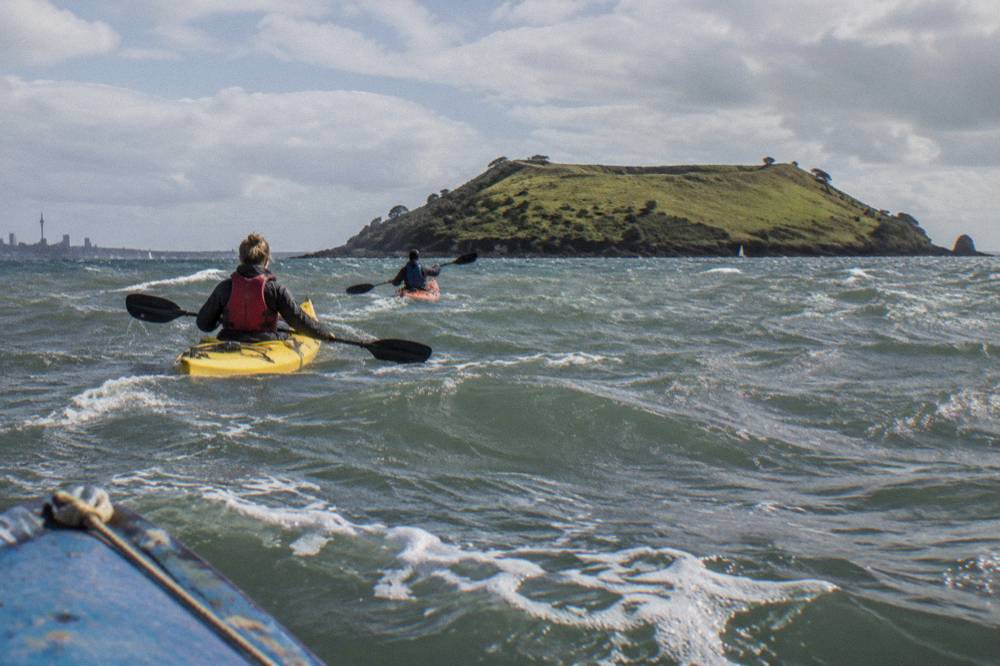
For a sea kayaker the practical meaning is simple. If a crossing has to happen, the hours either side of slack are the friendly ones, and the hours in the middle of the tide are when the same stretch of water can feel like a treadmill. A paddler who knows the day's tide times can look at the 50-90 pattern and see that launching an hour after slack means paddling against or across a stream already at half its maximum, while waiting three more hours means fighting water at full strength. Multiplied over a long open crossing, the difference between those two choices is not academic, it is the difference between arriving and enduring.
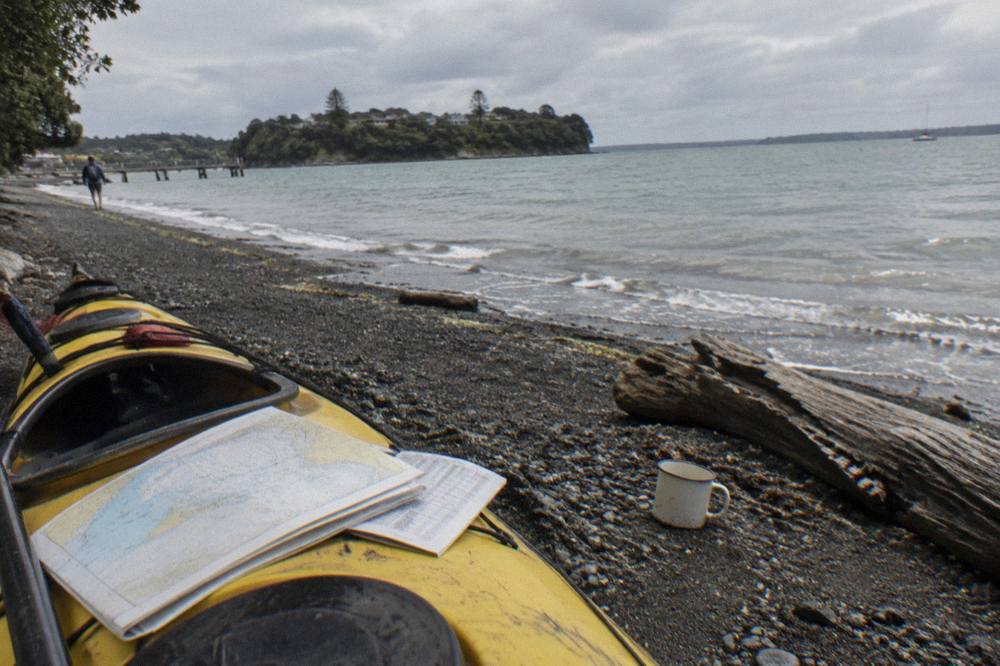
Where does the rule sit in a paddler's toolkit? Below formal navigation, above folklore. Nobody is obliged to use it, and many recreational paddlers never learn it, because on a guided tour the guide carries that load. New Zealand's official tide predictions come from Land Information New Zealand, which publishes the Auckland tide tables paddlers and guides plan around, and checking the LINZ tide predictions before any independent paddle is standard practice. The rule is one way of turning a tide table's raw numbers into a picture of how hard the water will push and when.
For readers weighing a guided paddle out of Auckland, the honest summary is this: the 50-90 rule matters most to people paddling on their own. On the tours covered here, from the city night paddles at Westhaven to the island day trips from St Heliers and Army Bay, the guide has already done the tidal arithmetic, which is a large part of what the ticket buys.
Why Do Tidal Streams Matter For Kayak Tours In Auckland?
Tidal streams matter because Auckland sits inside the Hauraki Gulf, where water moves between more than 50 islands and through channels that funnel it. The tours here cross or border that moving water, from the Rangitoto and Motukorea paddles out of St Heliers to the Tiritiri Matangi trip from Army Bay. Guides plan launch times around the tide so paddlers spend their energy on scenery, not on fighting current. If you're weighing Auckland's moving water against the sheltered shoreline of Abel Tasman, the guide to choosing between an Auckland and Abel Tasman kayak trip explains which setting suits newer paddlers.
The Hauraki Gulf Marine Park covers more than 1.2 million hectares and swallows the Waitemata Harbour, the Firth of Thames and the east Coromandel coast, as the Department of Conservation's marine park pages describe. Water does not sit still inside a space that large. It answers to the tide twice a day, and any channel between islands can carry a faster stream than the open water either side of it.
That last stretch deserves its own sentence. DOC is blunt on its Tiritiri Matangi page: kayaking there is an option for intermediate paddlers, because the water between the island and the mainland can get rough and windy, and the trip is not for beginners. The guided Tiritiri Matangi day tour exists precisely for that reason. It runs in stable double kayaks with guides, gear and tuition included, from Army Bay Beach on Whangaparaoa, six to seven hours all up, from $150.52 per person, minimum age 13. A reader asking about tidal rules and weighing that tour can read the full picture in the Tiritiri Matangi kayak tour guide.
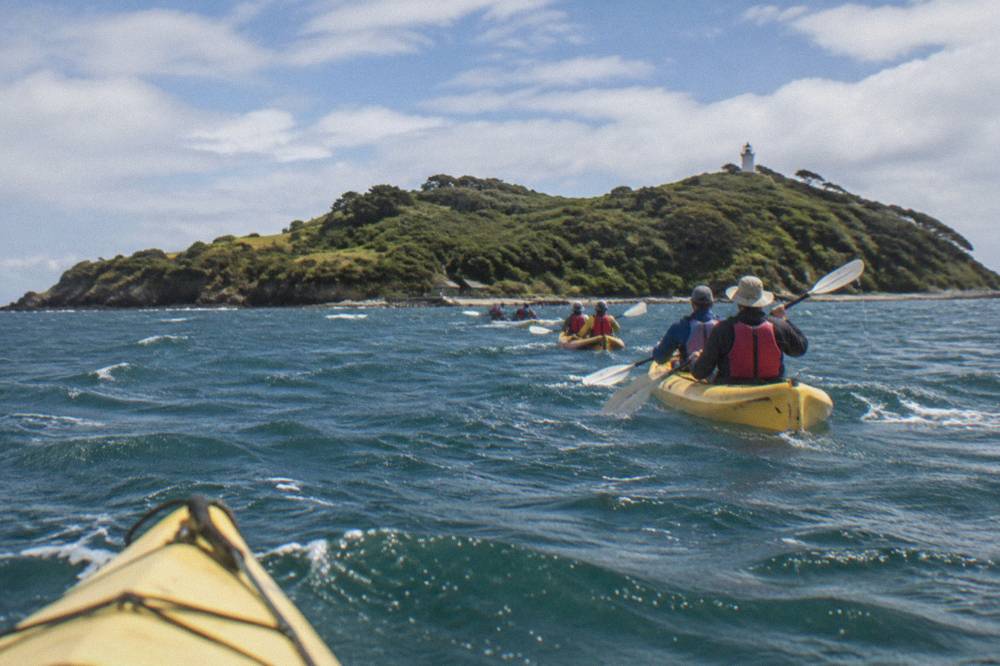
Wind is the other half of the story, and it stacks on top of tide rather than replacing it. A mid-tide stream against a fresh breeze produces short, steep chop that is more tiring than either alone, which is why paddlers check the MetService marine forecast alongside the tide table. Guided operators around Auckland work inside strict wind and sea limits. Auckland Sea Kayaks, for example, states its tours operate within strict limits with the final call often made on the day, and if conditions are unsafe it may move the group to a sheltered tour such as the City Lights or City Scenes paddle, reschedule, or refund in full if no alternative works. That policy, not the 50-90 rule, is what actually protects a booked paddler.
How Do Guided Auckland Tours Handle Tides And Currents?
Guided tours handle tides by planning around them rather than fighting them: launch windows are chosen against the tide table, routes use sheltered water where the stream is weak, and group sizes stay small so a guide can shepherd everyone. On Auckland Sea Kayaks island tours the group maximum is eight; on Social Nature Movement and Canoe & Kayak Adventures trips it is 16 to 24. The guide, not the guest, owns the tidal decision.
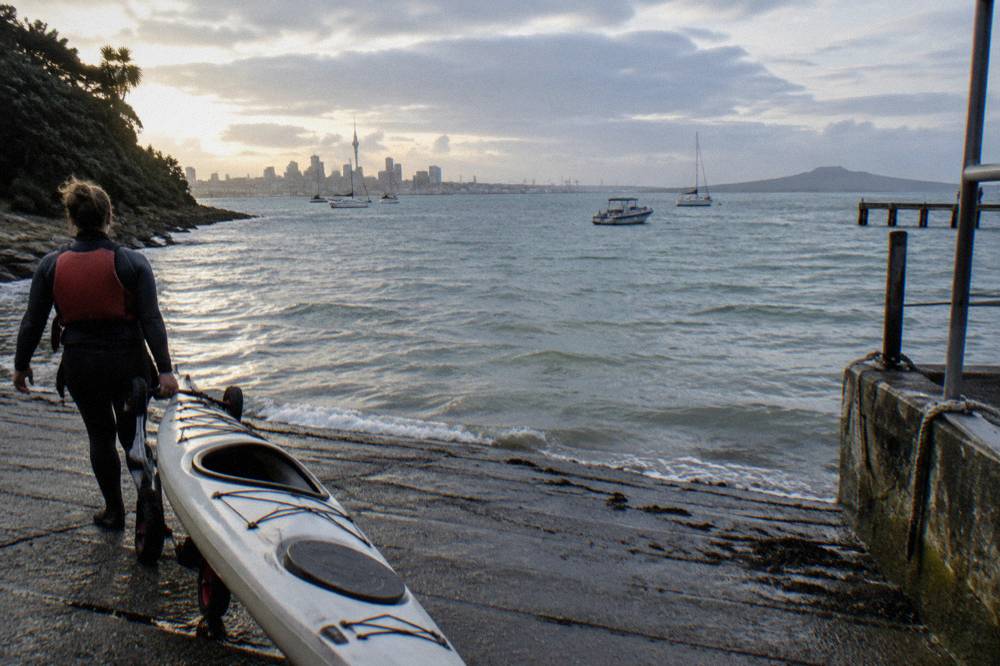
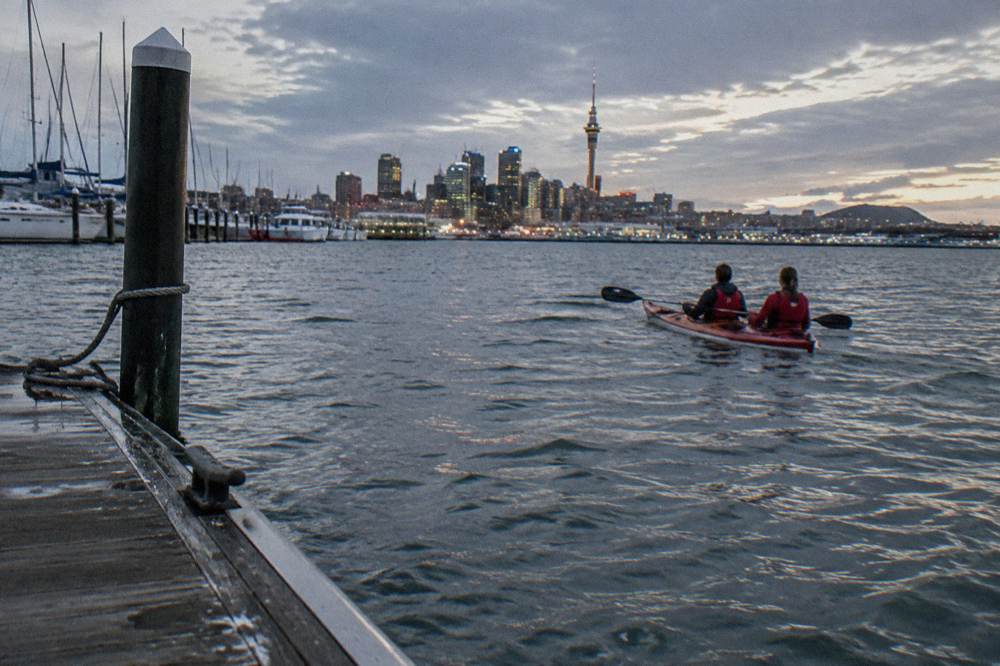
Start points across the tours here tell that story. The Rangitoto and Motukorea tours leave from the St Heliers Bay boat ramp at 384 Tamaki Drive, where the shoreline offers sheltered warm-up water before any crossing begins. The City Lights and City Scenes paddles leave from Westhaven Marina's Z Pier and stay inside the harbour, where tide matters far less than traffic and light. The Glow Kayak tour meets at a location chosen at booking, while the Est. 1994 bioluminescence tour emails its exact meeting point before 10 AM on the tour day. The Coastal Brewery paddle runs along the shore from Waiake to Browns Bay, about two kilometres one way, a route a guide can bend around the tide.
None of this means the tide is ignored. It means the arithmetic is done before a customer ever sits in a kayak, and the customer-facing version of it is simply a start time printed on a ticket. A guide planning the Tiritiri Matangi trip, which runs roughly 8 AM to 3 PM from Army Bay, is weighing the day's stream in that channel, the forecast wind and the group's pace together, then adjusting the plan or, as the operator states, arranging an alternative paddling location if conditions do not suit. Readers curious about how weather calls and refunds work in practice will find the detail in the Auckland kayak tour weather and cancellations guide.
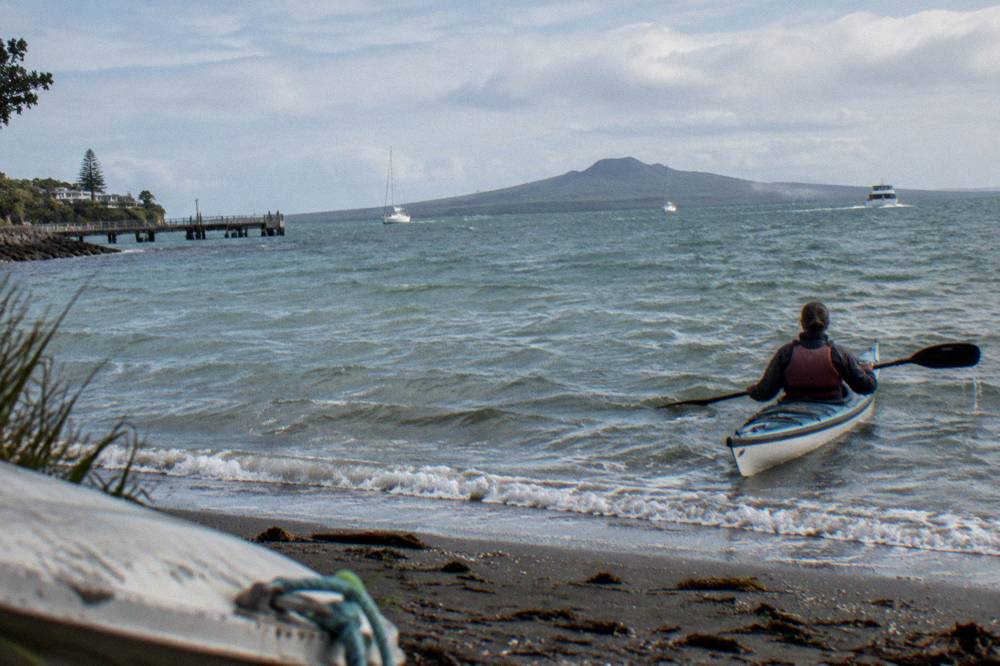
There is a fair question behind all of this: if guides handle it, why should a reader learn the 50-90 rule at all? Because knowledge sharpens choices. A paddler who understands that mid-tide water pushes hardest will see why a tour departs when it does, will ask better questions at the safety briefing, and will know what "we are timing the tide" means when a guide says it. And a paddler who one day wants to rent a kayak and go without a guide, the way independent paddlers do at Goat Island, will need the real thing rather than the shorthand.
What Does The 50-90 Rule Mean For Paddling To Islands In The Hauraki Gulf?
Applied to island paddles, the 50-90 rule says the hour or two around slack water is the window for a crossing, and mid-tide is the window to avoid. In the Hauraki Gulf that pairs with a second rule of thumb from the regulators: crossings to islands such as Rangitoto and Tiritiri Matangi are trips for experienced or intermediate paddlers, which is why the guided versions exist and why DOC repeats the warning.
DOC's Rangitoto page says it plainly: the island is accessible to experienced kayakers. That is the government conservation agency describing a paddle across a working harbour to the youngest volcano in New Zealand, an island that emerged from the sea just 600 years ago. The guided tours bridge the gap between that warning and a visitor's ambition. The sunset tour to Rangitoto, 6 hours 30 minutes, from $139.16 per person, rated 4.9 across 179 reviews, and the day version at the same price and duration, rated 4.9 across 83 reviews, both include the summit walk and a catered meal, with a free pre-booked shuttle from the Auckland War Memorial Museum atrium and a maximum of eight paddlers.
| Tour | Start point | Duration | Guided | Price from (USD) |
|---|---|---|---|---|
| Sunset kayak tour to Rangitoto Island | St Heliers Bay boat ramp | 6 hours 30 minutes | Yes | $139.16 per person |
| Auckland Volcano, Motukorea / Browns Island tour | St Heliers Bay boat ramp | 4 hours | Yes | $110.76 per person |
| Tiritiri Matangi Sea Kayak Tour | Army Bay Beach, Whangaparaoa | 6 to 7 hours | Yes | $150.52 per person |
| 2-Day Waiheke Island Sea Kayak Tour | Maraetai Public Boat Ramp | 2 days | Yes | $1,008.18 per person |
| Night Kayak Tour in Glowing Bioluminescent Waters | Given at booking | 1.5 to 2 hours | Yes | $64.03 per person |
The longer trips lean on tidal planning hardest. The Tiritiri Matangi tour, with just 3 reviews so far, crosses the channel DOC flags as rough and windy in the wrong conditions. Neither is a trip where a beginner wants to own the 50-90 arithmetic personally, and both are trips where asking the guide about the day's plan is fair conversation.
How Does Cold Water Change The Maths Around Auckland?
Cold water does not change the 50-90 rule but it raises the price of getting it wrong. Hauraki Gulf water is coolest in winter and warmest in late summer, and Maritime NZ warns that cold water shock kills, advising paddlers to dress for the water temperature and carry two waterproof ways to call for help. A stream that is merely annoying in February can be dangerous in July.
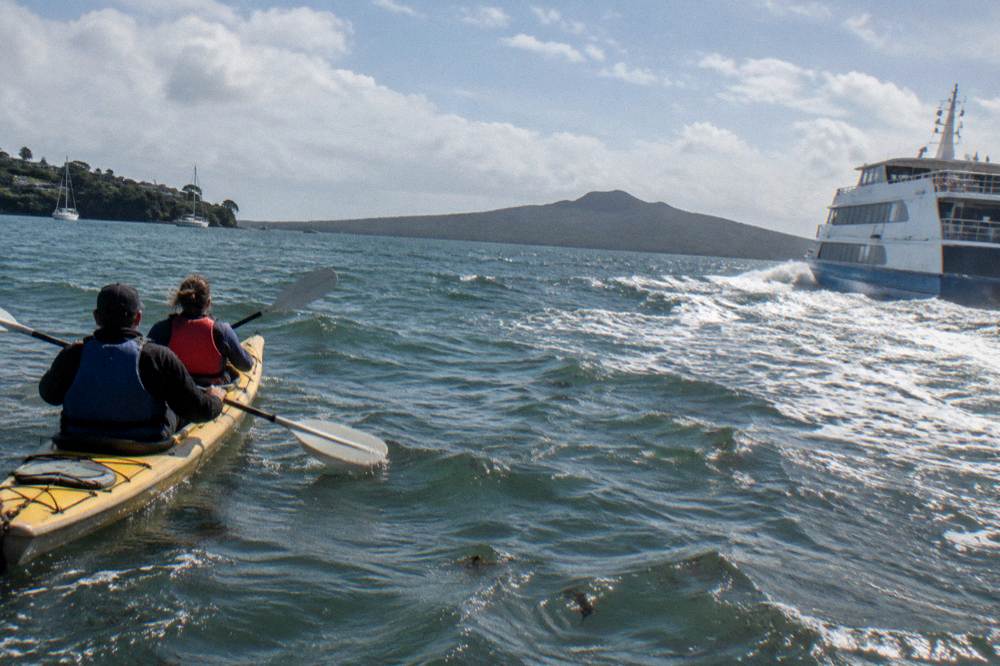
This is the part of sea kayaking safety that turns a navigation shortcut into a survival calculation. The 50-90 rule tells a paddler when the water pushes hardest; cold water knowledge tells the same paddler what an unplanned swim at that moment costs. Around Auckland the guided tours carry that weight collectively: gear is included on the tours, guides hold groups together, and the national lifejacket rule now removes any ambiguity about buoyancy. Since 9 October 2026, Maritime NZ requires everyone on a recreational craft of six metres or less, kayaks included, to wear a properly fitted lifejacket while underway, and guided tours supply them.
Most tours include a properly fitted lifejacket; gear is not stated for the City Scenes tour. The rule is being enforced with an educational approach in its first months, but the requirement itself is national and covers exactly the craft this site writes about. On the tours here it changes nothing visible, because operators were already putting every paddler in a flotation device, from the bioluminescence night paddle, 4.9 across 327 reviews and from $64.03 per person, to the Clearyak clear-bottom doubles at Goat Island, from $72.13 per double kayak, where the operator says lifejackets are worn by all.
What should a reader take from the pairing of tide and temperature? Two habits. First, when the water pushes hardest, in the middle hours of the tide, the cost of a capsize is highest, so that is when cautious paddlers are closest to shore or simply not on the water. Second, the season matters as much as the hour. Auckland's guided tours run most island crossings in daylight and their city paddles in the sheltered harbour at night, and that division is not an accident of marketing, it is risk management expressed as an itinerary. Readers planning wardrobe choices for the water itself can go deeper in the what to wear sea kayaking in Auckland guide.
What Safety Rules Sit Beside The 50-90 Rule In Auckland?
The 50-90 rule is one line in a longer safety picture: the Maritime NZ lifejacket rule, MetService marine forecasts, LINZ tide tables, pest-free island biosecurity and the operators' own wind and sea limits all sit beside it. On guided tours most of that picture is the operator's responsibility, which is the quiet argument for booking one rather than paddling alone.
That argument, laid out tour by tour with honest figures, is what Auckland Kayak Tours exists to make clear.
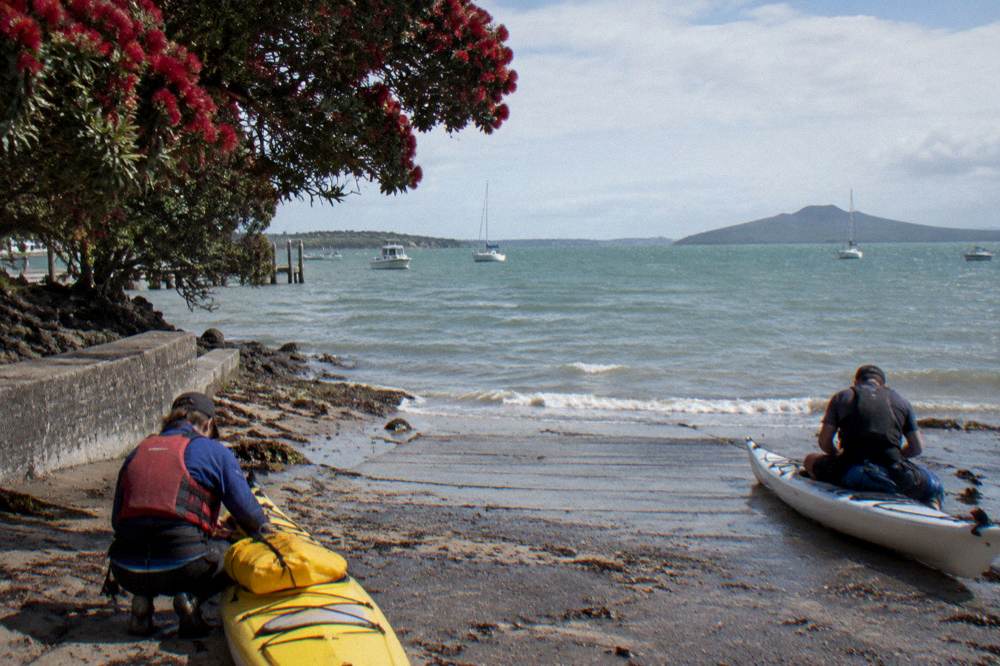
Take the pieces in order. The tide table: LINZ publishes Auckland's predictions, and any independent paddler should read the day's numbers before launching. The forecast: MetService's marine pages carry the Hauraki recreational forecast, and wind is the variable most likely to scrap or reshape a plan. The lifejacket: national law since October 2026 for kayaks. The biosecurity: DOC and Auckland Council require a Check, Clean, Close routine before landing on pest-free islands in the gulf, and rangers may recheck gear on arrival, which is why commercial operators such as Auckland Sea Kayaks hold a Pest Free Warrant and brief customers on it.
Then the operator layer. Auckland Sea Kayaks sets a maximum weight of 120 kilograms and a minimum age of 14 on its Rangitoto tours, 12 on Motukorea and the city paddles, and caps island groups at eight. Canoe & Kayak Adventures has run kayak operations since 1994 and puts a guide-to-guest ratio of 1 to 6 on its bioluminescence tour. Social Nature Movement's Browns Island listing describes 45 to 60 minutes of paddling each way and caps groups at 16. DOC describes Rangitoto as accessible to experienced kayakers, about two hours from the mainland, so the guided format and small group size carry paddlers who lack that experience themselves.
| Safety layer | Who owns it on a guided tour | Who owns it paddling alone |
|---|---|---|
| Tide timing, including the 50-90 pattern | The guide and operator | The paddler, from LINZ tables |
| Wind and sea limits | Operator policy, final call on the day | The paddler, from the MetService marine forecast |
| Lifejackets | Supplied and worn, required by law | The paddler, still required by law |
| Cold water preparation | Operator briefing and gear | The paddler, dressing for water temperature |
| Island biosecurity checks | Operator briefing and Pest Free Warrant | The paddler, under DOC and council rules |
The honest closing thought on the rule itself: it is a planning tool, not a promise. The water does not owe anyone 50 percent in the first hour. Treat it as a reason to respect mid-tide, to love slack water, to check the real predictions and, on unfamiliar gulf crossings, to paddle with someone who has done the trip before. That last clause is the entire business model of a guided kayak tour, stated plainly.
Common Questions About The 50-90 Rule In Sea Kayaking
What Is The 50-90 Rule In Sea Kayaking?
It is an informal shorthand for estimating tidal stream strength through a tide cycle: roughly 50 percent of maximum in the first hour after slack, about 90 percent in the second, peak around the middle hours, then 90 and 50 percent fading back to slack. It describes a typical pattern, not a guarantee for any specific day or channel.
Do Auckland Kayak Tour Guides Use The 50-90 Rule?
Tide tables and marine forecasts anchor the planning advice for these crossings, and the underlying pattern the rule describes belongs in that same planning. On a guided tour the guest never has to apply it personally; the start time on the ticket is the customer-facing result of the tidal arithmetic.
Is The 50-90 Rule Officially Published?
It appears in navigation and paddling course material as a widely taught rule of thumb rather than a regulation. Official tide predictions for Auckland come from LINZ, and the marine forecast comes from MetService. Those two sources give real numbers; the rule gives a shape to plug them into.
When Is Tidal Stream Strongest In The Hauraki Gulf?
Typically in the middle hours of the tide, roughly the third and fourth hours, with the water near slack, weakest, at the start and end of the cycle. The effect is strongest where islands and headlands squeeze the flow, such as the channels around Rangitoto and the stretch between Whangaparaoa and Tiritiri Matangi.
Does The 50-90 Rule Matter On A Night Kayak Tour In Auckland?
Very little, because the city night paddles run in the sheltered Waitemata Harbour from Westhaven Marina rather than across open channels. The Night Kayak Tour in Glowing Bioluminescent Waters, from $64.03 per person and rated 4.9 across 327 reviews, is run by Social Nature Movement, with the meeting point chosen at booking; the paddling route is not stated, so check the booking page.
Is The Lifejacket Rule Related To Tidal Planning?
They are separate safety layers that work together. The 50-90 rule is about avoiding the water's hardest-pushing hours; the Maritime NZ lifejacket rule, in force since 9 October 2026, is about surviving an unplanned swim if the plan fails anyway. Guided tours in Auckland cover both: guides time the water, and the operator supplies the lifejacket.