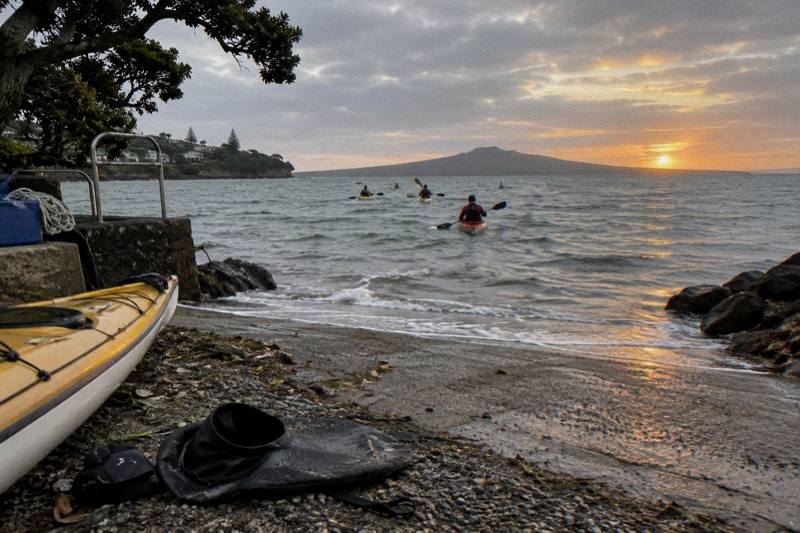
What To Wear On An Auckland Sea Kayak Tour
Auckland's guided kayak tours supply the boat, paddle and lifejacket. Everything touching your skin is up to you, and the choices matter more than most first-timers expect: the Hauraki Gulf is cool water even in summer, and tours that land on Rangitoto add a 7 km return volcanic walk to the day.
Short answer
Wear quick-dry layers, a sun hat and sunscreen, and shoes that can get wet but grip volcanic rock. Operators supply the kayak, paddle and lifejacket on 13 of the 14 tours covered here. Wetsuit status is not stated on most listings, so dress for the water temperature, not the air temperature, and pack a warm layer and a dry change of clothes.
Auckland sits on a harbour, not a lake, and the difference shows up in what you should wear. The Hauraki Gulf is cool water even at the height of summer, the sun off the water is stronger than on land, and guided paddles to the volcanic islands include time on foot over rough black rock. Getting the outfit right is not about buying specialist gear. It is about quick-dry fabrics, real footwear and one warm layer you will be glad you packed by the time the boat comes back.
This guide works through the question piece by piece: what the operators hand you, what to wear on your body, what to wear on your feet, and how the answers shift between a summer sunset crossing and a winter harbour paddle. The tours referenced throughout are the 13 guided paddles and one rental covered on this site, from St Heliers, Westhaven, Browns Bay and further afield. If weather rather than wardrobe is the open question, start with the companion piece on Auckland kayak tour weather and cancellations.
What Should You Wear Sea Kayaking In Auckland?
The base outfit for an Auckland paddle is a synthetic or merino base layer on top, quick-dry shorts or leggings, a warm mid-layer in a dry bag, a wide-brimmed hat, sunglasses with a retainer strap, and reef shoes or old trainers that can get wet. Avoid cotton entirely, including jeans and heavy hoodies, because cotton holds water and loses all warmth when damp, which is the exact opposite of what you want on cool harbour water.
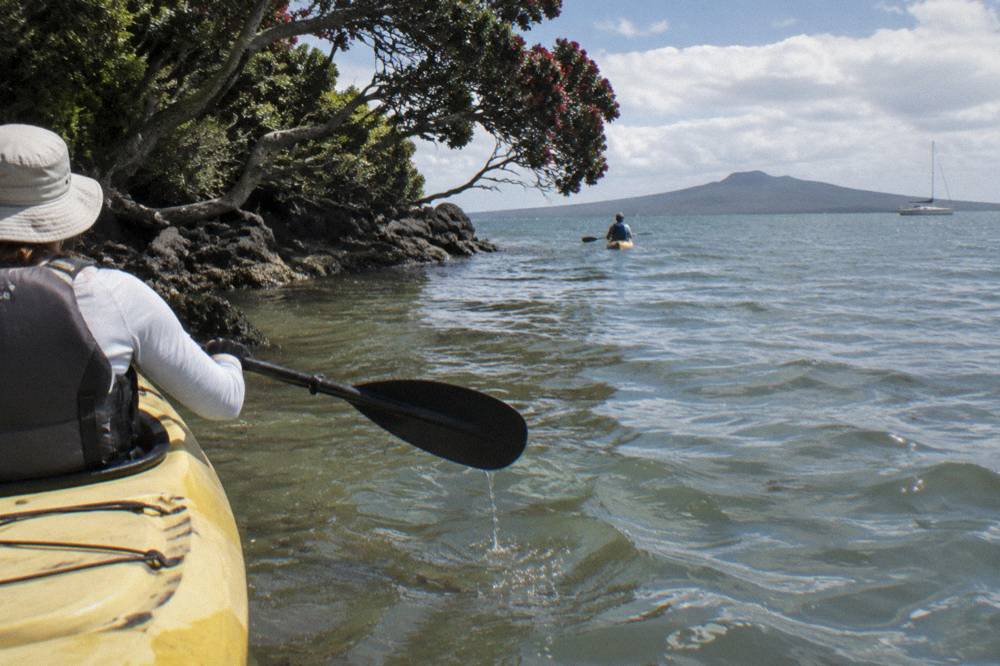
The reason the fabric rule comes first is simple: kayaking is a wet sport. Canoe & Kayak Adventures, which runs the bioluminescence tour and the Coastal Brewery paddle, says exactly that on its own pages. Spray comes off the paddle, water pools in the cockpit rim, and rain happens. A synthetic layer that wet stays warm; a cotton t-shirt that wet turns into a cold cloth strapped to your back for the next two hours.
Think in three blocks. A base layer against the skin that dries fast. An insulating layer, a fleece or a light puffer, that stays in a dry bag until you stop paddling. And a shell, a rain jacket at minimum, that cuts the wind on open water. On a warm summer day paddle the shell may never leave the bag. On a City Lights night tour from Westhaven Marina it will be the piece you reach for the moment the sun drops, because a 2.5 hour evening tour in Auckland can move from pleasantly warm to genuinely cool without the boat ever going anywhere fast.
Sun protection belongs in the outfit, not on top of it. The Department of Conservation's advice for Rangitoto visitors is blunt about heat coming off the lava, and the same sun is reflecting off the water while you paddle. A hat that shades your ears, a shirt with sleeves, and sunscreen reapplied at the landing are the standard. Sunglasses need a strap; every season a pair goes to the bottom of the Waitemata within sight of the boat ramp.
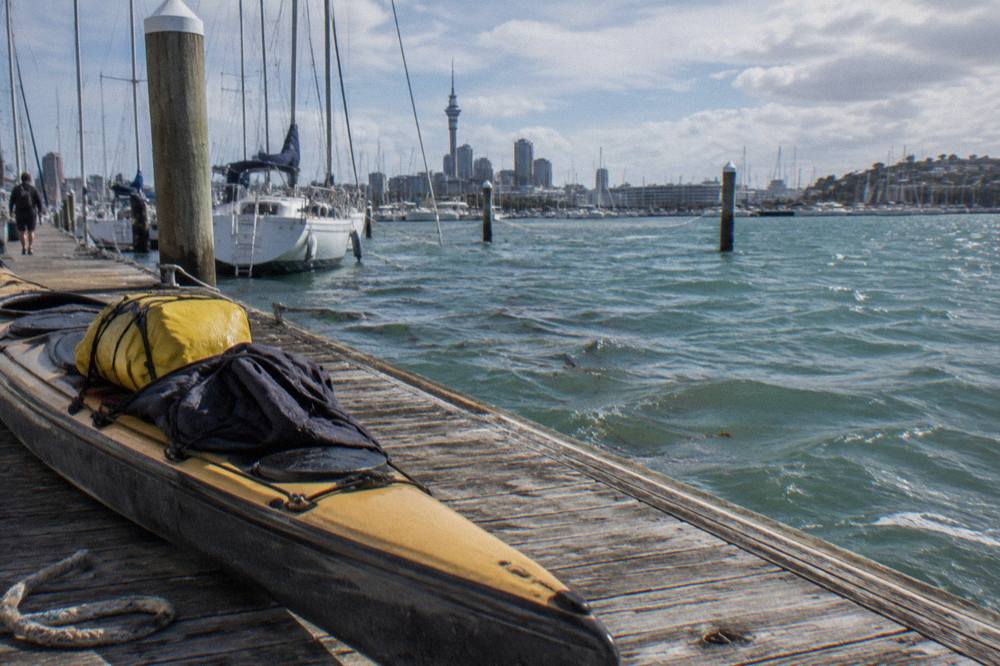
One planning note that belongs here rather than later: no tour on this site includes hotel pickup, and every trip starts from a specific ramp or beach. If your tour leaves from St Heliers, the parking and meeting-point details are covered in the guide to the St Heliers kayak meeting point, and arriving dressed nearly ready to go saves standing around in a wetsuit-adjacent outfit while the guide runs the briefing.
Do The Auckland Tours Provide Wetsuits And Gear?
The kayak and safety gear are included on 12 of the 13 guided tours, and the 13th, the City Scenes waterfront tour, does not state its inclusions yet. The lifejacket is always part of the supplied kit. Wetsuit provision is not stated on most of the tours here, so assume you are dressing yourself and ask the operator before the day if a wetsuit matters to you.
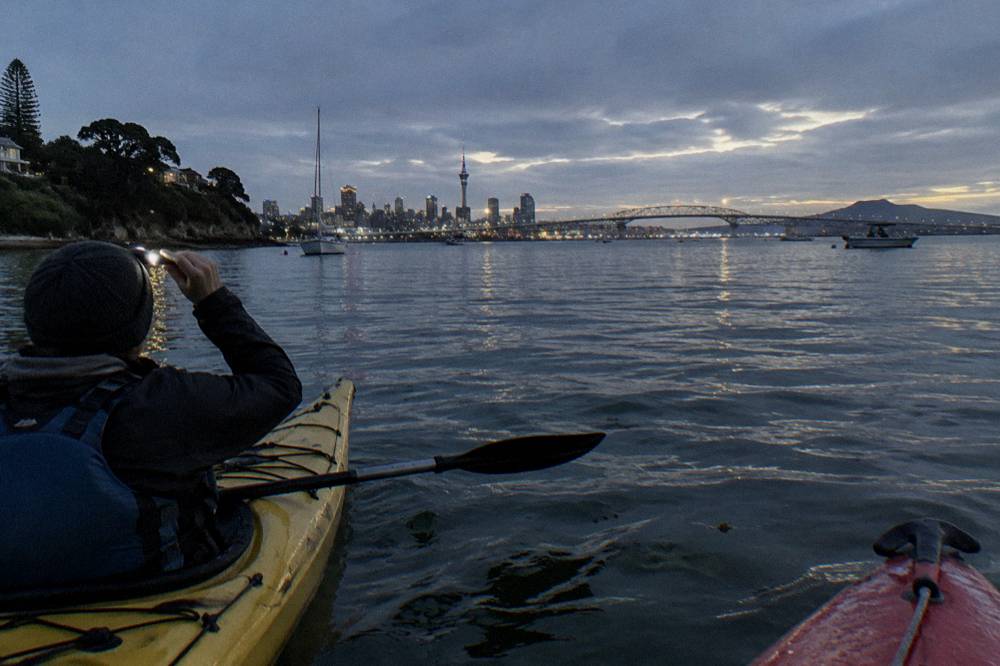
This is the single biggest gap between what first-timers imagine and what the tours actually hand over. The supplied kit is the boat, the paddle, a personal flotation device, and on the Social Nature Movement night tours a safety light beacon. What you wear underneath and over the top is your own wardrobe. The Auckland Sea Kayaks tours spell out top-quality sea kayak equipment and experienced guides in their inclusions, and clothing does not appear in that list. Since splash and spray are the main reason those clothing choices matter, the guide to how wet you get on an Auckland sea kayak tour covers exactly what to expect on the water.
For the Rangitoto tours specifically, the catering is supplied and the clothing is not. The sunset tour, 4.9 across 179 reviews and from $139.16 per person, includes a BBQ dinner and a hot drink, which is the operator's answer to cold: feed you warm at the far end. The day tour, from the same price and 4.9 across 83 reviews, does the same with a BBQ lunch. Neither listing mentions a wetsuit, so plan on layers you have chosen yourself.
The rental is a different case again. The Goat Island clear-bottom kayak hire, from $72.13 per double kayak for up to two people, is the one unguided product here, and its inclusions are the kayak, lifejacket, paddle and a safety briefing. Clearyak's own FAQ is reassuring for beginners, noting no kayaking or swimming experience is needed, but it also flags that you may get wet to the knees. That hire runs in the warmer season, and the operator closes outside those months, so check the operator's website before you drive to Leigh.
The table below sets out what is supplied against what you carry, based purely on what each tour's inclusions state.
| Tour | Supplied per the listing | Clothing or wetsuit stated? | Food stated |
|---|---|---|---|
| Sunset kayak tour to Rangitoto Island | Sea kayak equipment, guide, lifejacket | Not stated | BBQ dinner, coffee or tea |
| Rangitoto day sea kayak tour | Sea kayak equipment, guide, lifejacket | Not stated | BBQ lunch, coffee or tea |
| Motukorea half-day tour | Sea kayak equipment, guide, lifejacket | Not stated | Morning tea and refreshments |
| Bioluminescence night tour (Social Nature Movement) | Kayak and equipment, PFD, safety light beacon, guide | Not stated | Not stated |
| City Lights night kayaking | All kayaking and safety equipment, guide, snacks | Not stated | Light snack |
| Coastal Brewery paddle | All kayaking and safety equipment, guide, shuttle | Not stated | Not stated |
| Goat Island Clearyak rental | Kayak, lifejacket, paddle, safety briefing | Not stated | Not stated |
What Shoes Work For Kayaking And The Rangitoto Summit Walk?
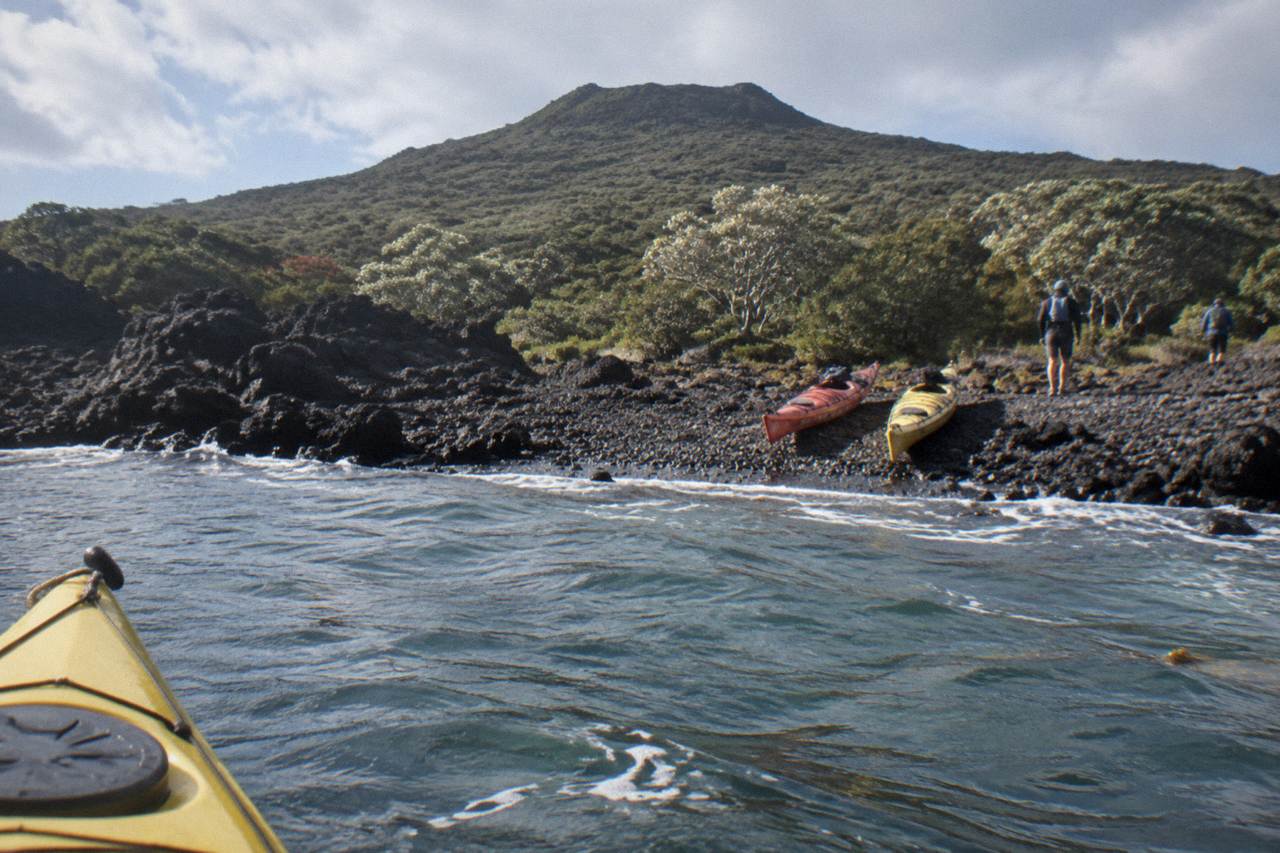
Wear enclosed shoes that can get wet and grip loose rock: reef shoes, wet shoes, or old trainers with a decent tread. Thongs and sandals fail twice, once on the wet ramp and again on Rangitoto's volcanic gravel. The DOC Summit Track is 7 km return with about 250 m of climbing over rough, uneven terrain, and the Department of Conservation's own advice for the island is sturdy shoes.
The two requirements pull against each other. On the water you want something that drains and does not hold water. On the island you want sole and grip. Barefoot is not an answer to either: the lava fields are sharp, and in warm months DOC warns that wasps are more common on Rangitoto, which is a strong argument for closed toes. A shoe that does both jobs exists in any budget: a basic wet shoe with a rubber sole, or a pair of running shoes you have already retired from running.
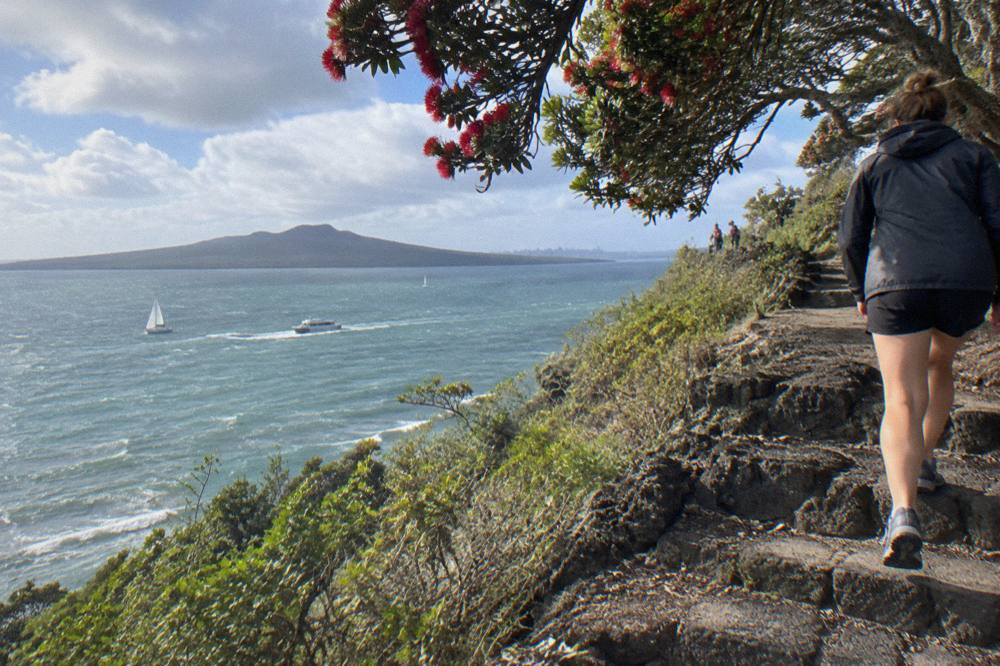
Only three tours here include a summit walk: the Rangitoto sunset tour, the Rangitoto day tour, and the Motukorea half-day. Those are the ones where footwear is a genuine safety item rather than a comfort item, because the walk is a substantial part of the day. The DOC Rangitoto Island page describes the Summit Track as easy to intermediate over loose gravel with little shade, so the same shoes that got you across the water have to carry you up a volcano afterward.
The Motukorea tour is a shorter version of the same equation: a 4 hour trip, 5.0 across 38 reviews, from $110.76 per person, with a guided 1.5 km walk climbing about 70 m to the summit. The operator, Auckland Sea Kayaks, describes the terrain as one of the best-preserved volcanoes in the Auckland Volcanic Field, and preserved volcano means the same rough ground underfoot. Reef shoes with a real sole handle both jobs; flip-flops handle neither.
For the tours that never leave the kayak, the bar is lower but not zero. Every launch on this site involves a boat ramp or a beach, which means wet feet before you are seated. A shoe you can walk into ankle-deep water wearing, and walk on gravel and broken shell in, is the practical minimum. The Coastal Brewery paddle from Browns Bay runs about 90 minutes of stated paddling and finishes near a brewery, and you will want the same shoes to walk in for a drink afterward that you wore on the water.
How Do You Dress For Auckland's Summer And Winter Water?
In summer, from late September to early April when daylight saving runs, dress light but never cotton-only: a rash top or quick-dry tee, leggings or board shorts, a hat and high-SPF sunscreen. In winter, add a thermal base layer, a fleece, a proper rain shell, beanie and gloves, because the water is cold year-round and Maritime NZ's standing advice is to dress for the water temperature, not the air.
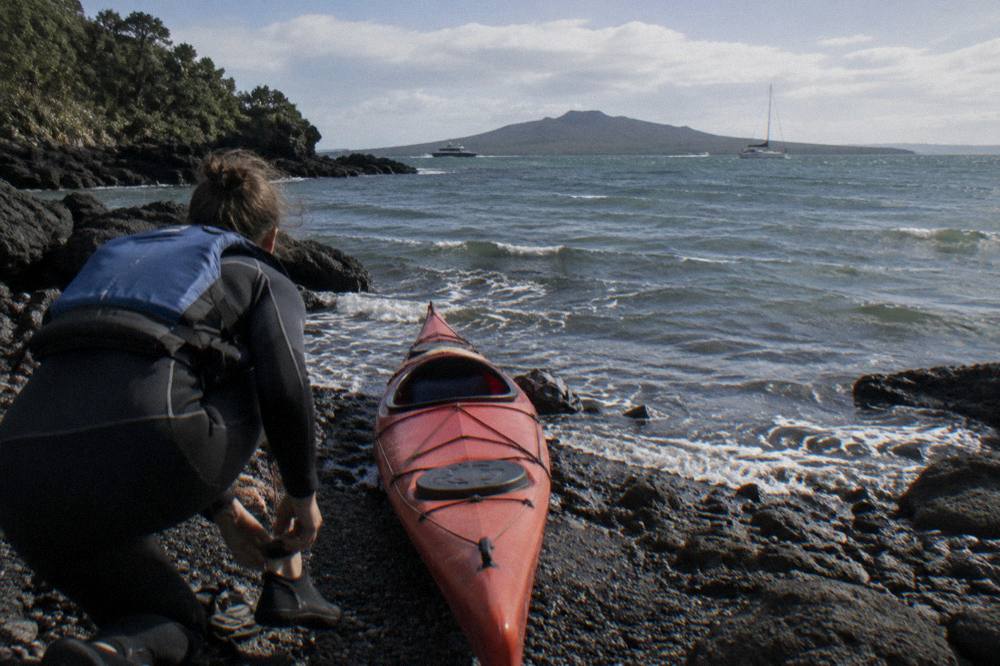
The water temperature point deserves its own sentence. Maritime NZ's paddle craft guidance is explicit that cold water shock kills, and that paddlers should wear a wetsuit or dress for the water temperature. Auckland's air can feel warm on a February afternoon while the gulf water beneath the kayak stays markedly cooler. If you fall in, and kayaking is a wet sport, your body reacts to the water, not the sunshine. That is why the warm layer is non-negotiable even on a day that feels like t-shirt weather at the ramp.
Winter paddling in Auckland is real and reasonably popular, but the wardrobe shifts completely. A thermal against the skin, a thick fleece over it, and a shell with sealed seams over that is the standard stack. Neoprene gloves matter more than people expect: hands are the part of you in the spray zone for the whole paddle. A beanie under the helmet, where one is worn, or under the hood, does more for comfort than any other single item once the wind picks up.
| Condition | On the water | In the dry bag | Feet and head |
|---|---|---|---|
| Warm summer day | Quick-dry tee or rash top, shorts or leggings, sunscreen | Fleece, rain shell, water | Reef shoes, wide-brim hat, sunglasses with strap |
| Cool or breezy day | Thermal base layer, fleece, light shell | Spare warm layer, dry top | Wet shoes, beanie, gloves |
| Winter paddle | Thermal, thick fleece, sealed rain shell, leggings | Full dry change of clothes, hot drink | Wet shoes with neoprene socks, beanie, gloves |
| Night or bioluminescence tour | Warm layers from the start, shell | Extra fleece, dry top for after | Enclosed wet shoes, beanie |
The night tours are the ones that catch people out. A bioluminescence paddle runs 1.5 to 2 hours in the dark, and the City Lights tour is a 2.5-hour evening paddle from Westhaven Marina. The temperature drop on the water after sunset is faster than on land, and there is no walking to warm up. Whatever the season, take one more layer on an evening tour than the afternoon air suggests.
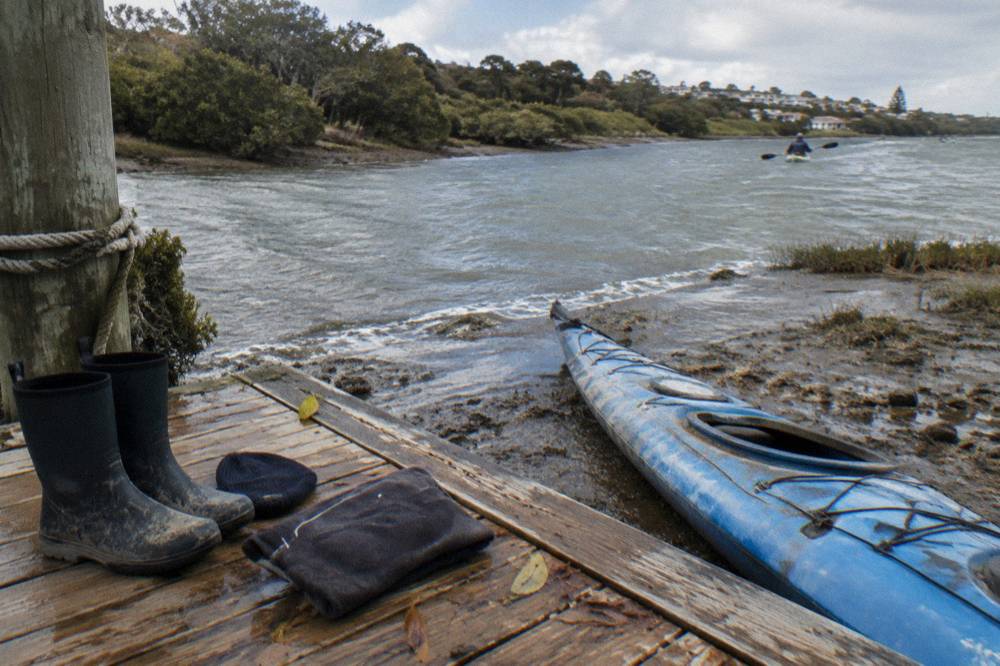
Rain deserves a specific word because Auckland gets plenty of it. A rain jacket on a kayak is doing two jobs, keeping rain off and cutting wind, and the second job matters more on the water. Any jacket with a storm flap and cinched cuffs does both. What does not work is an umbrella-grade poncho, which catches wind like a sail, or a soaked-through fashion jacket that just holds water against your base layer.
What Do You Wear On A Night Or Bioluminescence Paddle?
Wear full warm layers from the start of the evening: thermal base, fleece, windproof shell, beanie and gloves, plus a dry top stowed for the finish. The bioluminescence tours run 1.5 to 2 hours in the dark and the City Lights tour runs 2.5 hours, and Auckland evenings cool quickly on the water. Skip light colours only if you want to keep your night vision; dark outer layers help everyone's eyes adjust.
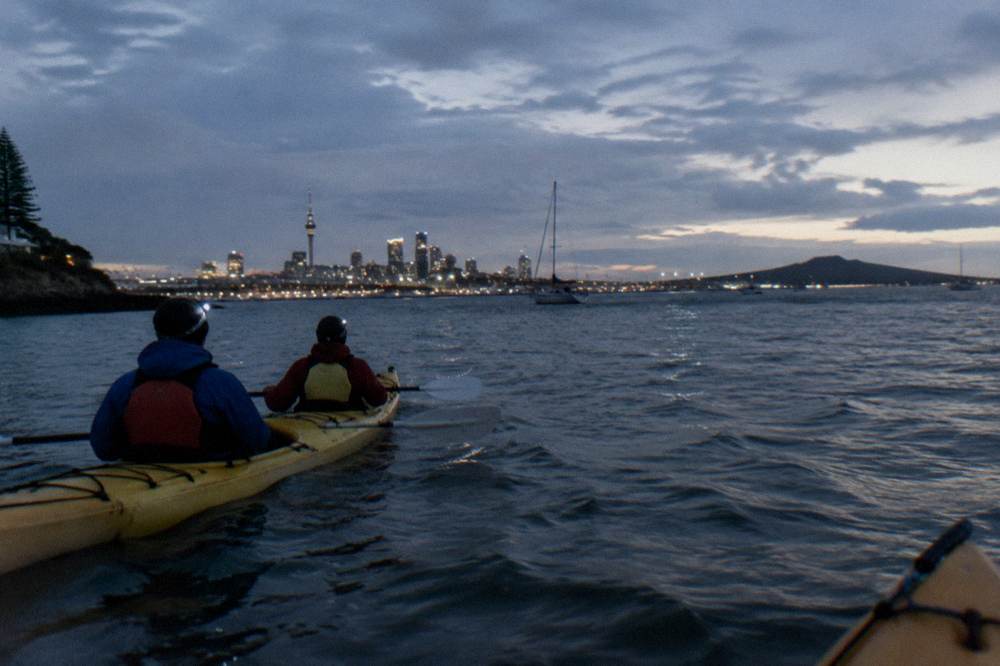
The bioluminescence night paddle is the most reviewed tour on this site, 4.9 across 327 reviews and from $64.03 per person, run by Social Nature Movement. The operator is careful with expectations, describing the glow as never guaranteed and dependent on season and conditions, and that honesty extends to the practicalities: the meeting point is chosen at booking, so read your confirmation email rather than guessing a beach. The kit supplied is the kayak, equipment, a personal flotation device and a safety light beacon; the clothing is entirely yours. The full index of guides sits on Auckland Kayak Tours.
The Canoe & Kayak Adventures bioluminescence tour, from $67.59 per person and 4.1 across 206 reviews, is a 2 hour evening paddle that notes a moonlight advisory on the operator's page. Its supplied inclusions are the kayaking and safety equipment, stable sea kayaks or sit-on-tops, and tuition from guides at a stated one-to-six guide-to-guest ratio. Nothing in either listing mentions wetsuits, which returns to the same planning answer: check with the operator directly if a wetsuit is a deal-breaker for you, otherwise dress as if for a cold evening walk that might splash.
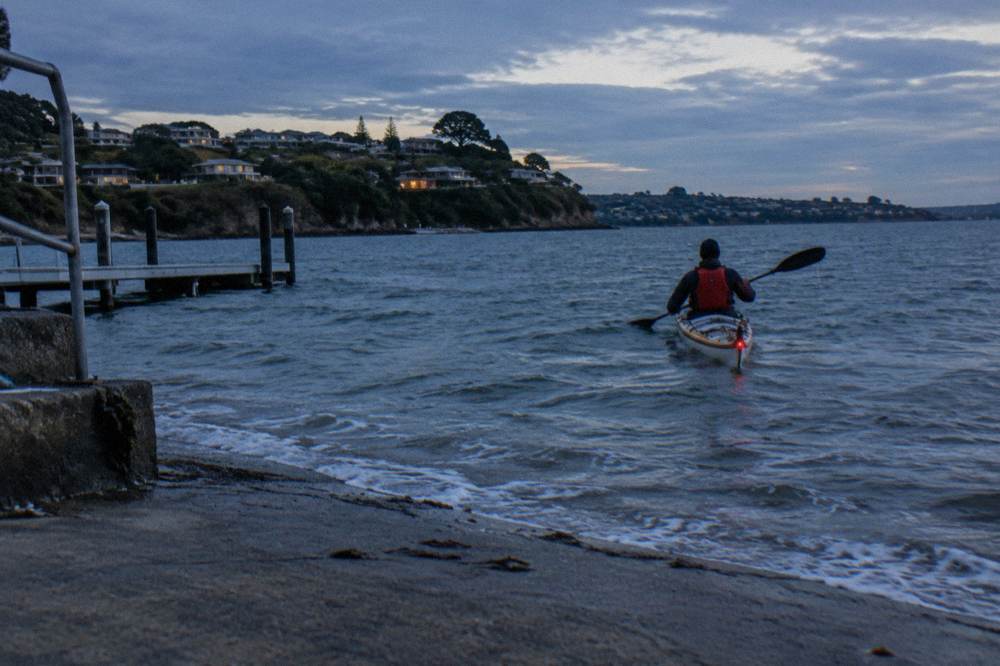
Gloves and a beanie are worth repeating for the night tours specifically, because they are the pieces people leave behind. Paddling keeps the torso warm and the hands frozen; the hands are wet, in the breeze, working the paddle shaft for two hours. A thin pair of neoprene or fleece gloves fixes that. If the tour description mentions photography, and many bioluminescence guests are there for exactly that, fingerless or touchscreen-compatible gloves save fumbling with a phone in the dark.
How Wet Do You Actually Get On A Sea Kayak Tour?
Plan on wet feet, wet seat and splashed forearms as the baseline, with a real chance of more: operators here describe kayaking as a wet sport, and Clearyak's FAQ for the Goat Island hire says plainly that you may get wet to the knees. Kayaking is a wet sport, so nobody should arrive in anything they cannot bear to soak.
This is where the fabric advice earns its keep. The damp that matters on a kayak is rarely a swim; it is the accumulation. Water runs down the paddle shaft, the seat foam holds moisture, and rain or spray adds to both. By the end of a 2 hour paddle, your base layer's ability to stay warm while damp is the difference between a good afternoon and a miserable one. Merino wool and synthetics do that job; cotton does the opposite.
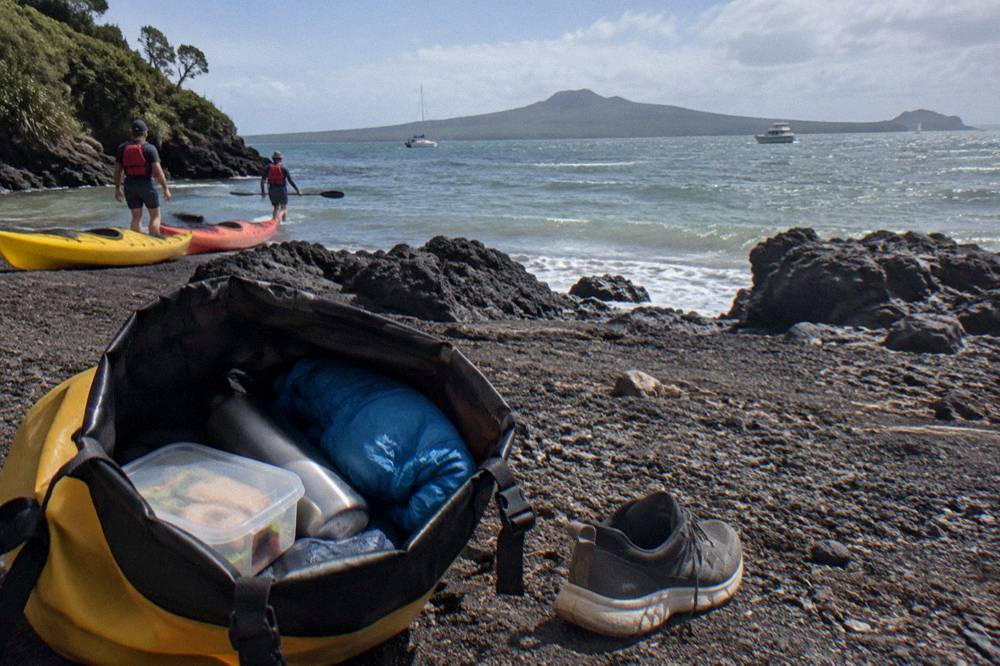
The guided tours here use double sea kayaks, which are stabler and drier than singles in the same conditions, and Auckland Sea Kayaks states that its tours suit people with little or no kayaking experience. Stability reduces the capsize odds but does not remove spray. The sunset Rangitoto tour actually plans for the wet-and-dark combination: the operator notes the return leg happens after dark with navigation lights fitted to every kayak, which tells you the expected conditions are exposed water, not a placid lagoon.
The one product where wet is guaranteed by design is the Goat Island clear kayak hire. The transparent-bottom double is paddled from a beach launch, and the operator's FAQ is upfront that beginners are fine but knees may get wet. The weight limit is 100 kg per person, hire runs 30 or 60 minutes, and the surrounding water is New Zealand's first marine reserve, established in 1975. The practical wardrobe answer is identical to every other tour on this page: quick-dry clothes and shoes that can go in the water.
What Should Go In A Dry Bag For A Day Tour?
Pack a dry bag with a full change of clothes, a warm fleece, a towel, sunscreen for reapplication, water, any personal medication, a phone in a waterproof pouch, and a plastic bag for wet gear on the way home. For the Rangitoto day and sunset tours, follow DOC's island guidance and bring your own food beyond what is catered, because there are no shops on the island.
The change of clothes is the item that separates the prepared from the uncomfortable. Even on a warm day, the ride back into a headwind in damp clothes is cold, and the walk from the ramp to the car in wet leggings is the memory people keep. A towel lives in the car rather than the dry bag for most tours, but on the full-day Rangitoto trips, 6 hours 30 minutes door to door, having it in the boat means you can get dry at the island before the walk up.
Water deserves emphasis on the island tours. DOC's know-before-you-go notes for Rangitoto tell visitors to bring their own food and water because there are no shops, and the heat off the lava is intense even on mild days. The tours cater the meals, a BBQ lunch on the day tour and a BBQ dinner on the sunset tour, but your own water bottle for the summit walk is your own responsibility. Sun protection belongs in the bag too, because the summit track has little shade and the reapplication you did at the ramp will not survive six hours.
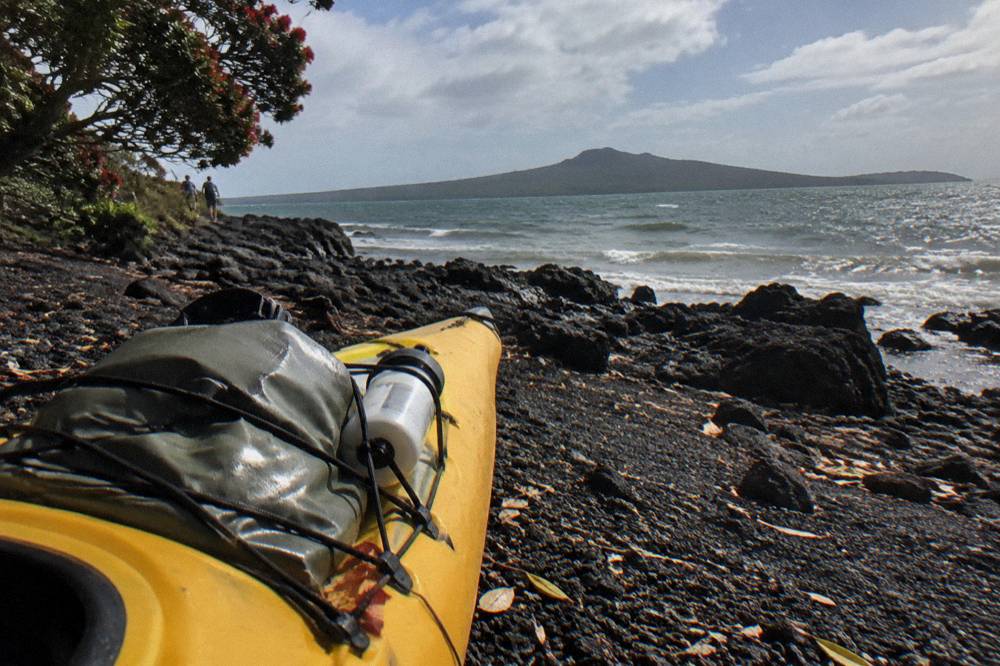
One biosecurity item that is also a packing item: the Hauraki Gulf islands are pest-free, and the Check, Clean, Close rules apply to your gear as much as the boat. Bags should be closed, no open or supermarket bags, and food in sealed containers; rangers may recheck gear on arrival. If your day pack has been in the garden shed since last summer, empty it and shake it out before you pack it. It is a small habit that protects exactly the wildlife the tours go out to see.
What Are The Lifejacket Rules For Kayaks In Auckland?
Since 9 October 2026, a nationwide Maritime NZ rule has required everyone on a recreational craft of six metres or less, kayaks included, to wear a properly fitted lifejacket while underway. On the guided tours this changes nothing in practice, as the personal flotation device is part of the supplied kit and guides fit it before launch; at the one rental, Goat Island hire, the lifejacket is included in the price and worn by all.
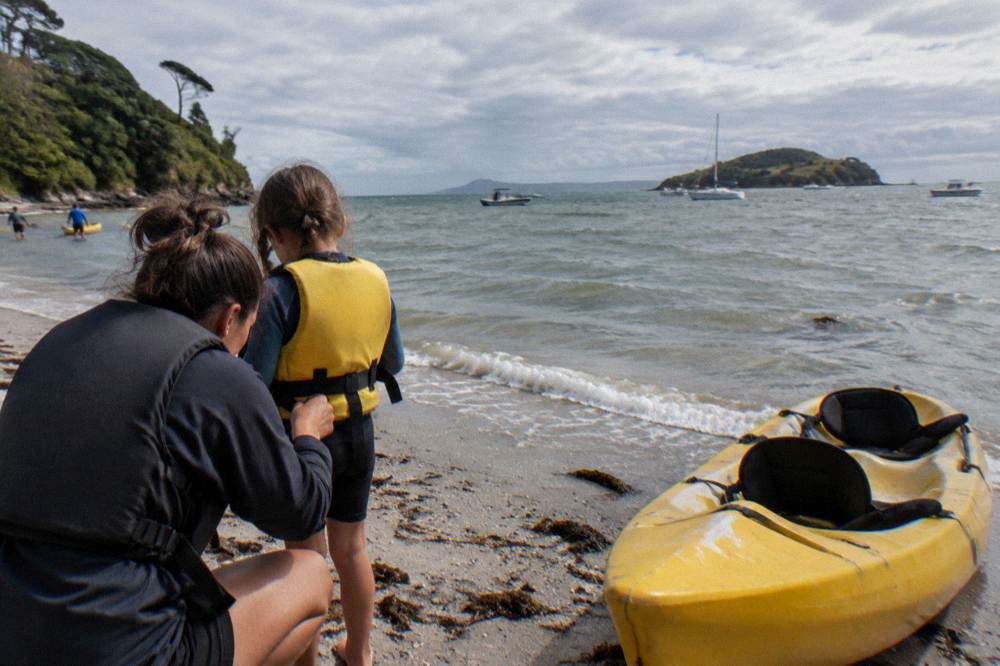
The rule matters most for anyone considering independent paddling rather than a guided tour, and it is worth knowing even as a tour customer because it explains why the guide will not push off until every clip is done up. Maritime NZ describes compliance in the early months as education-led, but the requirement itself is unconditional: properly fitted and worn while the craft is underway. A lifejacket slung under the deck lines does not count.
The same authority has a second piece of advice that belongs in a wardrobe article: carry two waterproof ways to call for help and check the marine forecast before you go. On a guided tour the guide carries the communications and makes the weather call, and Auckland Sea Kayaks states it operates within strict wind and sea limits, with the final call often made on the day. If you are renting, the forecast check is yours, and MetService's marine forecasts cover the Hauraki Gulf recreational area.
Fit is the last piece. A personal flotation device that is too loose rides up over your ears the moment you are in the water, and one that is too tight stops you paddling properly. Tell the guide if yours feels wrong before launch; adjusting clips takes thirty seconds on the ramp and is impossible to fix mid-harbour. Where a tour takes children, ask the operator about child sizes rather than sizing up from an adult small.
What Should Younger Paddlers Wear On A Family Tour?
Dress younger paddlers in the same quick-dry layers, sun protection and enclosed wet shoes that adults wear, then add one extra warm layer per child and pack a full spare outfit in the dry bag, because children get cold on the water faster than adults do, so the added warmth and backup clothing keep them comfortable if conditions turn wet, windy or chilly on the family tour.
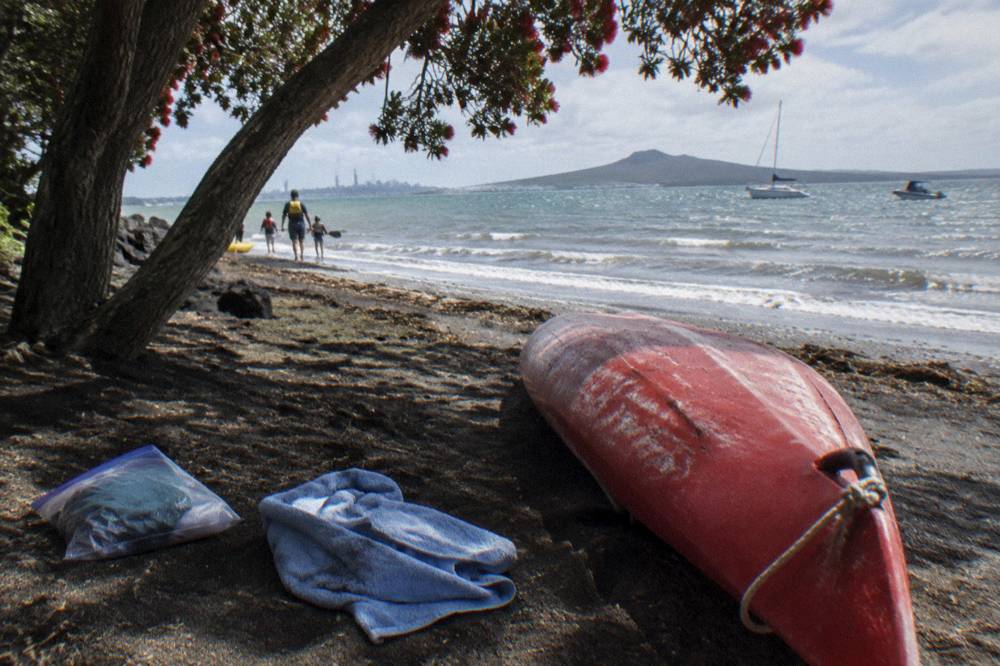
The per-tour ages matter because they shape what kind of day you are dressing for. A 3 year old on a 30 or 60 minute clear-kayak hire needs warmth, a hat and a parent's judgement about nap timing, not summit-walk footwear. A 14 year old on the 6 hours 30 minutes Rangitoto sunset tour needs exactly the full-day kit an adult needs, including sturdy shoes for the 7 km return walk and warm layers for the after-dark paddle home.
The Motukorea half-day, minimum age 12, is the island tour that suits younger teenagers best: 4 hours total, from $110.76 per person, 5.0 across 38 reviews, with a 1.5 km summit walk rather than Rangitoto's 7 km circuit. The clothing brief is a shorter version of the Rangitoto one: shoes that grip, sun protection, and a fleece in the bag for the paddle back. The City Lights night tour and City Scenes waterfront tour, both from $82.36 per person with a minimum age of 12, are harbour paddles with no landing, so the wardrobe is purely a water-and-weather question.
Whatever the tour, the spare-outfit rule doubles for children. A wet, cold child at the halfway point of a paddle is a tour-ending problem, and a dry bag with their size of everything turns it into a five-minute stop. Pack it even on days that look too warm for it to matter; on the water, warm days change their minds.
Does What You Wear Change With The Tour You Choose?
Yes, and the differences are bigger than the price gaps suggest. The Rangitoto day and sunset tours at 6 hours 30 minutes demand full-day kit and hiking-capable footwear, the 2 hour harbour and pub paddles need only quick-dry clothes and a warm layer, the night tours add beanie and gloves to everything, and the Goat Island rental is a swim-adjacent beach outing where getting wet to the knees is the stated norm.
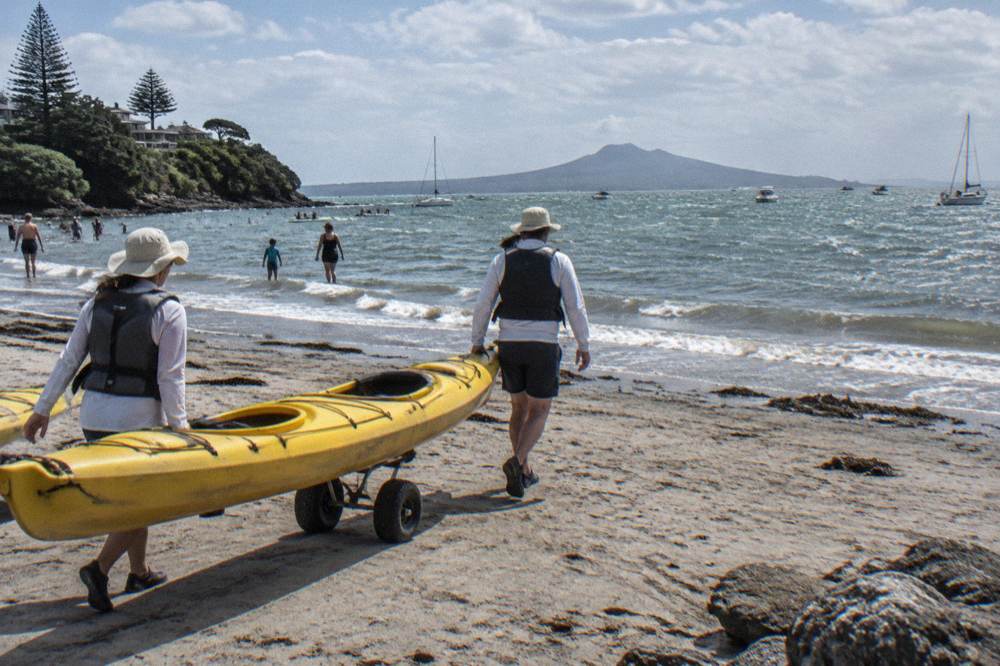
Duration is the main driver of wardrobe weight. A 2 hour tour forgives a thin layer choice; a 6 hours 30 minutes tour does not, because weather changes and bodies cool over that span. The Tiritiri Matangi day trip, 6 to 7 hours from Army Bay with a minimum age of 13 and from $150.52 per person, is the longest single-day paddle here and also lands on a predator-free scientific reserve where you walk the island tracks, so it takes the fullest kit list on this site: full paddling layers, walking shoes, sun protection and all your own food, since the island shop sells gifts and cold drinks rather than meals.
The pub paddles sit at the casual end. The Riverhead Tavern tour, from $62.48 per person, runs 2 hours with about 60 minutes of stated paddling from Herald Island, and the Coastal Brewery paddle, from $67.59 per person, runs 2 hours with about 90 minutes of stated paddling from Browns Bay and includes a shuttle. Both end at a tavern or brewery, which is the one wardrobe twist in their favour: bring a dry top to change into so the drink afterward is part of the tour rather than a cold afterthought. The Hallertau Clevedon tour, from $113.60 per person and 4 to 5 hours, does the same thing on a bigger scale, meeting at the brewery and paddling from Mataitai Bay Beach in Waitawa Regional Park.
| Tour | Duration | From (USD) | Wardrobe focus |
|---|---|---|---|
| Rangitoto day tour | 6 hours 30 minutes | $139.16 per person | Full-day kit, hiking shoes for the 7 km summit track |
| Rangitoto sunset tour | 6 hours 30 minutes | $139.16 per person | All of the above plus warm after-dark layers |
| Tiritiri Matangi tour | 6 to 7 hours | $150.52 per person | Longest day, walking shoes, all own food |
| Motukorea half-day | 4 hours | $110.76 per person | Island landing, 1.5 km walk, sun protection |
| City Lights night tour | 2.5 hours | $82.36 per person | Warm layers, beanie, gloves |
| Bioluminescence night tour | 1.5 to 2 hours | $64.03 per person | Dark-evening layers, dry top for after |
| Coastal Brewery paddle | 2 hours | $67.59 per person | Quick-dry clothes plus a change for the brewery |
| Goat Island Clearyak rental | 30 or 60 minutes | $72.13 per double kayak | Beach clothes, expect wet knees |
Weight and fit limits are part of this conversation too, because they are the operator's side of the same comfort question. Auckland Sea Kayaks states a 120 kg weight limit with a seat about 65 cm wide on its tours, and asks that paddlers be able to stay seated for up to 45 minutes at a time. Clearyak states 100 kg per person. None of this is about clothing, but it changes what clothing works: layers that bunch across the lap make a fitted cockpit harder, and a shell one size generous paddles better than one sized to fit.
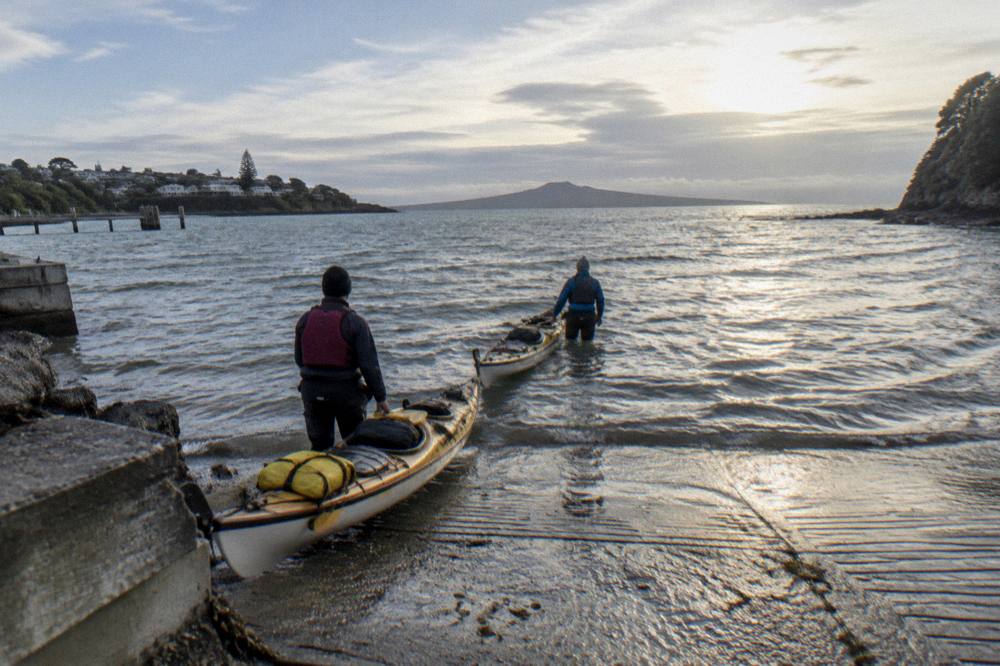
For a longer read on fitting the whole day around the tour rather than just the outfit, the kayak tour day in Auckland guide walks through timing, food and travel, and the when to kayak in Auckland guide covers the seasonal picture that should sit behind your layering choices. Timing and clothing are the same decision made twice: both are answers to what the water and sky are doing on your date.
The short version of the whole page: quick-dry everything, real shoes, more warmth than the air suggests, sun protection that survives the day, and a dry bag with a full change. The operator brings the boat, the paddle, the lifejacket and, on the island tours, the meal. You bring everything that touches your skin, and on a good day out there, that is the gear you will remember being glad about.
Common Questions About What To Wear Sea Kayaking In Auckland
Do I Need A Wetsuit For An Auckland Kayak Tour?
Not necessarily, and wetsuit provision is not stated on most of the tours covered here. Maritime NZ advises dressing for the water temperature, so in cooler months a wetsuit is a reasonable personal choice. Ask the operator before booking if a wetsuit is important to you, and otherwise layer synthetics or merino that stay warm when damp.
Can I Wear Jeans Or Leggings On A Kayak Tour?
Jeans, no: cotton holds water and goes cold. Leggings, yes, provided they are synthetic or merino rather than cotton. Quick-dry fabric is the one non-negotiable in the whole wardrobe, because kayaking is a wet sport and spray, seat moisture and rain all find their way to your base layer.
What Shoes Should I Wear On The Rangitoto Summit Walk?
Enclosed shoes that can get wet on the landing and grip loose volcanic gravel on the track. The DOC Summit Track is 7 km return with about 250 m of climbing over rough, uneven terrain, and DOC advises sturdy shoes. Reef shoes with a real sole or old trainers do both jobs; sandals and thongs do neither.
Do The Tours Provide Lifejackets?
Yes. Gear is supplied on the tours that list it, and a personal flotation device comes with that kit wherever it appears. Since 9 October 2026 a nationwide Maritime NZ rule also requires everyone on a kayak to wear a properly fitted lifejacket while underway, so guides will fit and check every jacket before launch.
Will I Get Wet On The Tour?
Plan on it. Wet feet at the ramp, a damp seat and splashed forearms are the baseline, and operators here describe kayaking as a wet sport. The Goat Island clear kayak hire states you may get wet to the knees. A dry bag with a full change of clothes is standard practice on every tour.
What Should I Wear On A Bioluminescence Night Kayak Tour?
Full warm layers from the start: thermal base, fleece, windproof shell, beanie and gloves, with a dry top stowed for the finish. The tours run 1.5 to 2 hours in the dark, Auckland evenings cool quickly on the water, and there is no walking to warm up. Dark outer layers help everyone's night vision.