Clear Kayak Vs Glass Bottom At Goat Island: What You See From The Water
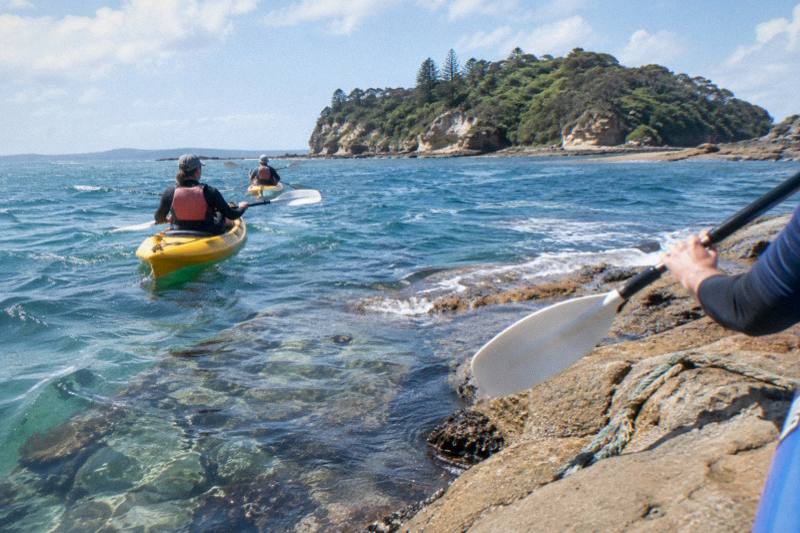
Goat Island's clear kayaks put a window under your seat rather than under a boat. This guide explains what the Clearyak hire actually is, what it costs per double kayak, and how it stacks up against every other way of looking into New Zealand's first marine reserve.
Short answer
The see-through option at Goat Island is a double kayak with a transparent bottom, hired from 150 Goat Island Road, Leigh, from $72.13 per double kayak for up to two people, 30 or 60 minutes, rated 4.8 across 84 reviews. It runs in the warmer season only; check the operator website before you drive up.
Goat Island, or Te Hawere-a-Maki, sits 150 metres off the beach at Cape Rodney-Okakari Point Marine Reserve, New Zealand's first marine reserve, established in 1975. The Department of Conservation says the island itself is inside the reserve, and kayaking around it is explicitly allowed. Of the ways to look into that water, only one is transparent: a double kayak with a clear bottom, hired on Goat Island Road by Clearyak NZ. There is no glass bottom boat covered on this page, because no glass bottom boat is among the tours covered here. What follows is an honest breakdown of what the clear kayak is, what the hire includes, and how the other ways of seeing the reserve compare. Once the comparison is clear, the follow-up guide to whether a clear kayak at Goat Island justifies its hire fee tackles the value question head on.
What Is A Clear Kayak At Goat Island?
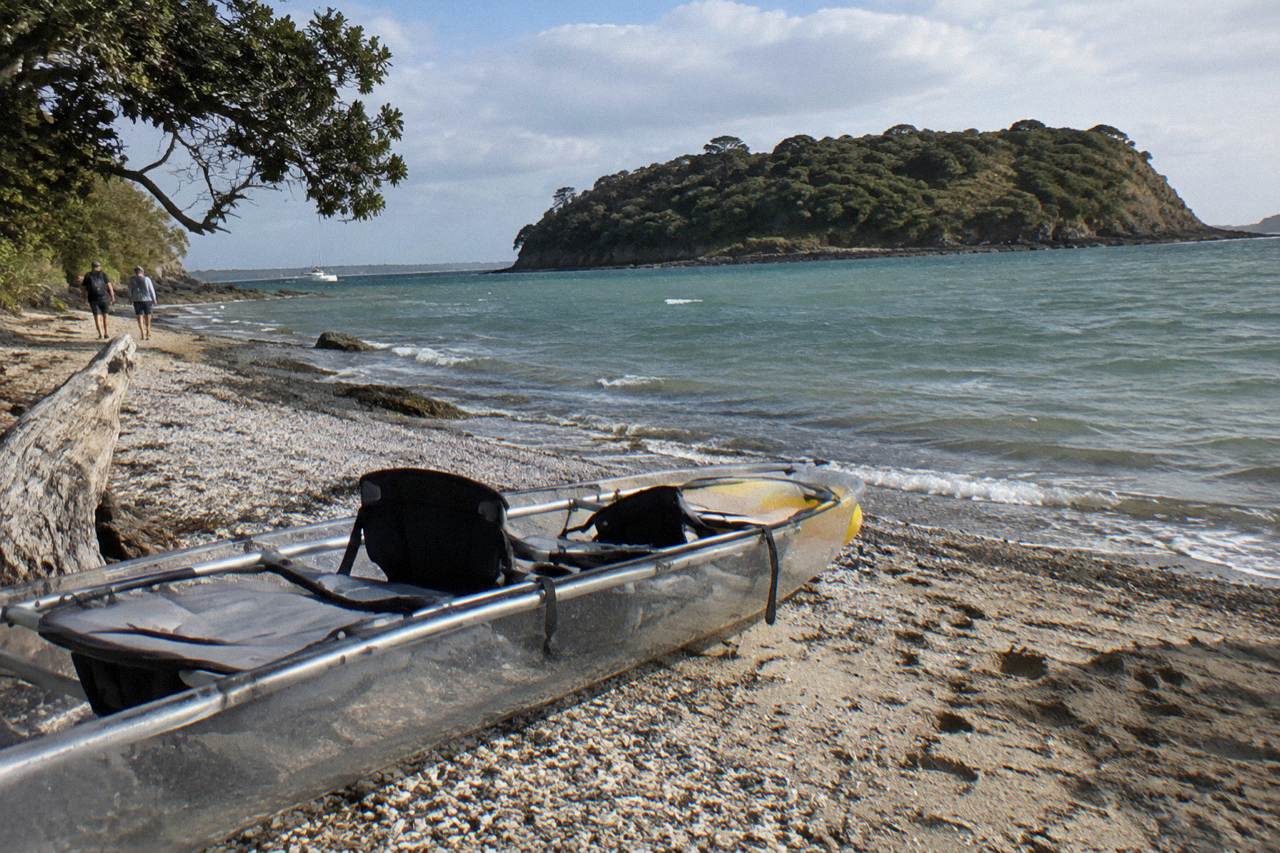
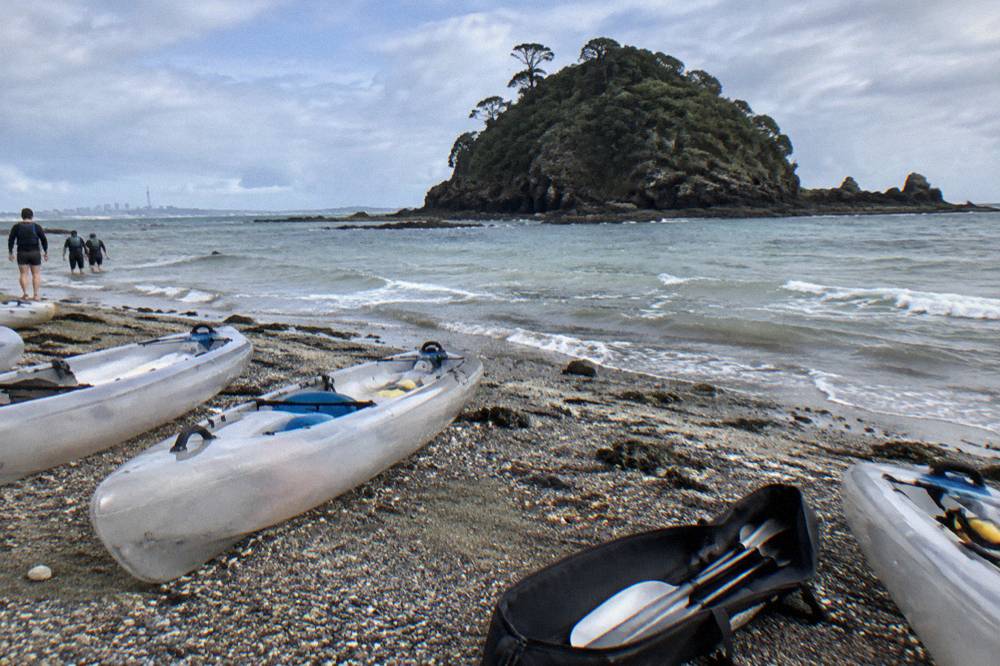
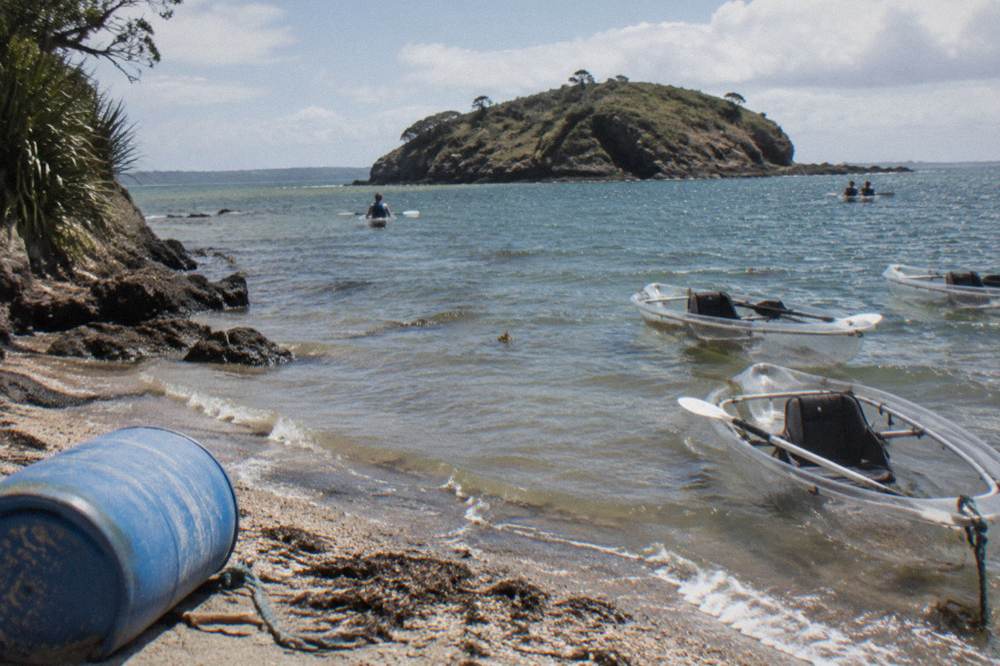
A clear kayak at Goat Island is a two-person double kayak with a transparent hull bottom, hired rather than guided, launched straight off the beach at 150 Goat Island Road, Leigh. It needs no ferry, no previous paddling experience and no swimming ability, and everything you sit above passes under the boat rather than past it. The operator, Clearyak NZ, supplies the kayak, paddles, lifejackets and a safety briefing with the hire.
The craft is a purpose-built double: two seats, one hull, and a window of transparent material running along the floor. You paddle it exactly as you would paddle any sit-inside double. The difference is what happens between strokes, when the water below is visible through the hull rather than hidden by it. Because the reserve extends 800 metres from shore and includes the island, the water you float over is protected water, and the fish that live there are accustomed to people.
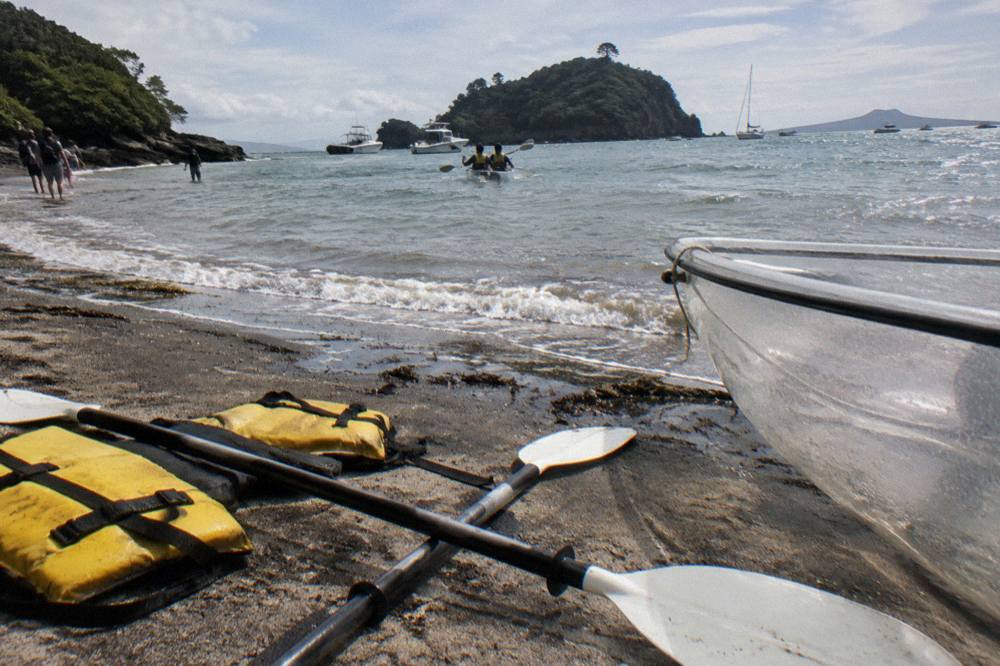
The launch is deliberately simple. You park at the Goat Island Road car park and walk down the hill to the beach, where the kayaks go straight into the sea. Public toilets and changing rooms sit at the car park, as the Department of Conservation notes for the reserve facilities. There is no pontoon, no boat transfer and no motor involved anywhere in the trip. That simplicity is the product: a self-paced window onto a protected near-shore reef, reached under your own paddle power.
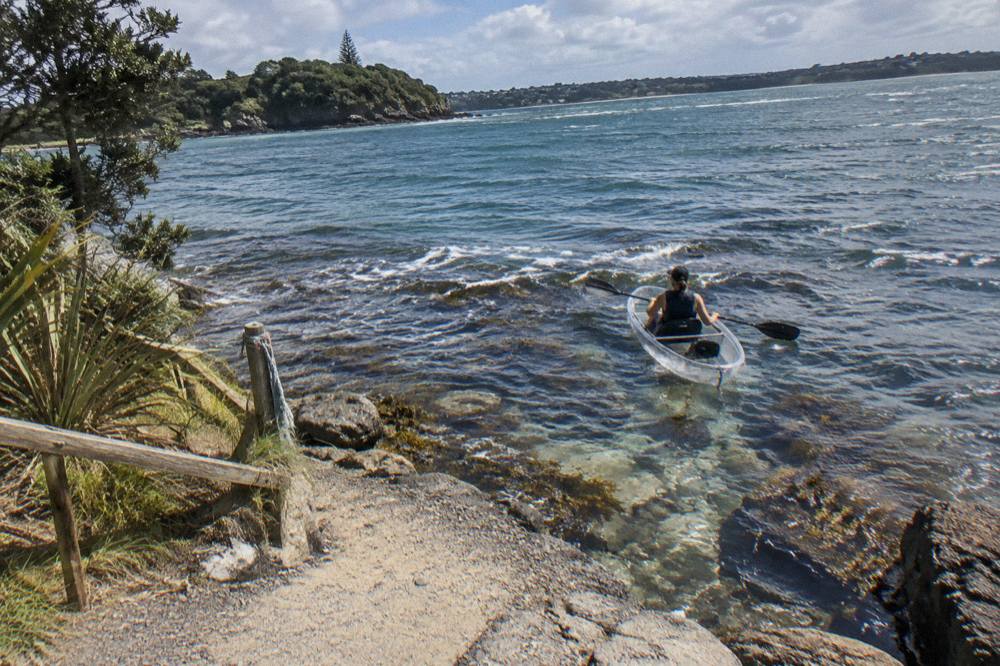
What the window shows depends entirely on the day. Sea conditions, light, swell and the movements of fish all vary, and no operator at the reserve promises what you will see through the hull. The Department of Conservation warns that inexperienced paddlers should take care with sea conditions and currents even inside the reserve, and its safety advice for the water is blunt: people have died at this marine reserve, there are no lifeguards, and it does not recommend getting in the water in east or north-east winds over 20 knots or swell over a metre. From a kayak, the same caution applies to judgement about going out at all.
Is A Clear Kayak The Same As A Glass Bottom Kayak?
In practice the two phrases describe the same thing at Goat Island: a kayak whose hull has a transparent panel or floor, so passengers look down through the boat into the water. The hire here is a double kayak with a clear bottom, listed as the Goat Island Marine Reserve 30 or 60-Min Clearyak Kayak Rental, rated 4.8 across 84 reviews, from $72.13 per double kayak for up to two people.
The word "glass" survives in search terms and in conversation, but no glass is involved. The kayak has a transparent bottom (operator FAQ); no glass is involved. Search for a glass bottom kayak Goat Island and the thing you can actually book is this Clearyak hire. That is worth stating plainly, because it shapes expectations: a kayak window sits centimetres above the surface, moves with the swell, and shows you the water in the same light a snorkeller sees it in, not the framed, stable view a cabin window gives.
A glass bottom boat, by contrast, is a powered vessel with a fixed viewing pane, and none is covered on this page because none appears among the tours covered here. The comparison that matters to a reader weighing the clear kayak is set out below: what each see-through concept does, and what the differences mean in practice.
| Clear-bottom double kayak (the hire at Goat Island) | Glass bottom boat (not covered here) | |
|---|---|---|
| Power | You and a paddle | Engine |
| Viewing pane | Transparent hull floor, at the waterline | Fixed pane set into a hull, above the waterline |
| Capacity | Two people per kayak | Larger groups per vessel |
| Pace | Yours, within the hire window | Set route and timetable |
| Noise | Paddle strokes only | Engine noise, which can move fish away |
| Covered on this page | Yes | No |
Two honest points finish the comparison. Second, being on the water rather than above it in a cabin changes what you notice: the kayak drifts with the swell, the fish pass close, and the boundary between boat and sea is thin. For many visitors that is the entire appeal.
If the self-hired window appeals but a guided day on the water appeals more, the reserve also sits inside a wider region of guided trips, and the pair of guided island tours listed above, from Army Bay and Maraetai respectively, are the natural step up. They are covered later in this guide, after the hire itself is laid out in full.
What Does The Goat Island Clearyak Hire Actually Include?
The hire includes the clear-bottom double kayak, paddles, lifejackets for both paddlers and a safety briefing, all from the launch point at 150 Goat Island Road, Leigh, for either 30 or 60 minutes, from $72.13 per double kayak for up to two people. Minimum age is 3 with an adult, maximum weight 100 kg per person. It is a rental, not a guided tour: no guide accompanies you.
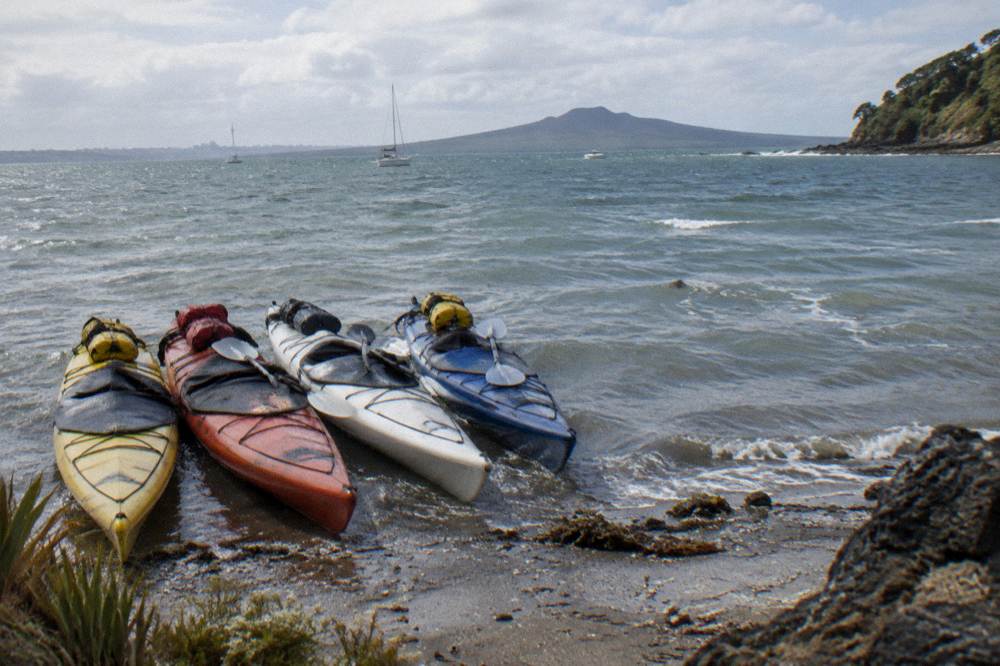
That last clause is the one readers most often miss. Of the fourteen kayak products covered on this site, thirteen are guided and exactly one is an unguided rental, and this is it. You carry the safety briefing, the lifejackets and the gear out onto the water on your own judgement, inside the hire window. For confident adults that freedom is the point. For nervous swimmers it is worth pausing over, even though the operator says no kayaking or swimming experience is needed and that beginners are welcome.
A few practicalities from the operator's own guidance are worth repeating. You may get wet to the knees getting in and out, so dress for it. Groups of ten or more hiring for an hour or longer get a 10 percent discount. In the December to February peak the operator suggests booking two to three days ahead. And the operator's weather policy is straightforward: if they cancel for weather, you get a full refund or a rebook. The hire listing also carries the booking page's free cancellation wording, a full refund up to 24 hours before the start.
One national rule now sits over everything on the water here. From 9 October 2026, Maritime NZ requires everyone on a recreational craft of six metres or less, kayaks included, to wear a properly fitted lifejacket while underway. The hire supplies lifejackets and requires them worn, which puts it on the right side of the rule before you leave the beach.
A fuller walk-through of the reserve's kayaking options, including what to bring and how the beach works on a busy day, is in the companion guide to kayaking at Goat Island, and the question of pairing a paddle with a swim is covered in combining a Goat Island kayak and snorkel. Neither changes the facts above; both fill in the surrounding day.
How Much Does A Clear Kayak At Goat Island Cost?
The price is from $72.13 per double kayak, which carries up to two people, for a 30 or 60 minute hire. That basis matters: it is not a per-person fare, and dividing it by two is your arithmetic, not a published per-person price. By duration, the choice is simply the half-hour or the hour; the listing offers both.
It is also not the cheapest paddle on this site, and this page will not call it that, because the per-person guided tours start lower: the cheapest per-person tour covered here is the Riverhead Tavern paddle at $62.48. The honest comparison for a pair is that a shared double window on the reserve sits in the same dollar zone as a short guided tour for one, while giving two people the boat. What you trade away is the guide, the tuition and the group structure that come with guided paddles.
| Item | Figure |
|---|---|
| Price | From $72.13 |
| Basis | Per double kayak, up to 2 people |
| Durations offered | 30 or 60 minutes |
| Rating | 4.8 across 84 reviews |
| Minimum age | 3 (with an adult) |
| Weight limit | 100 kg per person |
| Start point | 150 Goat Island Road, Leigh 0985 |
| Guide | No, this is a rental |
| Free cancellation | Full refund up to 24 hours before the start |
Budget for the day beyond the hire itself. The reserve is about an hour and a half's drive north of central Auckland, so fuel and a full day of your time belong in the plan. On parking, two current facts from the Department of Conservation: the upper car parks closed for repair, with the main car park and lower overflow staying open and the work expected to finish before December, and paid parking is aiming to be introduced in December 2026, with final pricing not yet released. No tariff figure is printed here because none has been confirmed.
For context, the price sits against a wide spread across Auckland kayak products: the median per-person price of the thirteen per-person tours covered here is $83.80, from $62.48 at the low end to $1,008.18 for the two-day Waiheke Island trip at the top. The full spread is laid out in the guide to Auckland kayak tour prices. Against that spread, a shared transparent double for an hour is a mid-range spend for two people.
Can Beginners Use A Clear Kayak At Goat Island?
Yes. The operator says no kayaking or swimming experience is needed and that beginners are welcome, the kayaks are stable doubles, and lifejackets are supplied and worn by everyone. The minimum age of 3 with an adult, the 100 kg per person weight limit and a sensible read of the sea state on the day are the only gates. Calm, clear days are the days to do it.
Beginner-friendly does not mean condition-free. The Department of Conservation's own advice for the reserve tells inexperienced paddlers to take care with sea conditions and currents, and the reserve is open water, not a pool. On a flat morning the double is forgiving and the window works; on a fresh east or north-east wind the same water is a different proposition, and the operator's weather-cancellation policy, a full refund or rebook, exists precisely for those days. Checking the MetService marine forecast before the drive north is the single most useful preparation.
Dress for the water temperature rather than the air temperature, which is Maritime NZ's standing advice for paddle craft, and expect wet knees at launch. Sun protection matters on the water even at Goat Island's latitude, and a dry bag for keys and phone keeps the walk back up the hill uncomplicated. None of this is demanding; it is the short checklist that separates a relaxed hour from a rushed one.
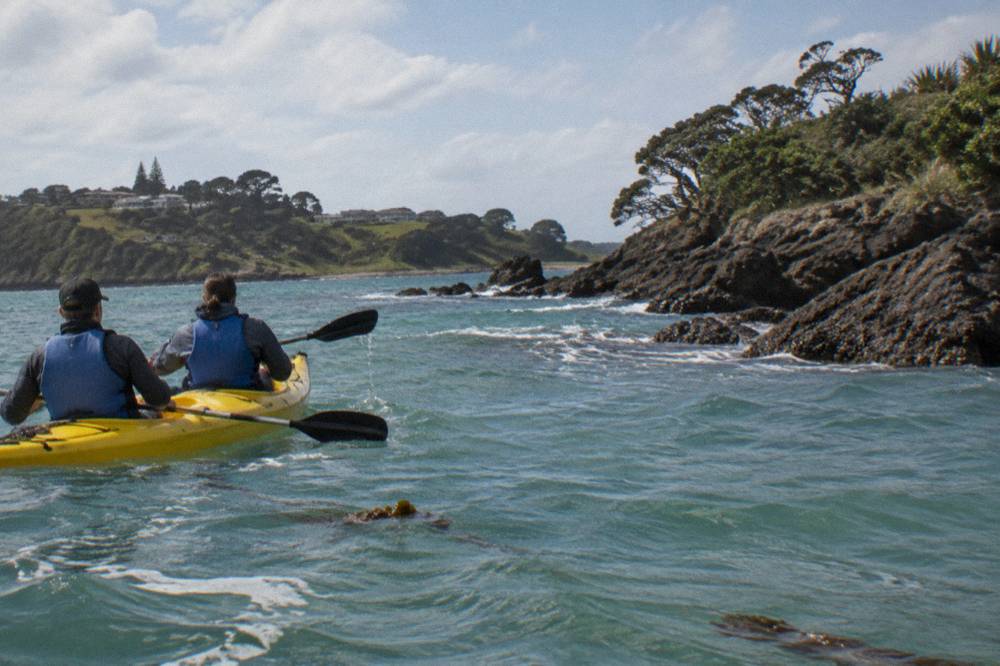
For readers who want the window treatment with more hand-holding, the honest answer is that no guided clear-kayak tour exists among the tours covered here. The guided alternatives are conventional sea kayaks with a guide alongside, and the closest in spirit, a guided island day trip on stable doubles, is discussed later in this guide. First, the rules of the water you would paddle over.
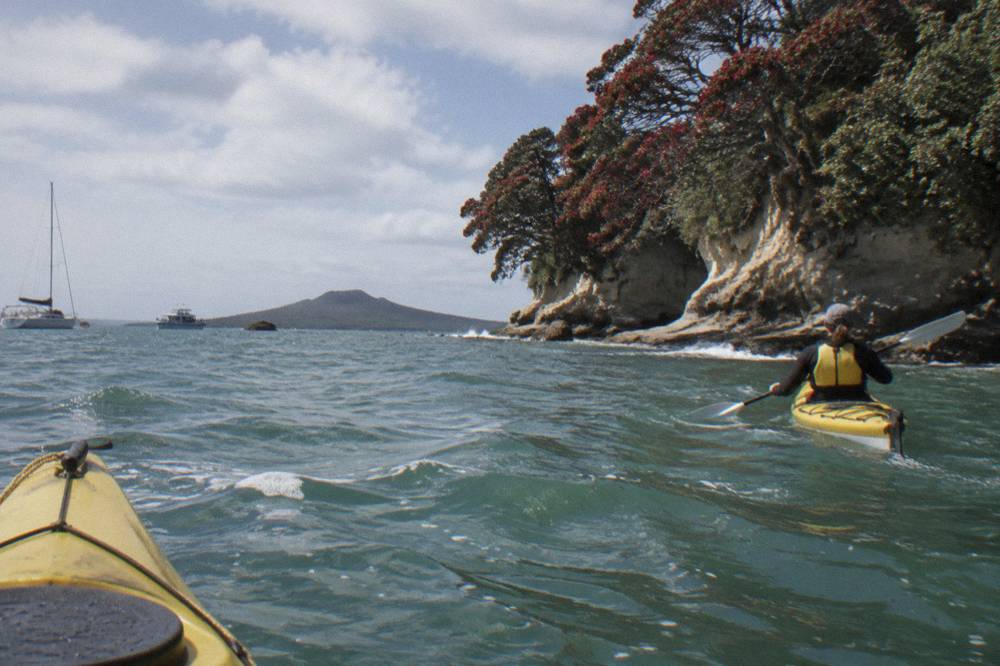
What Are The Rules In The Cape Rodney-Okakari Point Marine Reserve?
No fishing of any kind, no taking, disturbing or removing marine life or materials, no feeding fish, no dogs, and a 5 knot speed limit within 200 metres of shore or a dive flag, or within 50 metres of another boat or person. The reserve, New Zealand's first, was established in 1975, and its boundaries tripled in 2025 under the Hauraki Gulf marine protection legislation.
The reserve runs from Cape Rodney to Okakari Point and extends 800 metres from shore, taking in Te Hawere-a-Maki itself. The Department of Conservation's reserve page sets out the rules in full and names kayaking around the island as an allowed activity, with kayaks hired at Leigh and on Goat Island Road. For a paddler in a clear kayak the practical list is short, and it is worth memorising before launch.
| Rule | What it means from a kayak |
|---|---|
| No fishing or taking seafood | Not even by hand; nothing leaves the water |
| Do not disturb or remove marine life or materials | No chasing, touching or collecting, including shells and rocks |
| Do not feed fish | Feeding changes behaviour and is prohibited |
| 5 knots within 200 m of shore or a dive flag | Irrelevant under paddle power, but explains the boat traffic around you |
| No dogs | Pets stay home |
| Clean hull | Relevant to boat owners; the hire kayaks are managed by the operator |
The 2025 boundary expansion is the fresh fact most visitors arrive without. The reserve that was long a compact sliver of coast is now three times its earlier size under the Hauraki Gulf/Tikapa Moana Marine Protection Act regime, part of the wider protection of the gulf whose marine park covers more than 1.2 million hectares and more than 50 islands.
Is The Clear Kayak Hire Open Now?
It runs in the warmer season only, so check the operator website before you drive up. Peak season is December to February, when the operator suggests booking two to three days ahead. Before driving the hour and a half north, check the operator's website for current availability.
This is the single easiest mistake to make with this hire: treating it as an any-weekend option. The operator's own site carries the season status, and it is the live word on whether kayaks are on the beach. In the shoulder weeks either side of the season, the rest of the reserve still runs: the beach, the walking track and the water itself do not close with the hire, they simply lose the see-through boats.
Plan around the pattern rather than against it. If the visit is fixed for a cooler month, the clear kayak is off the table and the choice becomes the other ways of seeing the reserve, covered next, or a guided kayak trip elsewhere in the region. If the dates are flexible, the warmer season is when this product runs, busiest December to February, with the two-to-three-day advance booking the operator recommends in that peak.
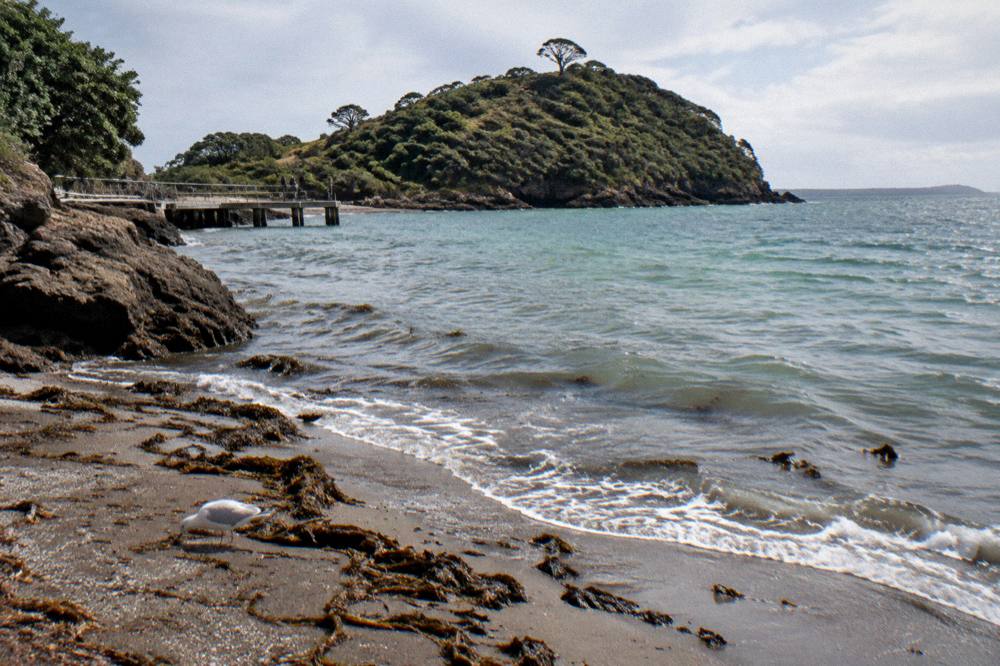
What Other Ways Can You See The Goat Island Reserve?
Three, besides the kayak: snorkelling from the beach, viewing from the shore and the short walkway around the headland, and swimming in the shallows. None of these is a tour covered here, and none carries a price on this page. They cost nothing beyond gear you bring, they are available whenever the reserve is, and they need the same caution about wind and swell that the Department of Conservation applies to all water activity at the reserve.
Snorkelling is the classic Goat Island experience, and on a calm day it puts you inside the water column rather than above it, which is a different and arguably richer view than any hull window gives. The shore option suits anyone who would rather stay dry: the beach itself looks straight onto the shallow reef, and the coastal walkway gives elevated views over the water on the northern side.
| Way of seeing the reserve | On or in the water | Covered as a tour here |
|---|---|---|
| Clear-bottom double kayak hire | On | Yes, from $72.13 per double kayak |
| Snorkelling from the beach | In | No |
| Shore viewing and the walkway | Neither | No |
| Guided kayak tours elsewhere in the region | On | Yes, per-person guided trips |
The comparison is genuinely a matter of appetite rather than quality. A swimmer sees more fish at closer range than a paddler; a paddler covers more reef and stays warm and dry; a shore visitor does neither but can do it in any weather the track allows. Families with very small children often end up mixing all three across a day, with the 30-minute hire option suiting short attention spans.
How Does The Clear Kayak Compare With Guided Island Kayak Tours?
The clear kayak is short, self-guided and per-boat; the guided island tours are longer, per-person and led. The Tiritiri Matangi sea kayak tour runs 6 to 7 hours from Army Bay from $150.52 per person, minimum age 13, on stable doubles with guides. The 2-Day Waiheke Island sea kayak tour from Maraetai, from $1,008.18 per person, is a two-day camping trip. They serve different travellers entirely. If that overnight camping option sounds tempting, the guide to Waiheke kayak tours and hire spells out what the price covers and which day-paddle alternatives exist.
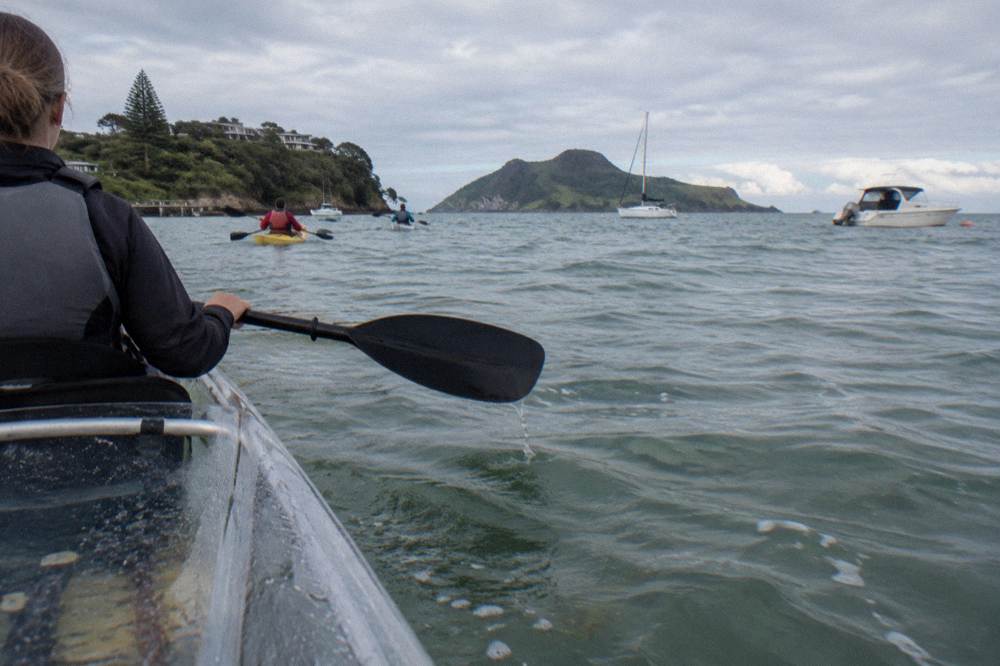
The Tiritiri Matangi day trip, run by Canoe & Kayak Adventures from Army Bay Beach on the Whangaparaoa Peninsula, is the natural upgrade for someone who enjoys the Goat Island water and wants a bigger island day. Tiritiri Matangi is a predator-free Scientific Reserve where kokako and takahe live, four kilometres off the peninsula, and the guided tour lands on the island for free time. It asks for moderate fitness, and the Department of Conservation is clear that independent kayaking there is for intermediate paddlers because the channel can get rough and windy; going with a guide is how non-experts do it. It carries three reviews so far, too few for a star rating.
The two-day Waiheke trip from Maraetai is a different category again: two days of paddling with luxury camping accommodation and dinner included, at from $1,008.18 per person, a new listing with no reviews yet. It is the only Waiheke kayak product covered on this site, and it is a camping expedition rather than a day paddle. For a reader whose mental image of "kayak tour" is a two-hour harbour jaunt, the price gap between that image and this trip is the first thing to absorb.
Between the self-hired window and the big island days sits a middle option worth knowing: the guided volcano paddles from St Heliers. The Motukorea half-day, four hours from $110.76 per person, rated 5.0 across 38 reviews, the highest rating of any tour here with more than twenty reviews, paddles to Browns Island with a guided summit walk included, morning tea and a free pre-booked shuttle from the Auckland War Memorial Museum atrium. Minimum age 12, group size capped at eight.
The clean way to hold all of this in mind: hire the clear kayak for the window, book the Motukorea half-day for a first guided island experience, and treat the Tiritiri and Waiheke trips as the full-day and overnight commitments they are. Auckland Kayak Tours covers all four side by side, and the differences in basis, per person against per double kayak, are exactly where careless comparison goes wrong.
Common Questions About Clear Kayaks At Goat Island
Is A Clear Kayak The Same As A Glass Bottom Boat?
No. The clear kayak at Goat Island is a paddle-powered double kayak with a transparent hull floor, hired per boat for up to two people. A glass bottom boat is a powered vessel with a fixed viewing pane, and no glass bottom boat is covered among the tours on this page.
How Much Does The Clear Kayak At Goat Island Cost?
From $72.13 per double kayak, carrying up to two people, for a choice of 30 or 60 minutes. It is not a per-person price and it is not the cheapest tour covered on this site; the cheapest per-person guided tour here is $62.48.
Do You Need Experience To Use A Clear Kayak?
No. The operator says no kayaking or swimming experience is needed and that beginners are welcome, the kayaks are stable doubles, and lifejackets are supplied and worn. The Department of Conservation still advises inexperienced paddlers to take care with sea conditions and currents at the reserve.
Is The Clear Kayak Hire Open All Year?
No. It runs in the warmer season, with December to February the peak. The operator runs in the warmer season only, so check the operator's website before driving up.
Can Children Go In The Clear Kayak?
Yes, from age 3, with an adult. The weight limit is 100 kg per person, and the price covers the double kayak for up to two people rather than each paddler separately.
Can You See Fish From A Clear Kayak At Goat Island?
Sometimes, and never guaranteed. The kayak paddles over a protected reef inside New Zealand's first marine reserve, where fish are accustomed to people, but sea state, light and the movements of fish all vary day to day. No operator at the reserve promises what the window will show.