Goat Island Kayak And Snorkel: Combining Both In One Visit
Goat Island is one of the easiest places near Auckland where you can paddle a kayak over a protected reef and snorkel the same water on the same day, provided you know the reserve rules and the hire options.
Short answer
Yes. Goat Island Marine Reserve sits about 1.5 hours' drive north of Auckland near Leigh, and kayaking and snorkelling are both allowed there. The only kayak product on this site is a clear-bottom double kayak hire from $72.13 per kayak for up to two people, rated 4.8 across 84 reviews. Snorkel gear is not listed with it.
Goat Island, known to mana whenua as Te Hawere-a-Maki, is the anchor of the Cape Rodney-Okakari Point Marine Reserve, New Zealand's first marine reserve, established in 1975. Its boundaries tripled in 2025 under the Hauraki Gulf/Tikapa Moana Marine Protection Act, and the reserve now draws more than 300,000 visitors a year to a stretch of coast about 1.5 hours' drive north of Auckland. Snorkellers and kayakers share the same protected water, which makes it one of the few places near the city where you can genuinely do both in a single day trip.
The catch is that almost nothing at this reserve is served to you on a plate. There are no lifeguards, the Department of Conservation does not recommend swimming or snorkelling in east or north-east winds over 20 knots or swell over a metre, and the only kayak product covered here is an unguided hire: a clear-bottom double kayak launched from the beach, with no snorkel equipment included. This guide sets out what combining the two actually looks like, what the rules permit, and what to check before you drive.
Can You Do Goat Island Kayaking And Snorkelling On The Same Day?
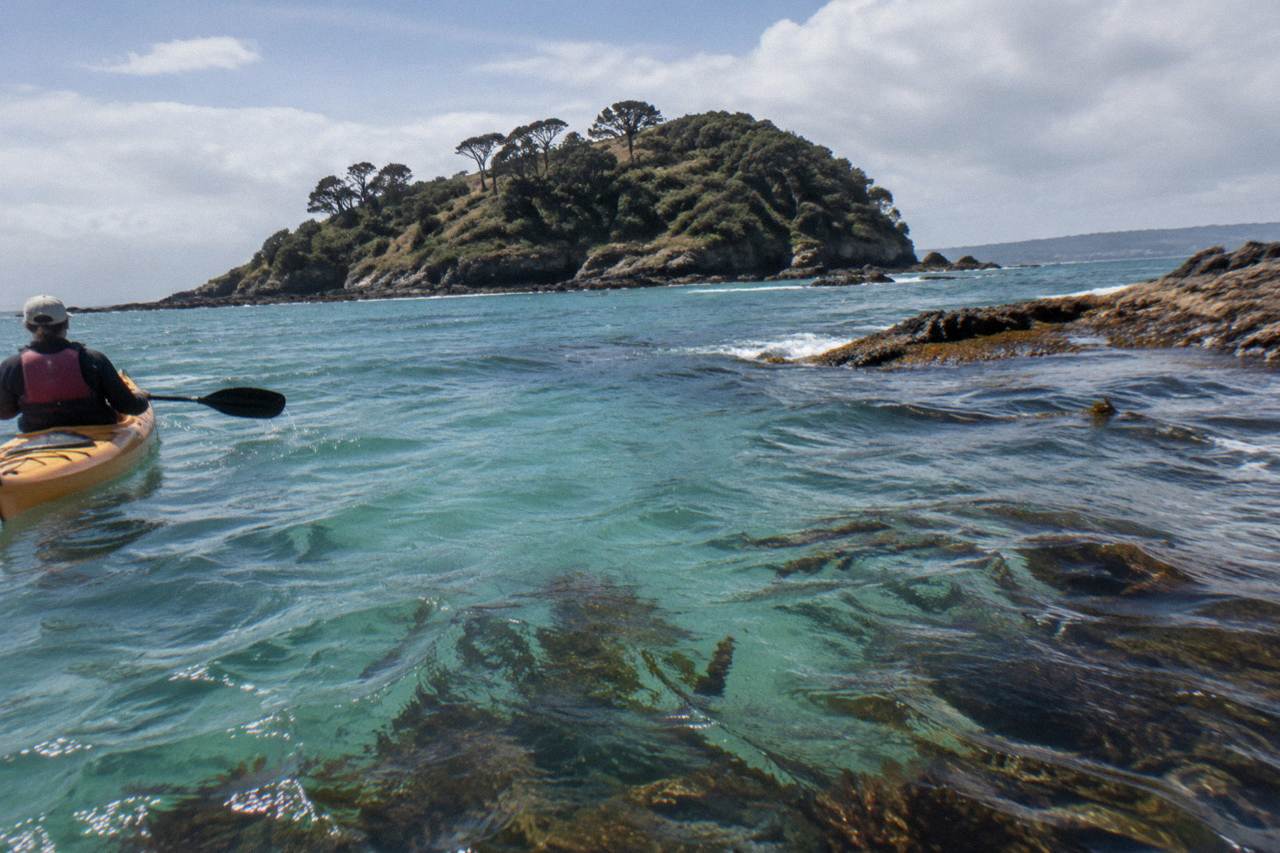
Yes, and it is the natural way to do it. The marine reserve explicitly allows both: you can kayak around Te Hawere-a-Maki, the island 150 m offshore, and snorkel the same water, provided you do not take, disturb or remove any marine life. One clear kayak hire covers the paddling side from the beach at 150 Goat Island Road, Leigh, and the sheltered bay works for a swim before or after, weather permitting.
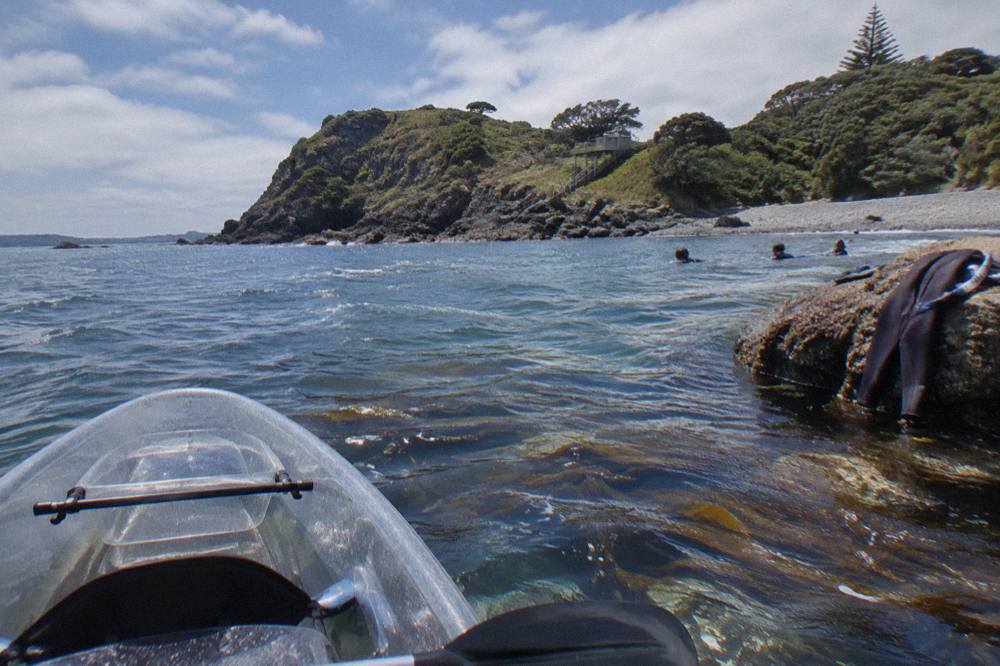
The practical shape of the day is simple. You drive to Leigh, park, walk down the hill to the beach, and everything happens from there: the kayak launch, the snorkelling, the walk back up. Public toilets and changing rooms sit at the car park, which matters more than it sounds when you are swapping between a wet kayak seat and a wetsuit. There is no ferry and no boat transfer involved anywhere in the visit.
The order you do things in is mostly a wind and crowd question. On a calm morning the water is usually at its clearest, so snorkelling first and paddling second, or alternating in short bursts, is the pattern most visitors settle into. On a busy summer day the beach and the water near the shore get crowded, and paddling out toward the island gives you room that the swim zone does not.
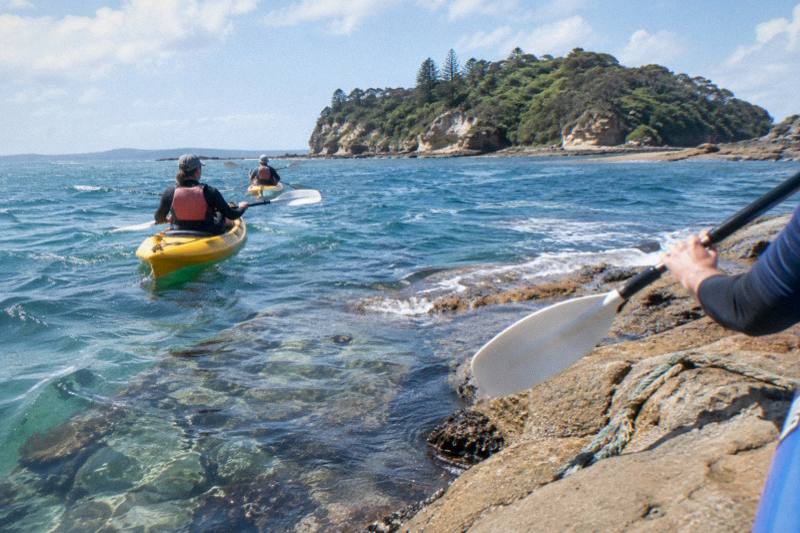
The reserve's protection is what makes the combination worth the drive. DOC's rules for kayakers are straightforward: kayaking is allowed, but you must not take, kill, disturb or remove marine life or materials, you must not feed fish, and you should not exceed 5 knots within 200 m of shore or a dive flag, or within 50 m of another boat or person.
| Activity at the reserve | Allowed | Key condition |
|---|---|---|
| Kayaking around Te Hawere-a-Maki | Yes | 5 knot limit near shore, divers and boats |
| Snorkelling and swimming | Yes | Not advised in east or north-east winds over 20 knots or swell over a metre |
| Fishing of any kind | No | Covers the whole reserve, 800 m from shore |
| Taking or disturbing marine life | No | Includes shells, rocks and kelp |
| Feeding fish | No | Changes natural behaviour, explicitly banned |
| Dogs | No | Not permitted in the reserve |
A note on expectations: nothing in the water is guaranteed. What you see snorkelling or paddling varies with the day, the season, the swell and the light, and it is more honest to plan for "a protected reef, sometimes busy with fish" than for any particular species. The kayak itself, though, is one of the better ways to read the water before you commit to getting in it.
What Kayak Options Exist At Goat Island?
Exactly one kayak product is covered here: the Goat Island Marine Reserve 30 or 60-Min Clearyak Kayak Rental, an unguided hire of a clear-bottom double kayak from $72.13 per kayak, up to two people, rated 4.8 across 84 reviews. It is a rental, not a tour: no guide comes with it, and the price includes the kayak, lifejacket, paddle and a safety briefing. The 30 and 60 minute options are on the booking page. Before booking, a look at whether the clear kayak at Goat Island justifies its price weighs what a transparent hull actually reveals and who the hire suits best.
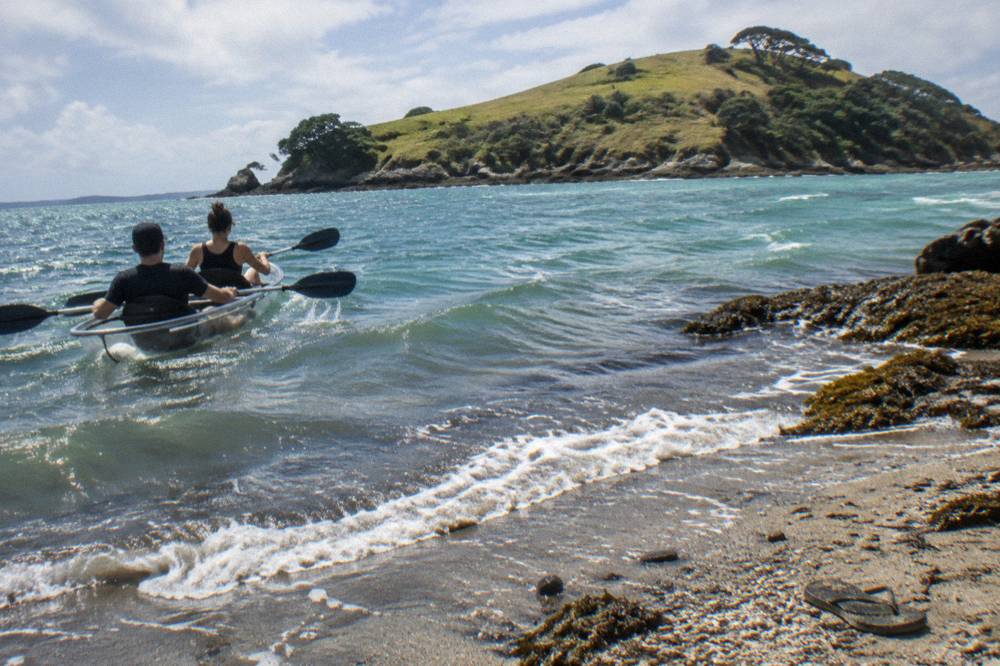
Clearyak NZ runs the hire from Goat Island Road, Leigh, and the transparent bottom is the whole point: from the seat you can see straight down through the hull to the reef. It is a double kayak, so you are paddling as a pair, and the operator's FAQ is clear that no kayaking or swimming experience is needed. Beginners are explicitly welcome. The weight limit is 100 kg per person, the minimum age is 3, and lifejackets are worn by everyone on the water. Expect to get wet to the knees getting in and out.
Two planning facts matter more than the rest. First, the hire runs in the warmer season only; check the operator website before you drive up, because availability outside the warmer months is not a given. Second, peak season is December to February, and the operator advises booking 2 to 3 days ahead in those weeks. Groups of 10 or more hiring for an hour or longer get a 10 percent discount.
If the unguided format gives you pause, it is worth knowing what guided paddling near Auckland looks like for comparison. Guided tours elsewhere on this site cover Rangitoto, Motukorea, the city waterfront and Tiritiri Matangi, but at Goat Island itself the clear kayak hire is the product on offer, and it stands or falls on the simplicity of the bay rather than on a guide's local knowledge. For a wider picture of what guided trips involve, see sea kayaking in Auckland and the longer Goat Island kayak overview.
Is Snorkelling From The Clear Kayak Practical?
Not as a package, because the hire lists no snorkel gear. The kayak gets you over the reef; the snorkelling is a separate activity you organise yourself with your own equipment. What the two share is the water: the reef you drift over in the kayak is the same reef you swim above, and many visitors alternate short paddles with swims in the bay nearest the beach.
This is the point where a lot of online copy goes fuzzy, so it pays to be precise. The Clearyak rental price covers the kayak, lifejacket, paddle and safety briefing. Snorkel equipment is not mentioned as part of this rental. If you want to snorkel, you bring your own mask, snorkel and fins, or you source them in the region before you arrive. Plan on that basis and the day works; assume gear on the beach and you may be disappointed.
The clear bottom does change how the two activities stack up, though. Snorkelling at Goat Island is close-in work: the best of the reef and the fish traffic is near the shore and around the island 150 m offshore, and the kayak gives you a slow, dry way to read the water before you swim. Paddle out, look down through the hull, mark where the fish are holding, come back in and swim there. On a calm day it is an efficient loop. In chop, the hull view goes blurry and the swim is poor anyway, which conveniently gives you the same answer for both.
Conditions decide everything, and DOC frames them the same way for kayakers and snorkellers. Inexperienced paddlers should take care with sea conditions and currents, and the swimming guidance is the same weather logic from the other side: east or north-east winds over 20 knots, or swell over a metre, mean the water is not inviting for anyone. Checking the MetService marine forecast the morning you drive up is the single most useful thing you can do, alongside the tide, since shallow reef and a low tide can shift where the fish and the paddling line are.
How Much Does A Goat Island Kayak And Snorkel Day Cost?
Budget from $72.13 for the kayak itself, the 30 or 60 minute clear kayak hire priced per double kayak for up to two people, plus your own snorkel gear and your transport. No guided kayak tour at this reserve is covered here, so the total is hire plus fuel plus food, and nothing else is sold as part of the paddle.
| Cost item | Figure | Basis |
|---|---|---|
| Clear kayak hire, 30 or 60 minutes | From $72.13 | Per double kayak, up to 2 people |
| Group discount (10 or more, hire of an hour or longer) | 10% off | Operator discount |
| Snorkel gear | Bring your own | Not included in the hire |
| Guided kayak tour at Goat Island | Not offered | The hire is unguided |
| Parking | Paid parking aiming to be introduced in December 2026 | No tariff published yet |
Two things keep the price honest. The per-kayak basis means $72.13 covers two people, not one, which is why the hire is not described here as the cheapest kayak option per person among Auckland tours: it is an unguided rental and not comparable to a guided tour. And because it is a short hire, 30 or 60 minutes, the rest of your day at the reserve costs you nothing but time: swimming, walking the beach and watching the reef from the shore are all free.
For context, the guided tours covered on this site run from $62.48 per person for the Riverhead Tavern paddle up to $1,008.18 per person for the 2-day Waiheke Island trip, with a median of $83.80 across the per-person tours. A common pairing for visitors who want both an island day and a guided experience is the Tiritiri Matangi Sea Kayak Tour, from $150.52 per person for 6 to 7 hours in double kayaks from Army Bay, Whangaparaoa, a guided trip with gear, tuition and guides included, though only 3 reviews so far. The full spread is in the Auckland kayak tour prices guide.
Because the hire is a rental rather than a tour, the cancellation terms are worth a glance. The booking page offers free cancellation up to 24 hours before the start for a full refund, and if the operator cancels for weather you get a full refund or a rebook. The weather clause matters at a beach launch: the operator will not put clear kayaks onto a reef in conditions that make the hire pointless or unsafe.
What Is It Like To Paddle Over The Reef?
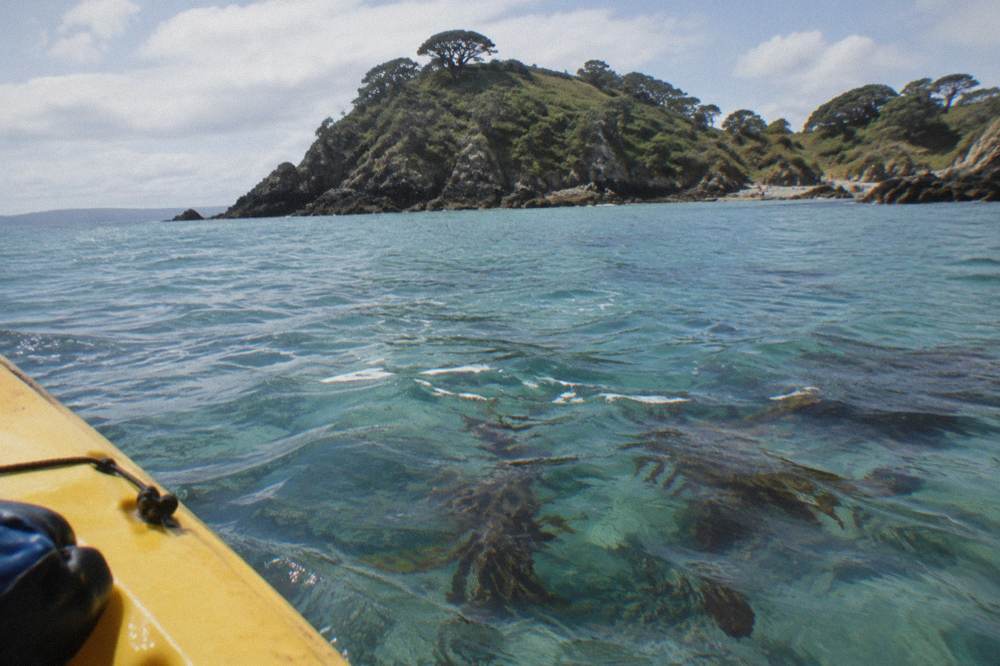
The experience is a slow drift over shallow protected water with the reef directly underfoot through the transparent hull. The paddle out toward Te Hawere-a-Maki, the island 150 m offshore, is short, the bay is sheltered by the headlands, and fish sometimes pass under the kayak in numbers you would otherwise need a mask to see. None of that is guaranteed on any given day.
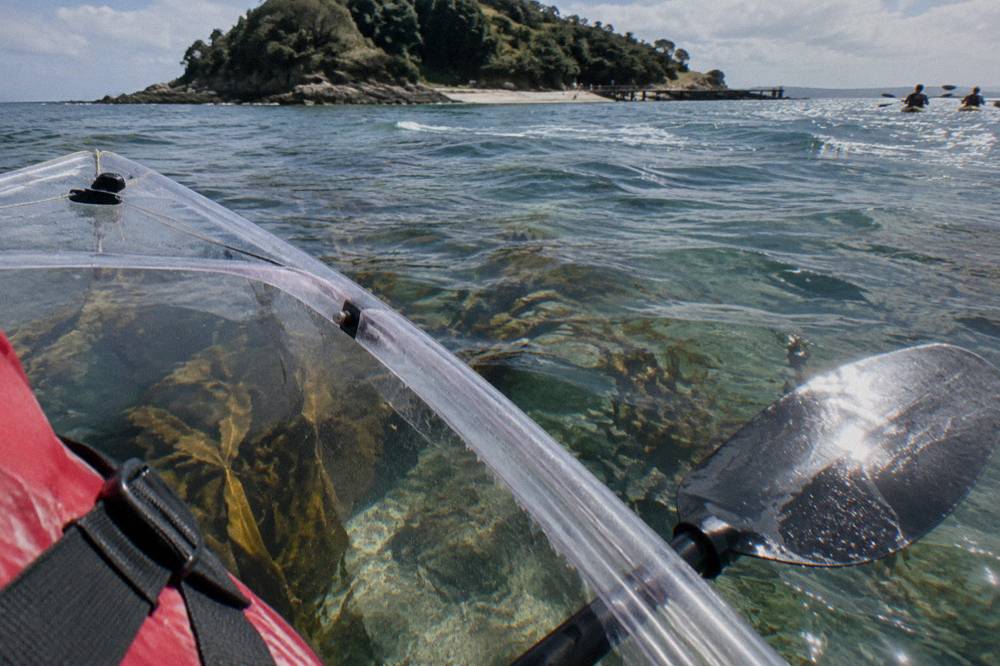
Honesty first: the sea decides. On a calm, clear day the hull acts like a moving viewing window, and the combination of sun angle and clear water does the work. On an overcast or windy day the view flattens, the surface chops up, and the paddle becomes a pleasant short float rather than an aquarium.
The double format shapes the trip too. One paddler steers, the other watches the water, and with a child aboard (the minimum age is 3) the front seat becomes the best wildlife viewing platform on the coast for small people who cannot snorkel far. The 100 kg per person weight limit and the basic reality that you may get wet to the knees are the only real physical constraints. No experience is needed, and the operator says beginners are "totally okay".
Snorkelling from the beach covers different water. The kayak range is the bay and the line to the island; the snorkel range is the near-shore reef where the fish concentrate. Doing both in one visit means you see the reserve from two heights: the mapped, wind-in-your-face version from the seat, and the immersed, close-focus version with a mask on.
For comparison, the guided island trips elsewhere on this site cover much bigger water. The question of which format suits you is covered in clear kayak versus glass bottom options at Goat Island, and the wider comparison between a marine reserve day and an Auckland guided paddle is worth reading before you commit to the drive.
When Should You Go And What Should You Check First?
Go in the warmer months, and check two things before you drive: the operator's website and the car park status. Clearyak runs in the warmer season only, and DOC has the upper car parks closing for repair, with the main car park and lower overflow staying open. Peak season is December to February, when booking 2 to 3 days ahead is advised.
The season question is not cosmetic. The clear kayak hire runs in the warmer months only, so a winter day trip for the kayak specifically can end in a swim and nothing else. Snorkelling follows the same logic from the comfort side: the sea is coolest in winter and warmest in late summer, and no wetsuit makes a winter swim at Goat Island a short one. Daylight matters too, with sunset late in midsummer and early in midwinter.
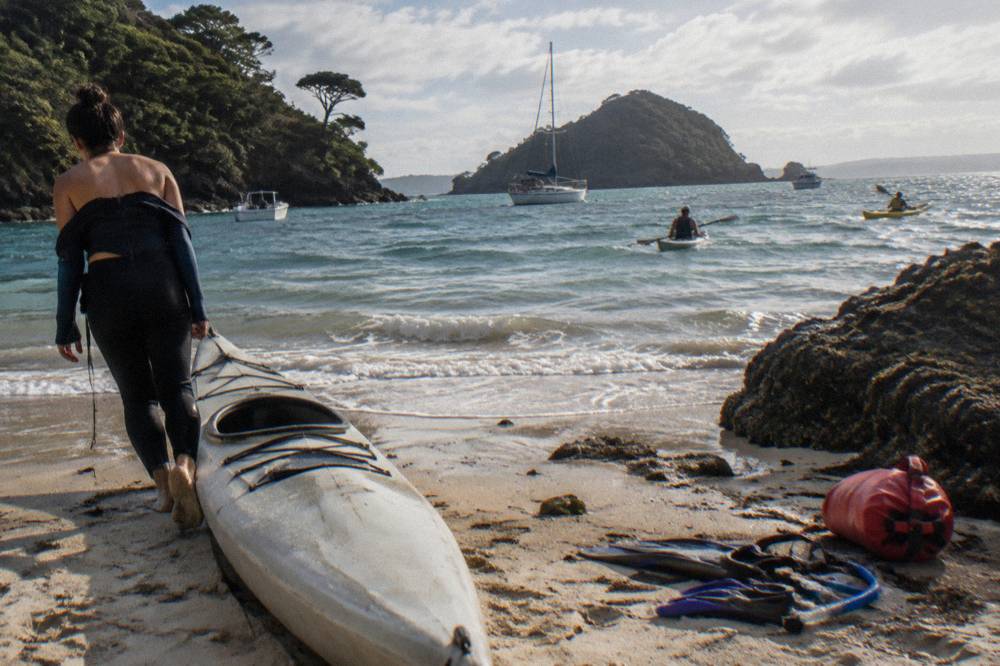
Parking is the other moving part. DOC has said paid parking is aiming to be introduced in December 2026, with pricing to be announced, and the upper car park repairs mean the layout on arrival may differ from what maps show. Arriving early in peak season is the standard advice for both a park and a patch of reef to yourself; by late morning on a fine summer day the reserve's 300,000-plus annual visitors make themselves felt.
| Check before you go | Where to check | Why |
|---|---|---|
| Kayak availability and season | Operator website and booking page | Hire closed outside the warmer season |
| Wind and swell forecast | MetService marine forecast | Not advised over 20 knots east or north-east, or swell over a metre |
| Car park status | DOC Goat Island page | Upper car parks in repair |
| Booking lead time in Dec to Feb | Booking page, 2 to 3 days ahead | Peak season books out |
| Tide | LINZ tide table | Shallow reef shifts the paddling and swimming line |
The lifejacket rule is now national law rather than operator preference: from 9 October 2026, everyone on a recreational craft of six metres or less, kayaks included, must wear a properly fitted lifejacket while underway. The hire includes lifejackets and the briefing covers their use, so this is a rule that takes care of itself at Goat Island, but it applies to any private kayak you bring as well.
What Should You Bring For The Day?
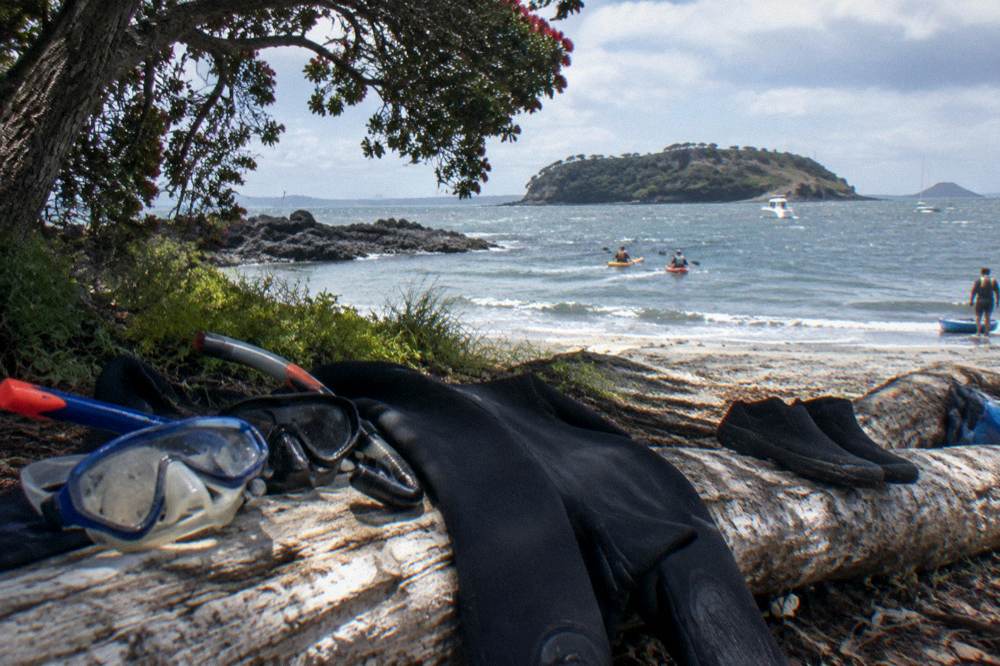
Bring your own snorkel gear, a wetsuit if you feel the cold, sun protection, water and food, and sturdy footwear for the walk down the hill. The hire supplies kayak, lifejacket and paddle only.
The list is short but each item earns its place. Sun protection matters more on the water than on land, and the reflection off a calm bay burns people who were careful all morning. Footwear matters because the beach launch and the rocky reef edges are hard on bare feet, and the walk back up from the beach to the car park ends the day on a slope.
For the snorkel side, the standard kit is a mask, snorkel and fins that fit, plus a wetsuit for anything outside high summer. The reserve's swimming safety note is blunt, and worth repeating in your planning: people have died at this marine reserve, there are no lifeguards, and DOC does not recommend swimming, snorkelling or diving in east or north-east winds over 20 knots or swell over a metre. Swim with a buddy, stay close to shore, and treat the kayak as your viewing platform rather than an open-water vessel.
| Item | Supplied with the hire | Bring your own |
|---|---|---|
| Clear double kayak | Yes | No |
| Lifejacket | Yes | No |
| Paddle | Yes | No |
| Safety briefing | Yes | No |
| Snorkel, mask, fins | No | Yes |
| Wetsuit | No | Yes, outside high summer |
| Food and water | No | Yes, take rubbish out |
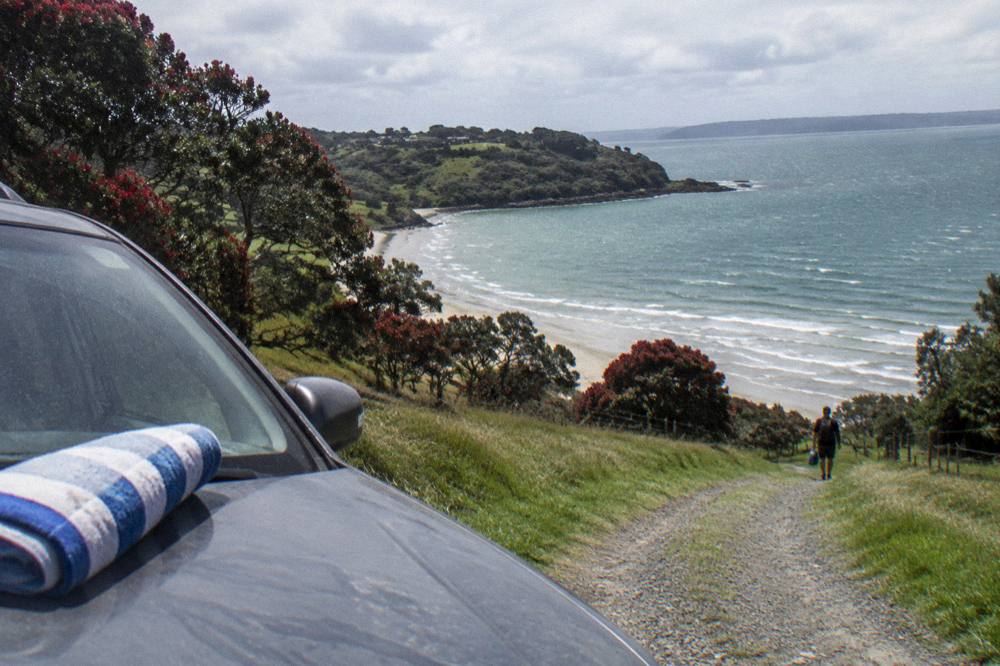
| Towel and change of clothes | No | Yes, changing rooms at the car park |
One last comparison point for readers weighing Goat Island against a guided day elsewhere. The reserve experience is self-directed: you are the guide, the pace-setter and the safety officer, and the reward is freedom on a small, protected patch of coast. A guided trip, whether the Tiritiri Matangi day or the volcano paddles from St Heliers, hands those jobs to someone else in exchange for a schedule and a group. The clearest write-up of that trade-off for families is in Auckland kayak tours with kids.
The middle of the market is worth a look too. The most reviewed paddle on this site is the Auckland: Night Kayak Tour in Glowing Bioluminescent Waters, 4.9 across 327 reviews, from $64.03 per person, a 1.5 to 2 hour guided evening trip that pairs naturally with a daytime Goat Island visit for anyone building two water days into one Auckland stay. Bioluminescence is never guaranteed, and the glow depends on season and conditions, which the operator states plainly.
Common Questions About Goat Island Kayak And Snorkel
Can You Kayak And Snorkel At Goat Island On The Same Day?
Yes. Both are allowed in the Cape Rodney-Okakari Point Marine Reserve. The clear kayak hire runs from the beach at Goat Island Road, Leigh, and snorkelling happens from the same bay, weather permitting. Bring your own snorkel gear, since the hire includes kayak, lifejacket and paddle only.
Does The Goat Island Clear Kayak Hire Include Snorkelling Gear?
No. The price of from $72.13 per double kayak, up to two people, covers the transparent kayak, lifejackets, paddles and a safety briefing. Any mask, snorkel or fins are your own equipment.
Is The Goat Island Clear Kayak Hire Suitable For Beginners?
Yes. The operator says no kayaking or swimming experience is needed and that beginners are totally okay. The kayaks are stable doubles, the minimum age is 3, and the weight limit is 100 kg per person. Lifejackets are worn by everyone.
When Is The Goat Island Kayak Hire Open?
It runs in the warmer season, with peak season December to February when booking 2 to 3 days ahead is advised. Clearyak runs in the warmer season only, so check the operator website before driving to Leigh.
Is It Safe To Snorkel At Goat Island?
Snorkelling is allowed and popular, but there are no lifeguards and DOC warns that people have died at this marine reserve. DOC does not recommend swimming or snorkelling in east or north-east winds over 20 knots or swell over a metre. Swim with a buddy and stay close to shore.
How Far Is Goat Island From Auckland?
About 1.5 hours' drive north of Auckland, near Leigh. Allow extra time in peak season for parking: DOC's upper car parks are closing for repair, with the main car park and lower overflow staying open, and paid parking is aiming to be introduced in December 2026.
The reserve is a rare thing, a fully protected piece of coast an easy drive from a big city, and combining the kayak and the snorkel is simply the most efficient way to see it from every angle. For everything else on the water around Auckland, from volcano crossings to harbour nights, start with Auckland Kayak Tours.