When To Kayak In Auckland: Season By Season
Choosing a date matters as much as choosing a tour. Here is how Auckland's daylight, seasonality and weather windows shape each type of paddle, from Rangitoto crossings to night tours in glowing water.
Short answer
Auckland kayak tours run across the calendar, but the experiences differ sharply by season. Summer brings long evenings and warm-water paddles; one operator reports bioluminescence is sometimes seen October to April, never guaranteed. Winter tours still run in sheltered spots, with early sunsets. The median guided tour price is $83.80 per person.
Auckland sits far enough from the equator that its daylight swings from about 14 and a half hours at midsummer to under 9 and a half hours at midwinter. That single fact shapes almost every kayak decision in the city: whether a sunset paddle begins in bright evening light or near dark, whether a night tour happens in warm dusk or full dark, and whether a six-and-a-half-hour Rangitoto tour feels like a long summer day or a race against early evening. This guide walks through the seasons, the daylight mathematics and the weather realities, so a reader can pick a date with clear eyes rather than a guess.
The 14 tours covered here span four operators and five start points around the region, from St Heliers in the east to Army Bay on the Whangaparaoa Peninsula and Leigh in the north. Thirteen of the 14 are guided; the Goat Island clear kayak hire, from $72.13 per double kayak for up to two people, is the one unguided rental. Prices below are USD "from" prices exactly as each booking page states them, and none of the tours offers hotel pickup, so a date choice always includes a drive to a boat ramp.
What Is The Best Season For Kayaking In Auckland?
There is no single best season, because the tours themselves change with the calendar. The long evenings of December to February suit the 6 hour 30 minute Rangitoto crossings and sunset paddles, while the warmer months of October to April are when one operator reports bioluminescence is sometimes seen. Winter tours still run, mostly on sheltered city and harbour paddles, with early sunsets.
Rather than ranking months, it helps to match the season to the type of paddle. The table below groups the tours here by type and notes what each one asks of the calendar.
| Tour type | Tours | What the calendar decides |
|---|---|---|
| Rangitoto Island crossings | Sunset kayak tour, Day Sea Kayak Tour | Long total duration of 6 hours 30 minutes each; both include the 7 km return summit walk, so daylight and evening warmth matter |
| Volcano island half-days | Motukorea / Browns Island tours (2) | 4 hours each; Auckland Sea Kayaks paddles up to 45 minutes at a stretch and walks the summit, while the Social Nature Movement listing says about 45 to 60 minutes each way |
| Night and bioluminescence paddles | Night Kayak Tour in Glowing Bioluminescent Waters, Bioluminescence Kayak Tour Est. 1994, City Lights Night Kayaking | Darkness is required, so start times shift with sunset; glow sightings are never guaranteed |
| Harbour city and pub paddles | City Scenes, Coastal Brewery, Riverhead Tavern, Hallertau Clevedon | Shorter, 2 to 5 hours, on more sheltered water; the most flexible in cooler months |
| Island and marine reserve trips | Tiritiri Matangi, 2-Day Waiheke, Goat Island Clearyak hire | The Clearyak hire runs in the warmer season only |
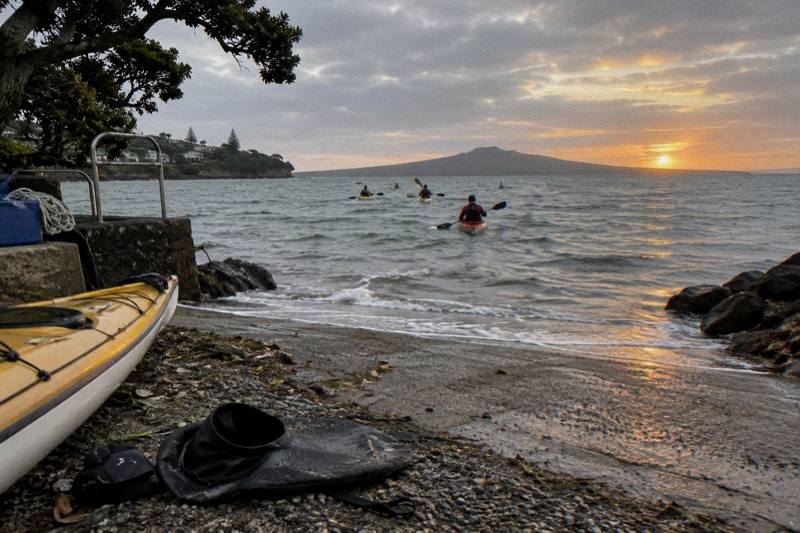
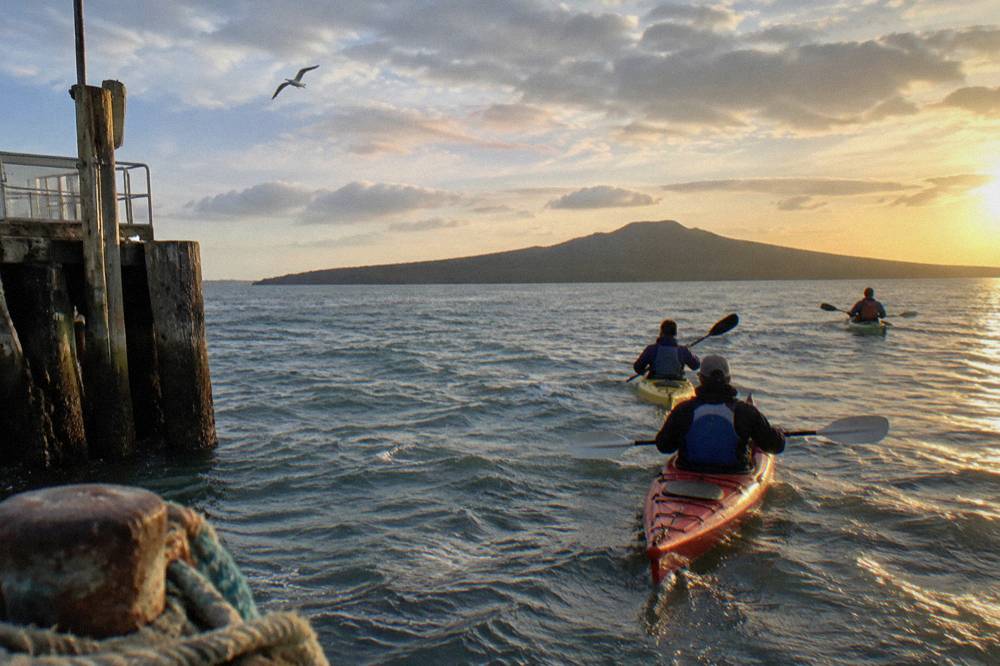
Summer is when the region's signature experiences are at their widest. Daylight saving runs from late September to early April, and in midsummer the sun sets late, which lets a sunset tour to Rangitoto begin in full afternoon light and return to St Heliers after dark with navigation lights on every kayak. DOC, which manages the island, notes Rangitoto emerged from the sea just 600 years ago and carries the world's largest pohutukawa forest.
Autumn stretches the comfortable window. Spring, from October, is the other shoulder: longer days return, and October to April is the period one operator names for occasional bioluminescence sightings, though the operator's own wording is that the glow is "sometimes" seen and never guaranteed.
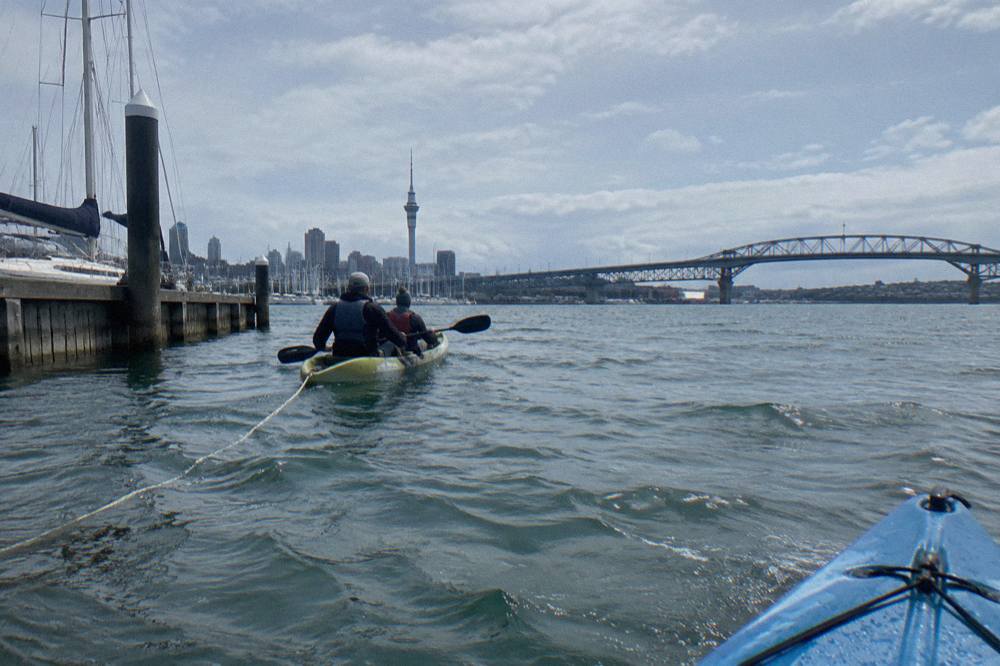
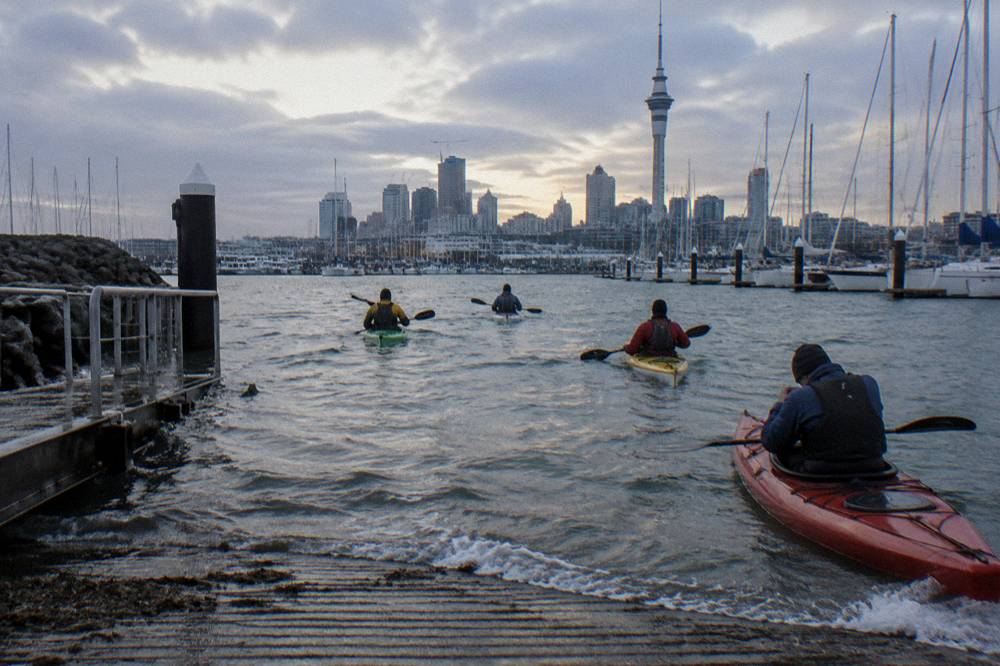
Winter is not a dead season, but it narrows the menu. With the sun down early, a 6 hour 30 minute island crossing consumes nearly the whole usable day, and operators make the final weather call on the day. The sheltered options come forward instead: the City Lights night tour and the City Scenes waterfront paddle both launch from Westhaven Marina's Z Pier boat ramp and last 2 to 3 hours, which is a friendlier proposition in a short winter afternoon.
One timing trap deserves its own mention. The Goat Island clear kayak hire, the one unguided rental among the tours here, operates in the warmer season only, so anyone planning a Leigh trip should check the operator's website and booking page before driving the roughly 1.5 hours north of Auckland. Readers weighing that trip against alternatives can compare options in the Goat Island kayak guide.
How Does Daylight Saving Affect Kayak Tours In Auckland?
New Zealand daylight saving runs from late September to early April, and it moves sunset from early in midwinter to late in midsummer. Sunset and night tours here carry their start times on the booking rather than following the sun's cue, so the same tour in January and in July is genuinely a different experience, one beginning in bright evening warmth, the other in early darkness.
The practical arithmetic looks like this.
| Period | Approximate sunset | What it means for a paddle |
|---|---|---|
| Midsummer, December to January | Late evening | Sunset tours return to St Heliers after dark with navigation lights on; warmest evenings for a 6 hour 30 minute Rangitoto trip |
| Late daylight saving, February to early April | Gradually earlier | Comfortable shoulder season for crossings and glow paddles |
| Outside daylight saving, April to late September | Sunset earliest around late June, then later each week after that | Night tours start earlier; long island trips must use the middle of the day |
| Midwinter, June to July | Early evening | Short tours and sheltered harbours suit best; night paddles begin in late afternoon |
Sunset times here are approximate, and they shift week by week; the exact start time for any given date is on the booking page, and operators adjust as the season moves. The shape of the tours stays the same year round. The Sunset kayak tour to Rangitoto Island runs 6 hours 30 minutes, from $139.16 per person, rated 4.9 across 179 reviews, and includes a BBQ dinner, a hot drink and the summit walk. The tour's shape is constant, the light is not.
Night tours invert the calculation. The Auckland City Lights Night Kayaking Tour, 2.5 hours from $82.36 per person and rated 4.8 across 28 reviews, needs darkness over the Waitemata Harbour to show the city skyline at its best, so the exact start time is on the booking. In midsummer that means a late start and a finish deep in the evening; in winter the same tour can begin before some people have eaten dinner. Neither version is better, but a reader picking a date should know which one they are booking.
Daylight also feeds the summit walk question. Exactly three tours here include a summit walk: the Rangitoto sunset tour, the Rangitoto day tour and the Motukorea half-day. DOC describes the Rangitoto Summit Track as 7 km return with about 250 m of climbing, roughly 2 hours return, over rough volcanic terrain with little shade. In midsummer there is daylight to spare; in the shoulder months the return leg to St Heliers happens after dark, which is why the sunset tour runs navigation lights on every kayak. The full picture is in the Rangitoto sunset kayak tour guide.
For readers planning well ahead, the decision usually comes down to three strong candidates, and the season often picks between them: a sunset crossing, a full-day crossing, or a night paddle in glowing water.
When Can You See Bioluminescence On An Auckland Kayak Tour?
One operator reports bioluminescence is "sometimes" seen from October to April, and the same operator states plainly that it is never guaranteed. Auckland Sea Kayaks' Rangitoto sunset tour reports glow "sometimes" seen October to April, never guaranteed. Two tours here are built around the glow: the Social Nature Movement night paddle, rated 4.9 across 327 reviews from $64.03, and the Canoe and Kayak Adventures tour operating since 1994, rated 4.1 across 206 reviews from $67.59.
The October to April window comes from one operator, and it lines up with the warmer water months, but no tour on any date promises a glow. The honest framing is probability management: book inside the window, book a night with low moonlight if the operator offers guidance on that, and treat any glow as a bonus rather than the purchase. The most reviewed tour of everything covered here is the Night Kayak Tour in Glowing Bioluminescent Waters, 4.9 across 327 reviews, 1.5 to 2 hours from $64.03 per person, which also makes it the cheapest tour among those with 15 or more reviews. Its meeting point is chosen at booking, so the exact beach is confirmed when the date is set.
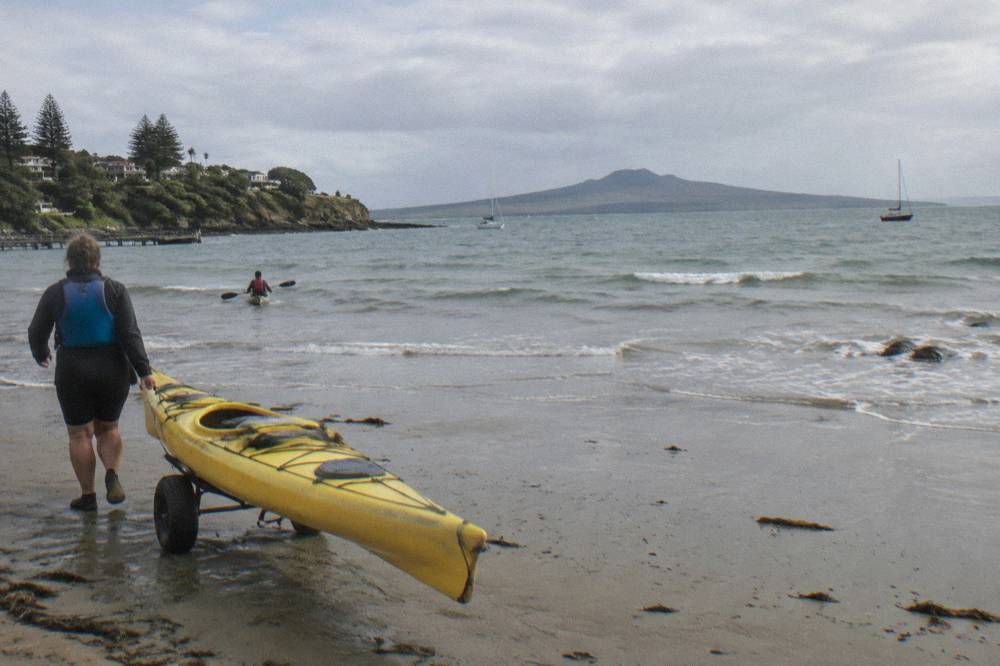
The older glow option is the Bioluminescence Kayak Tour from an operator running since 1994, 2 hours from $67.59 per person, rated 4.1 across 206 reviews, with the exact meeting point emailed before 10 AM on the day of the tour. Its group size runs to 24 against the smaller tour's 16. A page note styled as a "Moonlight Notice" on the operator's site is worth reading beforechoosing a date, since moonlight and glow work against each other. Night paddles also carry their own safety questions, which are covered separately in night kayaking in Auckland.
| Night tour | Duration | From, per person | Rating and reviews | Group max |
|---|---|---|---|---|
| Night Kayak Tour in Glowing Bioluminescent Waters | 1.5 to 2 hours | $64.03 | 4.9 across 327 reviews | 16 |
| Bioluminescence Kayak Tour, Est. 1994 | 2 hours | $67.59 | 4.1 across 206 reviews | 24 |
| City Lights Night Kayaking Tour | 2.5 hours | $82.36 | 4.8 across 28 reviews | 8 |
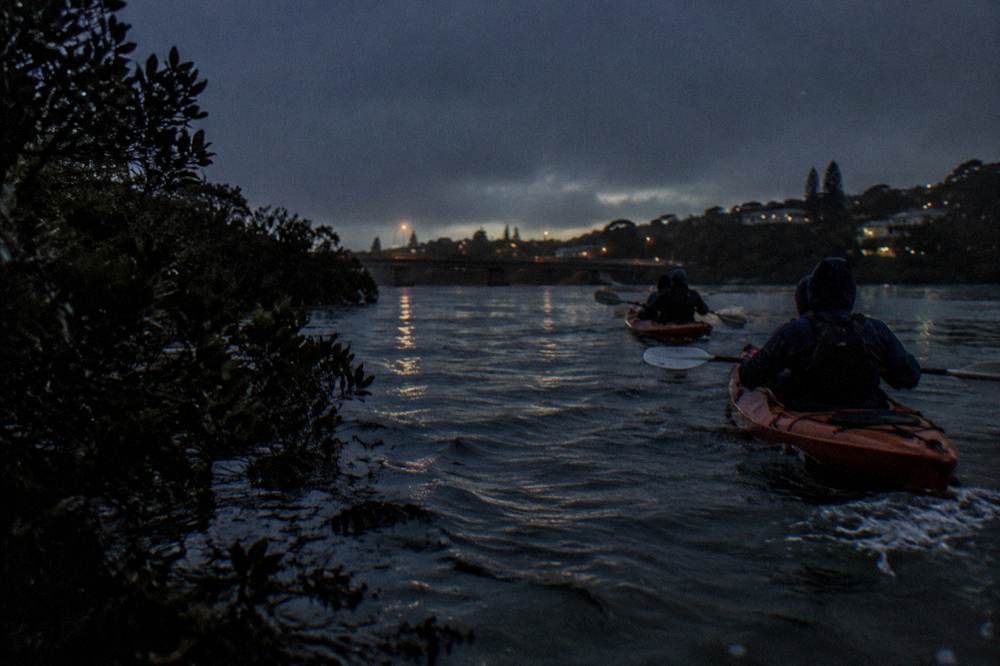
The third night option needs no glow at all. The City Lights tour paddles the working harbour from Westhaven Marina, and the skyline does its part on every clear night, which makes it the most season-proof of the three: it works in December and in July equally well, darkness being the only requirement. Free cancellation up to 24 hours before the start for a full refund is stated on its booking page, with a caveat worth knowing. Auckland Sea Kayaks' own terms for client cancellations differ from the booking-page wording: more than 48 hours before departure, a refund less a 25% admin fee; inside 48 hours or a no-show, no refund. Read the terms on the booking page before relying on either version.
Which Tours Suit Cooler Months In Auckland?
The sheltered, shorter paddles carry the cooler months: the City Lights and City Scenes tours from Westhaven, the Coastal Brewery paddle from Browns Bay, the Riverhead Tavern paddle from Herald Island and the bioluminescence tours all run 2 to 3 hours or less on more protected water. The Goat Island clear kayak hire runs in the warmer season only, and the 6 to 7 hour Tiritiri Matangi day trip is a bigger ask when daylight is short.
Winter paddling in Auckland is real paddling, not a novelty. The 2-hour Riverhead Tavern Kayak Tour from Herald Island's Christmas Beach is the cheapest per-person tour here at $62.48, a new listing with no reviews yet, with 60 stated paddling minutes up the sheltered upper harbour. The Coastal Brewery paddle from Browns Bay, also 2 hours from $67.59 and also a new listing, includes a complimentary shuttle and about 90 stated paddling minutes, ending near the Browns Bay Brewing Company with food and drinks not included. A warm pub at the end of a short paddle is a genuinely good winter structure, and the paddle to the pub guide walks through those options in detail.
The City Lights tour earns its winter place twice over: the 2.5-hour format fits inside a short afternoon, and the city looks its best with early darkness. It is rated 4.8 across 28 reviews, from $82.36 per person, minimum age 12, group max 8, launching from the Z Pier boat ramp at Westhaven Marina where parking is paid.
What winter takes away is mostly the long crossings. The Tiritiri Matangi Sea Kayak Tour from Army Bay, 6 to 7 hours from $150.52 per person, is a guided day trip in stable double kayaks that asks for moderate fitness, and DOC is explicit that independent kayaking to the island is for intermediate paddlers because the water between the island and the mainland can get rough and windy. A guided trip manages that risk, but a short winter day leaves less margin if conditions force a change of plan. The tour has 3 reviews so far, too few for a star rating to mean much.
The Goat Island hire is the clear seasonal exclusion. It is New Zealand's first marine reserve, established in 1975, with boundaries that tripled in 2025, and the clear-bottom double kayaks are a genuine family option with a minimum age of 3 and a 100 kg per person limit. But the operator runs in the warmer season only, so treat it as a summer planning item and check the operator's website before committing to the drive.
How Should Weather Shape Your Chosen Date?
Operators here make the final weather call on the day, and the honest approach is to build slack into a trip: pick a date with a fallback day, read the cancellation wording before booking, and check the MetService marine forecast in the days before. If an operator cancels for weather, the standard outcome is a full refund or a reschedule.
Auckland Sea Kayaks states it operates within strict wind and sea limits and often makes the final call on the day; if conditions are unsafe it may move a group to a sheltered tour such as City Lights or City Scenes, reschedule, or give a full refund if no alternative works. Canoe and Kayak Adventures says that if weather conditions are unsuitable for the Tiritiri Matangi trip, an alternative paddling location will be arranged. In other words, take the weather seriously: cold water is a real hazard in the Hauraki Gulf, tours are cancelled or rescheduled when conditions warrant, and the weather and cancellations guide covers what that means for your booking.
A reader choosing a season should also weigh wind against warmth. Summer brings the warmest water and the longest days. The water is coolest in winter and warmest in late summer, and a wetsuit or dressing for the water temperature is standard advice from Maritime NZ for anyone paddler-side of a guided tour. The forecast to watch is the MetService marine forecast for the Hauraki Gulf.
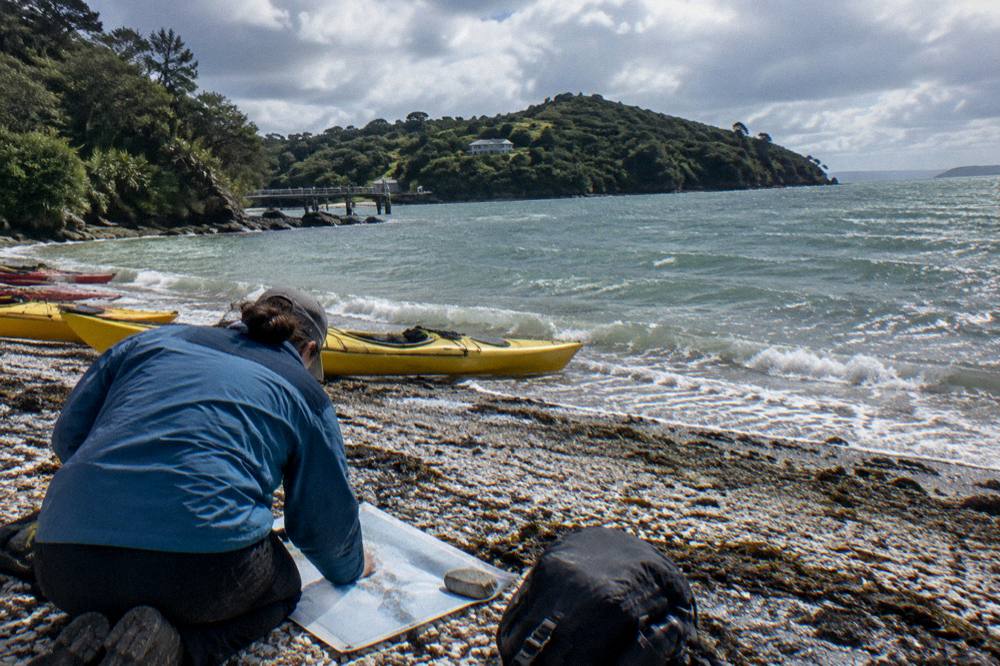
One rule now applies to every paddler in the country, guided or not. From 9 October 2026, everyone on board a recreational craft of six metres or less must wear a properly fitted lifejacket while the craft is underway, kayaks included. On the tours here that changes nothing practical, since Maritime NZ is managing compliance through education, but independent paddlers planning around a guided booking should know the rule stands.
Timing also interacts with the marine park's rules rather than the weather. The Hauraki Gulf Marine Park covers more than 1.2 million hectares and more than 50 islands, and within its High Protection Areas, which include the waters around Rangitoto and Motutapu, kayaking is explicitly allowed while fishing and taking any seafood is not. The DOC marine park page sets out the full set of protections, and the pest-free Check, Clean, Close rules apply to every island landing: gear checked for rodents and seeds, bags closed, food in sealed containers.
How Far Ahead Should You Book An Auckland Kayak Tour?
For summer dates, book early: the clearest published signal is the Goat Island operator's advice to book 2 to 3 days ahead in the December to February peak, and guided groups here are small, capped at 8 or 9 on Auckland Sea Kayaks tours and 16 or 24 elsewhere. For Rangitoto tours, a pre-booked free shuttle from the Auckland War Memorial Museum has limited seats and must be reserved.
Group size is the reason lead time matters. The sunset and day Rangitoto tours and the Motukorea half-day cap at 8 paddlers; City Scenes caps at 9; the Social Nature Movement tours cap at 16; the Canoe and Kayak Adventures tours cap at 24. A family of four filling half an 8-person sunset tour shows how quickly peak dates close. Five of the 14 tours are new listings with no reviews yet, which sometimes means easier availability, while the bioluminescence night paddle has the deepest review history at 327 reviews and the sunset Rangitoto tour carries 179.
The sunset tour to Rangitoto deserves the earliest commitment in high season. The draw is real: 6 hours 30 minutes total, from $139.16 per person, rated 4.9 across 179 reviews, with a BBQ dinner, a hot drink, the summit walk and a return to St Heliers after dark under navigationlights. Minimum age 14, group max 8, weight limit 120 kg. The booking page states free cancellation up to 24 hours before the start for a full refund, while the operator's own terms apply a 25% admin fee to cancellations more than 48 hours out and no refund inside 48 hours, so read the terms on the booking page before relying on the headline. More detail sits in the sunset kayak tour to Rangitoto Island page and in how fit you need to be for a Rangitoto kayak tour.
Practical date-picking, in short: choose the experience first, the season second, then a specific date with a spare day behind it. Summer for crossings, summit walks and the glow window; shoulder months for settled conditions and thinner crowds; winter for short sheltered paddles, city lights and a pub at the end. Whenever the date lands, the meeting point is a real place to drive to, since no tour here collects anyone from a hotel: St Heliers for the Rangitoto and Motukorea tours, Westhaven for the city paddles, and the individual start points listed for everything else, with the museum shuttle the one free option on the three Auckland Sea Kayaks island tours. For a broader look at what fits on any given date, Auckland Kayak Tours keeps the full set of season guides in one place, including advice on what to wear sea kayaking in Auckland.
| Season | Best-fit tours from this page | Why it fits |
|---|---|---|
| December to February | Sunset and day Rangitoto tours, bioluminescence night paddle, Goat Island hire (warmer season) | Longest daylight, warmest water, glow window, peak season so book furthest ahead |
| March to early April | Rangitoto tours, Browns Island half-days, glow paddles | Still inside daylight saving and the glow window; thinner crowds |
| Late April to September | City Lights, City Scenes, Coastal Brewery, Riverhead Tavern, Hallertau Clevedon | Short formats on sheltered water suit short days; early nightfall favours city lights |
| Any season | City Lights Night Kayaking, City Scenes | Darkness and sheltered harbour water, not seasons, are the ingredients |
Common Questions About When To Kayak In Auckland
What Is The Best Time For Kayaking In Auckland?
There is no single best time. Summer, roughly December to February, suits the long Rangitoto crossings and sunset paddles with long evening light; October to April is the window one operator names for occasional bioluminescence; winter favours shorter sheltered paddles such as the City Lights tour from Westhaven Marina. Match the season to the tour type rather than looking for one perfect month.
Can You Kayak In Auckland In Winter?
Yes. Several tours here are well suited to winter: the 2.5-hour City Lights night tour and the City Scenes waterfront paddle from Westhaven Marina, the 2-hour Coastal Brewery paddle from Browns Bay, and the 2-hour Riverhead Tavern paddle from Herald Island. All are guided, and winter's early darkness, with an early sunset, actually helps the night tours.
When Can You See Bioluminescence Kayaking In Auckland?
Auckland Sea Kayaks reports bioluminescence is "sometimes" seen from October to April on its sunset Rangitoto tour, and no operator guarantees the glow, it depends on season and conditions. Two tours are built around the glow: the Night Kayak Tour in Glowing Bioluminescent Waters, 4.9 across 327 reviews from $64.03, and the Bioluminescence Kayak Tour operating since 1994, 4.1 across 206 reviews from $67.59. Book inside the window and treat any glow as a bonus.
How Late Do Sunset Kayak Tours Run In Auckland Summer?
In midsummer the sun sets well into the evening, so a sunset tour starts in late afternoon light and finishes after dark. The Sunset kayak tour to Rangitoto Island runs 6 hours 30 minutes in total, returns to St Heliers with navigation lights on every kayak, and includes a BBQ dinner and the return summit walk.
Is The Goat Island Clear Kayak Hire Open All Year?
No. The Clearyak hire at Goat Island runs in the warmer season only. Anyone planning the roughly 1.5-hour drive to Leigh should check the operator's website and the booking page first. The hire price, from $72.13, is per double kayak for up to two people, not per person.
How Far Ahead Should You Book An Auckland Kayak Tour?
For December to February, book well ahead: the Goat Island operator advises 2 to 3 days' lead in that peak, and guided groups are small, capped at 8 or 9 on Auckland Sea Kayaks tours. The free shuttle from the Auckland War Memorial Museum on the Rangitoto and Motukorea tours must be pre-booked and has limited seats.