Night Kayaking In Auckland: Glow And City Lights Tours
Three guided tours cover after-dark paddling in Auckland: two bioluminescence night paddles and a city-lights harbour tour from Westhaven. Here is what each one costs, where it starts, and what the water asks of you at night.
Short answer
This guide covers three Auckland night kayak tours. The most reviewed is a bioluminescence night paddle, 4.9 across 327 reviews, from $64.03 per person for 1.5 to 2 hours. A second bioluminescence tour runs 2 hours from $67.59, and the City Lights night paddle runs 2.5 hours from $82.36.
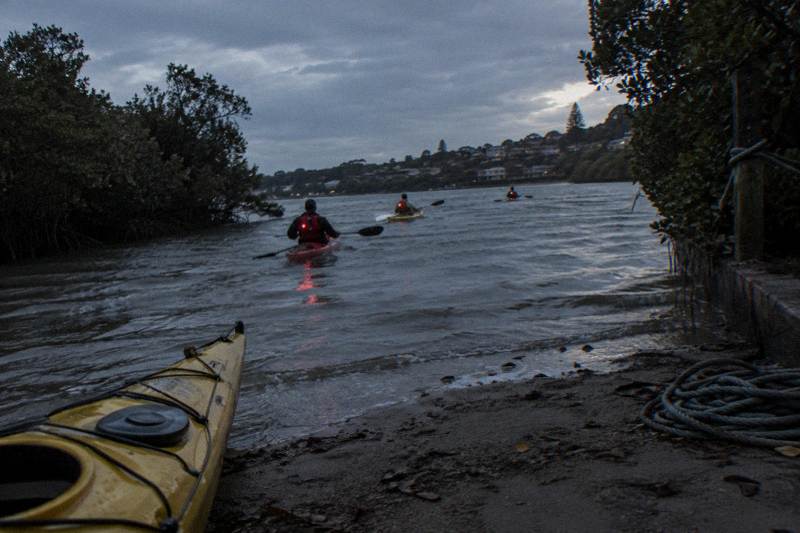
A night kayak in Auckland is a different sport from a daytime one. The harbour noise drops, the city turns into a strip of lights along the Waitemata, and on some evenings from late spring to early autumn the water itself can glow where your paddle stirs it. None of that is promised on any departure, but it is what draws people to the after-dark tours, and three night tours are covered here: two bioluminescence night paddles run by Social Nature Movement and Canoe & Kayak Adventures, and a City Lights night paddle run by Auckland Sea Kayaks from Westhaven Marina.
This guide compares the three tours, what they cost, where they start, what the safety rules are, and what to wear. It also covers the parts nobody expects: the moonlight notices, the lifejacket rule that came into force in October 2026, and why the meeting point for the two bioluminescence tours is only given at booking.
What Is A Night Kayak In Auckland?
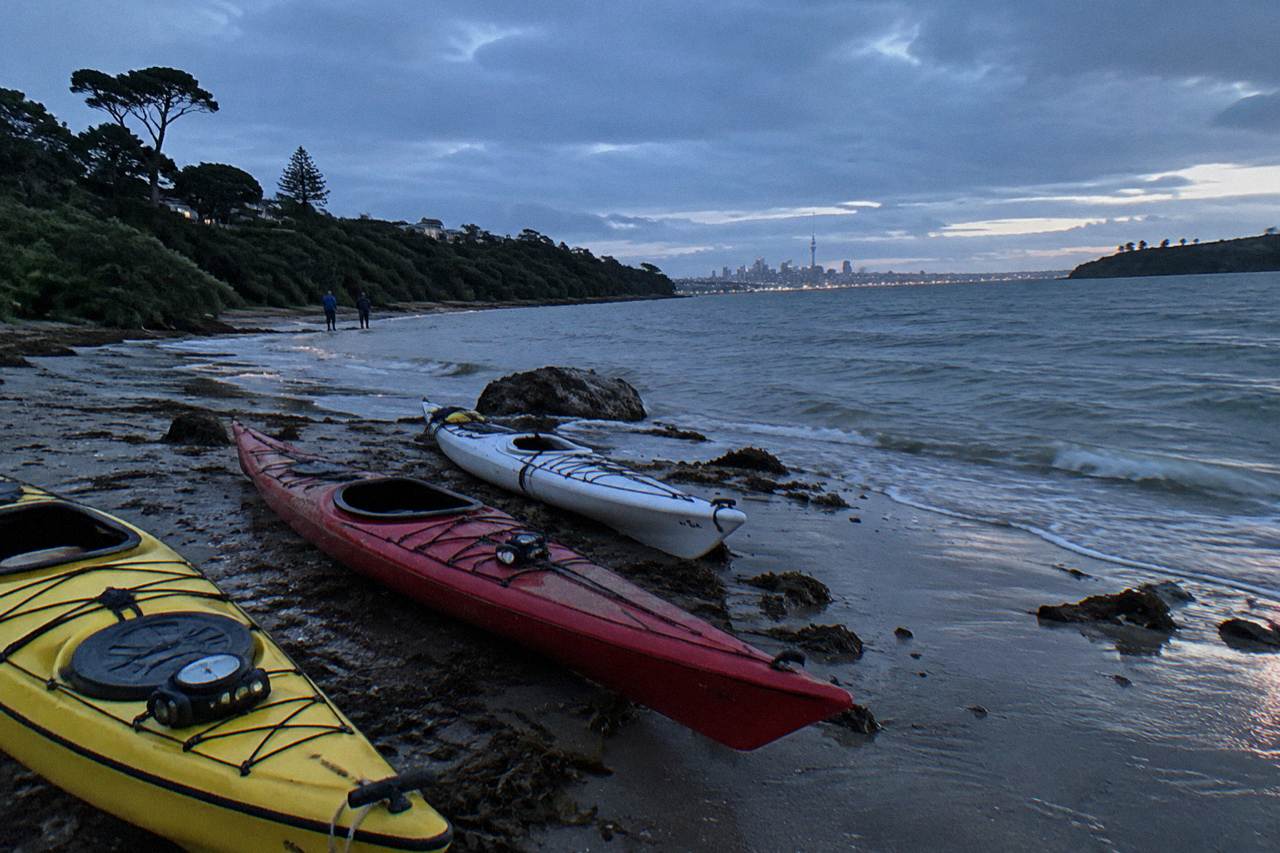
A night kayak in Auckland is a guided paddle that departs at or after dusk, in double or single kayaks, on the Waitemata Harbour or the Hauraki Gulf. Three tours fit the description: two bioluminescence paddles of 1.5 to 2 hours, and a 2.5-hour City Lights paddle past the lit Auckland waterfront. All three are guided and all three supply the kayak, paddle and safety gear.
The distinction matters because most Auckland kayaking happens in daylight. The island crossings to Rangitoto and Motukorea are morning and afternoon trips. What is left after dark falls into two families: paddles that go looking for bioluminescence, the blue-green flicker that disturbed seawater can produce when dense populations of light-producing plankton are present, and paddles that stay on the harbour and use the city skyline as the attraction. Daylight paddlers weighing which trip suits them best can start with the guide to Auckland's most scenic kayaking destinations before committing to a route.
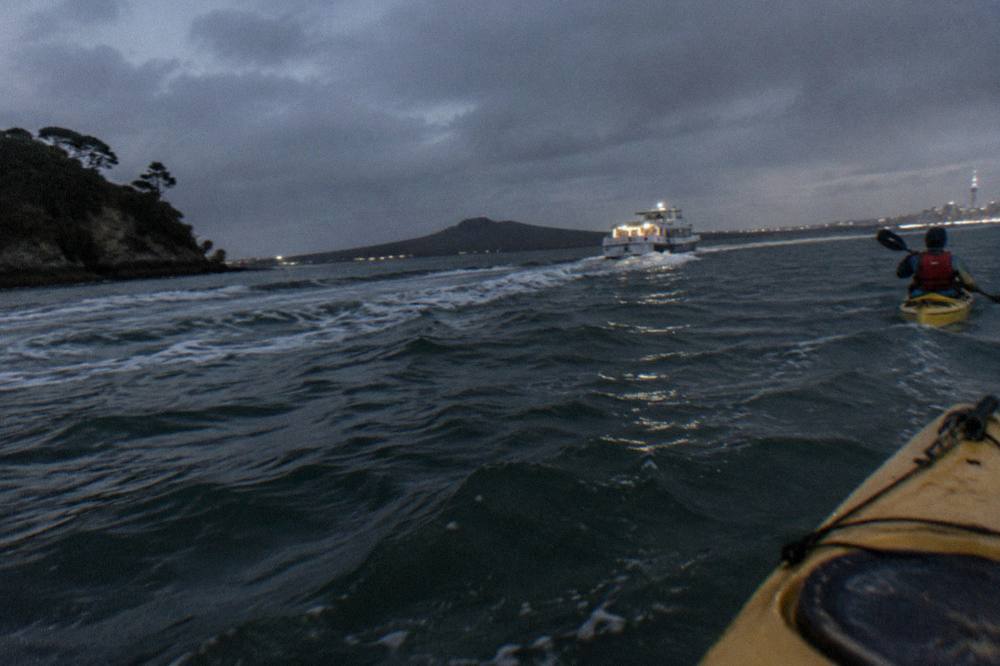
The bioluminescence phenomenon is real but fickle. Auckland Sea Kayaks describes the glow as "sometimes" seen from October to April on its sunset Rangitoto tour; the Glow Kayak listing says it is never guaranteed and depends on season and conditions. No tour guarantees a glow, and a moonlit night can wash out faint displays entirely. Canoe & Kayak Adventures carries a "Moonlight Notice" on its bioluminescence page: a bright moon over dark water is beautiful, but it is not the dark water the plankton show best in. Anyone booking a glow tour on a full-moon weekend should go expecting a pleasant night paddle first and a light show as a bonus.
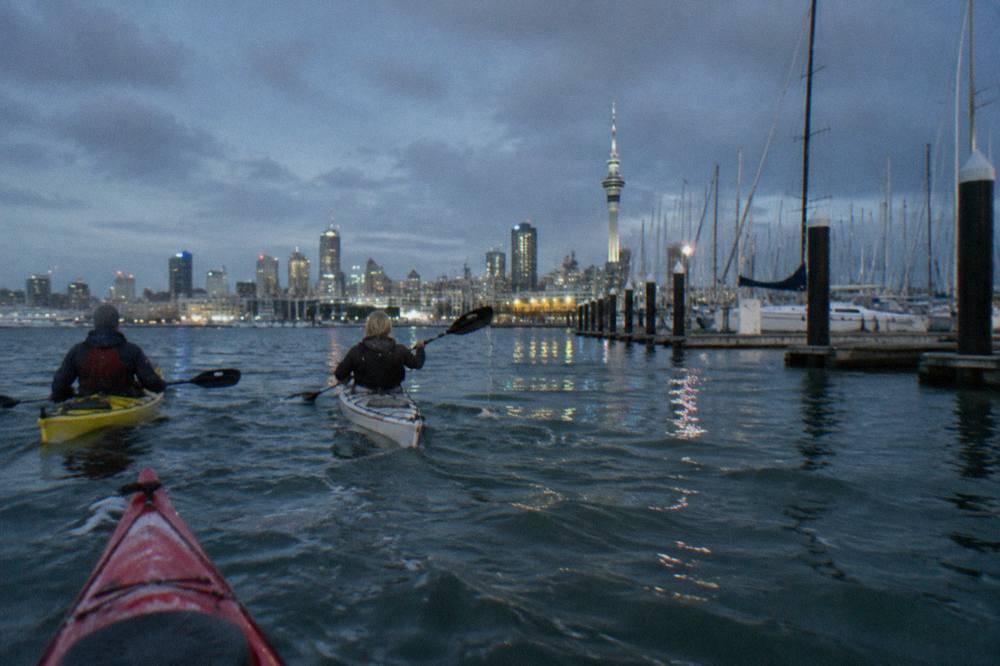
The City Lights tour makes no claim about glowing water at all. It launches from Westhaven Marina and works along the lit waterfront. It is the pick for visitors who want the postcard Auckland at night and would rather not chase a natural phenomenon that may not appear.
All of this sits inside the Hauraki Gulf Marine Park, which spans more than 1.2 million hectares and more than 50 islands, a scale worth holding in mind when the city lights make the harbour feel small. The park's rules follow the water, not the clock.
Which Auckland Night Kayak Tours Can You Book?
Three tours, three operators, three price points. The Social Nature Movement night paddle is from $64.03 per person for 1.5 to 2 hours, 4.9 across 327 reviews. The Canoe & Kayak Adventures bioluminescence tour is from $67.59 for 2 hours, 4.1 across 206 reviews. The Auckland Sea Kayaks City Lights tour is from $82.36 for 2.5 hours, 4.8 across 28 reviews. All three are guided and include gear.
Here is the honest comparison of the three.
| Tour | Operator | Duration | Reviews | Price from | Group max |
|---|---|---|---|---|---|
| Night Kayak Tour in Glowing Bioluminescent Waters | Social Nature Movement | 1.5 to 2 hours | 4.9 across 327 | $64.03 per person | 16 |
| Bioluminescence Kayak Tour, Est. 1994 | Canoe & Kayak Adventures | 2 hours | 4.1 across 206 | $67.59 per person | 24 |
| Auckland City Lights Night Kayaking Tour | Auckland Sea Kayaks | 2.5 hours | 4.8 across 28 | $82.36 per person | 8 |
The Social Nature Movement tour is the most reviewed night paddle in the city by a wide margin, 327 reviews at 4.9, and it is also the cheapest of the three per person. Its listing includes a guide, kayak and equipment, a personal flotation device and a safety light beacon. Transport is not in the base price; an optional paid bus add-on is offered at checkout, with a meet time one hour before the start. The meeting point itself is chosen at booking.
The Canoe & Kayak Adventures tour has run since 1994 under an operator that has been teaching kayaking for decades, and its listing promises all kayaking and safety equipment, tuition from qualified guides and a ratio of one guide to six guests. Its 4.1 across 206 reviews is the softer score of the three. Its exact location is emailed before 10 AM on the tour day rather than named in advance.
The City Lights tour is the small-group option, capped at 8, in double sea kayaks from the Westhaven Marina boat ramp at Z Pier, 79 Westhaven Drive. It includes a light snack and all equipment, and its booking page states free cancellation up to 24 hours before the start for a full refund. Auckland Sea Kayaks' own terms are stricter, more than 48 hours before departure for a refund less a 25 percent admin fee, so read both before booking.
One more after-dark option deserves a mention even though it is not strictly a night tour. The Sunset kayak tour to Rangitoto Island, from $139.16 per person and rated 4.9 across 179 reviews, is a 6.5-hour trip that returns to St Heliers after dark with navigation lights on every kayak. If the appeal of night kayaking is being on the water as the light goes rather than the glow itself, that is the tour that delivers it, with a BBQ dinner and a summit walk included.
How Does Bioluminescence Night Kayaking Actually Work?
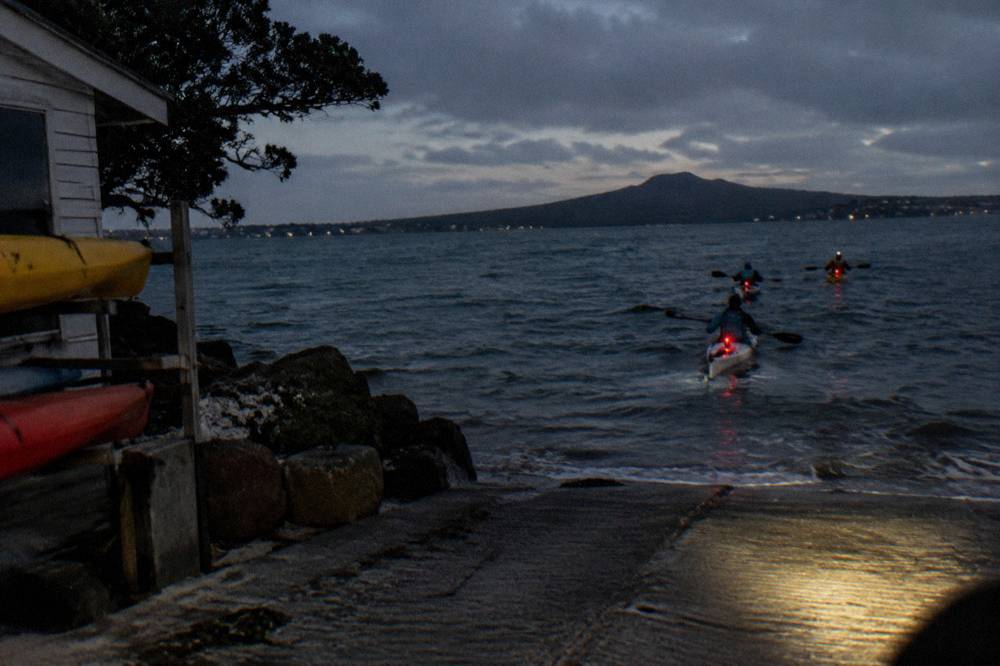
Bioluminescence kayaking is an ordinary guided paddle in the dark, on water where light-producing plankton are sometimes present. When a paddle, a kayak hull or a hand disturbs the water, the plankton flash blue-green for a fraction of a second. The glow is never guaranteed, depends on the season and conditions, and no Auckland tour promises it.
The mechanism is chemical. Certain dinoflagellates, a type of microscopic plankton, produce light when mechanically disturbed, an evolved defence that turns the water around a moving predator into a spotlight. When enough of them are concentrated in a bay, every paddle stroke leaves a brief blue trail and fish become moving streaks of light. The concentration is the whole game: a week after a strong display the same bay can show nothing.
The display depends on plankton density, water temperature and darkness, and no operator promises a glow. Auckland Sea Kayaks describes it as "sometimes" seen from October to April on its sunset Rangitoto tour, the Glow Kayak listing says it is never guaranteed, and a dark sky helps. A glow hunt three nights from full moon competes with moonlight; the same water two weeks later under a new moon can look entirely different.
Practically, the tour is a slow, sheltered-water paddle. Night trips here run from an hour and a half to two and a half hours on the water, and the glow is the whole point: no operator guarantees it. You may get wet to the elbows and the seat of a sit-on-top kayak is rarely dry, so dress for the water temperature, not the air temperature. Cold water shock is a genuine risk in New Zealand waters outside summer, and Maritime NZ's paddle craft guidance is blunt about dressing for the water and carrying two waterproof ways to call for help.
Should You Take The Bus Add-On?
The Social Nature Movement meeting point is chosen at booking, and Canoe & Kayak Adventures emails the exact location before 10 AM on the tour day. Visitors without a car should weigh the bus add-on against a rideshare to the meeting point, and note that the meeting point for the bioluminescence tours is chosen at booking, so the address only exists once the booking is made. Do not plan around a specific beach; none is published.
| Factor | Bioluminescence paddles | City Lights paddle |
|---|---|---|
| Main draw | Plankton glow, never guaranteed | Lit Auckland waterfront |
| Best conditions | Dark moon, warm months | Any calm evening |
| Water type | Sheltered bays | Waitemata Harbour |
| Duration | 1.5 to 2 hours | 2.5 hours |
| Meeting point | Given at booking | Westhaven Marina, Z Pier |
If the glow does not show, you still get a night paddle under stars or moon, and the better operators treat that as the product. Anyone whose heart is set on seeing bioluminescence should book the warmer-month departures, accept the moon as a factor, and hold the glow as a possibility rather than the purchase.
Where Do Night Kayak Tours In Auckland Start?
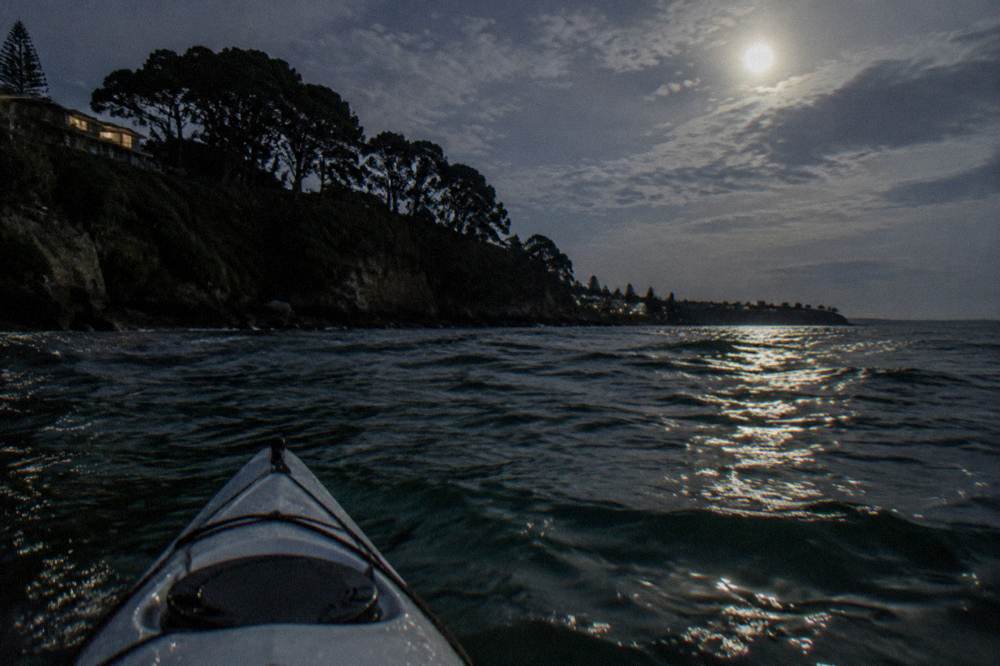
The City Lights tour starts at the Westhaven Marina boat ramp at Z Pier, 79 Westhaven Drive, with paid parking nearby. The two bioluminescence tours do not publish a beach: the Social Nature Movement meeting point is chosen at booking, and the Canoe & Kayak Adventures location is emailed before 10 AM on the day of the tour. No night tour offers hotel pickup.
Start points shape the evening more than most visitors expect, so it pays to know them before booking rather than after.
The City Lights departure is the simplest. Westhaven is on the city side of the harbour bridge, a short drive or a brisk walk from the central city, and parking there is paid. Arrive early enough to park, change and listen to the briefing; Auckland Sea Kayaks asks guests to arrive 10 minutes before a tour start, and that habit transfers well to any operator.
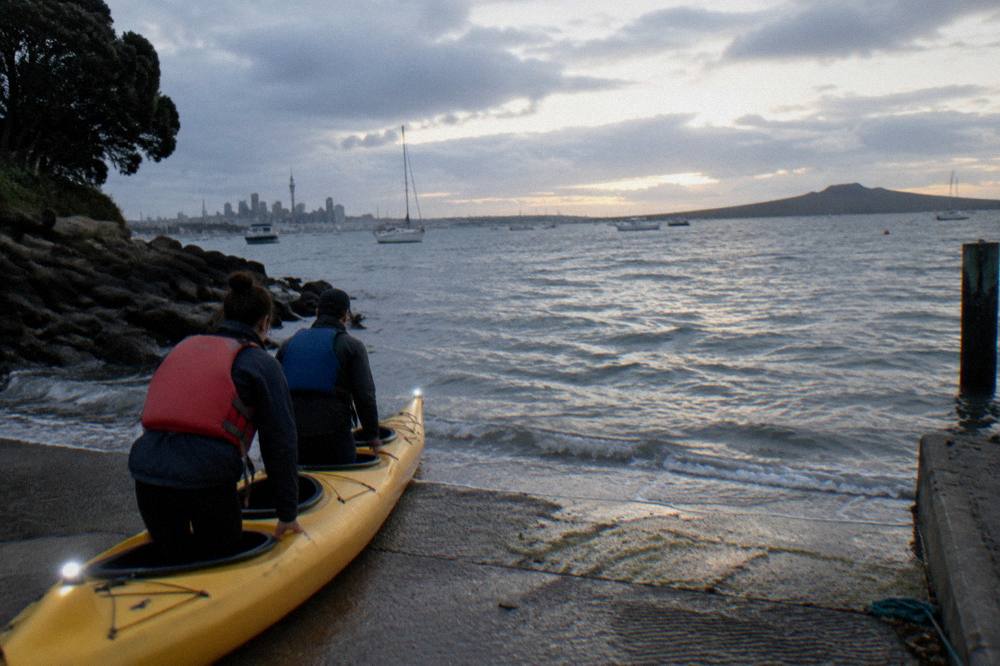
The two bioluminescence tours deliberately keep their locations flexible. Neither glowing-water tour names a launch beach in advance: one sets the meeting point when you book, the other emails the exact location before 10 AM on tour day. The Social Nature Movement listing states the meeting point is chosen at booking, and its bus add-on meets one hour before the start. In both cases the practical advice is the same: wait for the operator's message, check the location on a map before you leave, and allow more travel time than the distance suggests, because several of the plausible launch spots around Auckland are reached on unlit roads. If chasing plankton to whichever beach they appear on sounds like more fuss than appeal, the guide to renting a kayak versus booking a guided Auckland tour explains when hiring your own boat and choosing a fixed launch spot makes more sense.
For readers weighing a night paddle against a daytime island crossing, the meeting-point differences are one of the sharpest contrasts. The Rangitoto and Motukorea tours all leave from one address, 384 Tamaki Drive at St Heliers, where the guide covers the logistics in detail in the St Heliers kayak meeting point guide.
Is Night Kayaking In Auckland Safe For Beginners?
Yes, on a guided tour. All three night tours are guided, and each lasts two and a half hours or less. The Auckland Sea Kayaks tours state no experience is needed. Since 9 October 2026, Maritime NZ requires everyone on a kayak to wear a properly fitted lifejacket while underway, and every guided tour supplies one.
The lifejacket rule is new enough that many guides written a year ago miss it. From 9 October 2026, everyone on board a recreational craft of six metres or less, kayaks and paddleboards included, must wear a properly fitted lifejacket while the craft is underway, with compliance being managed through an educational approach in the first months. On a guided tour this is automatic: safety equipment is a listed inclusion on all three night tours, and the guides handle the fitting. Anyone renting a kayak independently after dark should treat the rule, and their own competence, much more seriously.
Guided night paddles manage risk in other ways too. The Social Nature Movement bioluminescence listing includes a safety light beacon per paddler, so the group stays visible to each other and to any boats. Auckland Sea Kayaks keeps groups to 8 on the City Lights tour, uses stable double sea kayaks, and states that beginners are welcome with no experience needed. Its tours run inside strict wind and sea limits, with the final call often made on the day; if conditions are unsafe, guests may be moved to a sheltered alternative, rescheduled, or refunded in full if no alternative exists. For anyone wondering what risks remain when these precautions are in place, the guide to common kayaking injuries explains what actually matters on the water.
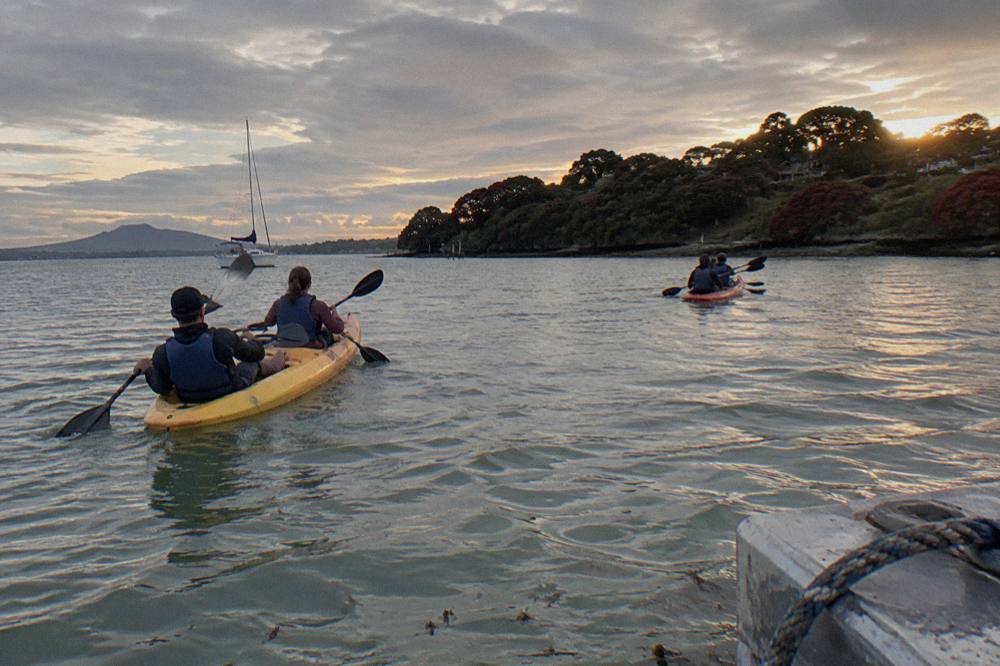
The honest limits are these. A guided night paddle asks for basic fitness, the ability to stay seated and paddle gently for up to an hour or two, and a tolerance for being on dark water. It does not ask for rolling skills or prior training. Independent night kayaking is a different matter entirely, and the safety questions worth asking before any dark-water departure are laid out in is a night kayak in Auckland safe. Weather, not darkness, is what actually cancels tours, and the operator's decision process is covered in the Auckland kayak tour weather and cancellations guide.
What Should You Wear And Bring On A Night Paddle?
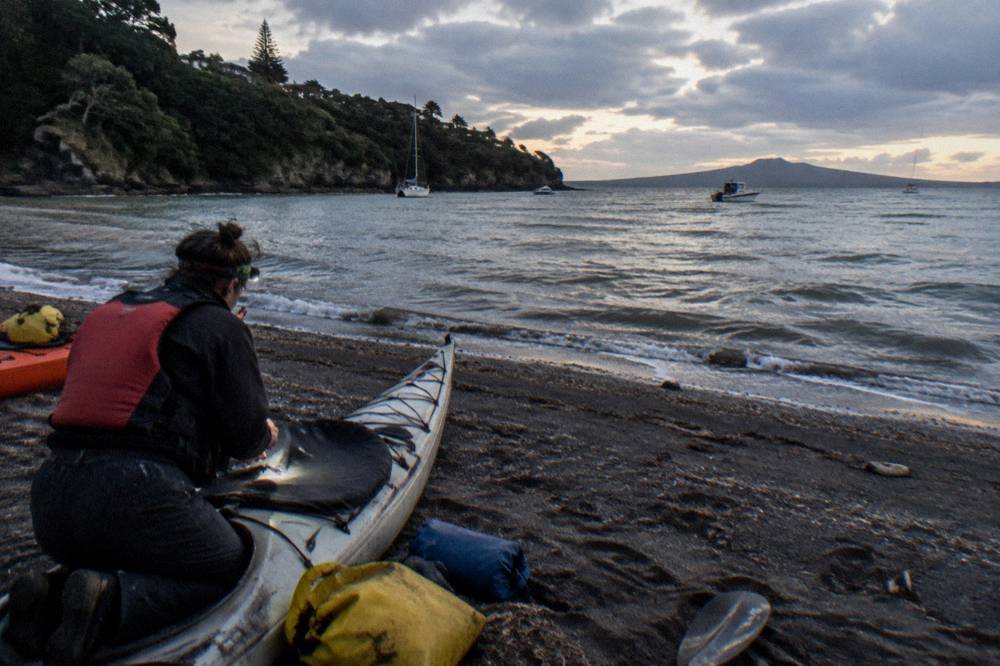
Wear synthetic or wool layers that work wet, a jacket, and shoes that can go in the water, plus a warm layer for afterwards. Kayaking is a wet sport: expect a wet seat, wet elbows and occasionally wet everything. Bring a towel and a change of clothes in the car, and skip cotton entirely, it loses all warmth when soaked.
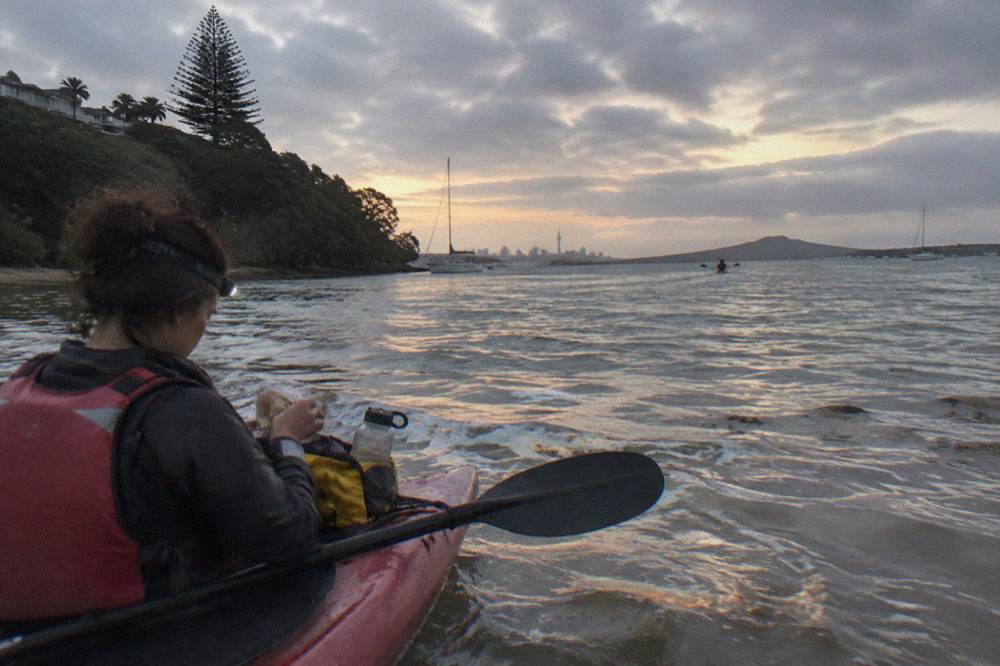
Night temperatures on Auckland water run cooler than the air ashore, and the wind off the harbour after dusk can bite even in summer. The layering logic is simple: a base layer that insulates when damp, an outer layer that blocks wind and spray, and something dry waiting at the end. Maritime NZ's paddle craft advice adds the point most people skip: dress for the water temperature, because cold water shock is the killer, not the air.
| Item | Why It Matters At Night |
|---|---|
| Synthetic or wool base layer | Insulates when damp, dries fast |
| Windproof paddle jacket | Blocks spray and night wind |
| Shoes that can get wet | You launch from beaches and ramps |
| Warm dry layer for after | Body temperature drops when you stop |
| Towel and change of clothes | You will get wet somewhere |
| Water and a snack | Even a 90-minute paddle burns energy |
| Headlamp or torch | For rigging and derigging on shore |
A few operator-specific notes. Auckland Sea Kayaks lists a light snack on the City Lights tour, but the bioluminescence listings state no food, so eat before you go. Toilets are a known gap: the Social Nature Movement listing names toilets as not included, so plan around that. Minimum ages matter too: the City Lights tour sets a minimum age of 12, while the bioluminescence tours state none on their pages. The full clothing logic, including what works in winter, is laid out in what to wear sea kayaking in Auckland.
Weight and fit limits apply on the Auckland Sea Kayaks tours: 120 kg or less, and the ability to fit a seat about 65 cm wide and stay seated for up to 45 minutes at a time. Alcohol is not permitted on their tours.
How Much Does A Night Kayak In Auckland Cost?
The two bioluminescence tours start at $64.03 and $67.59 per person, and the City Lights tour starts at $82.36 per person. All three are per-person prices for guided tours with gear included. The sunset-to-dark Rangitoto tour, $139.16 per person with dinner and a summit walk, is the premium after-dark option at nearly double the entry price.
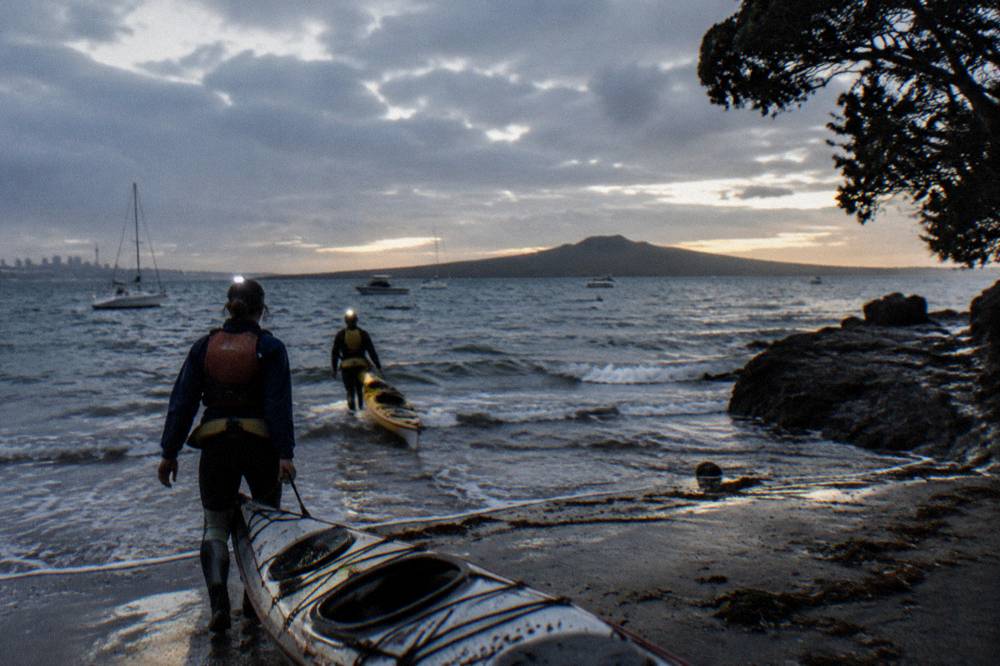
Per-person entry to night kayaking in Auckland therefore sits in a narrow band. The cheapest night paddle, the Social Nature Movement bioluminescence tour at $64.03, is also the most reviewed tour on the whole site at 327 reviews, an unusual combination. It is also, for completeness, among the cheapest guided kayak experiences available per person anywhere on this site, with only the Riverhead Tavern paddle, a new listing at $62.48 with no reviews yet, undercutting it.
| Tour | From price | Basis | Duration | Food included | Free cancellation stated |
|---|---|---|---|---|---|
| Bioluminescent Waters night paddle | $64.03 | per person | 1.5 to 2 hours | Not stated | Not stated |
| Bioluminescence Kayak Tour, Est. 1994 | $67.59 | per person | 2 hours | Not stated | yes, up to 24 hours before |
| City Lights Night Kayaking Tour | $82.36 | per person | 2.5 hours | light snack | yes, up to 24 hours before |
| Sunset kayak to Rangitoto Island | $139.16 | per person | 6 hours 30 minutes | BBQ dinner and hot drink | yes, up to 24 hours before |
Read the cancellation column carefully, because it is not uniform. The Canoe & Kayak Adventures, Social Nature Movement and Auckland Sea Kayaks booking pages state free cancellation up to 24 hours before the start for a full refund. Auckland Sea Kayaks adds its own layer: by the operator's terms, client cancellations more than 48 hours before departure get a refund less a 25 percent admin fee, and inside 48 hours there is no refund, while an operator cancellation for weather means a full refund or a reschedule. The booking page wording and the operator terms differ, so read both before you book.
What the price does not include is worth listing. Transport to the meeting point is not included on any night tour; the Social Nature Movement bus is a paid add-on, Westhaven parking is paid, and the bioluminescence launch points may be a rideshare fare from the city. Food beyond what the listing names is not included, and gratuities are named as excluded on the Canoe & Kayak Adventures tour.
When Is The Best Time Of Year For Night Kayaking In Auckland?
For bioluminescence, October to April, the months Auckland Sea Kayaks says the glow is sometimes seen on its sunset Rangitoto tour. For the City Lights tour, any calm evening works, since the skyline does not have a season. Social Nature Movement picks the night meeting point at booking, Canoe & Kayak Adventures emails its launch spot before 10 AM on the day, and Auckland Sea Kayaks keeps a 25% admin fee on cancellations more than 48 hours out.
The glow season and the warmth season are the same season, which is convenient. The trade-off is demand: the operators' busiest weeks are December to February, and the smart move is a midweek departure early in the booking window rather than a Saturday night two days out.
Darkness itself is seasonal in a way northern hemisphere visitors underestimate. New Zealand daylight saving runs from late September to early April, so a night tour in January starts late, with darkness arriving after 9 pm, while the same tour in May can start before 7 pm and still be fully dark.
Winter night kayaking exists but is a colder, quieter affair. The City Lights tour is the natural winter choice, a short harbour paddle with the city as the warmth at the end of it, and the water is at its coolest. Whatever the month, check the MetService marine forecast before the evening, and the LINZ tide table if you are meeting at a tidal ramp.
How Do You Choose Between The Three Night Tours?
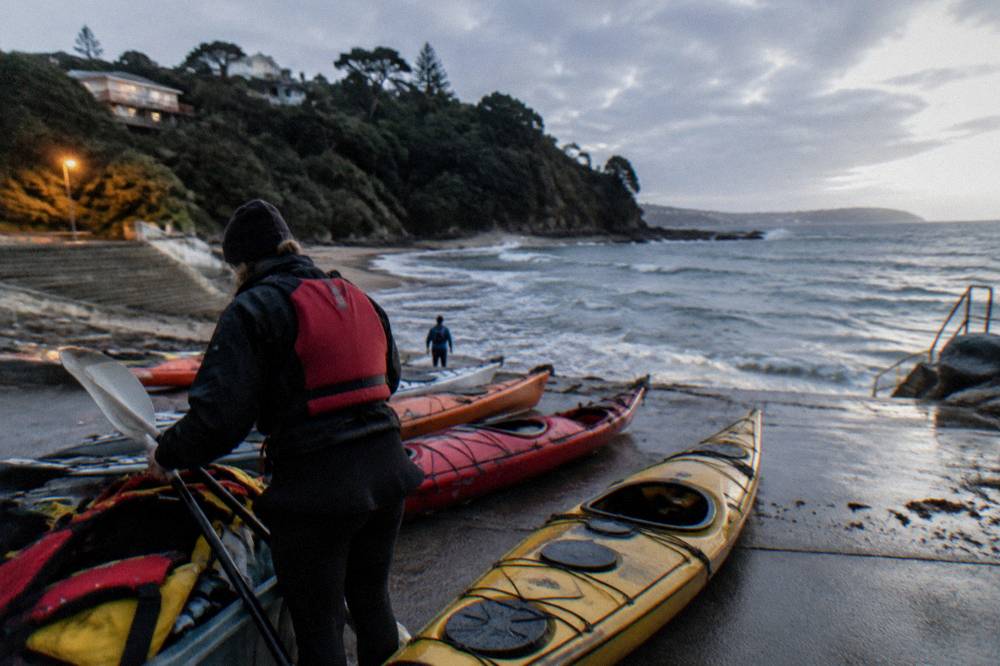
Pick the Social Nature Movement paddle for price and review depth, $64.03 and 327 reviews at 4.9. Pick Canoe & Kayak Adventures for the smallest guide ratio, one guide to six guests. Pick City Lights for certainty: a fixed meeting point at Westhaven, a light snack, small groups of 8, and scenery that shows up every night regardless of plankton.
The choice usually comes down to how much uncertainty you can enjoy. A bioluminescence booking is a bet on biology and the moon, softened by a pleasant paddle if the bet loses. The City Lights booking is a sure thing by comparison, and its 4.8 across 28 reviews, a smaller pool but a strong one, reflects a product that delivers what it promises every clear evening.
Solo travellers and couples favour the small caps. The City Lights tour caps at 8, the Social Nature Movement tour at 16 and the Canoe & Kayak Adventures tour at 24. A group of eight friends will find the bioluminescence tours more accommodating; a visitor who dislikes crowd paddling will not.
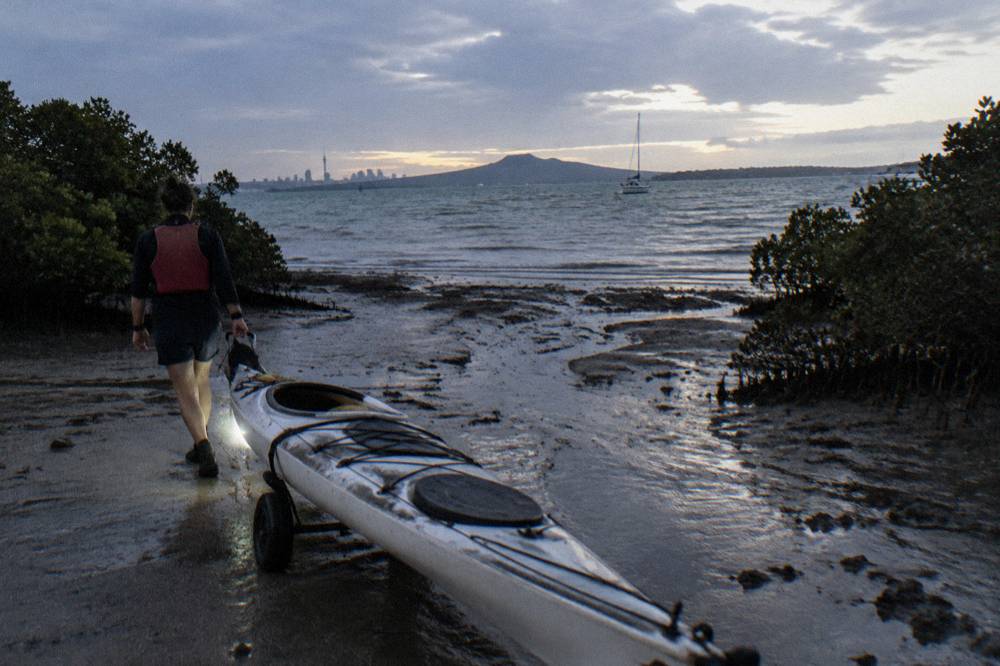
Families should check ages before anything else. City Lights sets a minimum age of 12, and the two bioluminescence listings state no minimum age, which means the question is one to put to the operator directly when booking, covering darkness, water temperature and attention span. For a broader look at age limits across every tour on this site, the Auckland kayak tours with kids guide gathers them in one place.
Whichever you choose, the rest of Auckland Kayak Tours covers the region's other paddles: volcano crossings, island sanctuaries, brewery runs. Prices shown are from-prices per person; the live booking page confirms the current figure and the cancellation terms before you book.
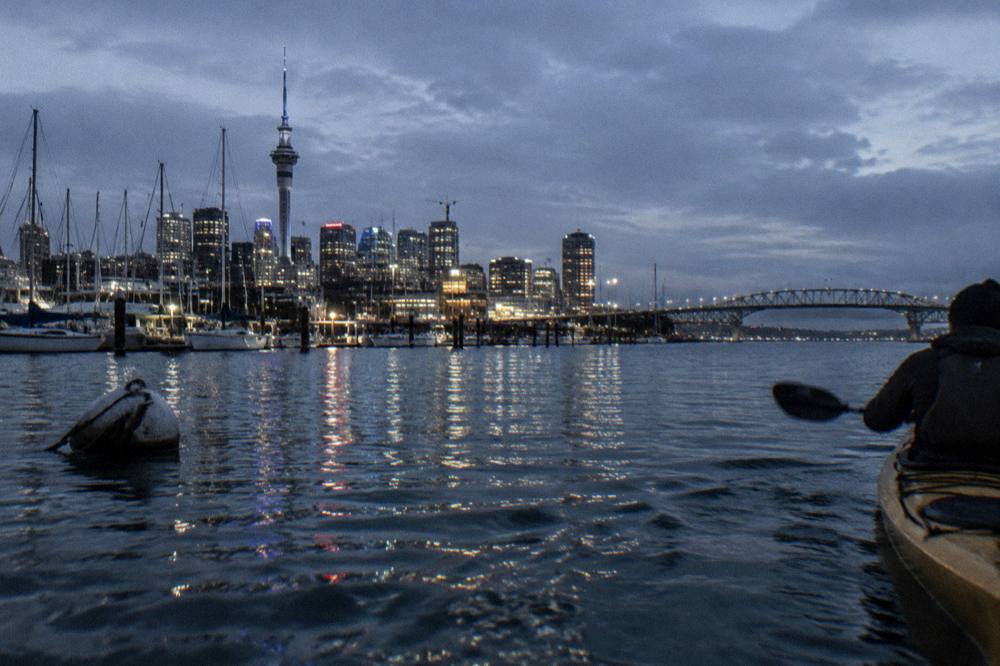
The night paddle that suits most first-timers is the bioluminescent waters night tour, which pairs the lowest price with the deepest review pool; Check availability to see the season's dates.
Common Questions About Night Kayaking In Auckland
Is A Night Kayak In Auckland Safe?
On a guided tour, yes. All three night tours are guided, supply kayaks, gear and lifejackets, and paddle sheltered water at a slow pace. Since 9 October 2026 everyone on a kayak must wear a properly fitted lifejacket while underway, and guided tours supply and fit them. Tours also run inside operator wind and sea limits, with cancellations or reschedules when conditions are unsafe.
Is Bioluminescence Guaranteed On An Auckland Night Kayak Tour?
No. No operator promises a glow: the Glow Kayak listing says it is never guaranteed and depends on season and conditions, and Auckland Sea Kayaks says it is sometimes seen from October to April on its sunset Rangitoto tour. One operator carries a Moonlight Notice on its booking page. Book expecting a good night paddle, and treat any glow as a bonus.
Where Do Night Kayak Tours In Auckland Meet?
The City Lights tour meets at the Westhaven Marina boat ramp at Z Pier, 79 Westhaven Drive, with paid parking. The two bioluminescence tours do not publish a beach: one meeting point is chosen at booking, the other emails the exact location before 10 AM on the tour day. No night tour offers hotel pickup.
How Much Does A Night Kayak In Auckland Cost?
From $64.03 per person for the 1.5 to 2-hour bioluminescence night paddle, from $67.59 for the 2-hour Canoe & Kayak Adventures bioluminescence tour, and from $82.36 for the 2.5-hour City Lights tour. The sunset Rangitoto tour, which returns after dark, is from $139.16 per person including dinner and a summit walk.
Can Beginners Do A Night Kayak Tour In Auckland?
Yes. Auckland Sea Kayaks states no experience is needed on its tours, which use stable double sea kayaks, and the bioluminescence tours are short, slow, sheltered-water paddles with guides alongside. Basic fitness and a tolerance for being on dark water are the only real requirements.
What Should I Wear On A Night Kayak Tour?
Synthetic or wool layers, a windproof jacket, and shoes that can get wet, plus a warm dry layer and a towel for afterwards. Kayaking is a wet sport and night air on the harbour is cool even in summer. Avoid cotton, which loses all warmth when soaked.