Do You Get Wet On An Auckland Sea Kayak Tour?
Yes, a little. How wet you get on an Auckland sea kayak tour depends on the tour, the weather and your clothing. Here is what to expect, tour by tour.
In short
Yes, almost certainly a little. Wet feet, a damp seat and the occasional splash across the deck are normal on guided sea kayak tours from Auckland, and nobody stays bone dry. Feet get wet first at every launch, so wear quick-dry clothing and bring a full change of clothes. Dress for the water temperature, not the air temperature.
Yes, almost certainly a little. Wet feet, a damp seat and the occasional splash across the deck are a normal part of guided sea kayaking from Auckland, and Canoe & Kayak Adventures, an operator running tours here since 1994, says it plainly: kayaking is a wet sport. Nobody stays bone dry. How wet depends on the tour, the sea state and what you wear, not on luck.
That single sentence settles most of the worry, but the detail matters when you are packing. A two-hour sheltered harbour paddle in calm conditions might leave you with nothing more than a few drips on your shins and a seat that feels cool through your shorts. A six-and-a-half-hour crossing to a volcanic island in a fresh breeze is a different day out, and spray over the deck is part of it. Neither means you are swimming, and neither means you will be cold, provided you dress for it.
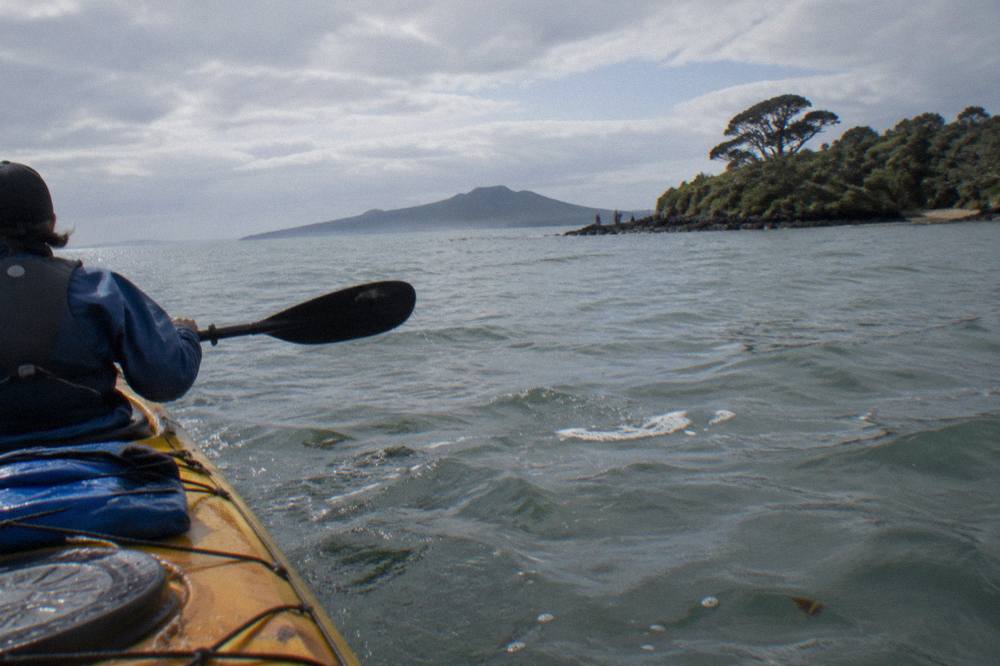
The honest framing is this: water comes aboard in three predictable ways. Drips run down the paddle shaft to your hands and lap. Waves and boat wake throw spray over the deck when conditions are lively. And your feet sit lowest in the boat, so they get wet first, from entering the kayak at the beach or ramp and from any water that pools in the footwell. Everything else is manageable with clothing choices.
Maritime NZ, the national maritime authority, gives the standard advice that applies to every paddle craft in this country: dress for the water temperature, not the air temperature, because cold water shock is the real risk, not dampness. That guidance sits on the Maritime NZ recreational craft pages, and it is worth reading before you pack. The same authority introduced a nationwide rule in October 2026 requiring everyone on a recreational craft of six metres or less, kayaks included, to wear a properly fitted lifejacket while underway. Guided tours supply the lifejacket; you supply the clothing sense.
If you are weighing which tour to book and how wet each one gets, three options span the range well:
How Wet Does Each Auckland Kayak Tour Get?
Sheltered paddles get you damp, open-water crossings get you properly splashed. The short bioluminescence night tours, from $64.03 and $67.59 per person, and the city paddles from Westhaven Marina are the driest end of the scale. The 6 hour 30 minute Rangitoto crossings, from $139.16 per person, involve a long open-water paddle where spray over the deck is common. Expect wet feet on all of them.
Every tour on this site is different in character, and the water behaves differently at each start point. Tours leaving from Westhaven Marina, the City Lights Night Kayaking Tour at 2.5 hours and the City Scenes waterfront tour at 2 hours 30 minutes, both from $82.36 per person, paddle sheltered inner-harbour water where waves are small and spray is minimal. You will still climb into the kayak at the Z Pier boat ramp with the water an arm's length away, and drips from the paddle will still find your lap.
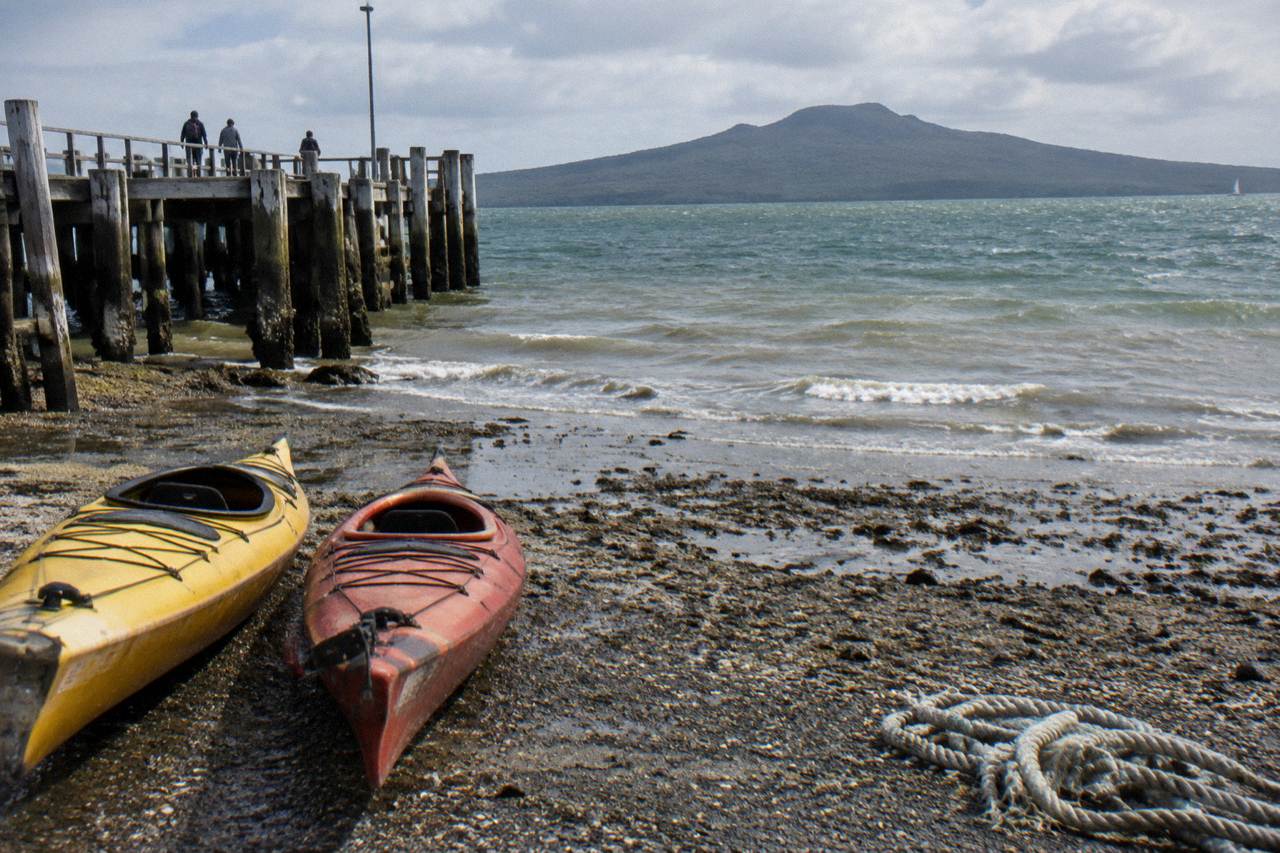
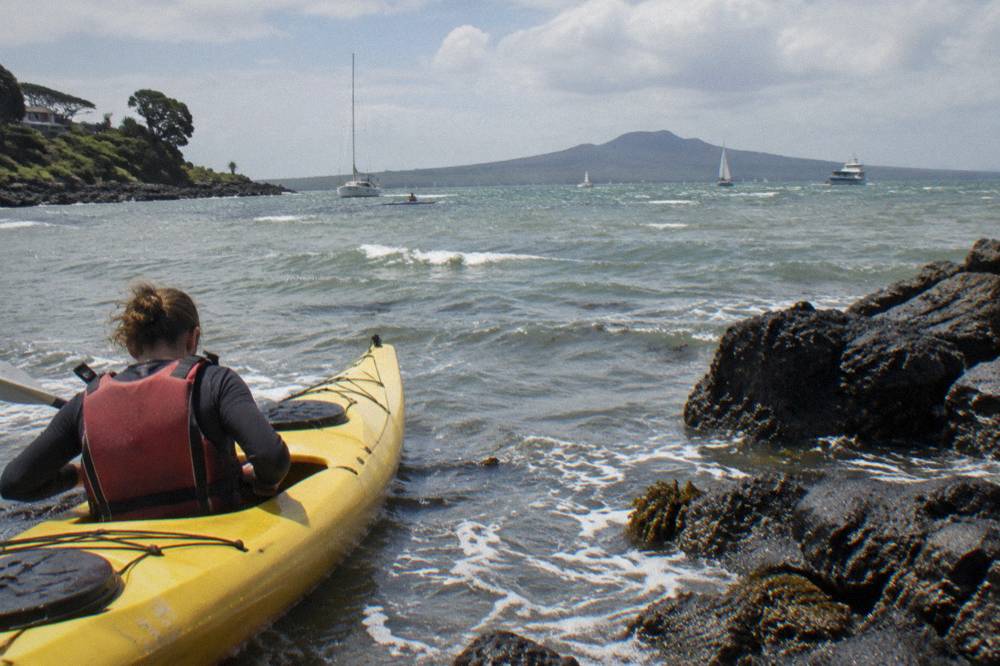
The island crossings are the wet end. The Rangitoto sunset and day tours, both 6 hours 30 minutes and from $139.16 per person, and the Motukorea half-day, 4 hours and from $110.76 per person, all start at St Heliers Bay boat ramp on Tamaki Drive and cross open Hauraki Gulf water to reach their islands. Wind against tide can throw consistent spray there, and Auckland Sea Kayaks runs these trips within strict wind and sea limits for exactly that reason. The Department of Conservation, which manages the islands, describes Rangitoto as accessible to experienced kayakers, roughly two hours from the mainland; a guided tour in a stable double with a professional guide is how beginners do it safely.
| Tour | Start point | Duration | Wet rating | What gets wet |
|---|---|---|---|---|
| Night Kayak Tour in Glowing Bioluminescent Waters | Given at booking | 1.5 to 2 hours | Light | Feet, hands, drips on clothing |
| Bioluminescence Kayak Tour, Est. 1994 | Exact location emailed before 10 AM on the tour day | 2 hours | Light | Feet, hands, drips on clothing |
| City Lights Night Kayaking Tour | Westhaven Marina, Z Pier | 2.5 hours | Light | Feet, seat, occasional spray |
| City Scenes Waterfront Tour | Westhaven Marina, Z Pier | 2 hours 30 minutes | Light | Feet, seat, occasional spray |
| Browns Island Volcano Tour | St Heliers Bay boat ramp | 4 hours | Moderate | Feet, seat, spray over deck in breeze |
| Motukorea / Browns Island half-day | St Heliers Bay boat ramp | 4 hours | Moderate | Feet, seat, spray over deck in breeze |
| Rangitoto day and sunset tours | St Heliers Bay boat ramp | 6 hours 30 minutes | Highest here | Feet, seat, regular spray, wet outer layer |
| Goat Island Clearyak hire | Goat Island Road, Leigh | 30 or 60 minutes | Feet to the knees | Operator says you may get wet to the knees |
One entry on that table deserves its own note. The Goat Island clear-bottom kayak hire, from $72.13 per double kayak for up to two people, is an unguided rental rather than a tour, and the operator's own FAQ says plainly that you may get wet to the knees, because you wade in to launch from the beach. It runs in the warmer season only, peaking December to February, so check the operator website and the booking page before driving up to Leigh.
The brewery and tavern paddles sit in between. The Coastal Brewery Kayak Tour, 2 hours with about 90 minutes of stated paddling from Browns Bay, and the Riverhead Tavern paddle, 2 hours with about 60 minutes of paddling from Herald Island, both stay on calmer water but still involve beach launches. The Hallertau Clevedon tour shuttles you from the brewery to a beach in Waitawa Regional Park to launch.
What Should You Wear To Stay Warm And Dry?
Wear quick-dry synthetics or merino, avoid cotton and jeans entirely, bring a windproof spray or shell jacket, and pack a full change of clothes for afterwards. Cotton holds water and loses its insulation when damp, which is the one clothing mistake that genuinely matters. Shoes should be ones you do not mind getting wet, because your feet will.
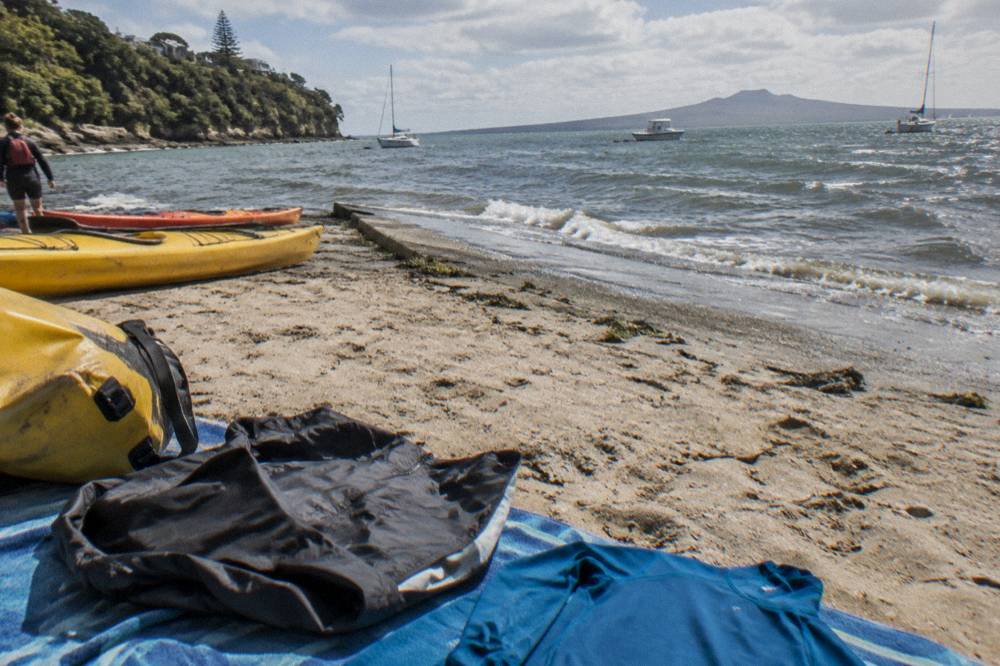
This is the section that decides how your day feels. The golden rule from every paddling authority, including Maritime NZ, is to dress for the water temperature. Auckland sea temperatures run cool in winter and warmest in late summer, and a dunking or even steady spray in winter is a different proposition from the same in February.
Layering beats any single miracle garment. A thin base layer, a warm mid layer and a shell you can shed gives you control as the day warms or the wind picks up. The Rangitoto day tour runs 6 hours 30 minutes, includes a 7 km return summit walk with about 250 m of climbing on rough volcanic track, and includes a BBQ lunch, so you need clothes that work wet in the boat and dry enough on land. The operator supplies all kayaking and safety equipment; clothing is yours to bring.
| Item | Why it helps | Skip it if |
|---|---|---|
| Quick-dry shorts or leggings | Dry fast after spray and beach launches | Never skip |
| Merino or synthetic base layer | Insulates even when damp | Never skip |
| Windproof spray or shell jacket | Blocks wind chill and most spray | Sheltered summer paddles |
| Hat with a brim and sunglasses | Sun glare off the water is constant | Overcast days |
| Sandals, water shoes or old trainers | Feet get wet at every launch | Never wear thongs alone |
| Full change of clothes and a towel | The drive home in wet clothes is miserable | Never skip |
| Wetsuit | Warmth if you swim or capsize | Usually not needed on guided summer paddles |
A note on phones and cameras: a dry bag or a ziplock inside your jacket pocket is not optional. Spray, drips and rain find bags. The guided tours include a guide who carries safety and communications gear, but your own electronics are your own problem.
Will You Get Wet Feet And A Wet Seat Every Time?
Yes, effectively every time. Launching and landing at a boat ramp or beach means stepping in shallow water or sliding into a cockpit that has water in it, and feet are the lowest point of the boat. On the Goat Island clear kayaks the operator states you may get wet to the knees. Treat wet feet and a damp seat as guaranteed and plan around them rather than hoping to avoid them.
The launch sequence is where most of the day's water arrives. At St Heliers, tours launch from the boat ramp in shallow water close to shore, and settling into a kayak there tends to involve a splash or two before the real paddling starts. At Westhaven, you board from the Z Pier ramp. At beach launches like Goat Island or the Waitawa beach used by the Hallertau Clevedon tour, you walk the boat out through shallows first. Every method puts water somewhere on you before the paddle stroke begins. The full index of guides sits on Auckland Kayak Tours.
The seat itself deserves expectation-setting. Double sea kayaks used on the guided tours have cockpit rims and often spray decks or cockpits that collect a little water, and paddling is a dripping business: every stroke runs water down the shaft to your hands, and your lap sits directly under that line. Nobody is soaked through by drips alone, but a base layer that hates water, meaning cotton, will feel it.
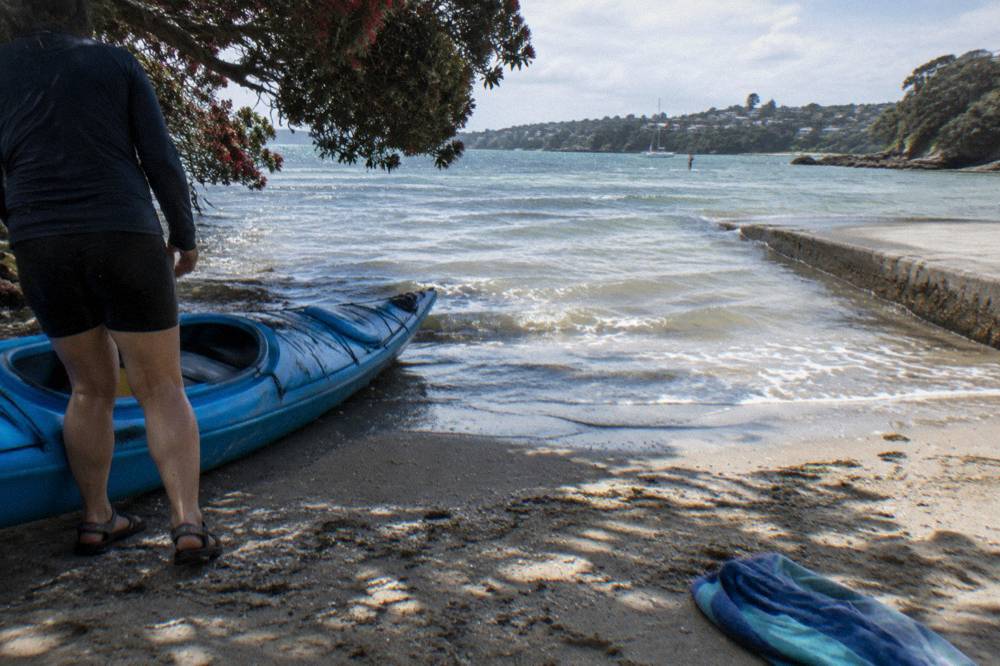
Landing repeats the process in reverse. On the island tours you land on a beach, step out into shallows and help drag the boat above the waterline. On the Rangitoto tours you then walk a volcanic track, which is why sturdy shoes that tolerate water beat anything delicate. DOC's own guidance for Rangitoto visitors asks for sturdy footwear because of the rough, uneven lava terrain and loose gravel.
The people who enjoy these tours most are the ones who stopped fighting the water early. Resigned, prepared and dry again afterwards is the correct order of operations.
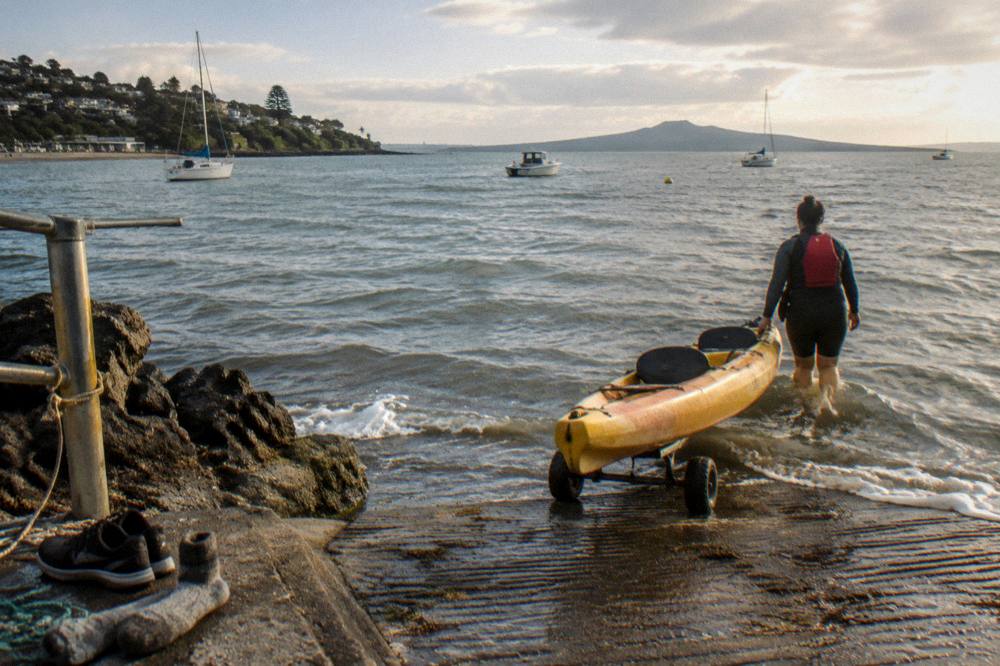
Do You Need A Wetsuit On An Auckland Sea Kayak Tour?
Usually not on a guided tour in the warmer months, and wetsuit provision is not stated on most of the tours here, so do not count on one being supplied. A wetsuit is a reasonable personal choice for winter paddles, for the night bioluminescence tours, or for anyone who swims readily, because it insulates you in the water, not just on it. Ask the operator when booking.
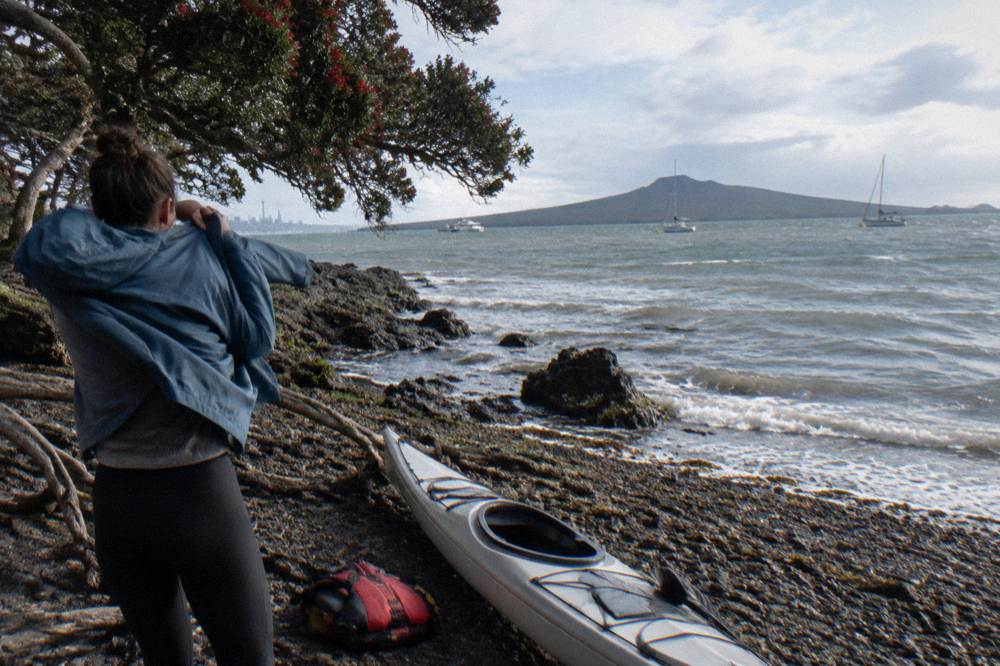
This is where honesty matters more than reassurance. Most tour listings here do not state a wetsuit as included equipment. What the guided tours do state is gear: kayak, paddle and safety equipment, including the lifejackets now required by the national lifejacket rule for craft of six metres or less. If a wetsuit matters to your comfort, the answer is to ask the operator directly before the day rather than assume.
The case for bringing your own wetsuit is about the water, not the deck. If you capsize and wet-exit, you are suddenly immersed, and Maritime NZ's paddling guidance is blunt that cold water shock kills and that dressing for the water temperature is the countermeasure. A wetsuit turns an unplanned swim from an emergency into an inconvenience. The trade-off is that on a warm, calm day a wetsuit is hot, restrictive and largely unused weight.
The sunset tour to Rangitoto, 6 hours 30 minutes from $139.16 per person and rated 4.9 across 179 reviews, illustrates the middle ground. It paddles back to St Heliers after dark with navigation lights on every kayak, so the trip ends in the cool of the evening, and its operator Auckland Sea Kayaks notes bioluminescence is sometimes seen on this route between October and April, never guaranteed. Someone who runs cold might welcome a wetsuit layer for the return leg; someone who runs warm will not.
For the night bioluminescence tours the same logic applies with less crossing involved. The most reviewed tour on this site, the Night Kayak Tour in Glowing Bioluminescent Waters, runs just 1.5 to 2 hours from $64.03 per person, is rated 4.9 across 327 reviews, and stays on sheltered water, but night air feels cooler than the thermometer says, especially damp.
What Happens If You Capsize Or Take A Wave?
Capsizes on guided Auckland tours are rare because the boats are stable doubles, the guides choose conditions within strict limits, and beginners are welcome with no experience needed, but they are not impossible, and the design of the day assumes the possibility: guides carry rescue gear and train for it, and your lifejacket is the piece of equipment that makes a capsize survivable rather than dangerous.
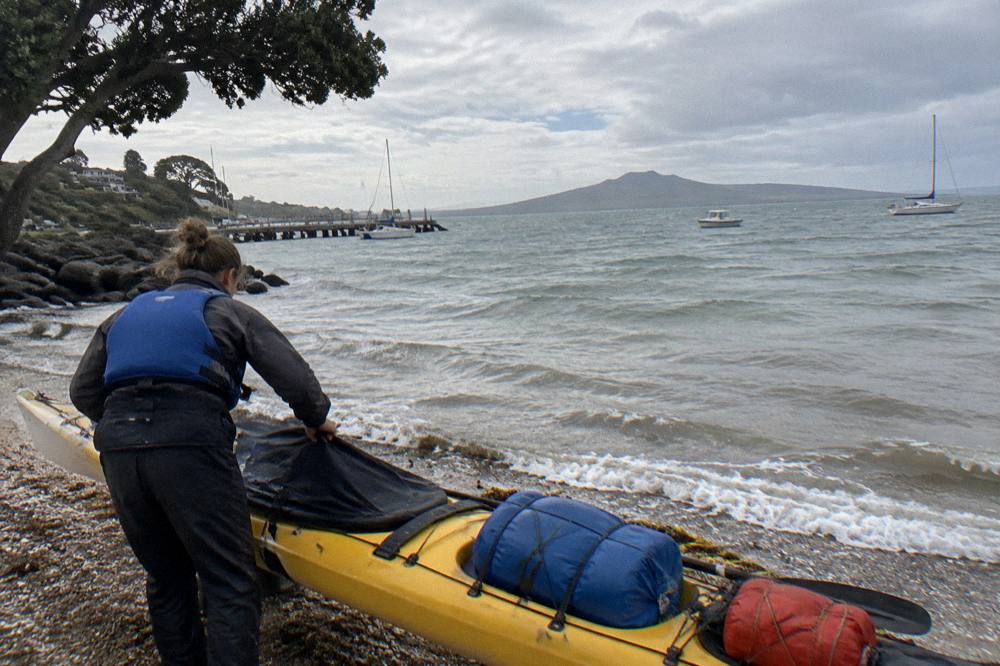
Start with the boats. The Auckland Sea Kayaks island tours and the Tiritiri Matangi day tour use stable double sea kayaks, which are dramatically harder to flip than single boats, because two paddlers dampen each other's wobble. That is why these operators can honestly say beginners are welcome. The trade-off is that when a double does go over, two people get wet at once, which is why the guide-to-guest ratios and the guide's rescue training matter.
The guide's job on the water includes exactly this. Canoe & Kayak Adventures, running since 1994, staffs its bioluminescence tour at a stated ratio of one guide to six guests, and its guides give full tuition before launch. Auckland Sea Kayaks operates as a certified Adventure Activity Operator, audited under the national adventure activities regime, which exists because this kind of tour carries real, managed risk.
| Scenario | Likelihood on a guided tour | How wet you get | What protects you |
|---|---|---|---|
| Paddle drips | Every tour | Damp hands and lap | Quick-dry clothing |
| Spray over the deck | Common on island crossings and breezy days | Wet outer layer | Spray or shell jacket |
| Wave or wake at launch | Occasional | Wet feet to knees | Water shoes, shorts |
| Capsize | Rare | Fully immersed | Lifejacket, guide rescue training, close group |
| Operator weather cancellation | Possible on any tour | None | Full refund or reschedule under operator terms |
If the operator cancels for weather, the terms are straightforward: Auckland Sea Kayaks offers a full refund or a reschedule when conditions are unsafe, and the Canoe & Kayak Adventures Tiritiri trip arranges an alternative paddling location when its stretch of water does not suit. The wider question of cancellations is covered in detail in the guide to Auckland kayak tour weather and cancellations, which explains what happens to your booking when the forecast turns.
For readers curious about the actual mechanics of wind and waves, the blog piece on the 50/90 rule in sea kayaking explains how wind rarely delivers its full stated strength on the water. And if the fear of flipping is what sits behind the wetness question, the honest answer is in how likely a sea kayak is to flip: stable tour doubles in guide-selected conditions flip seldom, and the wet you will actually experience is the ordinary kind, splash and drips.
Does The Weather Change How Wet You Get?
Yes, more than any other factor. Wind is the main driver of spray, and the MetService marine forecast for the Hauraki Gulf is the reference operators and paddlers use; on a calm day you may finish nearly dry, while the same tour in a 15 knot breeze will soak your outer layer. Rain adds its own water from above regardless of sea state.
The water is coolest in winter and warmest in late summer. Guides read the conditions daily, and the final go or no-go call is often made on the day. Auckland Sea Kayaks states it operates within strict wind and sea limits, and if conditions are unsafe it may transfer you to a sheltered tour such as the City Lights or City Scenes paddles, reschedule, or refund in full if no alternative suits.
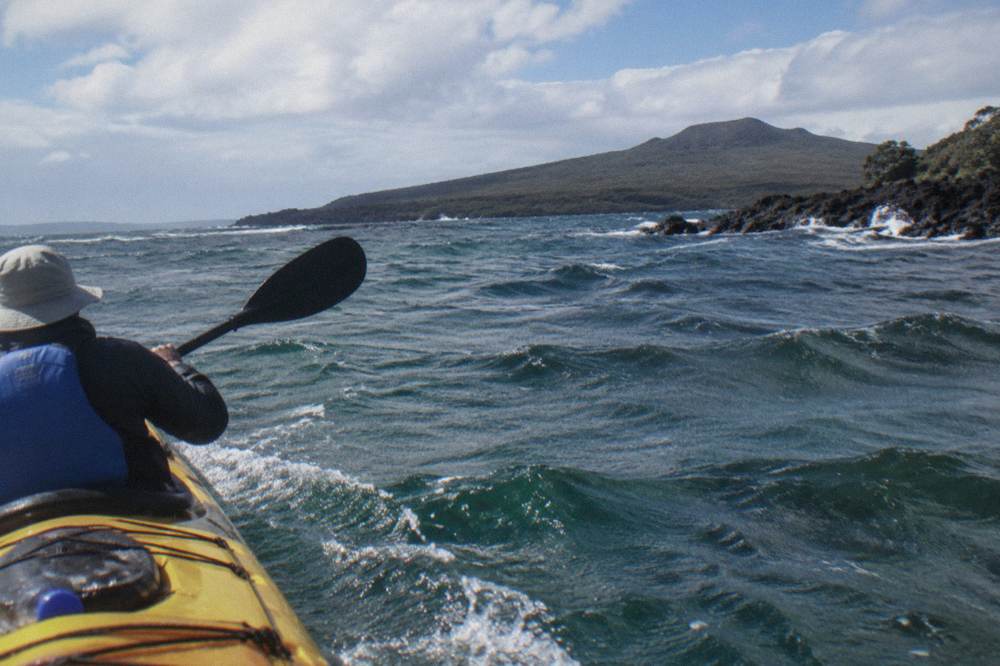
Rain is the underestimated one. A dry, windless Auckland day with drizzle still wets you steadily, and a hood or cap keeps it out of your eyes on the forward stroke. The good news is that rain on its own, without wind, rarely makes the sea rough in the sheltered corners these tours use, which is why the city paddles from Westhaven run in conditions that would scrub an island crossing.
The Department of Conservation's Hauraki Gulf pages, including its guide to the Hauraki Gulf Marine Park, cover more than 1.2 million hectares of park across 50-plus islands, and conditions within it vary enormously between the sheltered Waitemata and the open gulf. Your tour's route is chosen with that variety in mind. Before any independent paddling, or just to understand what your guide is watching, the MetService marine forecasts publish the recreational Hauraki forecast daily.
Seasonally, daylight saving runs from late September to early April, with sunset late in midsummer, which shapes which tours feel warm after dark and which feel bracing. The general guidance on picking a time of year is in when to kayak in Auckland, including what the warmer bioluminescence season means for night paddles.
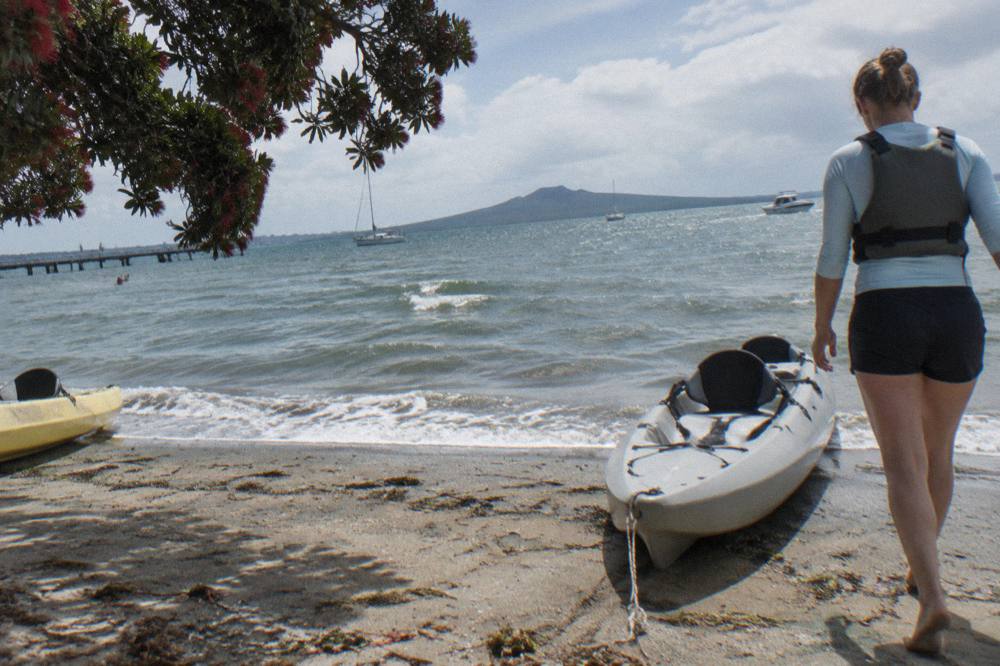
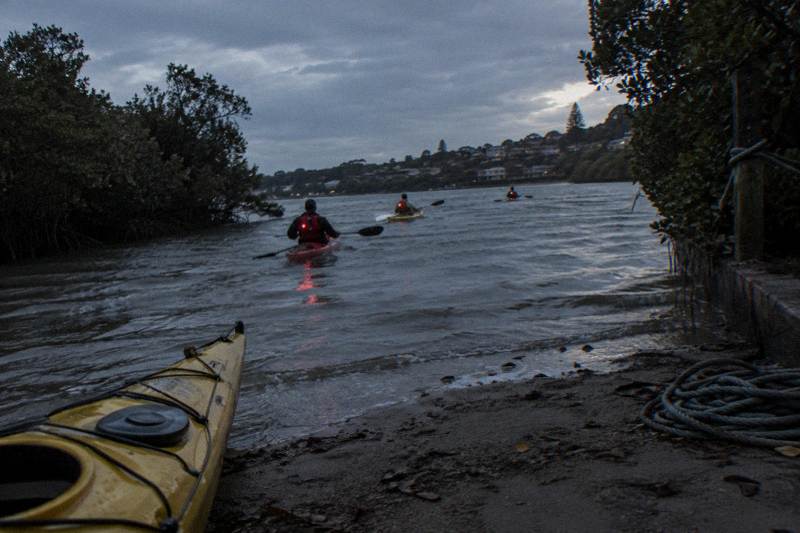
For the night bioluminescence tour specifically, dressing for a damp, cool evening is the right baseline:
One practical habit ties the whole wetness question together: keep a towel and a full change of clothes in the car at the start point, whether that is St Heliers, Westhaven or a beach further afield. For the broader packing list, the companion guide on what to wear sea kayaking in Auckland goes layer by layer.
Common Questions About Getting Wet On An Auckland Kayak Tour
Do You Get Wet On An Auckland Sea Kayak Tour?
Yes, a little. Wet feet, a damp seat and paddle drips on your lap are normal on every tour. Operators here describe kayaking as a wet sport. Full immersion is rare on guided tours in stable double kayaks.
Will I Get Soaked Through On The Rangitoto Tours?
These are the wettest of the tours here, with around an hour and a half on the water each way across open Hauraki Gulf water, but soaked through is the wrong expectation. Spray over the deck and a wet outer layer are common in breeze; quick-dry clothing and a shell jacket manage it.
Do The Tours Provide Wetsuits?
Wetsuit provision is not stated on most of the tours covered here, so do not assume one is supplied. Tours state kayak, paddle and safety equipment including lifejackets. If a wetsuit matters to you, ask the operator before booking.
Do I Need To Be Able To Swim?
The tours here state no swimming requirement, and you wear a supplied lifejacket throughout, which the national rule now requires on kayaks anyway. That said, comfort in and around water makes any paddle more enjoyable.
What Shoes Should I Wear?
Anything that can get wet: sandals with a heel strap, water shoes or old trainers. Feet get wet at every launch and landing, and on the island tours you walk rough volcanic track after landing, so sturdy beats flimsy.
Does Rain Cancel A Tour?
Not automatically. Operators cancel for wind and sea state, not rain, and Auckland Sea Kayaks may transfer you to a sheltered harbour tour, reschedule, or refund in full when conditions are unsafe. The final call is often made on the day.