How Likely Is A Kayak To Flip?
A plain answer to how likely a sea kayak is to flip on an Auckland tour, why double kayaks are stable, what guides do if a capsize happens, and how to prepare.
In short
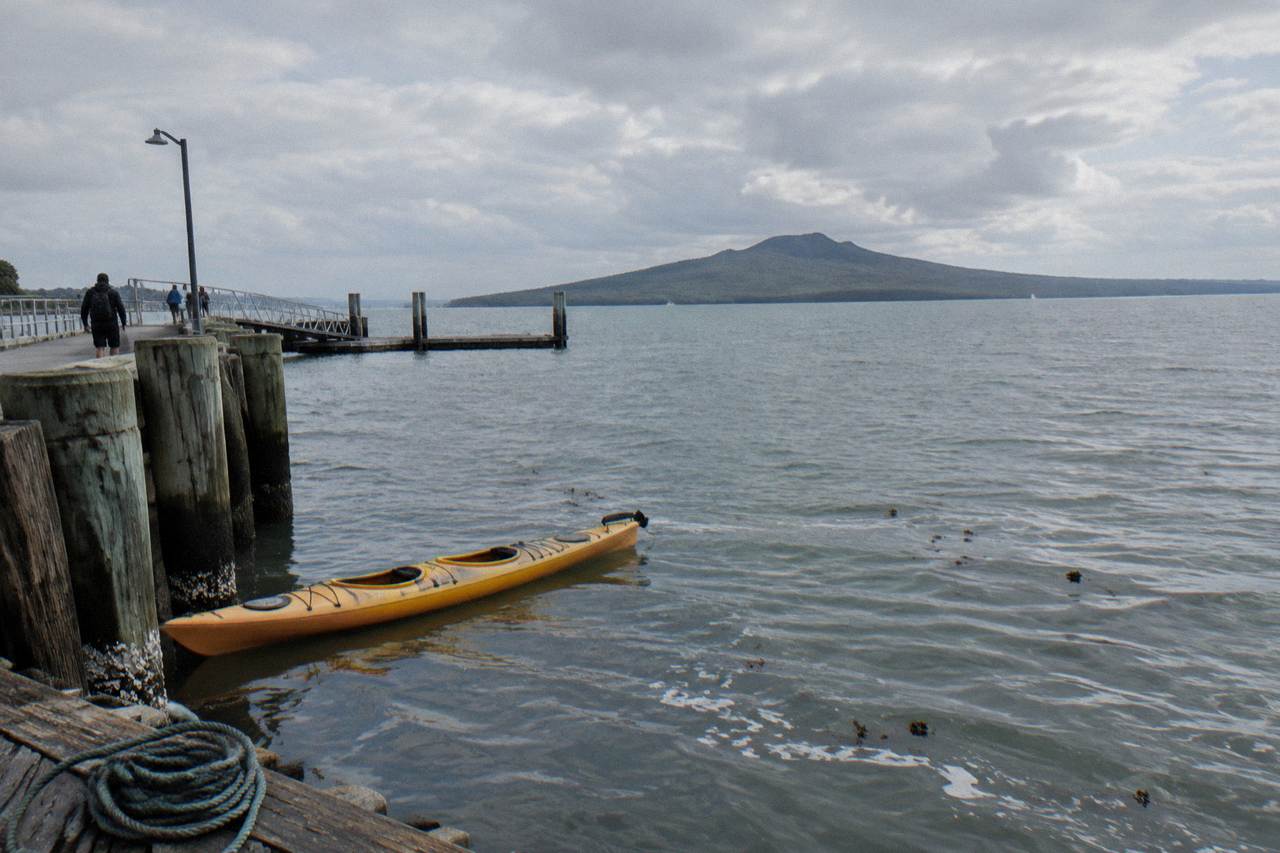
A flip on a guided Auckland tour is unlikely but never impossible. Operators welcome beginners with no experience. Lifejackets are worn, a guide sets the line and the pace, and Auckland Sea Kayaks makes the final call on wind and sea limits, often on the day. Even so, no operator promises an upright boat. The honest answer is that no operator publishes a capsize rate, and with a guide and a lifejacket a capsize is usually not dangerous.
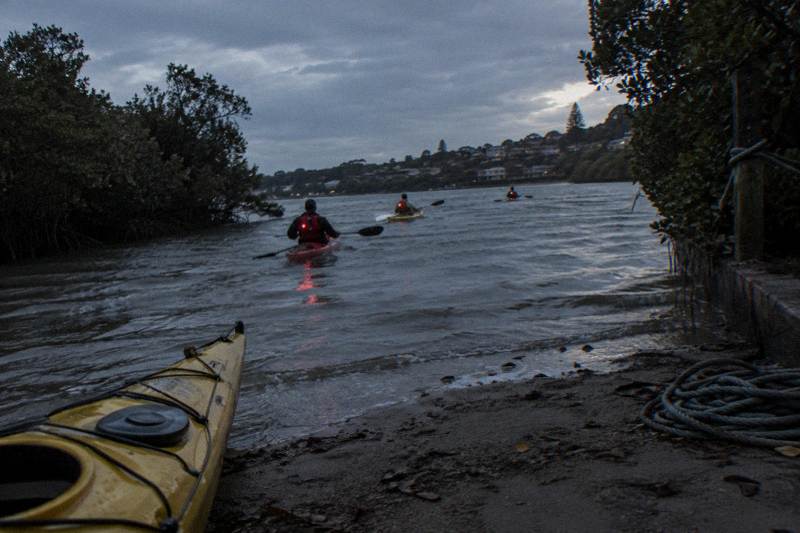
On a guided Auckland sea kayak tour, a capsize is unlikely but never impossible, and honest operators plan for it anyway. Where a tour states its craft, it is a stable double sea kayak, or on Canoe & Kayak tours a stable sea kayak or sit-on-top; most also state lifejackets and safety gear. A pre-launch briefing is spelled out on some tours only, so check the booking page for the rest. No operator promises an upright boat, and none should, because sea conditions change. The better question is not a percentage but whether a flip would be dangerous, and on these tours the answer is usually no: you are with a guide, wearing a lifejacket, in water you can be helped back from. Operators here describe their craft and their briefings openly. Auckland Sea Kayaks says beginners are welcome on all of its kayak tours, with no experience needed, which is a statement a company cannot make lightly when it has been running Hauraki Gulf trips since 2010.
What makes the question feel bigger than it is, for many readers, is the word "sea". A kayak on a lake near home feels manageable. A kayak on the Hauraki Gulf, next to a volcano, with a tide running, sounds like a different sport. In practice the two risks are separated by equipment and by judgement, and both are supplied on a guided tour. The craft matter first. Double sea kayaks are long, wide at the waterline relative to a single, and hard to tip by accident when loaded with two people and paddled at touring speed. The guided tours from St Heliers, Westhaven and further out all lean on that stability.
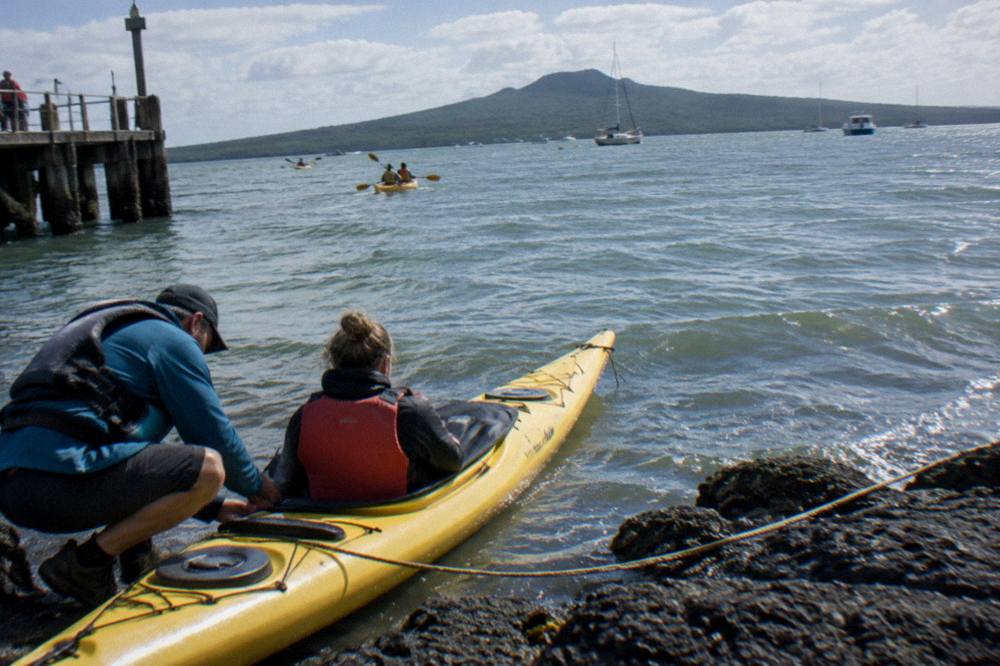
The situations that actually flip kayaks are well understood: sudden beam waves combined with a stopped paddle, leaning out to take a photo, bracing on one side with the blade out of the water, or climbing out of the boat in a hurry at a beach. None of them are mysterious, all of them are covered in a decent safety briefing, and none of them are required on a tour where a guide sets the line and the pace. A nervous reader deciding whether to book is usually deciding whether to trust the operator's judgement more than their own skill. That is exactly the right thing to do on a first sea paddle.
If the worry is the deciding factor between tours, three covered here sit at the gentle end of the scale, and the differences between them are real: length of time on the water, open-water exposure and group size.
For a deeper grounding in the general risk, the piece on beginner sea kayaking suitability works through who these tours are really for, and it makes a useful companion to this one.
How Stable Is A Double Sea Kayak On Auckland Tours?
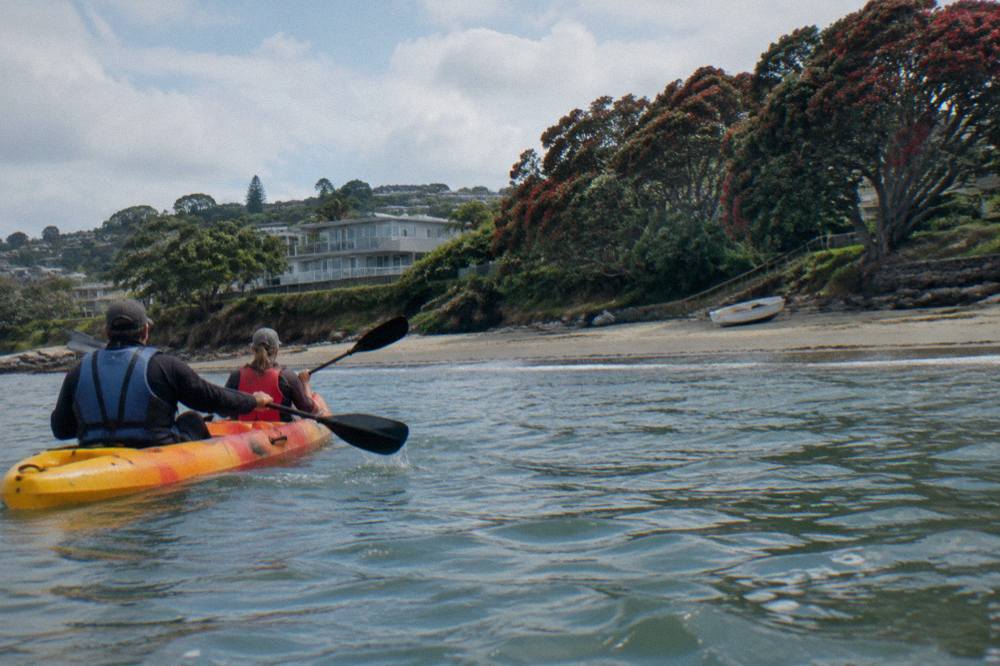
Very stable by design, and that is not marketing. Double sea kayaks used by Auckland operators are built to carry two adults and gear across open water, which makes them far harder to tip than a short recreational single. Auckland Sea Kayaks uses double sea kayaks on its island and harbour tours, welcomes beginners with no experience, and caps most groups at eight paddlers so a guide can watch everyone. The Canoe & Kayak Adventures Tiritiri Matangi tour also uses stable double sea kayaks, and the Clearyak hire at Goat Island is a double craft with a transparent bottom, with the operator saying beginners are "totally okay" and no kayaking experience needed. Across the tours covered here, the double kayak is the standard tool precisely because it forgives mistakes.
Stability has a technical side worth sixty seconds. A wider, longer hull resists tipping force, and two paddlers seated low act like ballast. What a double gives up in agility it gives back in forgiveness: weight shifts that would rock a narrow single barely register. The trade a nervous first-timer is making is therefore a good one. You will not turn as sharply as a skilled paddler in a performance single, and you will not need to.
The operator requirements published for Auckland Sea Kayaks tours also frame who the boats are for: paddlers of 120 kg or less who can fit a seat about 65 cm wide and stay seated for up to 45 minutes at a time. Those are comfort and fit limits, not athletic ones. Basic English for the safety briefing is asked for, with Spanish guides on request and Mandarin safety resources available. Alcohol is not permitted. None of this screens for strength or experience, because the boats and the guide cover that.
A comparison of the craft and group sizes across a representative set of the tours shows the pattern clearly.
| Tour | Operator | Craft | Group max | Guide |
|---|---|---|---|---|
| Sunset kayak tour to Rangitoto Island | Auckland Sea Kayaks | Double sea kayak | 8 | Yes |
| Auckland Volcano, Motukorea, Browns Island | Auckland Sea Kayaks | Double sea kayak | 8 | Yes |
| Auckland Browns Island Sea Kayak Volcano Tour | Social Nature Movement | Not stated | 16 | Yes |
| Auckland City Lights Night Kayaking Tour | Auckland Sea Kayaks | Double sea kayak | 8 | Yes |
| Tiritiri Matangi Sea Kayak Tour | Canoe & Kayak Adventures | Double sea kayak | 16 | Yes |
| Goat Island Clearyak rental | Clearyak NZ | Double, clear bottom | Not stated | No, rental |
One row in that table behaves differently from the rest, and it is worth naming. The Goat Island hire is the one unguided product among the fourteen tours covered on this site. Everything else is guided. That single difference changes the capsize conversation, because a guide is not just a route-setter but the person who makes the call on conditions, spots a paddler struggling early, and manages the group's spacing. A nervous first-timer should weigh that heavily.
The half-day volcano paddle from St Heliers is a good worked example of the guided model. The Motukorea and Browns Island tour runs 4 hours total in double sea kayaks with a group cap of eight, includes morning tea and a guided walk to the summit, and holds a 5.0 rating across 38 reviews. Check availability
Do You Need Experience To Keep A Sea Kayak Upright?
No, and on the guided tours here that is the operators' stated position rather than an inference. Auckland Sea Kayaks lists beginners as welcome with no experience needed on its kayak tours. Clearyak at Goat Island says beginner is totally okay. Canoe & Kayak Adventures includes all tuition from experienced, qualified guides on its bioluminescence and island tours. The experience that matters on a guided tour is not yours but the guide's: reading the forecast, choosing the line, timing the crossing and deciding, on the day, whether conditions are inside the operator's limits. Auckland Sea Kayaks says it operates within strict wind and sea limits, with the final call often made on the day.
What a beginner actually contributes to staying upright is modest and learnable in minutes: sit low, keep your paddle active, do not lean out for a photo, and let the guide set the pace. The failure mode most new paddlers fear, a rogue wave appearing from nowhere, is rare in the sheltered waters these tours use. The Waitemata Harbour paddles from Westhaven and the Browns Bay brewery route both operate close to shelter, and guides adjust the plan when the forecast shifts.
What does the honest fine print say? Operators here choose their wording carefully, and that care is itself worth reading. Bioluminescence is described as sometimes seen and never guaranteed. Weather cancellations are stated plainly: if Auckland Sea Kayaks cancels for safety, the options are a transfer to a sheltered tour such as City Lights or City Scenes, a reschedule, or a full refund if no alternative works. Clearyak offers a full refund or rebook if weather stops the hire. These are companies that plan around conditions rather than around promises, which is exactly what a nervous paddler wants to see.
The island crossings are where the honest caveats attach. The Department of Conservation describes Rangitoto as accessible to experienced kayakers, about two hours from the mainland. On Tiritiri Matangi it notes that the stretch of water between the island and the mainland can get rough and windy, so that trip is not for beginners. None of that is a warning against the guided tours; it is the reason the guided tours exist. A guide with local knowledge converts a trip that demands experience into one that welcomes its absence. More on the general safety picture is in the Hauraki Gulf sea kayak safety guide.
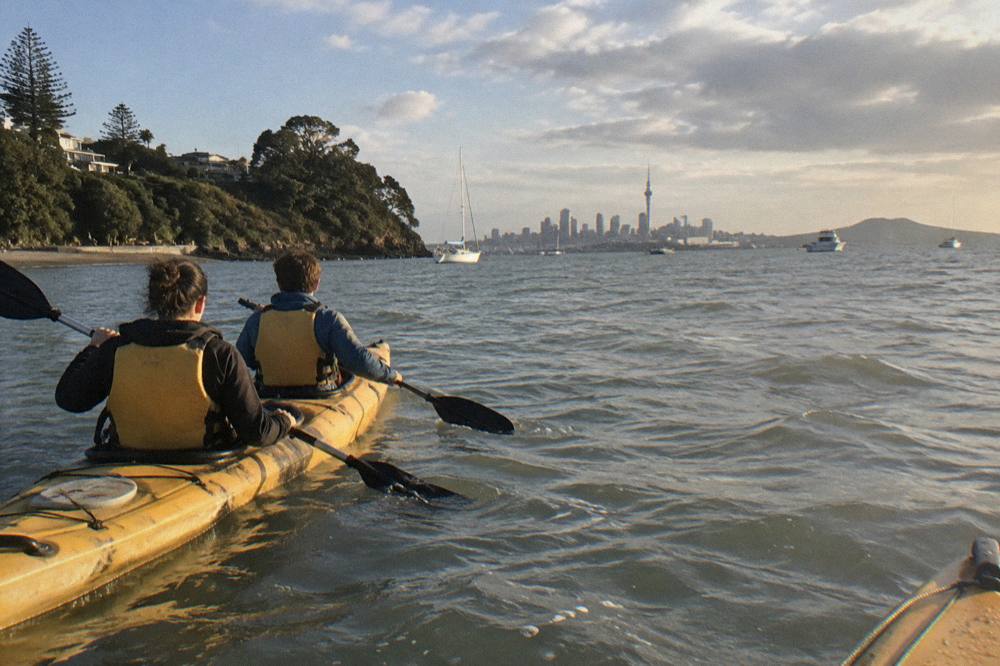
The Browns Island volcano tour from Social Nature Movement is another confidence-friendly option from St Heliers Bay: 4 hours total, 120 of those minutes stated as paddling, gear and guide included, and a 5.0 rating across 22 reviews. Short stated paddling time and a group cap of sixteen make it a genuine alternative for a first-timer comparing options.
What Happens If A Guided Tour Kayak Does Capsize?
The short, calm answer: you float, because you are wearing a supplied lifejacket, and your guide manages the recovery. Most guided tours covered here state a guide and equipment in their inclusions, though the guide is not stated on City Scenes, Hallertau and Waiheke, and gear is not stated on City Scenes. The national rule now requires everyone on a recreational craft of six metres or less, kayaks included, to wear a properly fitted lifejacket while underway. That rule came into force on 9 October 2026, and Maritime NZ announces it in plain terms on its recreational craft pages. Guided tours supply the lifejacket, so there is nothing for you to arrange. If the boat goes over, the sequence is standard: stay with the craft, keep hold of your paddle if you can, and wait for the guide, who trains for exactly this.
Re-entry is the part beginners imagine as impossible, and it is usually mundane. With a guide stabilising the kayak, a paddler climbs back in from the water, helped by the boat's stability and often by a paddle float or a partner's balance in a double. Maritime NZ's advice to recreational paddlers is to practise re-entry before you need it, and that advice is aimed at independent paddlers. On a guided tour the practise is done for you, in the sense that the guide has done it many times and talks you through it.
Cold water is the part that deserves respect, and New Zealand's national safety body is direct about it. Maritime NZ notes that cold water shock kills, and advises paddlers to dress for the water temperature, not the air temperature, and to carry two waterproof ways to call for help. Again, guided tours absorb most of this: the operator chooses the season, the route and the craft, and carries the communications. The Hauraki Gulf is coolest in winter and warmest in late summer, so plan clothing around the season rather than a specific temperature. The what to wear sea kayaking guide covers layers, wetsuits and footwear in detail.
One habit worth adopting even as a passenger on a guided tour: check the forecast yourself the day before. The MetService marine forecasts cover the Hauraki Gulf, and knowing what the guide is looking at makes the morning briefing make sense. Tides matter too, and Land Information New Zealand publishes Auckland tide predictions; check the LINZ tide table if you want to see what the water will be doing. None of this homework is required, but nervous readers usually feel better with it done.
| Capsize factor | On a guided Auckland tour | Independent paddling |
|---|---|---|
| Craft choice | Stable double sea kayaks | Your own boat, any stability |
| Conditions call | Guide decides within operator limits | You decide |
| Lifejacket | Supplied and required | Your responsibility, legally required |
| Recovery | Guide-assisted re-entry | Self or partner rescue |
| Communications | Carried by the guide | Yours to carry, two waterproof ways advised |
| Route | Set by guide, adjusted for weather | Yours, unaided |
What Do Auckland Operators Do To Prevent Flips?
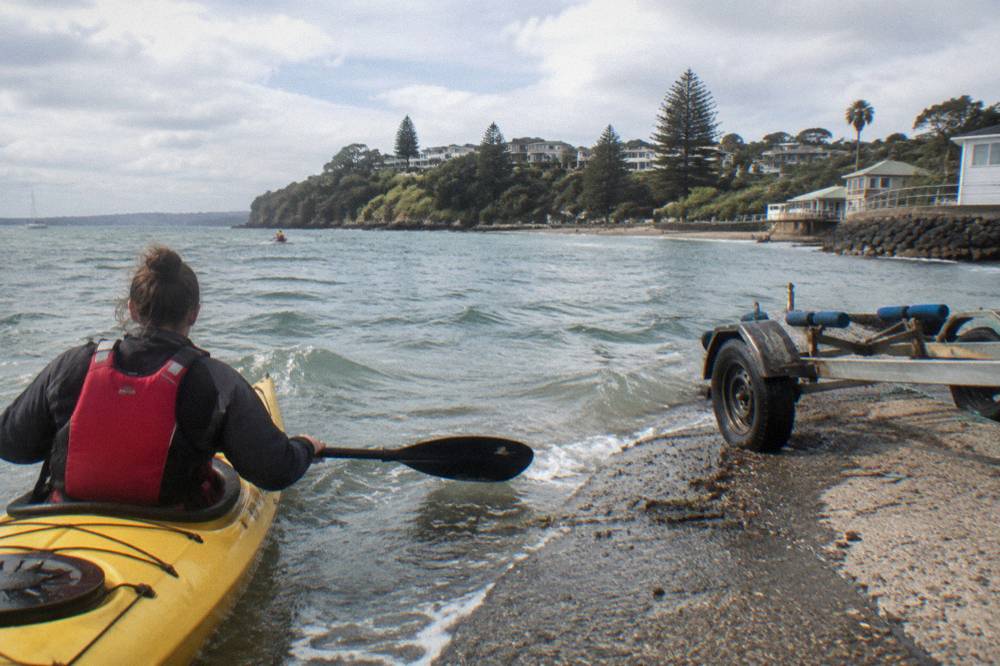
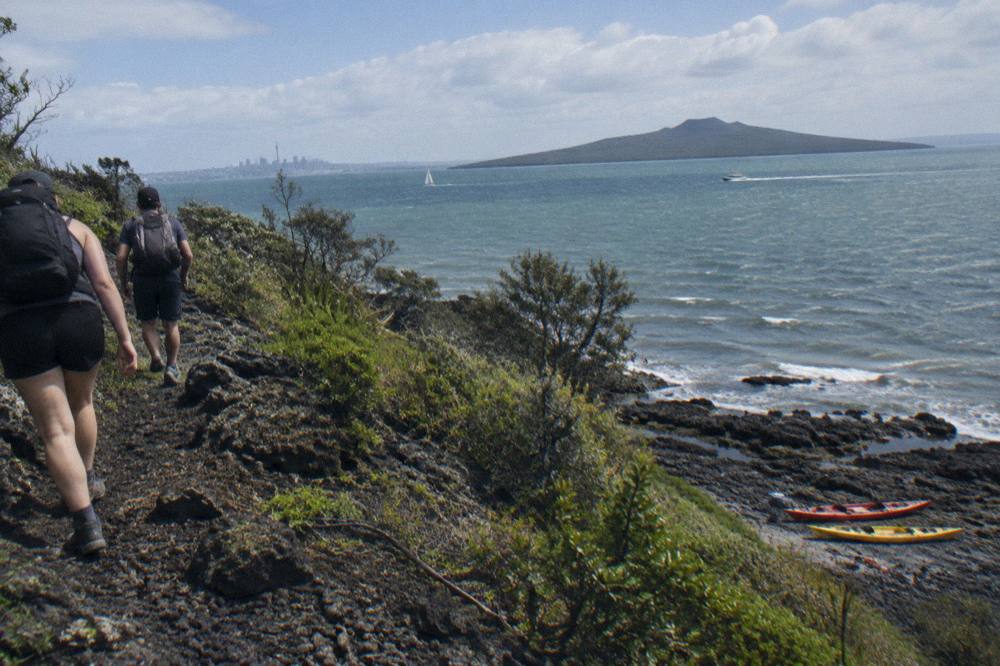
They pick the craft, the day and the water, in that order. Double sea kayaks for stability, strict wind and sea limits with a final call on the day, small groups so nobody paddles unnoticed, and full briefings before launch. Auckland Sea Kayaks states all of these; Canoe & Kayak Adventures runs a guide to guest ratio of one to six on its bioluminescence tour, its longest-standing product. Prevention on a guided tour is structural, not personal. You are not asked to prevent a capsize through skill; you are placed in a situation where a capsize has been made unlikely by other people's decisions.
The group caps are worth reading as safety data rather than marketing. Group sizes cap at eight paddlers on the Auckland Sea Kayaks island tours, nine on City Scenes, sixteen on the Social Nature Movement tours, twenty-four on the Canoe & Kayak Adventures bioluminescence and brewery paddles, and sixteen on its Tiritiri Matangi day. Smaller groups mean more attention per boat and more room to space out across the water. For a nervous first-timer comparing tours, group size is one of the few numbers on a booking page that maps directly to how closely you will be watched.
Then there is the weather machinery. Auckland Sea Kayaks says it operates within strict wind and sea limits, and if conditions are unsafe it may transfer you to a sheltered tour, reschedule, or refund in full if no alternative works. Canoe & Kayak Adventures says that if weather conditions are unsuitable for the Tiritiri Matangi paddle, an alternative paddling location will be arranged. These policies read as dry sentences; in practice they are the mechanism that keeps capsize risk low, because the people with the most experience at reading the Hauraki Gulf are the ones with the power to cancel. The weather and cancellations guide explains what happens to your booking when a tour is called off.
The Auckland Sea Kayaks site also documents the operator's credentials behind all this: operating since 2010, Qualmark Gold, a certified Adventure Activity Operator audited under QualWorx, and a holder of a Pest Free Warrant for island landings. Certification does not keep a kayak upright by itself. It does indicate an operator whose safety systems are inspected rather than self-declared, which matters to a reader weighing risk.
Cancellation terms are the other honest print. The Auckland Sea Kayaks booking pages state free cancellation up to 24 hours before the start for a full refund, while the operator's own terms for client cancellations differ: more than 48 hours before departure brings a refund less a 25 percent admin fee, and inside 48 hours or a no-show brings no refund. Read both before booking, and note that an operator cancellation for weather brings a full refund or reschedule either way.
Which Auckland Guided Kayak Tours Suit A Nervous First-Timer?
Start with time on the water, not distance from the city. The shortest guided paddles here are the bioluminescence night tour at 1.5 to 2 hours and the Riverhead tavern paddle at 2 hours, both gentle, sheltered trips. The half-day Motukorea volcano tour at 4 hours is the natural first island paddle, in a double kayak with a group cap of eight and morning tea included. The 6.5 hour Rangitoto tours are magnificent but they are the biggest days here, with a summit walk and a long open-water component, and Auckland Sea Kayaks takes paddlers with little or no experience, so going straight to the island trip is a normal choice.
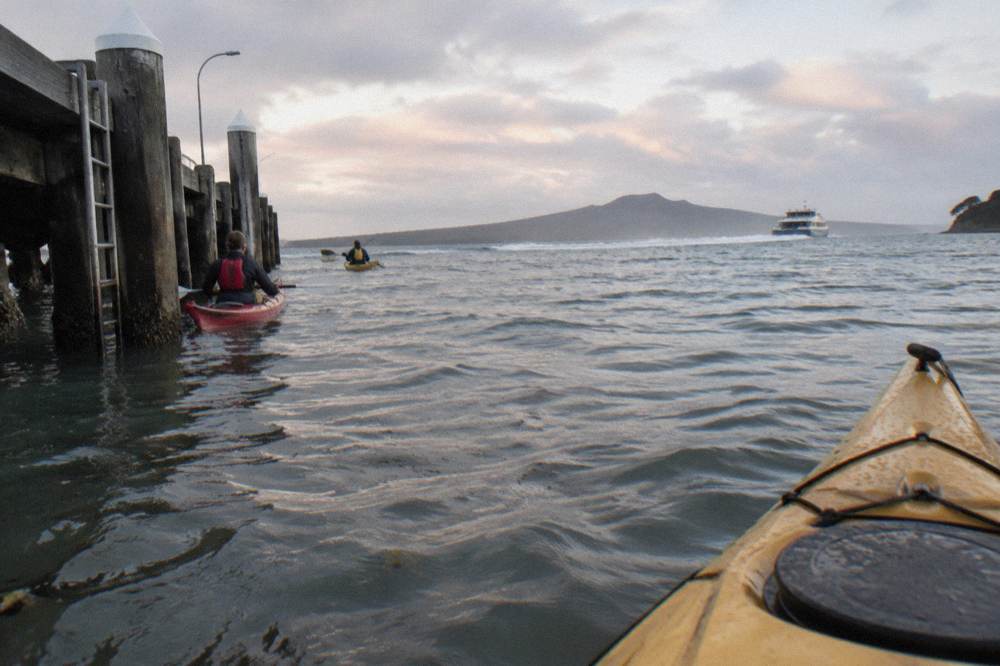
Price and review signals line up sensibly for a nervous reader. The bioluminescence night paddle is the most reviewed tour on this site, 4.9 across 327 reviews, from $64.03 per person. The Motukorea half-day is the highest rated tour with 20 or more reviews, 5.0 across 38, from $110.76 per person. The Social Nature Movement Browns Island tour, 5.0 across 22 reviews, from $83.80 per person, sits between them on both price and duration. Five of the fourteen tours here are new listings with no reviews yet, including the Riverhead tavern paddle at $62.48, the cheapest per person, and the 2-day Waiheke trip at $1,008.18, the highest. New is not bad, but a nervous first-timer may prefer the tours where hundreds of previous beginners have already voted.
| Tour | Total duration | From (USD) | Rating | Notes for a nervous paddler |
|---|---|---|---|---|
| Night kayak tour in glowing bioluminescent waters | 1.5 to 2 hours | $64.03 per person | 4.9 from 327 reviews | Short, sheltered, most reviewed |
| Bioluminescence kayak tour, est. 1994 | 2 hours | $67.59 per person | 4.1 from 206 reviews | One guide per six guests |
| Auckland Volcano, Motukorea, Browns Island | 4 hours | $110.76 per person | 5.0 from 38 reviews | Double kayaks, group of 8, summit walk |
| Auckland Browns Island volcano tour | 4 hours | $83.80 per person | 5.0 from 22 reviews | 120 stated paddling minutes |
| Goat Island Clearyak rental | 30 or 60 minutes | $72.13 per double kayak | 4.8 from 84 reviews | Unguided rental, warmer season only |
Two cautions on that table. The Goat Island hire price is per double kayak, up to two people, not per person, and it is the only option without a guide, a hire rather than a guided tour. It runs in the warmer season only, peak season December to February, so check the operator website and the booking page before driving to Leigh. The Department of Conservation's Goat Island marine reserve pages note that inexperienced paddlers should take care with sea conditions and currents there, which is fair context for an unguided hire.
If the fear is flipping, the cheapest ticket on this site is also one of the lowest-risk ways to test the fear.
A reader who enjoys that first hour on the water can graduate to the volcano paddles, then to the Rangitoto full days, each step adding open water and time rather than requiring new skills.
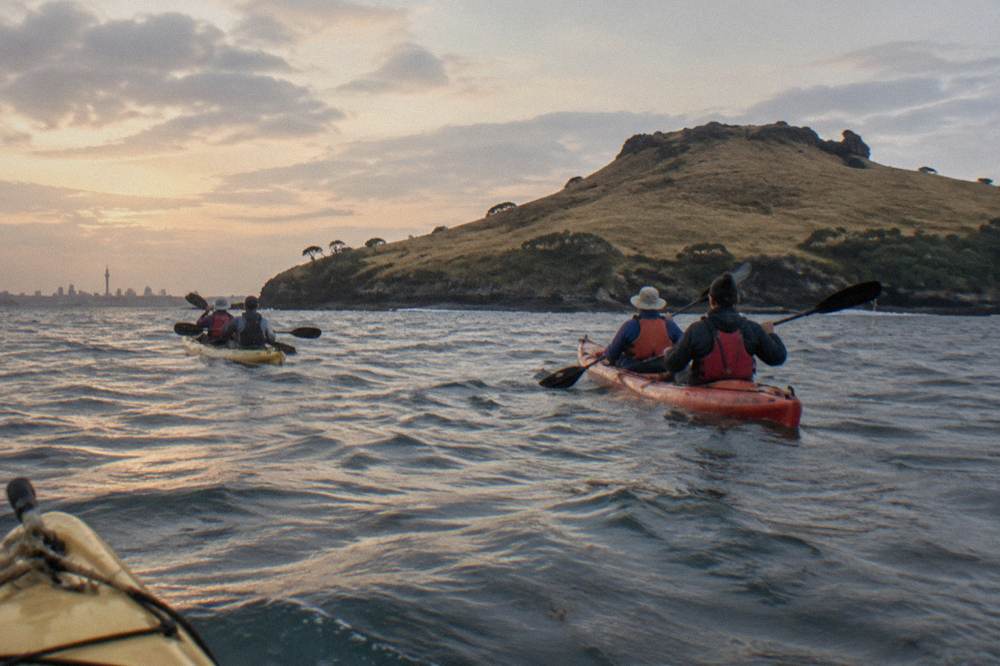
How Should You Prepare So You Stay Upright?
Prepare your body a little, your clothing properly and your expectations honestly. The operator requirements here are modest: sit comfortably for up to 45 minutes at a time, fit the seat, meet the weight limit of 120 kg on Auckland Sea Kayaks tours. Dress for the water, not the air, bring a change of clothes because kayaking is a wet sport, and read the briefing rather than enduring it. Nothing on the list is athletic, and none of it is about skill. The tour supplies the skill; you supply comfort and attention.
A few practical habits shrink the risk further. Keep a low centre of gravity by not sitting up on the backrest edge. Keep the paddle in the water when you feel wobbly, because a moving blade is a brace. Ask the guide at the briefing to show you what to do if the boat tips, before you leave the beach, not hypothetically afterwards. Eat and hydrate before a long tour, because tired paddlers get sloppy, and sloppy paddlers lean. If you are prone to seasickness, take your usual remedy; nausea makes every wobble feel worse.
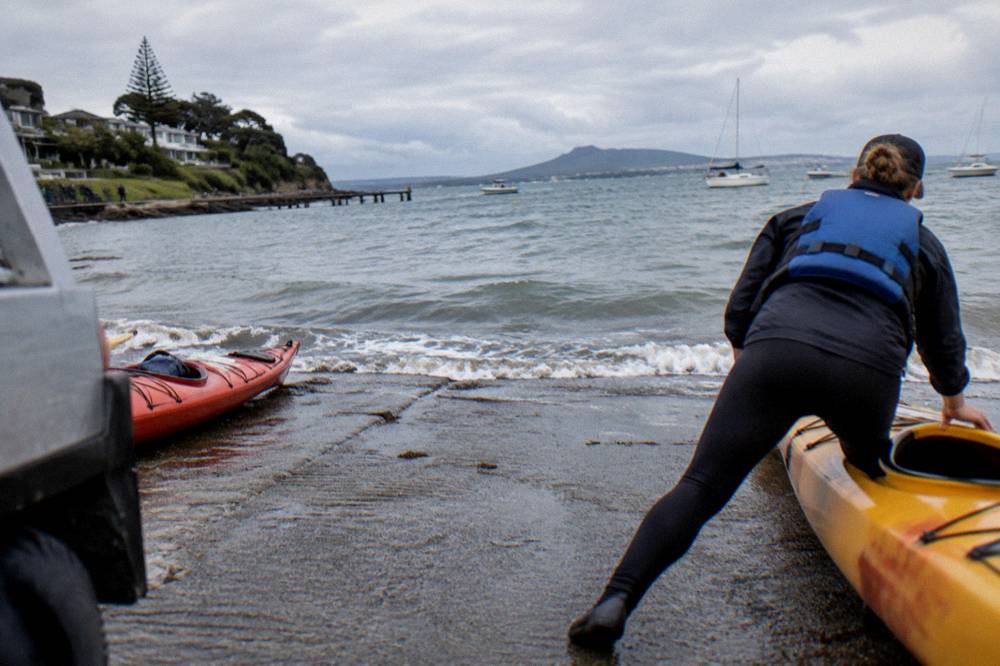
Timing and location choices help too. New Zealand daylight saving runs from late September to early April, sunset comes late in midsummer and early in midwinter, and the water is warmest in late summer. A first-timer planning a first paddle will find the season trade-offs set out in the when to kayak in Auckland guide. None of this prevents a capsize on its own; all of it stacks small advantages in the direction of a dry, calm day.
The final reassurance is the one the numbers already told. The most reviewed tour here has 327 reviews at 4.9, and the highest rated with 20 or more reviews sits at 5.0 across 38. Auckland Kayak Tours exists because ordinary visitors, most of whom had never held a paddle, keep coming back and reporting that the boat stayed up and the day was worth it. Trust the doubles, trust the guides, and go.
Common Questions About Kayaks Flipping
How Likely Is A Kayak To Flip?
On a guided Auckland sea kayak tour a capsize is uncommon. The double sea kayaks used here are stable craft designed for beginners, guides set the route and the pace, and operators work within strict wind and sea limits. A flip is always possible on the sea, but on these tours it is a managed event with a guide and a lifejacket, not an emergency.
Do You Need Experience To Keep A Sea Kayak Upright?
No. Auckland Sea Kayaks states beginners are welcome with no experience needed on its tours, Canoe & Kayak Adventures includes all tuition, and Clearyak at Goat Island says beginners are totally okay. The guide carries the experience: reading conditions, choosing the line and deciding whether the tour runs at all.
Are Double Kayaks Harder To Flip Than Singles?
Yes, in the conditions these tours use. A loaded double sea kayak is longer and more resistant to tipping than a short single, and two seated paddlers act as ballast. That is why doubles are the standard craft on the guided island and harbour tours covered here.
What Happens If A Tour Kayak Capsizes?
You float in a supplied lifejacket and the guide manages the recovery, including an assisted re-entry. Maritime NZ rules now require everyone on a kayak to wear a properly fitted lifejacket while underway, and guided tours supply them. Stay with the craft and follow the guide's instructions.
Can A Tour Be Cancelled Because Flipping Is Too Likely?
Yes, and that is a safety feature. Auckland Sea Kayaks operates within strict wind and sea limits with a final call often on the day, and may transfer you to a sheltered tour, reschedule, or refund in full. Canoe & Kayak Adventures arranges an alternative paddling location if conditions are unsuitable.
Which Auckland Kayak Tour Is Safest For A Nervous Beginner?
The shortest, most sheltered paddles: the bioluminescence night tour at 1.5 to 2 hours from $64.03 per person, 4.9 across 327 reviews, or the 2-hour Riverhead tavern paddle from $62.48. For a first island trip, the Motukorea half-day in double kayaks, 5.0 across 38 reviews, is the gentle option.