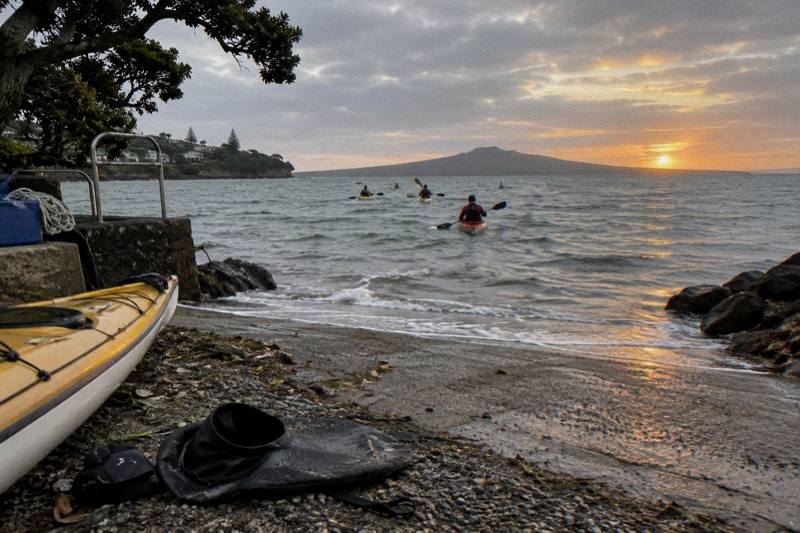
Do You Land On Rangitoto Island On A Kayak Tour?
Yes, on guided Auckland Sea Kayaks tours you land on Rangitoto Island and walk to the summit. Here is what the landing, the rules and the walk actually involve.
In short
Yes, the two Auckland Sea Kayaks guided tours from St Heliers, the sunset and the day version, land on Rangitoto Island. Both include a guided walk to the summit, cost from $139.16 per person and run 6 hours 30 minutes. Auckland Sea Kayaks makes its weather call on the day and may move you to a sheltered tour. Once ashore, pest-free biosecurity rules apply to every visitor and every piece of gear. No other tour covered on this site lands on Rangitoto.
Rangitoto is the youngest volcano in New Zealand, emerging from the sea just 600 years ago, and it can only be reached by ferry, boat or kayak. That fact alone shapes the question most first-time paddlers ask before booking: is this a paddle around the island, or do you actually get out and stand on it? The answer matters, because the walk to the summit is a very different experience from viewing the cone from the water, and the two guided tours that include the landing cost the same from price of $139.16 per person.
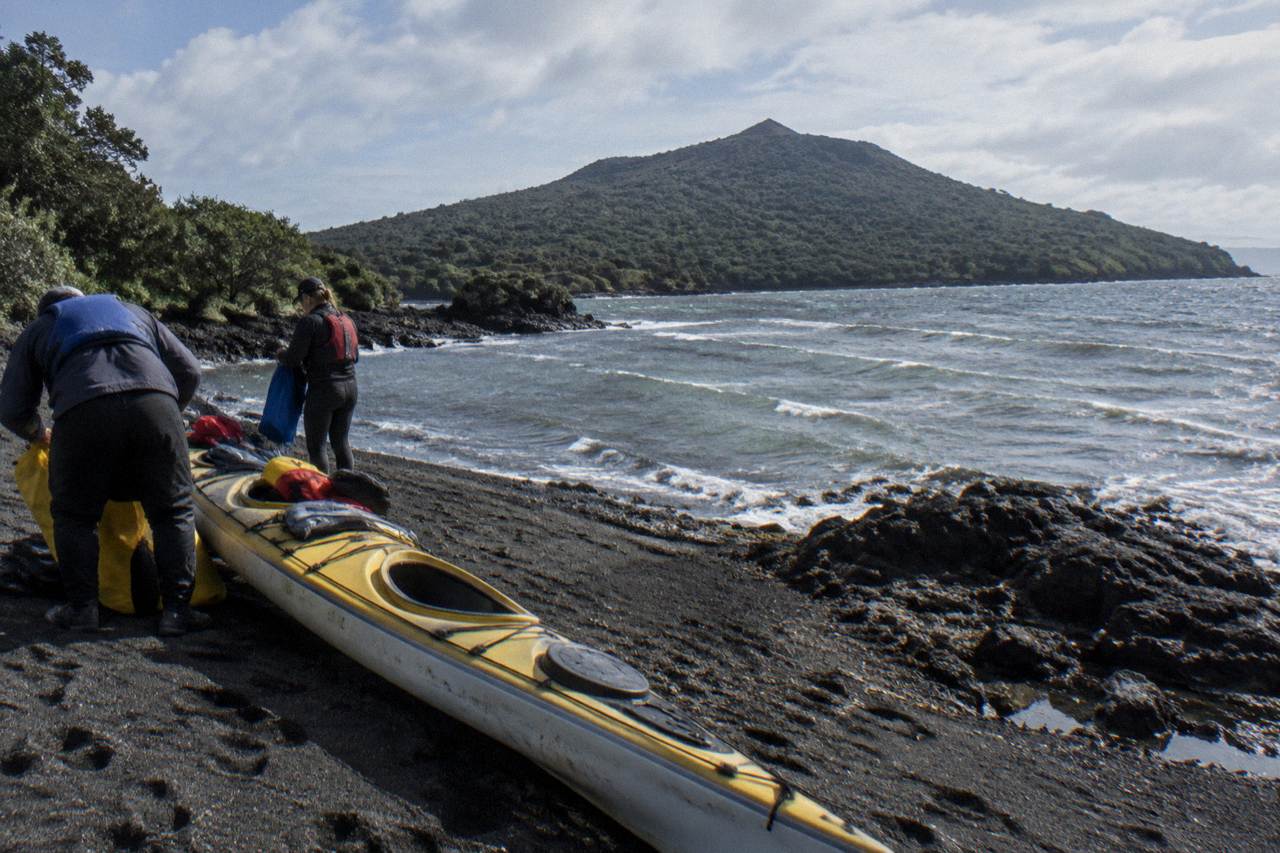
The short version is that yes, the guided tours operated by Auckland Sea Kayaks from St Heliers land on Rangitoto, and both the sunset and day versions include a guided summit walk. The landing is a beach landing at the island, made at the guide's discretion based on sea conditions, and once ashore the island's pest-free rules apply to every person and every piece of gear. This page walks through which tours land, what happens when you step ashore, what weather can do to the plan, and the rules DOC enforces on the island.
For planning around the wider question, the guide to Rangitoto kayak tours from Auckland covers every guided option, and the comparison of Rangitoto kayak versus ferry is useful if the landing is the main reason you are choosing a paddle over the boat.
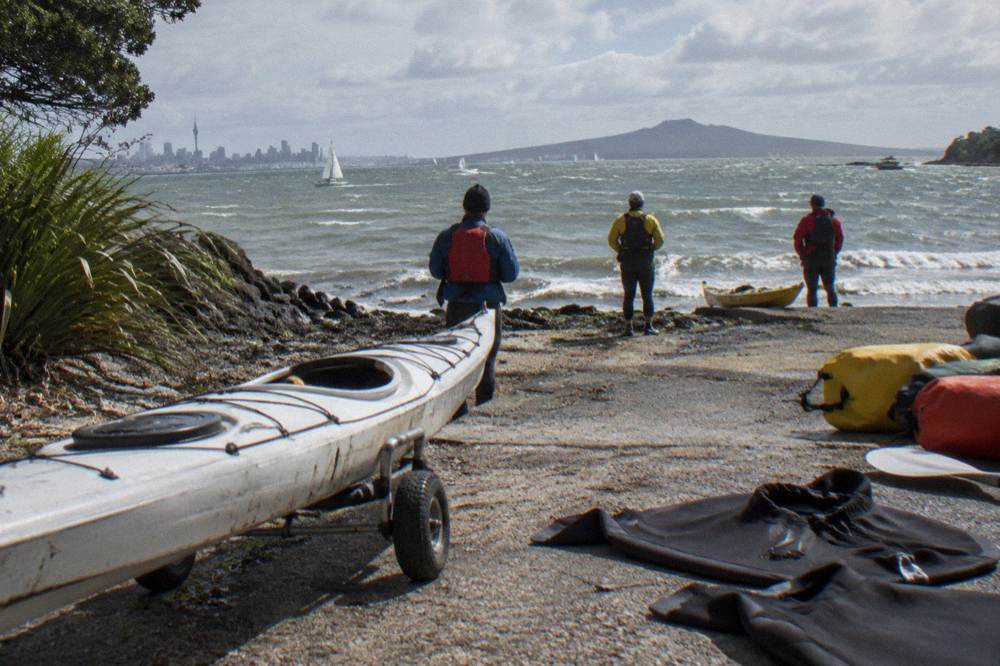
Yes, on the guided tours covered here you land on Rangitoto Island, and both Auckland Sea Kayaks Rangitoto tours, the sunset and the day version, include a guided walk to the summit after landing. The landing is a beach landing, made only when sea conditions on the day allow it, with the final call resting with the guide. On the island you follow pest-free biosecurity rules that apply to every visitor.
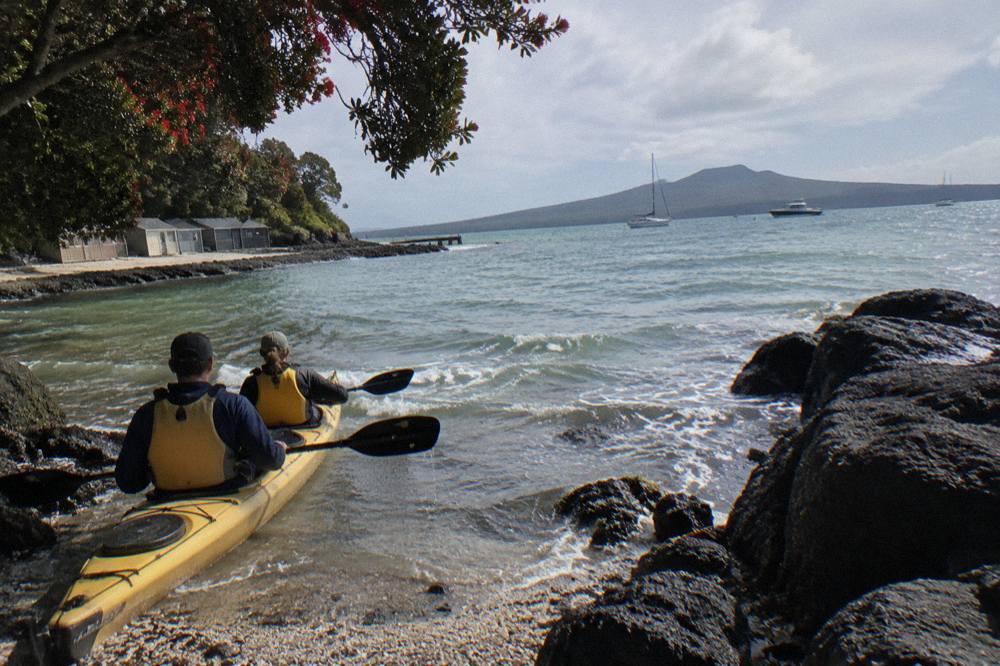
Those two tours are the core of the answer. The Sunset Kayak Tour to Rangitoto Island runs 6 hours 30 minutes in total, is rated 4.9 across 179 reviews, costs from $139.16 per person, and includes a BBQ dinner as well as the summit walk. The Auckland: Day Sea Kayak Tour of Rangitoto Island is the same price from $139.16 per person, runs the same 6 hours 30 minutes, is rated 4.9 across 83 reviews, and swaps the dinner for a BBQ lunch. Both use double sea kayaks, both take a maximum of 8 paddlers, both set a minimum age of 14 and a weight limit of 120 kg, and both start from the Auckland Sea Kayaks base at 384 Tamaki Drive, St Heliers. If you're wondering how the time splits between paddling and exploring the island, the guide to how long the Rangitoto kayak crossing takes breaks down what fills the day and why the crossing itself varies with conditions.
Landing, rather than merely circling, is what separates these trips from a harbour paddle. The Department of Conservation, which manages the island, notes that Rangitoto is accessible by ferry, boat and kayak only, and that an independent paddle there is accessible to experienced kayakers. The guided tours exist precisely because the crossing plus the landing plus the walk is a lot to coordinate on your own: the guide handles the sea state decision, the landing spot, the timing of the walk, and the food. The trade-off for that support is a long day, roughly six and a half hours door to dock, of which the summit walk is a 7 km return on foot from the landing area.
A natural comparison at this point is what else is on the water from St Heliers, so here is how the three Auckland Sea Kayaks island options compare on the details that decide a booking.
| Tour | Landing on island | Summit walk | Total duration | From price | Reviews |
|---|---|---|---|---|---|
| Sunset Kayak Tour to Rangitoto Island | Yes, conditions permitting | Included, guided | 6 hours 30 minutes | $139.16 per person | 4.9 across 179 |
| Auckland: Day Sea Kayak Tour of Rangitoto Island | Yes, conditions permitting | Included, guided | 6 hours 30 minutes | $139.16 per person | 4.9 across 83 |
| Auckland Volcano - Motukorea / Browns Island Sea Kayak Tour | Yes, at Motukorea | Included, guided | 4 hours | $110.76 per person | 5.0 across 38 |
The Motukorea row is there for honesty about scope: that tour also lands, and also walks to a summit, but the island is Browns Island, not Rangitoto, and the day is two and a half hours shorter. If your question is specifically about standing on Rangitoto's lava fields, the two Rangitoto tours above are the ones that do it.
Which Auckland Sea Kayaks Tours Include The Rangitoto Landing?
Exactly two tours from the base at 384 Tamaki Drive land on Rangitoto and walk to its summit: the sunset tour and the day tour, both 6 hours 30 minutes, both from $139.16 per person, both capped at 8 paddlers with a minimum age of 14. No other tour covered on this site lands on Rangitoto Island. The Motukorea half-day lands on a different island, Browns Island.
The distinction is worth spelling out because the words "volcano tour" get used loosely. The Auckland Volcano - Motukorea / Browns Island Sea Kayak Tour is a volcano landing tour, but the volcano is Motukorea, the cone that rises 68 m out of the Hauraki Gulf east of the city. It is a shorter commitment at 4 hours total, from $110.76 per person, rated 5.0 across 38 reviews, with a guided walk of about 1.5 km climbing about 70 m to its summit, and a lower minimum age of 12. It suits paddlers who want the land-and-climb experience without the longer Rangitoto day. The deeper comparison lives in the guide to Motukorea versus Rangitoto kayak tours.
On the Rangitoto tours themselves, the operator supplies the double sea kayaks, all paddling and safety gear, experienced guides and the catered meal. Auckland Sea Kayaks has been running guided Hauraki Gulf trips since 2010, holds a Pest Free Warrant for landing on conservation islands, and is a certified Adventure Activity Operator, details it publishes on its own site. The company states beginners are welcome and no experience is needed on its kayak tours, with a weight limit of 120 kg and the need to fit a seat about 65 cm wide, plus the ability to stay seated for up to 45 minutes at a time.
Getting to the start is its own small decision. The meeting point is the St Heliers Bay boat ramp at 384 Tamaki Drive, with free parking around St Heliers, and there is a free shuttle from the atrium of the Auckland War Memorial Museum that departs 30 minutes before the tour. The shuttle must be pre-booked and seats are limited, and no tour offers hotel pickup, so the museum shuttle is the one option for travellers staying central without a car. The guide to the St Heliers kayak meeting point covers arrival logistics in detail.
Cancellation terms deserve a careful read before booking, because two sets of wording exist side by side. The booking pages for the Auckland Sea Kayaks Rangitoto tours state free cancellation up to 24 hours before the start for a full refund, while the operator's own terms say more than 48 hours before departure brings a refund less a 25 percent admin fee, and inside 48 hours or a no-show brings no refund. Read both before you book, and if the operator cancels for weather you get a full refund or a reschedule. The guide to Auckland kayak tour weather and cancellations unpacks the whole policy.
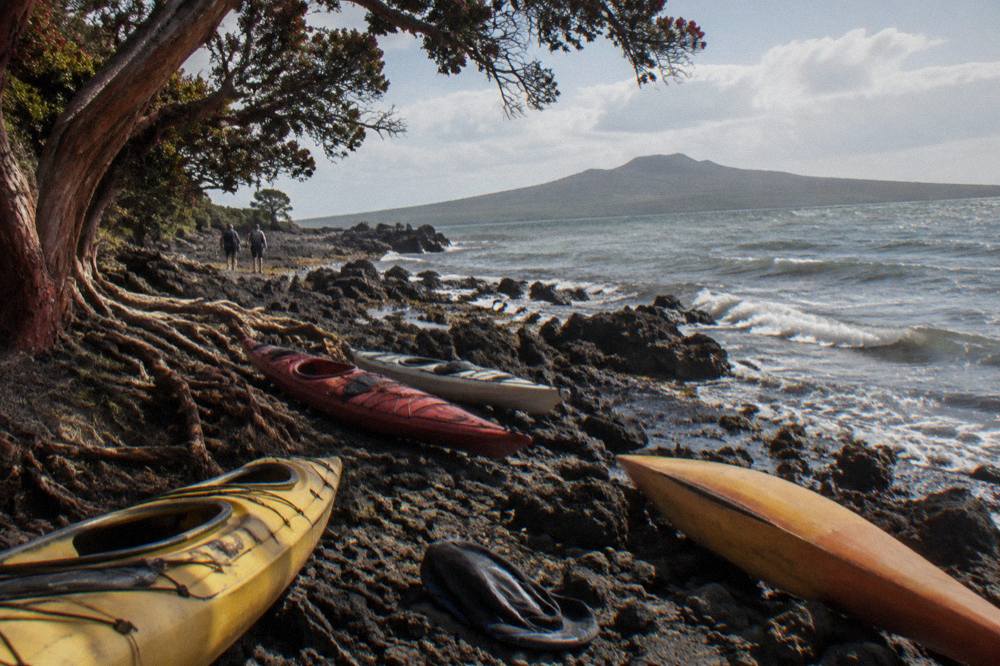
What Happens Once You Step Ashore On Rangitoto?
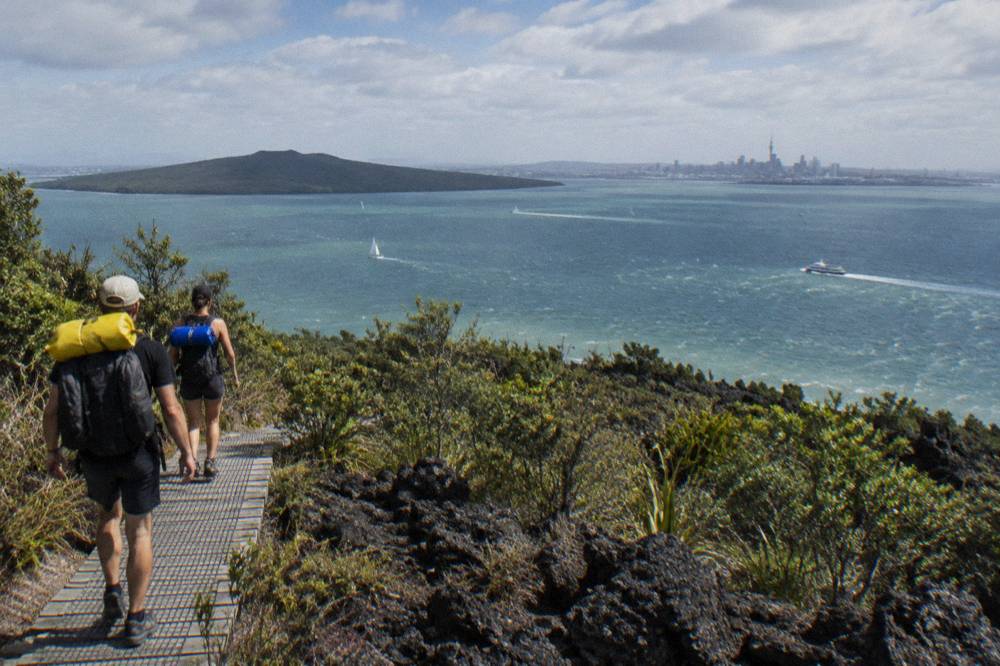
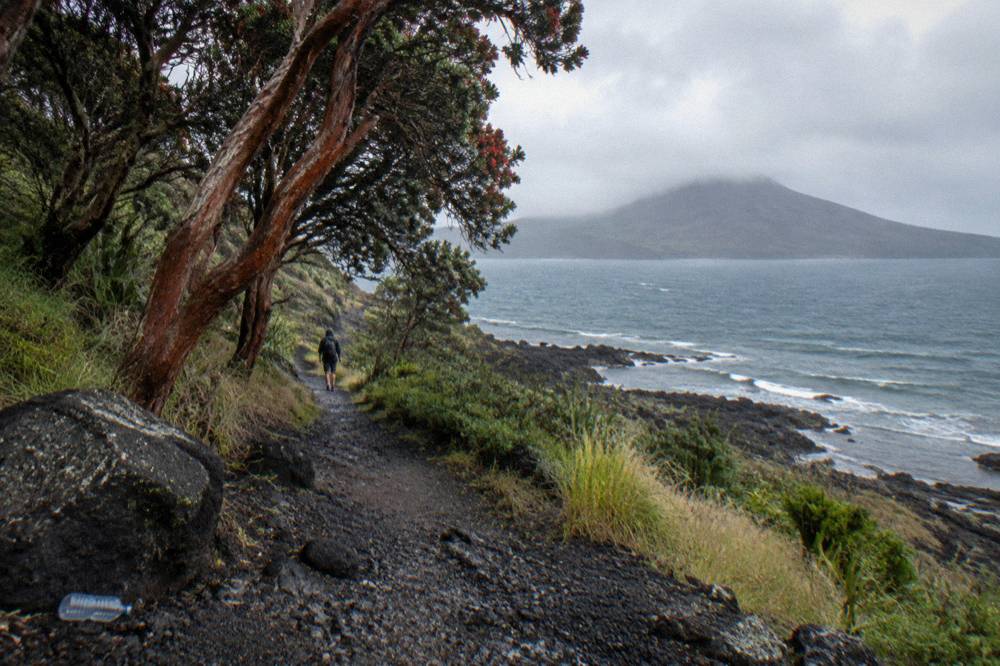
After landing, the guided tours walk the Summit Track, a 7 km return with about 250 m of climbing that DOC grades easy to intermediate and allows about 2 hours return. The day tour carries head torches for the lava caves, the sunset tour returns to the kayaks to paddle back after dark. There are no shops and no bins on the island, so everything you carry in, you carry out.
The walk is the payoff for the paddle. DOC describes the Summit Track as rough, uneven volcanic terrain with loose gravel and little shade, and the crater viewing platform sits near the top, with the Summit Lookout two minutes further. A short side option, the Crater Rim Track, is a 20 minute, 850 m loop from the summit area. The island holds the world's largest pohutukawa forest across a lava field that radiates heat, so sturdy shoes, sun protection and water are the practical kit list, and DOC warns wasps are more common in the warm months.
Timing is the difference between the two tours once you are ashore. The day tour makes the crossing and the walk in daylight, with head torches supplied for the lava caves. The sunset tour walks the summit late in the day, then paddles back to St Heliers after dark with navigation lights on every kayak. Sunset comes late in midsummer and early in midwinter, so the season shapes how much evening light the return leg gets. What neither tour can promise is the sunset itself; sky conditions vary, and the operator makes no guarantee of a glow, a view or any particular weather on any departure.
Food is handled on the island or at rest stops on the walk. The sunset tour is fully catered with a BBQ dinner and a hot drink, with dietary needs catered on notice, and the day tour runs a BBQ lunch the same way. DOC's own advice to independent visitors is to bring your own food and water because the island has no shops; on a guided tour the catering is included, but water and any personal snacks are still worth carrying for a six and a half hour day.
The lava field is a total fire ban zone, with no fires and no portable barbecues anywhere on the island, and no camping and no rubbish bins. The island's only accommodation is three rentable historic baches booked through rangitoto.org, none of which features on any tour here. For paddlers weighing the walking commitment against the paddle, the guide to how fit you need to be for a Rangitoto kayak tour covers the fitness question directly.
Can Weather Or Sea Conditions Stop The Landing?
Yes. Auckland Sea Kayaks states it operates within strict wind and sea limits, with the final call often made on the day, and the landing on Rangitoto is made only when conditions allow. If conditions are unsafe the operator may transfer you to a sheltered tour such as the City Lights or City Scenes paddle, reschedule you, or give a full refund if no alternative works.
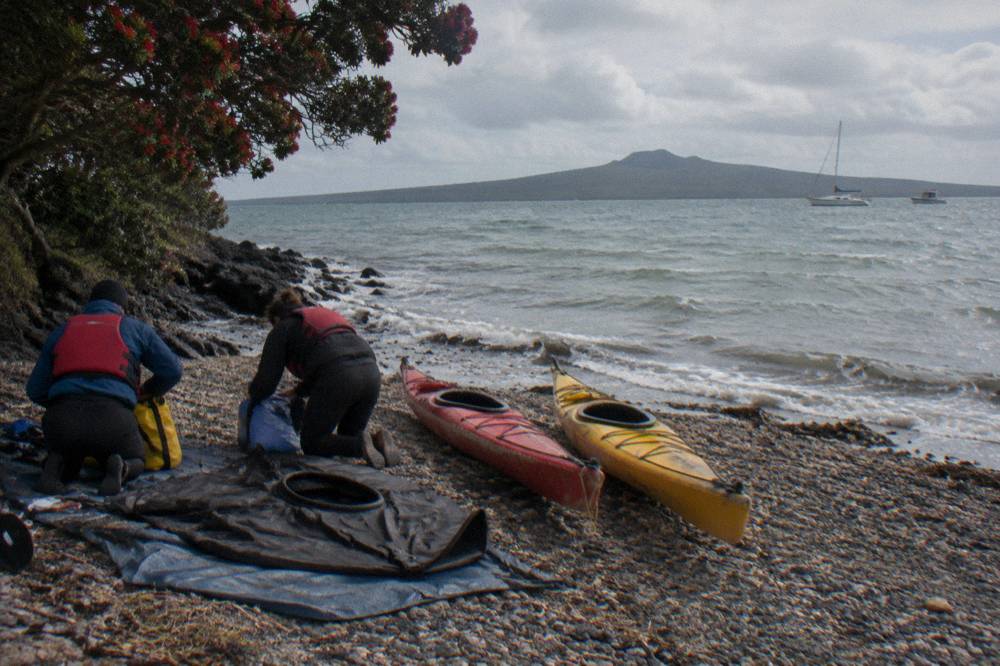
This is the honest edge of the question. Landing on an island in the Hauraki Gulf is not a turnstile operation; it is a judgment made by a guide looking at wind, swell and the beach on the day. DOC describes independent paddling to Rangitoto as "accessible to experienced kayakers", about two hours from the mainland. That is the clearest signal of why: the gulf can be glassy or it can blow hard, and a crossing that feels easy in the morning can be a different body of water by afternoon. A guided tour does not cancel the weather, it manages it, which is the entire argument for taking one. The rest of the planning pages sit on Auckland Kayak Tours.
The practical safeguards before you even launch are simple. Check the MetService marine forecast for the Hauraki Gulf the day before and the morning of your tour, and check the LINZ tide table if you are extending your trip with any independent paddling. Maritime NZ advises paddle craft users to dress for the water temperature, because cold water shock kills, and to carry two waterproof ways to call for help when paddling without a guide. Since 9 October 2026 a nationwide rule also requires everyone on a recreational craft of six metres or less, kayaks included, to wear a properly fitted lifejacket while underway; guided tours supply and fit the lifejacket as part of the gear.
Weather cancellations by the operator come with a full refund or a reschedule, so a blown-out day costs you the experience, not the money. Your own cancellation is governed by the terms described earlier on this page, the 24 hour full refund wording on the booking page alongside the operator's own 48 hour and 25 percent admin fee terms, so the timing of any change you make matters. Reading both before booking is the only way to know exactly where you stand.
What Are The Pest-Free Rules When You Land?
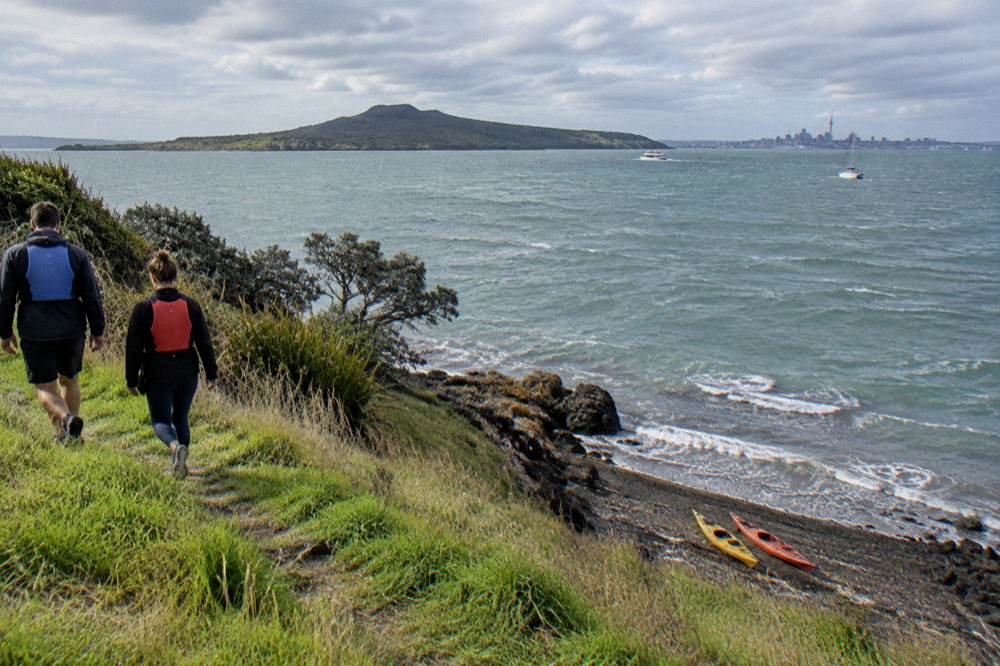
Every visitor landing on Rangitoto follows the Check, Clean, Close biosecurity routine: check gear for rodents, insects, ants and skinks, clean footwear and gear of soil and seeds, and close bags, with food in sealed containers and no open or supermarket bags. Rangers may recheck gear on arrival, no pets are allowed on island reserves, and commercial operators need a Pest-free Warrant, which Auckland Sea Kayaks states it holds.
The rules exist because Rangitoto is a pest-free island inside the Hauraki Gulf Marine Park, a park covering more than 1.2 million hectares and more than 50 islands. Rangitoto and neighbouring Motutapu form one of the 12 Hauraki Gulf High Protection Areas under the marine protection regime that took effect in 2025, where kayaking, snorkelling, swimming and boating are all explicitly allowed but fishing and taking any seafood are not. On a guided tour the operator's warrant covers the commercial side, but the personal side, your bags, your shoes, your pockets, is still your responsibility.
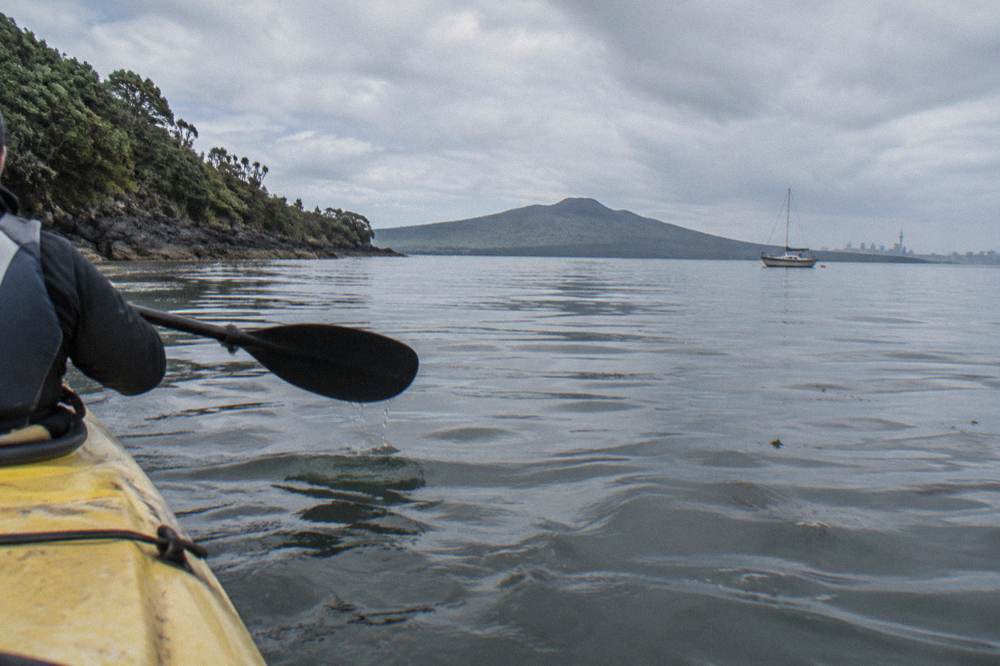
The park rules that touch a kayaking visitor most are easy to hold in one table.
| Rule | What It Means For You |
|---|---|
| Check, Clean, Close | Check gear for pests, clean footwear of soil and seeds, keep bags closed and food sealed |
| No pets | Dogs and other animals are banned on island reserves |
| No fishing or seafood | In the High Protection Area, no fishing or taking of seafood of any kind |
| Total fire ban | No fires or portable barbecues anywhere on Rangitoto |
| Take rubbish out | No rubbish bins on the island |
| No camping | No overnight stays outside the three rentable historic baches |
Reporting a pest sighting is as simple as calling 0800 DOC HOT, and rangers do recheck arriving gear, so packing sealed containers rather than open bags is the practical fix. DOC publishes the full island rules on its Rangitoto Island page, which is worth a skim before any landing, guided or independent. The wider marine park context, including where kayaking is permitted around the gulf's protected areas, is on the DOC Hauraki Gulf Marine Park page.
Do The Night And Harbour Paddles Land Anywhere?
No. The night and harbour paddles covered here stay on the water: the City Lights and City Scenes tours depart Westhaven Marina and paddle the waterfront, the bioluminescence night tours are evening paddles with no island landing, and the brewery and tavern paddles finish at shore-based venues. Only the Rangitoto sunset and day tours and the Motukorea half-day include an island landing and summit walk.
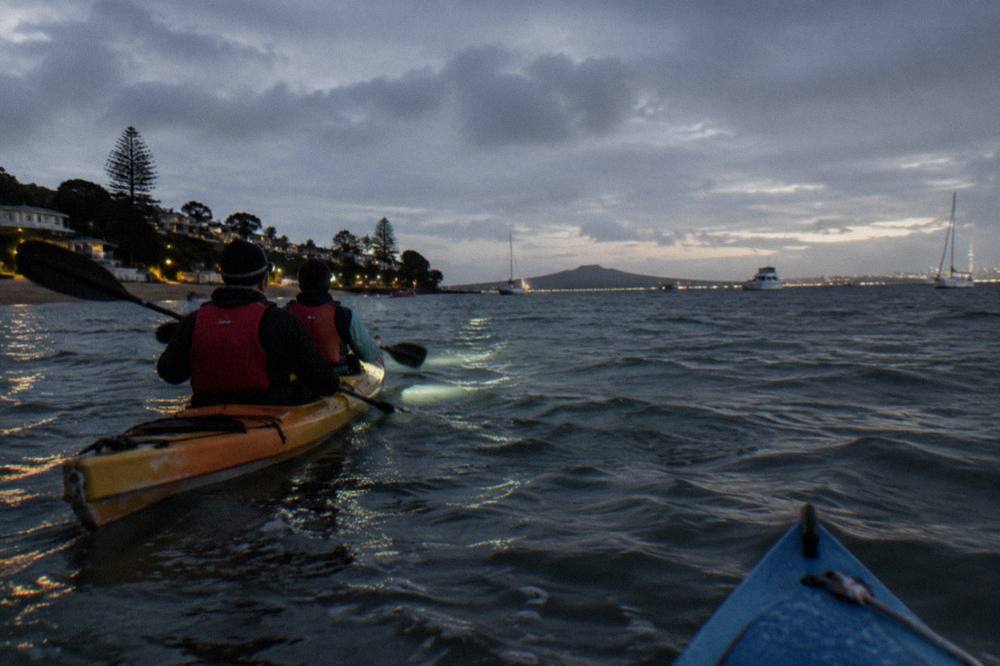
That is a count of the yes rows, not a generalisation. Of the tours covered on this site, three include a guided summit walk: the Rangitoto sunset tour, the Rangitoto day tour, and the Motukorea half-day. The bioluminescence night tours, the Auckland: Night Kayak Tour in Glowing Bioluminescent Waters from Social Nature Movement and the Bioluminescence Kayak Tour run by Canoe & Kayak Adventures, are evening paddles where the water itself is the attraction. The operator describes bioluminescence as sometimes seen and never guaranteed, so the glow is a possibility, not a promise, and a landing is not part of either trip.
The harbour paddles are their own thing. The Auckland City Lights Night Kayaking Tour, from $82.36 per person, rated 4.8 across 28 reviews, runs 2.5 hours from the Westhaven Marina boat ramp at Z Pier with the city lit up behind the paddles, and the City Scenes daytime version covers the waterfront in the same time at the same price. The pub paddles, the Riverhead Tavern tour from $62.48 per person and the Coastal Brewery paddle from $67.59 per person, finish at land-based venues rather than islands, which is a different kind of getting out of the kayak. The full Auckland night kayaking guide covers the after-dark options in depth.
If landing is the whole point, the choice is Rangitoto or Motukorea, and the difference is scale. Rangitoto gives you the 7 km summit walk, the lava caves and the youngest volcano in New Zealand across a 6 hours 30 minutes day. Motukorea gives you a shorter 4 hour day, a 1.5 km walk with about 70 m of climbing, a lower minimum age of 12, and a lower from price of $110.76 per person. Both land, both walk, both feed you: the Rangitoto tours with BBQ lunch or dinner, Motukorea with morning tea and refreshments.
Common Questions About Landing On Rangitoto
Do You Land On Rangitoto Island On A Kayak Tour?
Yes. The Auckland Sea Kayaks sunset and day tours to Rangitoto both land on the island and include a guided walk to the summit. The landing is made at the guide's discretion based on sea conditions, and no other tours covered here land on Rangitoto.
How Long Is The Walk After The Landing?
The Rangitoto Summit Track is a 7 km return with about 250 m of climbing, which DOC grades easy to intermediate and allows about 2 hours return. The terrain is rough volcanic rock with loose gravel and little shade, so sturdy shoes and water matter.
Is Food Included Once You Land?
On the guided tours, yes. The sunset tour includes a BBQ dinner and a hot drink, and the day tour includes a BBQ lunch, both catered with dietary needs handled on notice. The island itself has no shops, so any personal snacks and water need to come with you.
Can The Landing Be Cancelled For Weather?
Yes. Auckland Sea Kayaks operates within strict wind and sea limits and the final call is often made on the day. If conditions are unsafe the operator may move you to a sheltered tour, reschedule, or refund in full if no alternative works.
What Do The Pest-Free Rules Require?
Check gear for rodents, insects and skinks, clean footwear and gear of soil and seeds, and close bags, with food in sealed containers. Rangers may recheck gear on arrival, and no pets are allowed on the island reserves.
Can You Camp On Rangitoto After Landing?
No. Camping is not allowed on the island, and there is a total fire ban. The only overnight accommodation is three rentable historic baches booked through rangitoto.org, which are separate from any kayak tour.