What Is The Most Common Injury In Kayaking?
No verified injury ranking exists for kayaking, but the real safety story on Auckland tours is straightforward: lifejackets, guides, briefings and sensible clothing. Here is what actually matters.
In short
No reliable ranking of kayaking injuries exists, so this page quotes no number. Commonly cited risks are strain, sun, cold water and mishandling gear. Strain tends to hit shoulders, wrists and lower backs when technique is poor or breaks are skipped. Cold water is the serious risk, and Maritime NZ advises dressing for the water temperature, practising re-entry and carrying two waterproof ways to call for help. Guided tours blunt these risks with briefings, fitted lifejackets, guides and stable kayaks, doubles where stated.
A cautious reader deserves a straight answer, so here it is: no verified, ranked injury statistic for kayaking is available to print. Anyone quoting a precise "most common kayaking injury" with percentages is filling a gap with a guess. What can be said with confidence is the shape of the risk on the water, and the specific, checkable measures guided Auckland tours use to keep it small. Both halves of that sentence matter more than a number that does not exist.
No verified injury ranking for kayaking is published, so an honest page prints none. A reasonable reading of the risks points to a clear pattern: most paddling harm comes from strain, sun, cold water and mishandling gear rather than dramatic capsizes, and most guided tours blunt those with briefings, fitted lifejackets and guides.
The absence of a ranking is itself useful information. It tells you that nobody has counted kayaking injuries in a way that survives scrutiny for a place like Auckland, and it shifts the sensible question from "which injury is number one" to "what keeps paddlers out of trouble." On that second question there is plenty of solid ground.
The general pattern, described without statistics, is familiar to anyone who has spent time around boats. Paddling uses the shoulders, wrists and lower back in repetitive ways, so strain shows up where technique is poor or where a paddler sits too long without a break. Sun is a quiet offender on the water, because reflection off the surface adds to the exposure and people underestimate it. Cold water is the serious one: Maritime NZ is blunt that cold water shock kills, and advises paddlers to dress for the water temperature, practise re-entry into the kayak, and carry two waterproof ways to call for help. None of that is medical advice, it is the published safety guidance from the national authority.
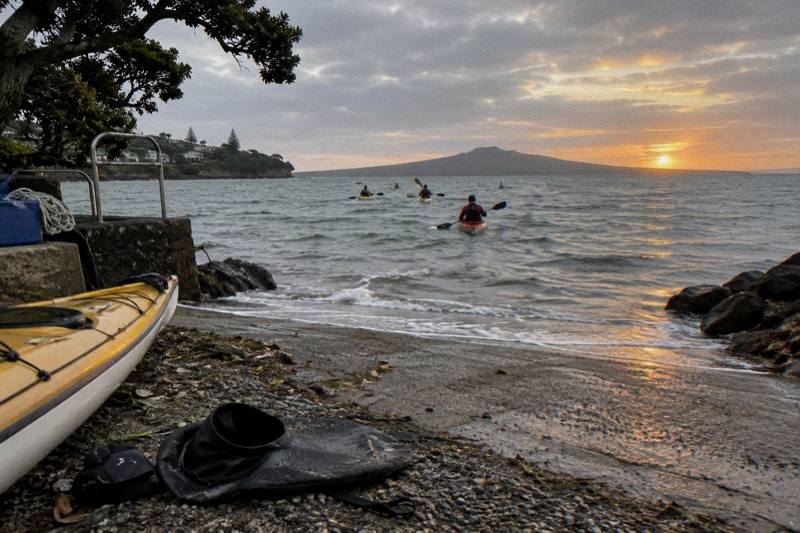
Then there is the mundane end of the scale: scrapes from handling kayaks on ramps, wet feet on slippery surfaces, the odd bump from a paddle. A tour handles those with a briefing at the start, a guide on the water, and a short walk into the water rather than a leap.
How does that translate to Auckland specifically? Thirteen of the fourteen tours covered here are guided, and guided paddles are built almost entirely of the measures that matter: a safety talk before launch, a lifejacket fitted to each paddler, a guide within reach, and stable double kayaks that are far harder to flip than a narrow single. The one unguided product on this site, the Goat Island clear kayak hire, is a rental in a sheltered marine reserve where the operator's own briefing, lifejackets and paddles are part of the hire. The step up in risk comes with independent open-water paddling, and the Department of Conservation describes Rangitoto as accessible to experienced kayakers, about two hours from the mainland.
That distinction, guided versus independent, is the single most safety-relevant choice a first-time booker makes, and it is worth a closer look at how the guided operators here actually run things.
How Do Guided Kayak Tours In Auckland Manage Safety Risks?
Guided tours here stack four protections: a pre-launch briefing and tuition, a properly fitted lifejacket on every paddler, an experienced guide on the water with the group, and stable double kayaks in capped groups. Weather calls sit with the operator, not the customer, and unfit conditions mean a reschedule, an alternative paddle or a refund.
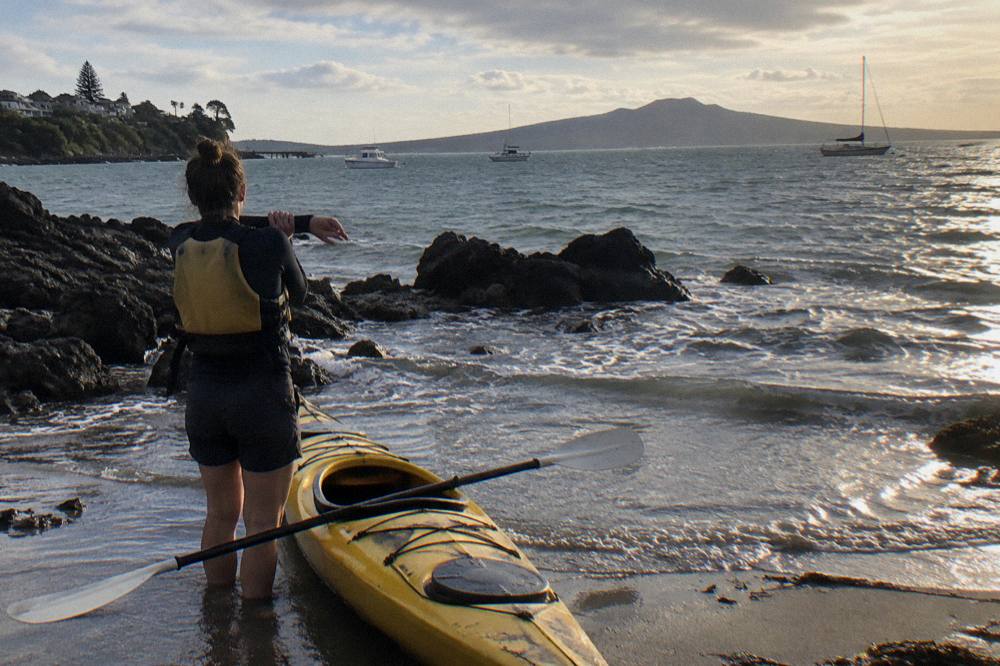
Start with the briefing. Not every tour states a briefing in its inclusions, so check the individual tour before assuming one. The Canoe & Kayak Adventures tours state full tuition from qualified guides. Auckland Sea Kayaks describes experienced guides on its tours, and Social Nature Movement describes professional and experienced guides, though the exact pre-paddle briefing content is not stated on every tour. For a nervous first-timer this is where most of the value of a guided tour lives.
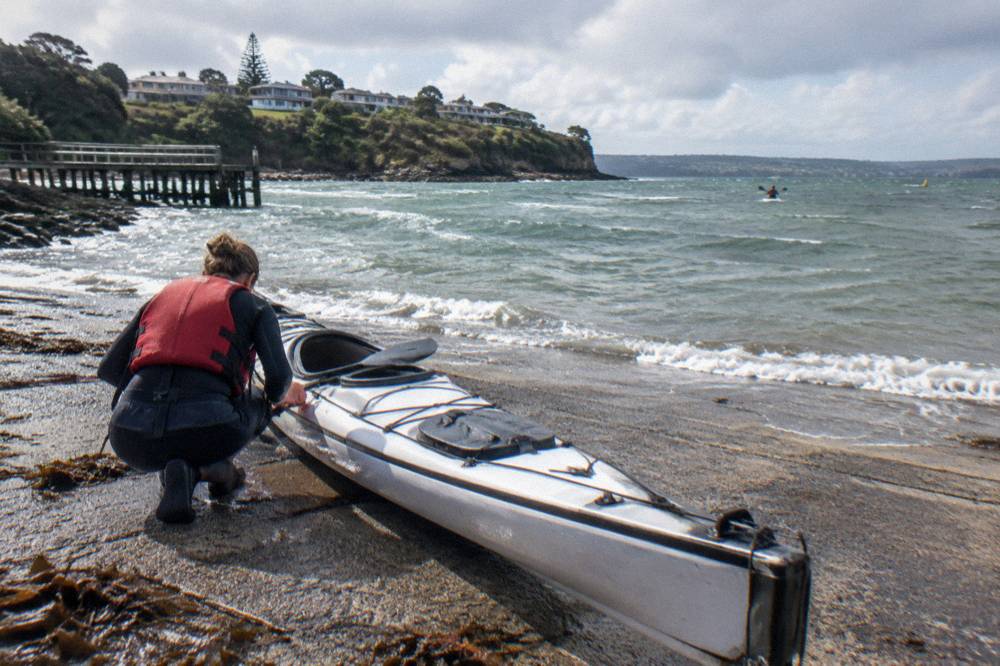
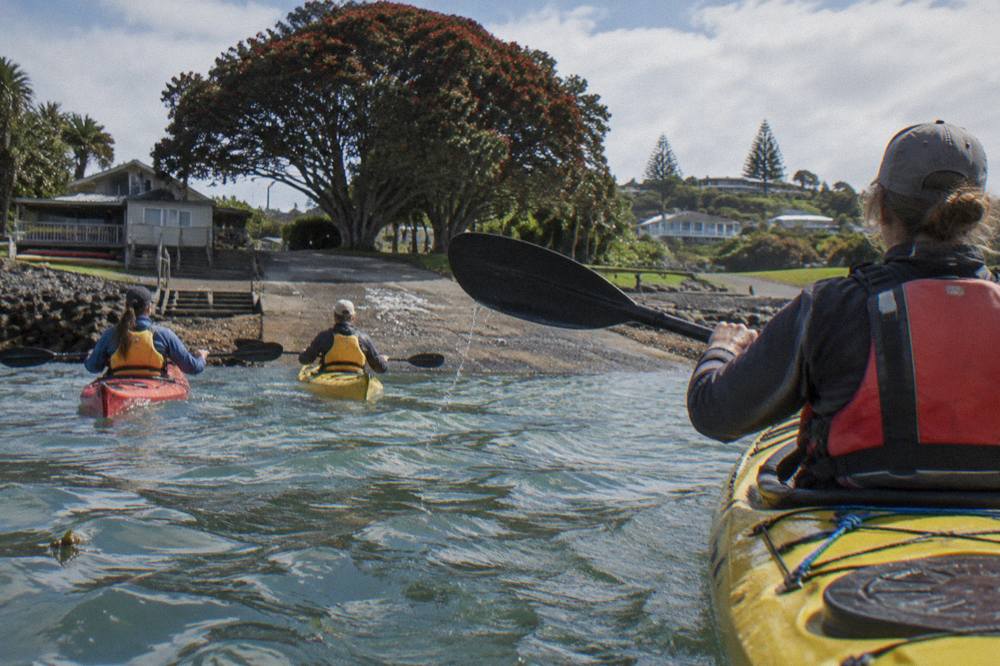
The lifejacket is now a legal requirement rather than a courtesy. Since 9 October 2026, everyone on a recreational craft of six metres or less, kayaks included, must wear a properly fitted lifejacket while underway, a rule Maritime NZ applies nationwide. Guided tours supply and fit the lifejackets, and the rental at Goat Island includes one in the hire price. A correctly worn lifejacket addresses the one kayaking outcome that is genuinely unforgiving, an unexpected swim in cold water far from shore.
Group size is the third protection. The Auckland Sea Kayaks volcano tours cap their groups at eight paddlers; the Social Nature Movement and Canoe & Kayak Adventures tours run up to sixteen and twenty-four respectively. Smaller groups mean a guide is never far from anyone who is struggling, and the tour moves at the pace of the group.
Then there is the weather call. Auckland Sea Kayaks states it operates within strict wind and sea limits, that the final decision is often made on the day, and that if conditions are unsafe it may move the group to a sheltered tour such as the City Lights or City Scenes paddle, reschedule, or give a full refund when no alternative fits. Canoe & Kayak Adventures says that on its Tiritiri Matangi day trip, unsuitable conditions mean an alternative paddling location is arranged. The reader does not have to judge the forecast from a beach; that judgement belongs to people who make it daily. The MetService marine forecast is the reference operators and independent paddlers alike work from.
The table below maps the protections against the kinds of tours available from St Heliers, Westhaven and further afield:
| Tour type and example | Briefing and tuition | Lifejacket supplied | Guide on the water | Kayak type | Group cap |
|---|---|---|---|---|---|
| Motukorea half-day, Auckland Sea Kayaks, from $110.76 | Yes | Yes | Yes | Double | 8 |
| Browns Island volcano tour, Social Nature Movement, from $83.80 | Yes | Yes | Yes | Not stated | 16 |
| Bioluminescence night paddle, Social Nature Movement, from $64.03 | Yes, plus safety light beacon | Yes | Yes | Not stated | 16 |
| Tiritiri Matangi day trip, Canoe & Kayak Adventures, from $150.52 | Yes, all tuition | Yes | Yes | Stable double | 16 |
| Goat Island clear kayak hire, Clearyak NZ, from $72.13 per double kayak | Safety briefing | Yes | No, self-guided rental | Double, clear bottom | Not stated |
For a reader weighing caution against booking, the Motukorea half-day is a strong fit: it is the highest rated tour here with twenty or more reviews, 5.0 across 38, small groups, gear included and a guide throughout, from $110.76 per person.
A related question worth settling here: what the museum shuttle is and is not. The three Auckland Sea Kayaks volcano tours from St Heliers offer a pre-booked free shuttle from the Auckland War Memorial Museum atrium, departing thirty minutes before the tour, with limited seats. No tour on this site collects anyone from a hotel. Everyone else meets at the stated start point, whether that is the St Heliers Bay boat ramp at 384 Tamaki Drive, Westhaven Marina's Z Pier for the city paddles, or Army Bay for Tiritiri Matangi.
Check the dates and availability, and read the cancellation terms while you are there.
What Should You Wear To Avoid Sun, Cold And Strain On An Auckland Paddle?
Dress for the water, not the air: quick-drying layers, sun protection even on grey days, shoes that grip wet surfaces, and nothing cotton. Sun cream, a hat and sunglasses matter as much as warmth, because reflection off the Hauraki Gulf doubles exposure. Paddling in legs, with breaks, is how guided tours avoid the strain side of the equation.
The sun point surprises visitors from lower latitudes. New Zealand's ultraviolet levels are intense, and on the water you are hit from above and below at once. The Hauraki Gulf's volcanic islands, Rangitoto above all, add radiant heat off black lava rock with almost no shade on the summit tracks; the Department of Conservation's own advice for Rangitoto lists sun protection and sturdy shoes among its know-before-you-go items. On a 6 hours 30 minutes day tour that includes a 7 km return summit walk, a sunburnt paddler is an unhappy one by the afternoon.
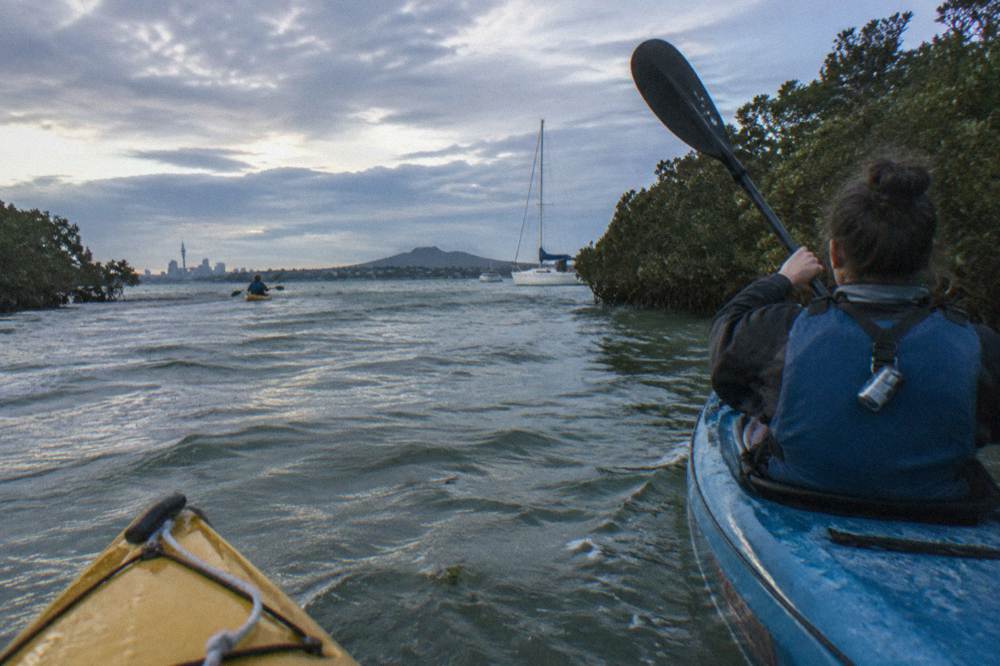
Cold works differently. Auckland's sea is coolest in winter and warmest in late summer, and the guidance from Maritime NZ is to dress for the water temperature rather than the air, because a capsize in cool water is the scenario that matters. Kayaking is a wet sport, as Canoe & Kayak Adventures puts it on its own page: expect at least wet feet, and on some launches, wet to the knees. Quick-drying layers and a windproof outer beat cotton utterly, and a wetsuit is sensible in the cooler months. The site's clothing guide covers this in more detail: what to wear sea kayaking in Auckland.
Strain is the third leg. A guided tour manages it structurally: the guide sets a pace, the group stops to rest, and the tours here break their paddling up with an island landing, a summit walk or a beach stop rather than hours of continuous strokes. Auckland Sea Kayaks notes only that paddlers should be able to stay seated comfortably for up to forty-five minutes at a time; the double kayaks share the workload between two people, which is one reason doubles, not singles, are the standard craft on these tours.
Do You Need To Be Fit Or Experienced To Join A Guided Tour?
No experience is needed on the guided tours here; the operators state that beginners are welcome and provide all tuition. The honest fitness question is about the two long volcano days: the Rangitoto tours ask for moderate fitness across a 6 hours 30 minutes day with a summit walk, while shorter paddles like the Motukorea half-day or the two-hour night tours sit at an easy-to-medium level.
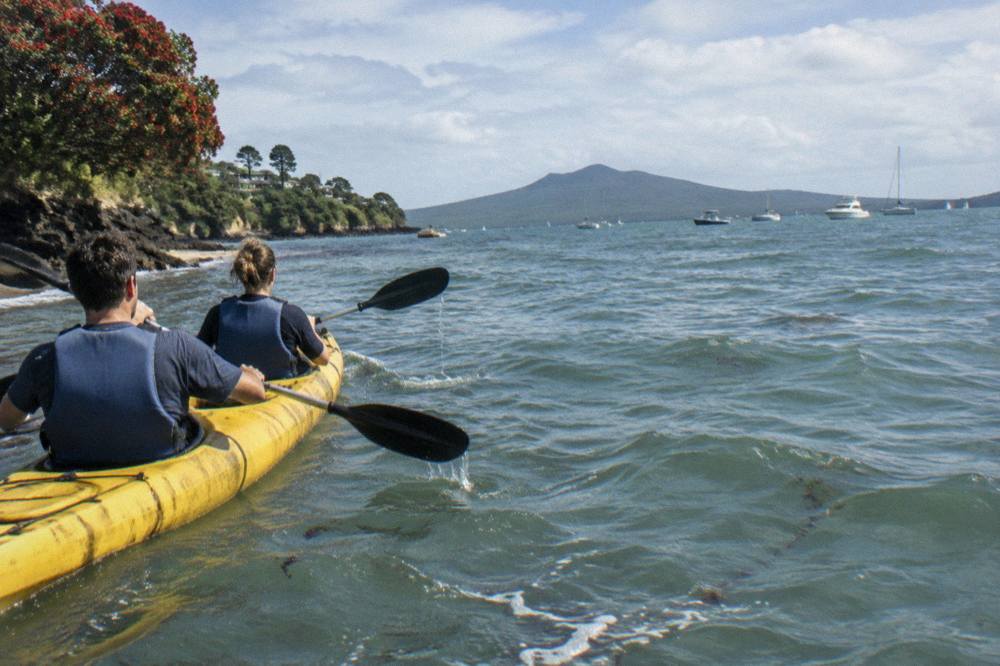
The clearest way to see this is by duration. The tours covered here range from a thirty or sixty minute rental at Goat Island to a two-day camping expedition to Waiheke, and the safety demands scale with the length and the open water involved.
| Tour | Duration | Minimum age | Experience needed |
|---|---|---|---|
| Goat Island clear kayak hire | 30 or 60 minutes | 3 | None; operator says beginners are fine |
| Bioluminescence night paddle, Social Nature Movement | 1.5 to 2 hours | Not stated | None stated |
| City Lights night kayak, Auckland Sea Kayaks | 2.5 hours | 12 | Easy, no experience needed |
| Motukorea half-day, Auckland Sea Kayaks | 4 hours | 12 | Medium fitness, no experience needed |
| Rangitoto sunset or day tour | 6 hours 30 minutes | 14 | Moderate fitness; long open-water paddle and summit walk |
| Tiritiri Matangi day trip | 6 to 7 hours | 13 | Moderate fitness; DOC rates independent paddling there as intermediate |
| 2-Day Waiheke Island tour | 2 days | Not stated | A guided camping expedition, from $1,008.18 per person |
Two of those rows deserve a caution. Tiritiri Matangi is not a beginner paddle in the way a sheltered harbour tour is: DOC says the stretch between the island and the mainland can get rough and windy, which is exactly why the guided trip there uses stable double kayaks with a minimum age of 13 and asks for moderate fitness. And Rangitoto is still a 6 hours 30 minutes commitment including a 7 km return walk with about 250 m of climbing over rough volcanic terrain, so "no experience needed" and "no effort needed" are different claims. The site's beginner page takes this further: can a beginner do sea kayaking.
Weight and mobility limits are published per tour rather than general. The Auckland Sea Kayaks tours ask that paddlers weigh 120 kg or less and fit a seat about 65 cm wide; the Goat Island clear kayaks cap at 100 kg per person. Canoe & Kayak Adventures asks paddlers over 120 kg on the Coastal Brewery paddle to tell them in advance so the right craft is available. None of this is about exclusion, it is about matching the kayak to the person so the paddle is stable and comfortable.
For many cautious first-timers the Motukorea half-day is the sweet spot: real open water, a genuine volcano landing and a short guided walk of 1.5 km climbing about 70 m, but only four hours door to door and a group of eight at most.
Readers after something shorter and after dark have a well-reviewed option in the bioluminescence night paddle, 4.9 across 327 reviews, making it the most reviewed tour here, from $64.03 per person. The glow itself is never guaranteed and depends on season and conditions, but the safety setup, a guide, supplied gear and a safety light beacon per paddler, is the same package in miniature.
What Safety Rules Apply On The Water Around Auckland?
Three layers apply: the national lifejacket rule for craft of six metres or less, the Hauraki Gulf's island biosecurity and protection rules, and the local speed and wildlife rules in the marine reserves. Guided tours absorb all three for you, but knowing them makes any paddle, guided or not, safer and more relaxed.
The lifejacket rule was covered above and applies to every kayak here. The island rules are the less famous layer. The Hauraki Gulf Marine Park spans more than 1.2 million hectares and more than fifty islands, and its pest-free islands run a Check, Clean, Close regime: gear checked for stowaway rodents and insects, footwear cleaned of soil and seeds, bags closed and food in sealed containers. Rangers may recheck gear on arrival, and commercial operators need a Pest-free Warrant, which Auckland Sea Kayaks states it holds. For a guided customer this is invisible; the operator's equipment and procedures already comply. For anyone renting independently it is a real obligation.
In the protected areas, kayaking is explicitly allowed, but fishing and taking any seafood are not, whether at Rangitoto and Motutapu, one of the gulf's High Protection Areas, or at Goat Island, New Zealand's first marine reserve, established in 1975. At Goat Island the rules extend to not feeding fish, careful anchoring and a five knot limit within 200 m of shore. DOC's advice there is worth repeating to any independent paddler: inexperienced paddlers should take care with sea conditions and currents.
Tides and daylight are the practical layer. LINZ publishes Auckland tide predictions, and the sensible habit on any launch, guided or independent, is to check the LINZ tide table and the MetService marine forecast before setting out. In midsummer Auckland holds daylight late into the evening; by midwinter the sun is down early, which is why several tours here run as night paddles with navigation lights on every kayak, as Auckland Sea Kayaks does on the Rangitoto sunset return to St Heliers.
What Happens If Conditions Turn Or A Tour Is Cancelled?
If an operator cancels for weather, the standard outcome is a full refund or a reschedule, and Auckland Sea Kayaks may instead offer a transfer to a sheltered city tour. Free cancellation for customer changes is stated on all fourteen tours here in the booking page's wording, a full refund up to 24 hours before, though Auckland Sea Kayaks' own terms are stricter and should be read before booking.
The weather-cancellation side is the reassuring half. Operators here make the call within strict wind and sea limits, and every cancellation path ends in the customer's favour: a refund, a new date, or an alternative paddle. The site has a full page on this: what happens if an Auckland kayak tour is cancelled for weather.
The customer-cancellation side needs care. The booking pages for all fourteen tours state free cancellation up to 24 hours before the start for a full refund. Auckland Sea Kayaks' own operator terms differ: more than 48 hours before departure brings a refund less a 25 percent admin fee, and inside 48 hours there is no refund. Both sets of terms are real and the stricter one can apply, so the practical advice is to read the terms on the booking page before paying, especially for the longer volcano tours.
One seasonal note for the north: the Goat Island clear kayak rental runs in the warmer season only, peaking December to February, so check the operator's website and the booking page for current availability before driving up to Leigh.
By now the original question has, hopefully, flipped. The most common injury in kayaking cannot be named from any verified source, but every mechanism that produces paddling injuries on a guided Auckland tour, poor technique, cold water, sun, gear mishandling, is met with a published, checkable countermeasure before the paddle starts. Choose a guided tour, wear what the operator lists, heed the briefing, and the residual risk is the ordinary kind that comes with any day on the water. Auckland Kayak Tours exists to make that choice an informed one, with the figures and the rules laid out plainly.
Common Questions About Kayaking Injuries And Safety
What Is The Most Common Injury In Kayaking?
No verified injury ranking for kayaking is published, so no honest source can name one with figures. The general pattern is strain, sun exposure, cold water and minor gear mishaps rather than dramatic capsizes, and guided tours counter each with briefings, fitted lifejackets, guides and stable kayaks, doubles where stated.
Do I Need A Lifejacket On A Kayak In Auckland?
Yes, and it is now a national rule: since 9 October 2026 everyone on a recreational craft of six metres or less, kayaks included, must wear a properly fitted lifejacket while underway. Guided tours and the Goat Island rental supply the lifejacket as part of the price.
Can A Beginner Join A Guided Auckland Kayak Tour?
Yes. The operators state beginners are welcome and no experience is needed, with full tuition before launch. The caveat is length and open water: the 6 hours 30 minutes Rangitoto tours ask for moderate fitness, and DOC rates independent paddling to Tiritiri Matangi as suitable for intermediate kayakers only.
What Should I Wear To Stay Safe On The Water?
Quick-drying layers rather than cotton, sun protection including a hat and sun cream, and shoes that grip wet surfaces. Dress for the water temperature rather than the air, expect wet feet at minimum, and consider a wetsuit in the cooler months.
What Happens If The Weather Turns Bad On Tour Day?
The operator makes the call within strict wind and sea limits, sometimes on the day. The standard outcomes are a reschedule, a transfer to a sheltered tour such as a city paddle, or a full refund if no alternative fits.
Is Kayaking At Night Safe In Auckland?
The night tours here are guided, with supplied gear and, on the Rangitoto sunset return, navigation lights on every kayak. The bioluminescence paddle issues each paddler a safety light beacon. As with any tour, the operator cancels or reschedules if conditions are unsuitable.