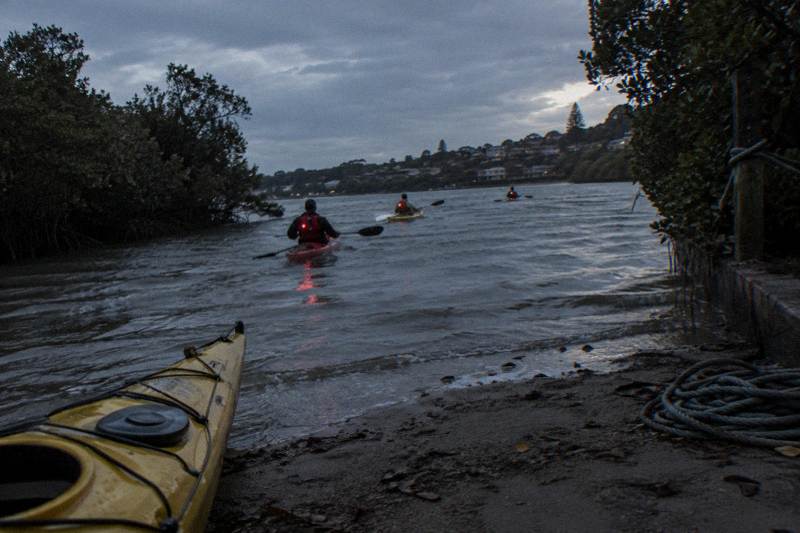
Can A Beginner Do Sea Kayaking In Auckland?
A plain answer for first timers considering a guided sea kayak tour in Auckland, with tour options, fitness needs, safety rules and what to wear.
In short
Yes. Operators including Auckland Sea Kayaks and Clearyak state that beginners are welcome and no experience is needed. Thirteen of the fourteen tours here are guided, and guides pick a route matched to the weather and guided tours that list gear supply the boat and safety equipment. Most tours that state a kayak type use stable doubles, with short options from 1.5 to 2 hours and prices starting at $62.48 per person. The Department of Conservation describes independent crossings to Rangitoto and Tiritiri Matangi as better suited to experienced or intermediate paddlers, while guided tours are open to first timers.
Yes. Auckland Sea Kayaks, the operator behind five of the guided tours covered here, states plainly that beginners are welcome and no experience is needed on its tours, and Clearyak at Goat Island says the same about its clear bottom kayak hire. Thirteen of the fourteen products here are guided, which is the format beginners should choose. The one exception is the Goat Island rental, which is unguided but confined to a marine reserve shoreline. Before you head out, the guide to sea kayak safety on the Hauraki Gulf covers the lifejacket rule, weather calls and fitness needs, plus how the marine reserve rules affect a rental at Goat Island.
That single word, guided, does most of the work. A guide chooses the route around the weather, supplies the boat and the safety gear, briefs you on paddle strokes before launch and stays within reach the whole time. The gap between paddling with a guide and paddling alone is not fitness, it is judgement, and judgement is exactly what a beginner has not built yet. The Department of Conservation makes the distinction sharp for this coast: on its Rangitoto Island page it describes the island as accessible to experienced kayakers, and its Tiritiri Matangi page says the stretch of water between that island and the mainland can get rough and windy, so the crossing is not for beginners. Neither statement is a barrier to a first timer on a guided tour, both are a warning about going alone.
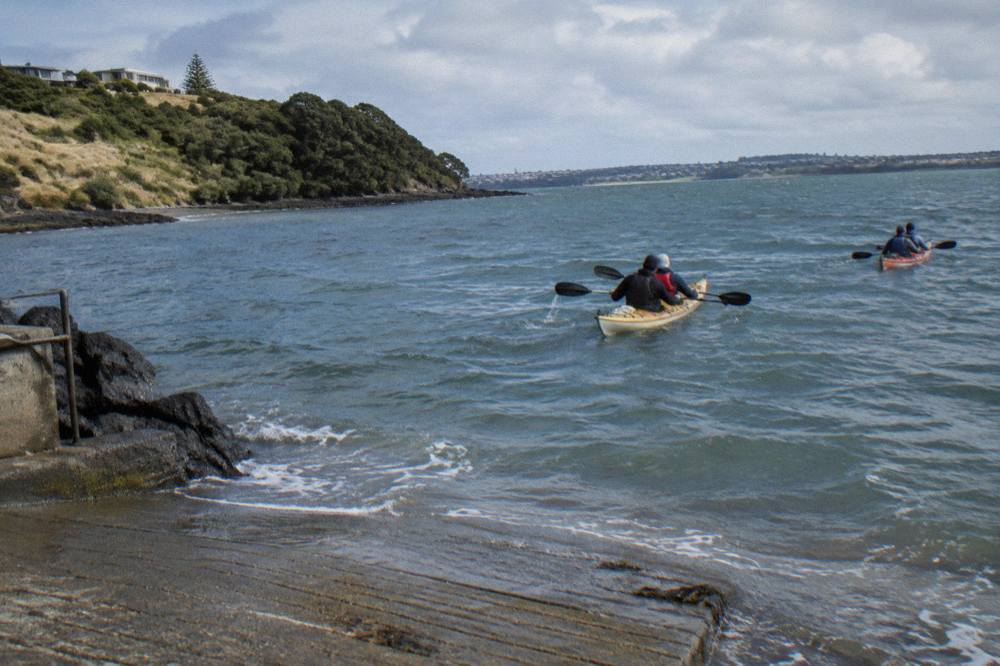
The tours themselves are sized for newcomers rather than athletes. The shortest guided options run 1.5 to 2 hours, the island day trips run 4 to 6.5 hours, and the operators describe their boats as stable double sea kayaks, which are far easier to balance than the narrow singles people picture from racing footage. Prices start low enough to treat the first paddle as an experiment: the most reviewed tour here, the bioluminescence night paddle with 327 reviews, opens at from $64.03 per person, and the cheapest per person is the Riverhead Tavern paddle at $62.48, a new listing with no reviews yet.
If the goal is a first tour that a newcomer can genuinely finish and enjoy, three options on this page fit that brief especially well.
What Should A First Time Kayaker Expect On A Guided Tour?
Expect a safety briefing, a fitted lifejacket, a stable double kayak shared with a partner and a guide leading the group from their own boat. Auckland Sea Kayaks asks that paddlers can stay seated for up to 45 minutes at a time and fit a seat about 65 cm wide, with a weight limit of 120 kg on its tours. Groups are small, eight paddlers on its island tours.
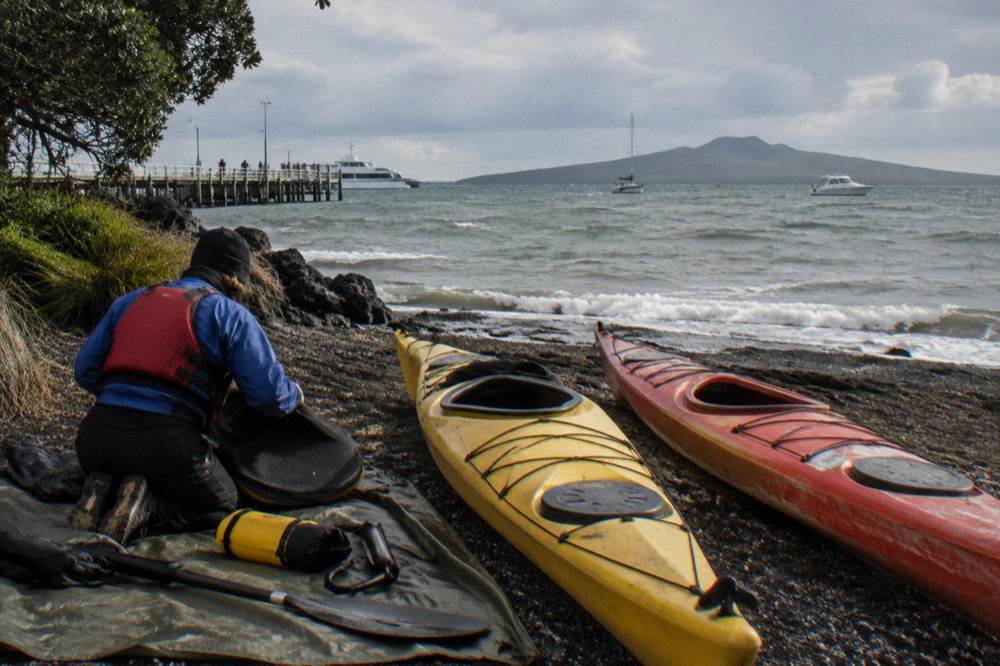
The shape of a first tour is more predictable than most newcomers expect. You arrive at the stated start point about ten minutes early, meet the guide, get gear, and spend the opening minutes on land learning three or four strokes and how to steer. Nobody expects technique. The guide sets the pace, watches the group for fatigue and adjusts the route if the wind shifts. On the longer island tours a cooked meal is part of the package, a BBQ dinner on the Rangitoto sunset tour and a BBQ lunch on the day version, which breaks the day into paddling and resting halves rather than one long effort.
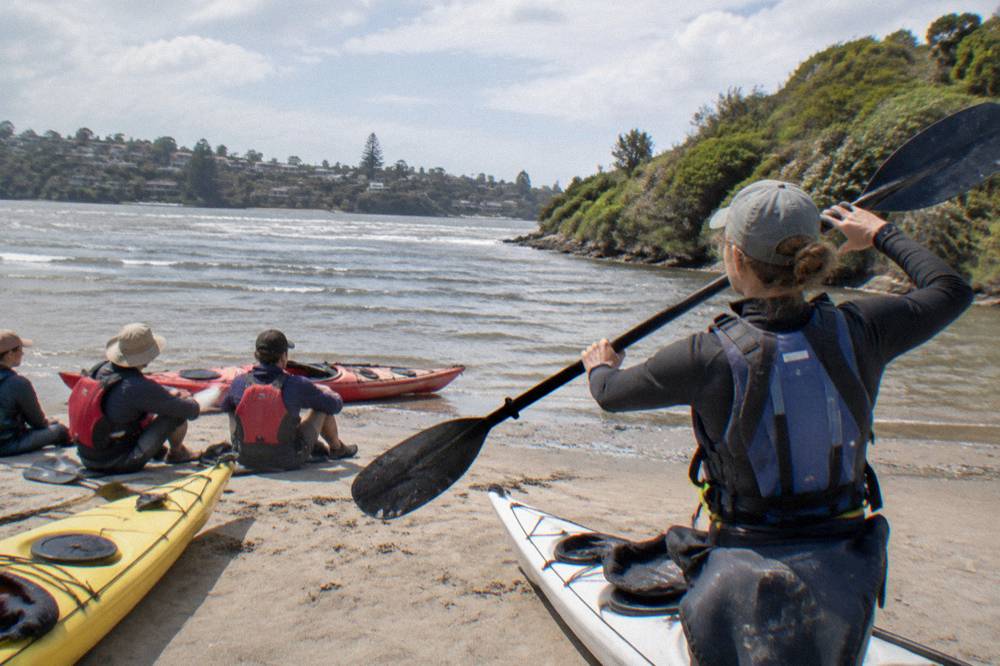
One detail worth knowing before booking is the lifejacket rule, because it changed recently. Since 9 October 2026, everyone on a recreational craft of six metres or less, kayaks included, must wear a properly fitted lifejacket while underway, under a nationwide rule announced by Maritime NZ. Guided tours supply and fit the jackets, so a beginner does not need to buy one, but the era of jackets stowed on deck is over. Kayaks, paddles and personal flotation devices are stated inclusions on most guided tours; for City Scenes the gear is not stated.
Which Kayak Tours In Auckland Suit Complete Beginners?
The clearest fits are the short harbour and city paddles: the City Lights Night Kayaking Tour at 2.5 hours, the Browns Island volcano tours at 4 hours, and the Glow Waters bioluminescence tour at 1.5 to 2 hours, all guided with gear included. The Rangitoto day and sunset tours take beginners too, at 6 hours 30 minutes total, but they demand a full day of moderate effort.
The table below groups the guided options by what they ask of a first timer. Durations, prices and start points come from each tour's own details.
| Tour | Duration | From (USD) | Start point | Beginner note |
|---|---|---|---|---|
| Night Kayak Tour in Glowing Bioluminescent Waters | 1.5 to 2 hours | $64.03 per person | Given at booking | Shortest guided paddle, 4.9 across 327 reviews |
| Auckland City Lights Night Kayaking Tour | 2.5 hours | $82.36 per person | Westhaven Marina (Z Pier) | Operator lists it as easy, light snack included |
| Browns Island Sea Kayak Volcano Tour | 4 hours | $83.80 per person | St Heliers Bay boat ramp | 120 minutes of stated paddling, 5.0 across 22 reviews |
| Auckland Volcano, Motukorea half day | 4 hours | $110.76 per person | St Heliers Bay boat ramp | Morning tea, guided summit walk, 5.0 across 38 reviews |
| Day Sea Kayak Tour of Rangitoto Island | 6 hours 30 minutes | $139.16 per person | St Heliers Bay boat ramp | Longest regular day tour, BBQ lunch and summit walk |
If a relaxed evening paddle ending at a waterside pub sounds more appealing than a volcano summit walk, the beginner guide to Auckland's paddle to the pub kayak tour covers paddling time, gear, ages, and the questions worth asking before booking.
For a genuine first paddle, the Motukorea half day is the strongest all round pick on this site. It is the highest rated tour here with more than 20 reviews, a 5.0 across 38 reviews, and it compresses the full island experience into 4 hours: a guided crossing, a catered morning tea and a 1.5 km guided walk to the summit of one of the best preserved volcanoes in the Auckland Volcanic Field, climbing about 70 m. Auckland Sea Kayaks describes the fitness level as medium rather than hard, and its tours use double kayaks that beginners find stable. The tour page has full dates and details at Motukorea Browns Island sea kayak tour.
The night paddles deserve a special mention because darkness sounds harder than it is. The bioluminescence tour by Social Nature Movement is the most reviewed product here, 4.9 across 327 reviews, and it lasts 1.5 to 2 hours. The listing says the glow is never guaranteed and depends on season and conditions, so book it as a night paddle that may glow rather than a light show with a boat attached. Its city counterpart, the City Lights tour from Westhaven Marina, paddles the lit waterfront and includes a light snack. A related read on this is the guide to night kayaking in Auckland, which walks through after dark options in detail.
Price and time give you a clean way to choose. The bioluminescence paddle is both the cheapest and the shortest option here, $64.03 for 1.5 to 2 hours, and the City Lights tour adds half an hour for $82.36. The two 4 hour volcano half days sit in the middle at $83.80 and $110.76, and the Rangitoto day tour tops the scale at $139.16 and 6 hours 30 minutes. If you are unsure about your stamina, start at the short end and work up.
Logistics group neatly too. Three of the five tours, both volcano half days plus the Rangitoto day trip, launch from the same St Heliers Bay boat ramp, so one set of travel plans covers any of them. The bioluminescence tour confirms its start point only at booking, so read your confirmation rather than assuming a marina. The Browns Island tour states 120 minutes of paddling inside its 4 hours, half the listed duration, a useful gauge of how the day splits between water and shore.
Food climbs with the day. The City Lights tour includes a light snack, the Motukorea half day adds a catered morning tea, and the Rangitoto day tour builds a BBQ lunch around its summit walk. Most guided tours include gear in the price; a few leave gear details not stated, so check the booking page for the specific tour before you pack.
Do You Need To Be Fit Or Strong To Paddle A Sea Kayak?
No special strength, but honest baseline fitness matters on the island tours. Auckland Sea Kayaks asks for moderate fitness on its Rangitoto tours and medium fitness on the Motukorea half day, and the Rangitoto summit walk is 7 km return with about 250 m of climbing on rough volcanic track. The short harbour paddles are listed as easy.
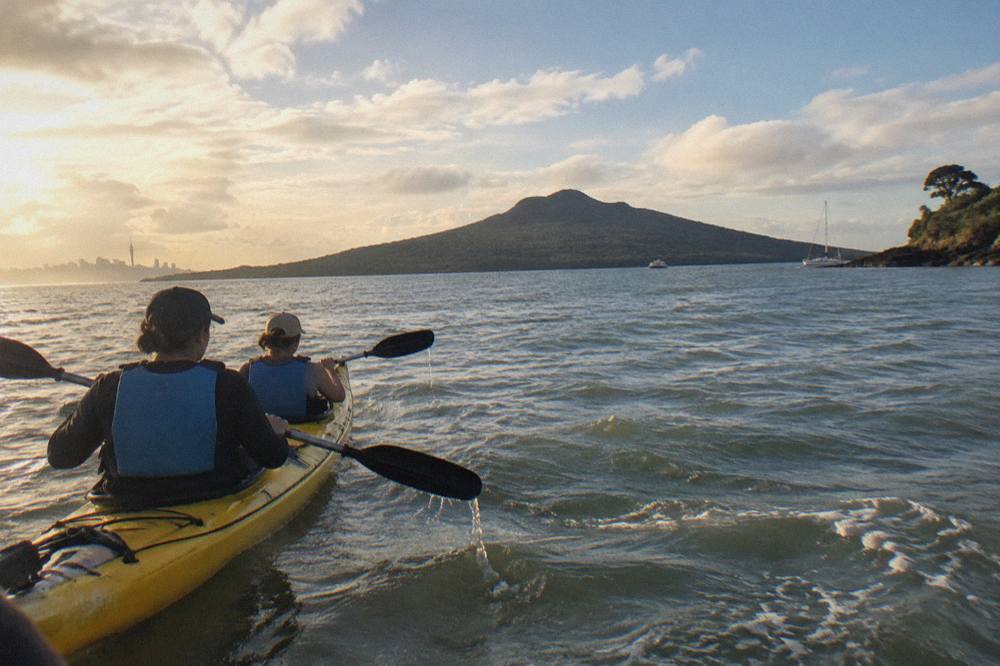
Upper body power is the least of it. A double sea kayak moves with steady, light strokes, and a guide sets a pace the whole group can hold. What actually tests people is staying seated and paddling in bursts, plus, on the island tours, walking on lava terrain after the crossing. The Department of Conservation grades the Rangitoto Summit Track easy to intermediate, 7 km return with a 250 m height gain, and warns of rough uneven ground, loose gravel and little shade, with intense heat radiating off the lava. A first timer who can walk a couple of hours on a hill and stay comfortable outdoors for six hours can do the Rangitoto day tour.
Two limits are hard rather than negotiable. Auckland Sea Kayaks caps paddler weight at 120 kg and asks that paddlers fit a seat about 65 cm wide and can stay seated up to 45 minutes at a time. Clearyak at Goat Island sets a 100 kg per person limit on its clear kayaks. Canoe and Kayak Adventures asks paddlers over 120 kg to tell them ahead on its Browns Bay brewery paddle. None of these are judgements, they are equipment limits, and stating them at booking avoids a bad morning. If renting your own kayak versus paddling with a guide is the next question, the guide to kayak hire versus guided tours in Auckland lays out prices, launch points, and safety rules side by side.
What Makes Rangitoto And Tiritiri Matangi Different For New Paddlers?
Rangitoto guided tours are open to beginners because a guide manages the open water crossing, while Tiritiri Matangi sits further out and the guidance around it is more cautious. DOC describes independent kayaking to both islands as a matter for experienced or intermediate paddlers. On a guided tour, the difference is duration and exposure, not permission. If you're still weighing how open water changes the picture, the guide to sea kayaking around Auckland explains what sea exposure means for beginners.
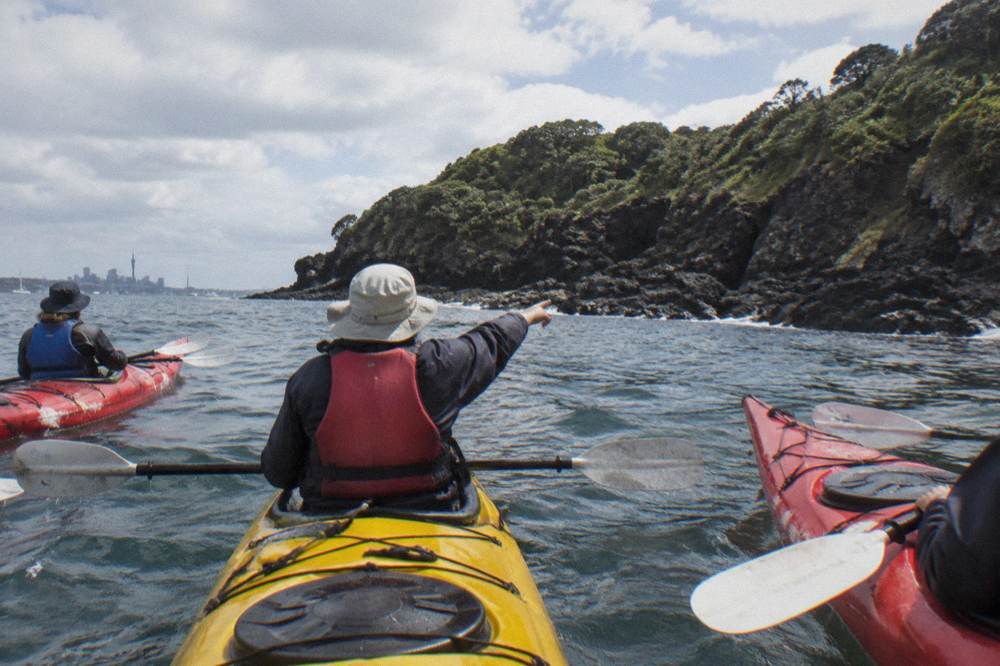
Rangitoto emerged from the sea just 600 years ago, the youngest volcano in New Zealand, and it is reachable only by ferry, boat or kayak. Three of the tours here land there or at its neighbour Motukorea, and all three include a summit walk. Tiritiri Matangi, 4 km off the Whangaparaoa Peninsula, is a scientific reserve and predator free island known for kokako and takahe, and the guided day trip there runs 6 to 7 hours from Army Bay, from $150.52 per person, with a 13 year minimum age. It carries only 3 reviews so far, too few to judge by, and Canoe and Kayak Adventures runs it on demand with minimum numbers.
The honest framing for a beginner is this: the guided Tiritiri Matangi trip is run by an operator established in 1994 using stable double kayaks with full tuition, but it is a bigger day than Rangitoto, over water DOC says can get rough and windy, and it is not the right choice for a first or second kayak tour. DOC's guidance for independent paddlers treats the Whangaparaoa Peninsula as the best start point and Hobbs Beach on the island's west side as the best landing. For comparing the two volcano islands closer to the city, Motukorea versus Rangitoto breaks down the differences in length, price and difficulty.
How Safe Is Sea Kayaking For Someone With No Experience?
On a guided tour in Auckland harbour conditions, sea kayaking is a low risk activity for healthy adults, and the operators are audited for it. Auckland Sea Kayaks is a certified Adventure Activity Operator and holds a Qualmark Gold rating, and most guided tours here include a guide, gear and flotation devices; a few state inclusions differently, so check the booking page. The sea itself sets the limits, and guides cancel or move tours when those limits are crossed.
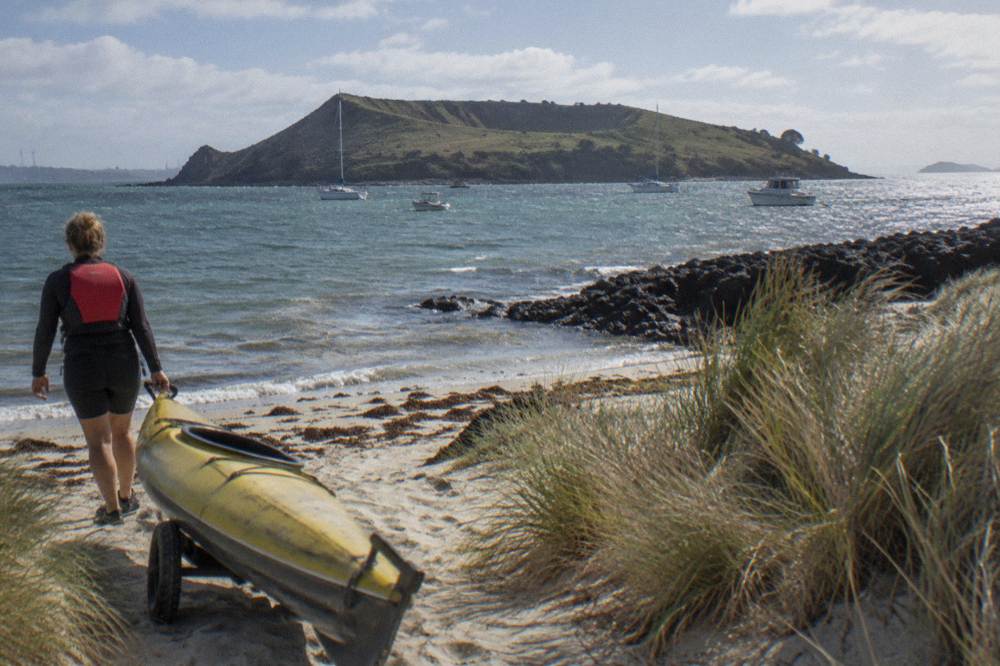
The safety system around guided kayaking is more formal than most newcomers assume. New Zealand's adventure activities regime requires commercial operators to be audited, and Auckland Sea Kayaks, operating since 2010, publishes its certification and its Pest Free Warrant, which matters because the Hauraki Gulf islands it lands on are pest free and gear is checked under the DOC and Auckland Council Check, Clean, Close rules. Weather policy is the other half: Auckland Sea Kayaks says it operates within strict wind and sea limits, with the final call often made on the day, and if conditions are unsafe it may move the group to a sheltered tour, reschedule, or refund in full if no alternative exists. What happens when weather cancels a tour is covered in full in what happens if an Auckland kayak tour is cancelled.
For paddling without a guide, the national advice is blunt. Maritime NZ's paddle craft guidance says to practise re-entry, dress for the water temperature because cold water shock kills, carry two waterproof ways to call for help and check the marine forecast before launch, with MetService marine forecasts the standard reference. At Goat Island, DOC's own words are that inexperienced paddlers should take care with sea conditions and currents, and that people have died at that marine reserve. The clear kayak hire there is confined to the reserve's near shore water, includes a safety briefing and requires no experience, but it is still an unguided rental, and it runs in the warmer season only, so check the operator's website at Clearyak before driving north.
What Should A Beginner Wear And Bring On A First Tour?
Wear quick drying clothes you can paddle in, shoes that can get wet, a warm layer and sun protection, and bring water and a change of clothes for afterwards. The tours supply kayaks, paddles, lifejackets and guides. Expect to get at least splashed: kayaking is a wet sport, as Canoe and Kayak Adventures puts it on its own page.
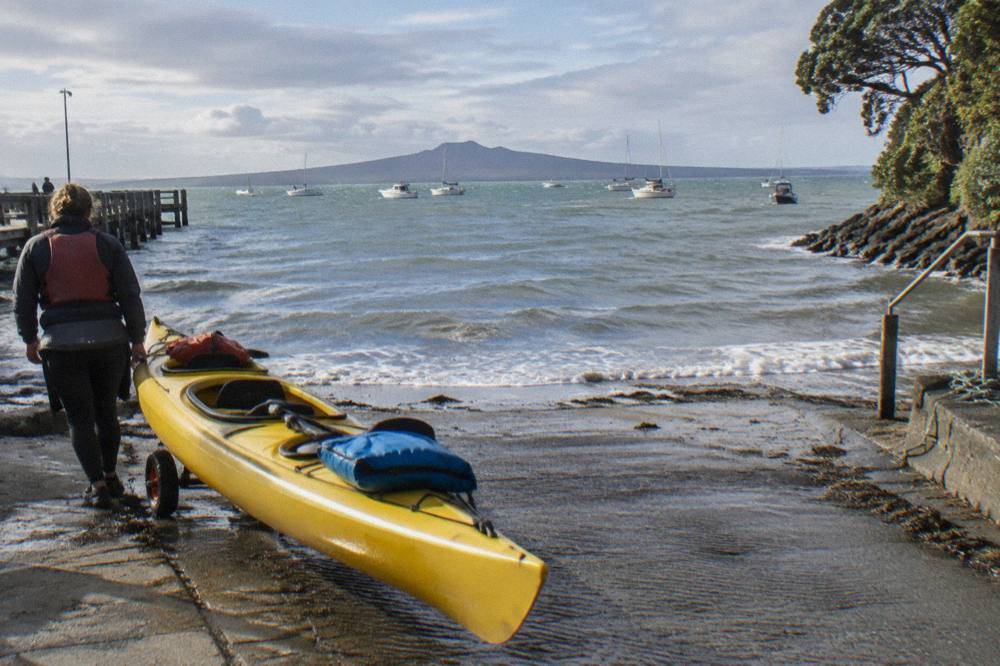
The two mistakes first timers make are dressing for the air rather than the water, and dressing for a walk rather than a boat seat. Jeans and cotton hold water and wind. Synthetic or merino layers, shorts or leggings, a windproof jacket and a hat cover most Auckland conditions, and a full breakdown by season sits in what to wear sea kayaking in Auckland. Footwear needs to grip wet lava rock on the island tours, where DOC recommends sturdy shoes, and to survive a wet landing, so sandals with a strap or light trainers beat bare feet. Good clothing choices also lower the odds of the small accidents covered in the guide to the most common kayaking injuries.
On the island tours, food and water need thought only in one direction: the tours cater, with a BBQ dinner and hot drink on the Rangitoto sunset tour, a BBQ lunch on the day tour and morning tea on the Motukorea half day, but there are no shops on Rangitoto and DOC tells visitors to bring their own water. The island is under a total fire ban, has no rubbish bins and allows no camping, so everything carried in leaves with the paddler. Sun protection matters more than people expect, because heat radiating off the black lava is intense and shade is scarce on the summit track. Wasps are more common in the warm months, worth knowing for anyone sensitive.
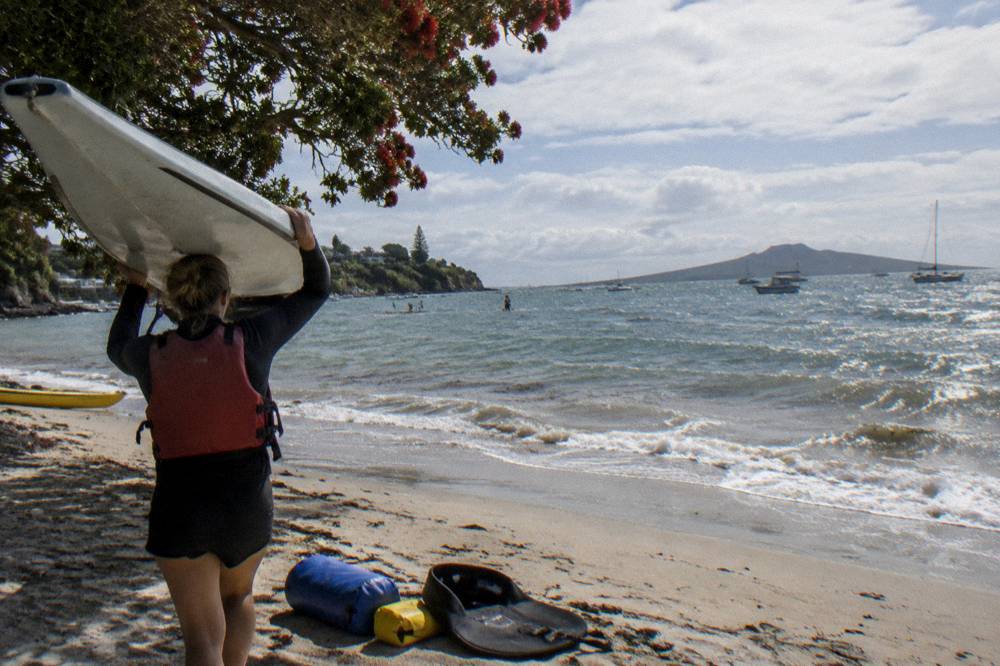
A few practicalities close the picture. Meeting points are fixed and published, from St Heliers Bay boat ramp for the Rangitoto and Motukorea tours to Westhaven Marina for the city paddles, Browns Bay for the brewery paddle and Army Bay for Tiritiri Matangi, and no tour offers hotel pickup, though Auckland Sea Kayaks runs a free pre booked shuttle from the Auckland War Memorial Museum for its three St Heliers tours. For a broader sense of timing across the year, when to kayak in Auckland covers daylight, water temperature and booking windows. The complete picture of what a first timer should know sits across Auckland Kayak Tours, including price comparisons and meeting point guides.
For anyone now weighing which first tour to book, these three remain the strongest beginner choices on the site.
Common Questions About Beginner Sea Kayaking In Auckland
Can A Beginner Do Kayaking?
Yes. Thirteen of the fourteen products covered here are guided, and the main operators state that beginners are welcome with no experience needed. Auckland Sea Kayaks asks only that paddlers weigh 120 kg or less, fit a seat about 65 cm wide and can stay seated up to 45 minutes at a time.
Do You Get Wet On A Sea Kayak Tour?
Almost certainly a little. Splashes, wet launch shoes and dripping paddles are normal, and Canoe and Kayak Adventures describes kayaking plainly as a wet sport. Clearyak warns hirers they may get wet to the knees. Bring a change of clothes.
Is A Double Kayak Easier For A Beginner?
Generally yes. A double is more stable than a single, and Auckland Sea Kayaks uses double sea kayaks on its island tours, with a guide able to pair with a nervous paddler where needed. The trade off is that both seats need to paddle in rhythm.
What Is The Shortest Guided Kayak Tour In Auckland?
The bioluminescence night paddle by Social Nature Movement, at 1.5 to 2 hours, from $64.03 per person. It is also the most reviewed tour here at 4.9 across 327 reviews.
Can A Beginner Do The Rangitoto Kayak Tour?
Yes, on a guided tour. Auckland Sea Kayaks lists the sunset and day tours as suitable for people with little or no kayaking experience, while asking for moderate fitness for the full 6 hours 30 minutes and the 7 km return summit walk with about 250 m of climbing.
Is Kayaking To Tiritiri Matangi Suitable For Beginners?
The guided day trip runs in stable double kayaks for paddlers with moderate fitness. DOC rates the independent crossing as intermediate, since the water between the island and the mainland can get rough and windy, and the tour runs 6 to 7 hours. Newcomers are better served by a harbour or Browns Island paddle first.