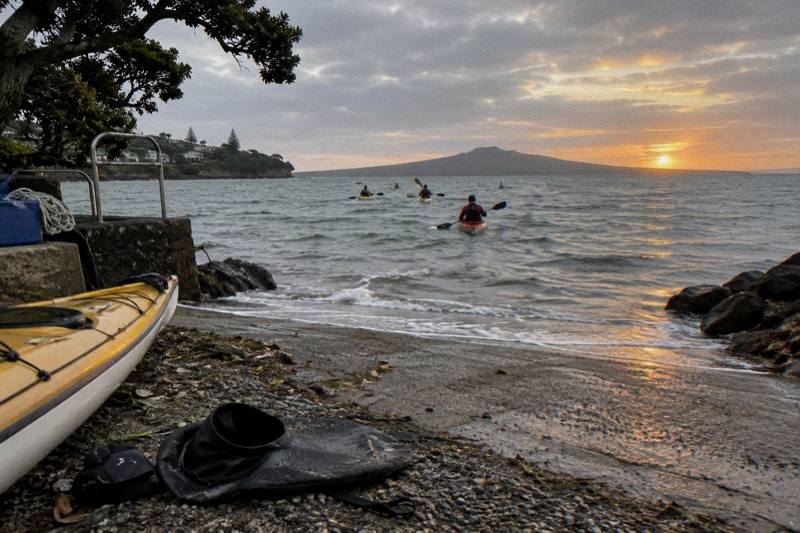
Kayak To Rangitoto Island: The Crossing, The Landing And The Day
Rangitoto is the youngest volcano in New Zealand, and a guided sea kayak tour is one of the few ways to land on it under your own power. Here is how the day actually works, from the St Heliers boat ramp to the summit track and back.
Short answer
Two guided kayak tours run to Rangitoto Island, both from St Heliers Bay, both 6 hours 30 minutes total and both from $139.16 per person: a sunset departure with BBQ dinner and a day departure with BBQ lunch. Both include the 7 km return summit walk, about 250 m of climbing. Independent paddling there is accessible to experienced kayakers, about two hours from the mainland.
Rangitoto emerged from the sea just 600 years ago, which makes it the youngest volcano in New Zealand and the most conspicuous landmark on Auckland's horizon. It is accessible by ferry, boat and kayak only, and a guided sea kayak tour is the only way listed here to reach its shore under your own power. Two tours make the trip, both run by Auckland Sea Kayaks from the St Heliers Bay boat ramp, and both fold a full summit walk into a 6 hours 30 minutes day. A natural question at this point is whether these tours actually put you ashore, and the guide to landing on Rangitoto Island during a kayak tour covers exactly that, along with the rules and what the summit walk involves.
This guide walks through the whole thing in order: the crossing, the landing, the walk, the rules that apply once you step ashore, and the practical decisions, sunset or day tour, what to wear, what it costs. Everything below comes from the tour listings and from the Department of Conservation, whose Rangitoto Island page governs what you may and may not do on the island.
How Does A Guided Kayak Trip To Rangitoto Island Work?
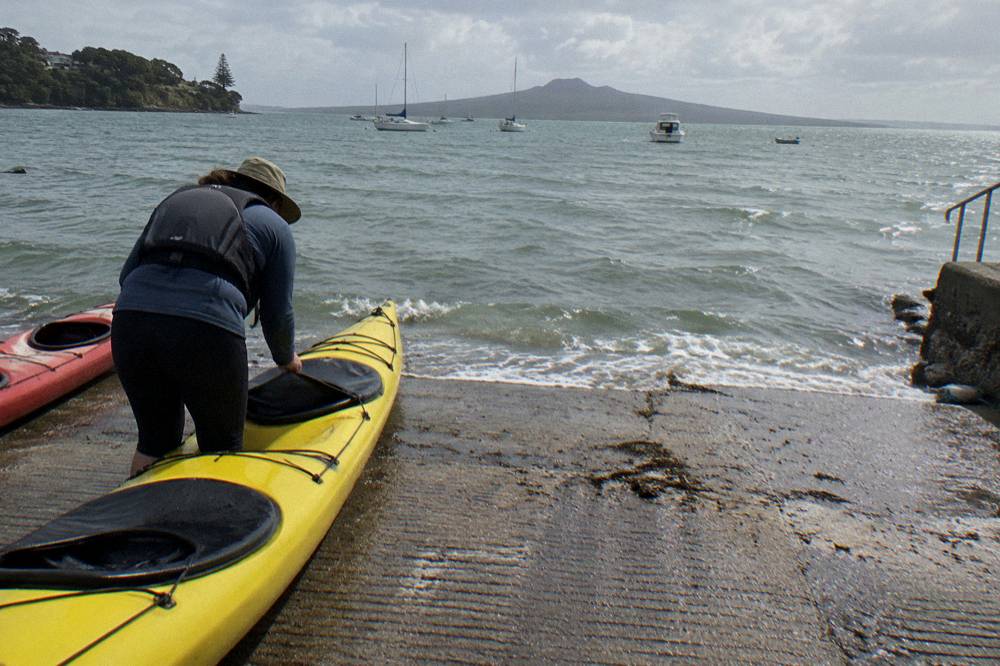
A guided Rangitoto kayak day runs in four blocks: meet and brief at the St Heliers Bay boat ramp at 384 Tamaki Drive, paddle out in double sea kayaks with a guide, land on the island and walk the summit track, then paddle back to St Heliers. The whole tour is 6 hours 30 minutes, the group is capped at 8 paddlers, and the listed price is from $139.16 per person including gear, guide and a catered meal. For anyone weighing whether to join a shared paddle or book a trip of their own, the comparison of private and group kayak tours in Auckland breaks down how the two options differ.
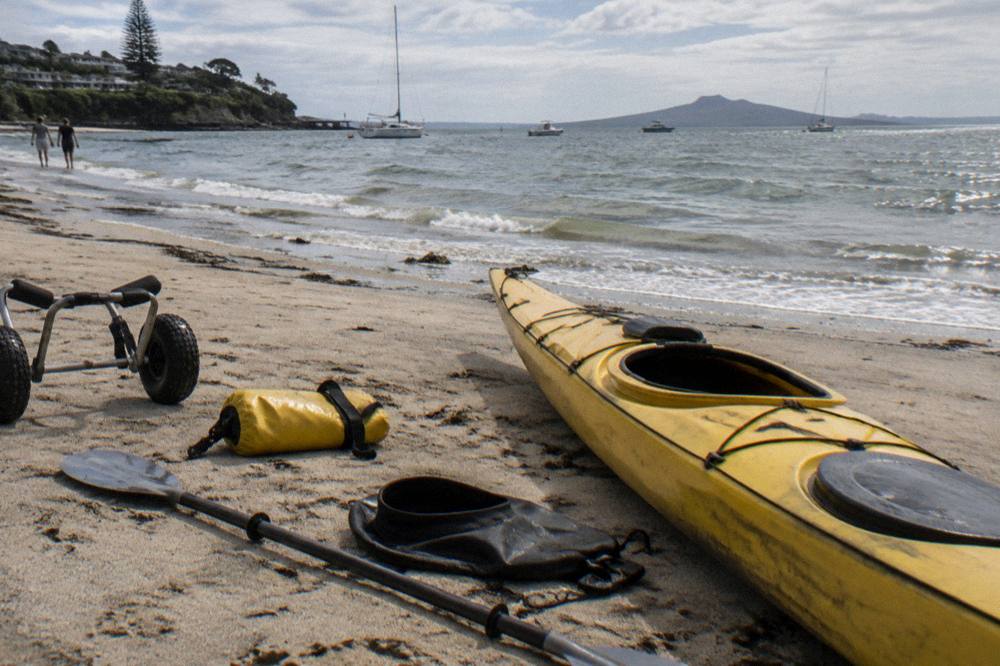
The shape of the day is fixed even though the details shift with the weather. Auckland Sea Kayaks operates within strict wind and sea limits, and the final call is often made on the day. If conditions are unsafe the operator may transfer you to a sheltered harbour tour, reschedule, or give a full refund if no alternative works. That is worth knowing before you build a whole itinerary around a single date.
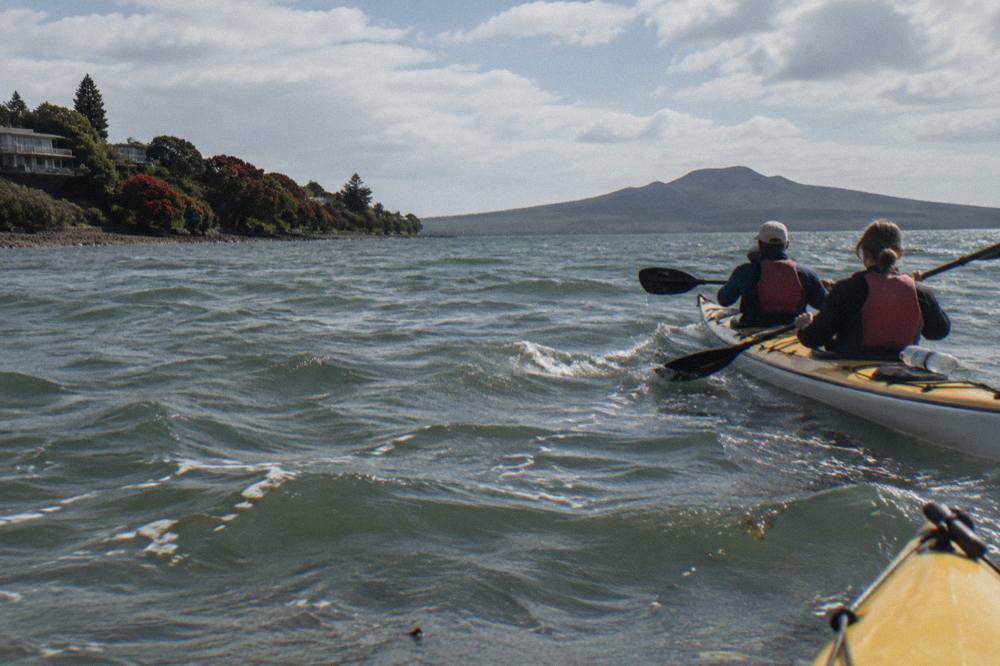
Both Rangitoto tours use double sea kayaks, not singles. Beginners are welcome and no experience is needed, which sounds surprising for an open-water island crossing until you understand how the guiding works: a qualified guide sets the line and the pace, the group stays together, and the double kayak gives you a partner to share the work with. The listing for both tours describes them as suitable for people with little kayaking experience.
Two departures exist. The sunset tour, rated 4.9 across 179 reviews, leaves later in the day, serves a BBQ dinner and a hot drink on the island, and returns to St Heliers after dark with navigation lights on every kayak. The day tour, rated 4.9 across 83 reviews, runs the same route and duration with a BBQ lunch instead. Both include the summit walk. The full comparison, including the third option of a night paddle that stays closer to home, is laid out in the dedicated Rangitoto kayak tours overview.
Can You Kayak To Rangitoto Island Without Experience?
Yes, on a guided tour. Both Rangitoto tours state that no experience is needed and beginners are welcome, and 13 of the 14 kayak products covered on this site are guided. Independent kayaking to Rangitoto is a different matter entirely: the Department of Conservation describes it as accessible to experienced kayakers, about 2 hours from the mainland.
The distinction matters more than most first-time visitors realise. The guided tour removes the three things that make an independent Rangitoto crossing serious: route-finding across a busy shipping channel, reading the weather window, and self-rescue if something goes wrong mid-crossing. Your guide carries all of that. What the tour does not remove is the physical day itself: 6 hours 30 minutes from start to finish, moderate fitness, a summit walk of 7 km return over rough volcanic terrain, and a full day on the water.
The operator's stated requirements are specific. Weight must be 120 kg or less and you need to fit a seat about 65 cm wide. Participants need basic English for safety instruction, alcohol is not permitted, and the minimum age is 14 on both Rangitoto tours. If those fit you and you can walk seven kilometres on gravel, you meet the bar.
If the open-water crossing still sounds like more than you want on a first paddle, there are softer entry points in the same family of tours. The Motukorea half-day from the same operator covers a similar volcano-island format in 4 hours, from $110.76 per person, rated 5.0 across 38 reviews.
Each of those three is a guided tour, gear included, with a group cap of 8 or 16 depending on the operator. The differences that matter are duration, water type and price, which the table further down this page sets out side by side.
What Does The Paddle Across To Rangitoto Actually Involve?
The crossing is a long open-water paddle in Hauraki Gulf conditions, done in stable double sea kayaks as a tight group behind a guide. The tours' total duration is 6 hours 30 minutes in total, with around an hour and a half on the water each way on the guided crossing plus the island time, so plan for a full day on the water rather than a short hop.
What the water feels like depends on the day, and Auckland serves up everything from glass to chop. The Hauraki Gulf is a marine park covering more than 1.2 million hectares and more than 50 islands, and the stretch between St Heliers and Rangitoto sits inside the Waitemata Harbour approaches, where ferry wakes, wind against tide and changing breeze are all part of the picture. This is precisely why the guided format exists. For an honest look at the question everyone asks, see how long it takes to kayak to Rangitoto.
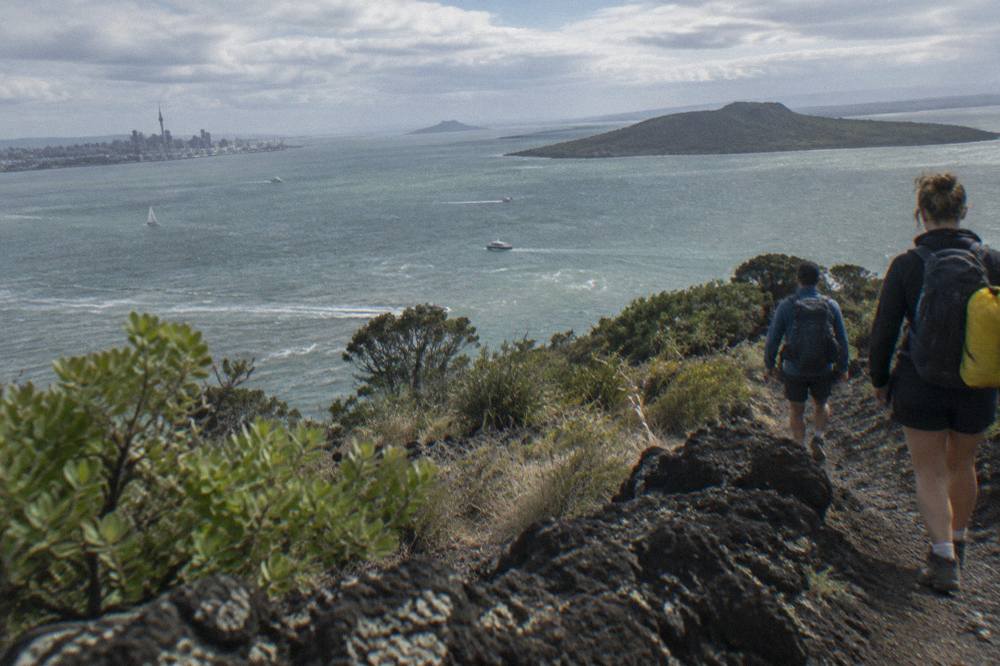
You will get wet, at least to the seat of your pants and probably to the knees. Kayaking is a wet sport, as one operator puts it. Dress for the water, not the air: a wetsuit or quick-dry layers, nothing cotton, and a windproof layer for the paddle home when the temperature drops. The full clothing logic is in the what-to-wear section below.
A note on conditions and judgment. Since October 2026, everyone on a recreational craft of six metres or less, kayaks included, must wear a properly fitted lifejacket while underway under the national rule announced by Maritime NZ. Guided tours supply the lifejacket and fit it for you, so on a tour this is simply part of the briefing.
Where Do You Meet And How Do You Get To St Heliers?
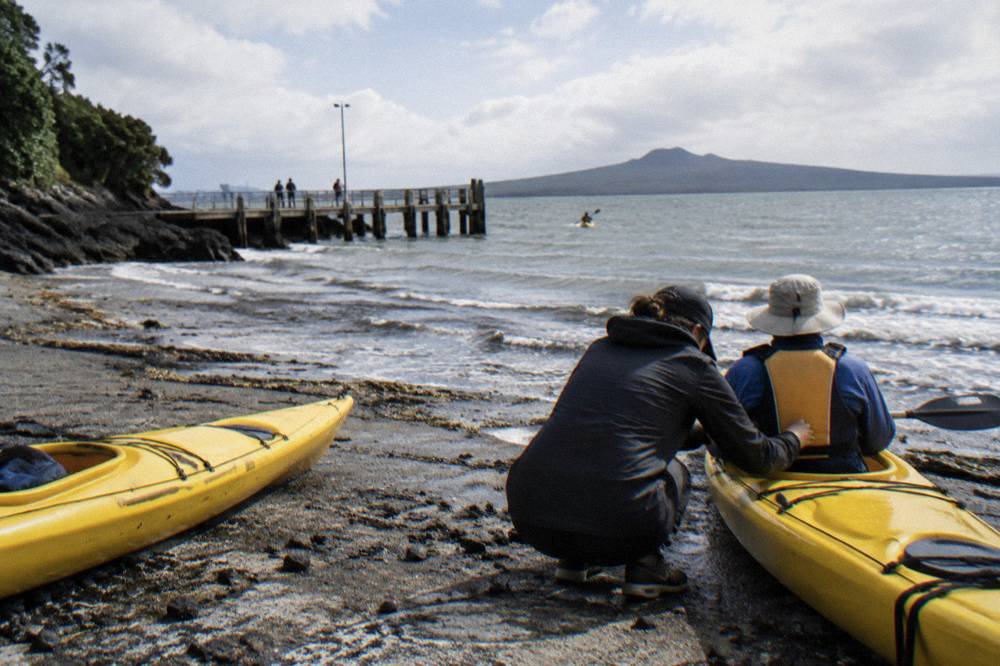
Both Rangitoto tours start at the Auckland Sea Kayaks base at 384 Tamaki Drive, St Heliers, at the St Heliers Bay boat ramp, with arrival 10 minutes before the start. No tour offers hotel pickup, but a free shuttle from the Auckland War Memorial Museum atrium departs 30 minutes before the tour, must be pre-booked and has limited seats.
That shuttle is the single most useful logistics detail on this page for visitors staying central without a car. You pre-book it when you book the tour, you stand in the museum atrium half an hour before departure, and it delivers you to the boat ramp. Miss the pre-booking and the seats may be gone, in which case the fallback is a taxi or rideshare to St Heliers.
Driving yourself is straightforward. Free parking is available around St Heliers, though time limits apply directly outside the shops, so read the signs. The two city paddles covered elsewhere on this site use a different ramp entirely, Westhaven Marina on the harbour side, which is paid parking: a useful reminder that every tour here has its own start point and the address on your booking confirmation is the one that counts.
For a fuller picture of the meeting point, parking and the shuttle timing, the St Heliers kayak meeting point guide covers the practicalities in detail. The short version: arrive early, park a street back from the shops, and check the shuttle box when you book.
What Happens When You Land On Rangitoto?
Guided tours land at the island, then the day splits: the catered meal, and the summit walk, which on both Rangitoto tours is included in the trip.
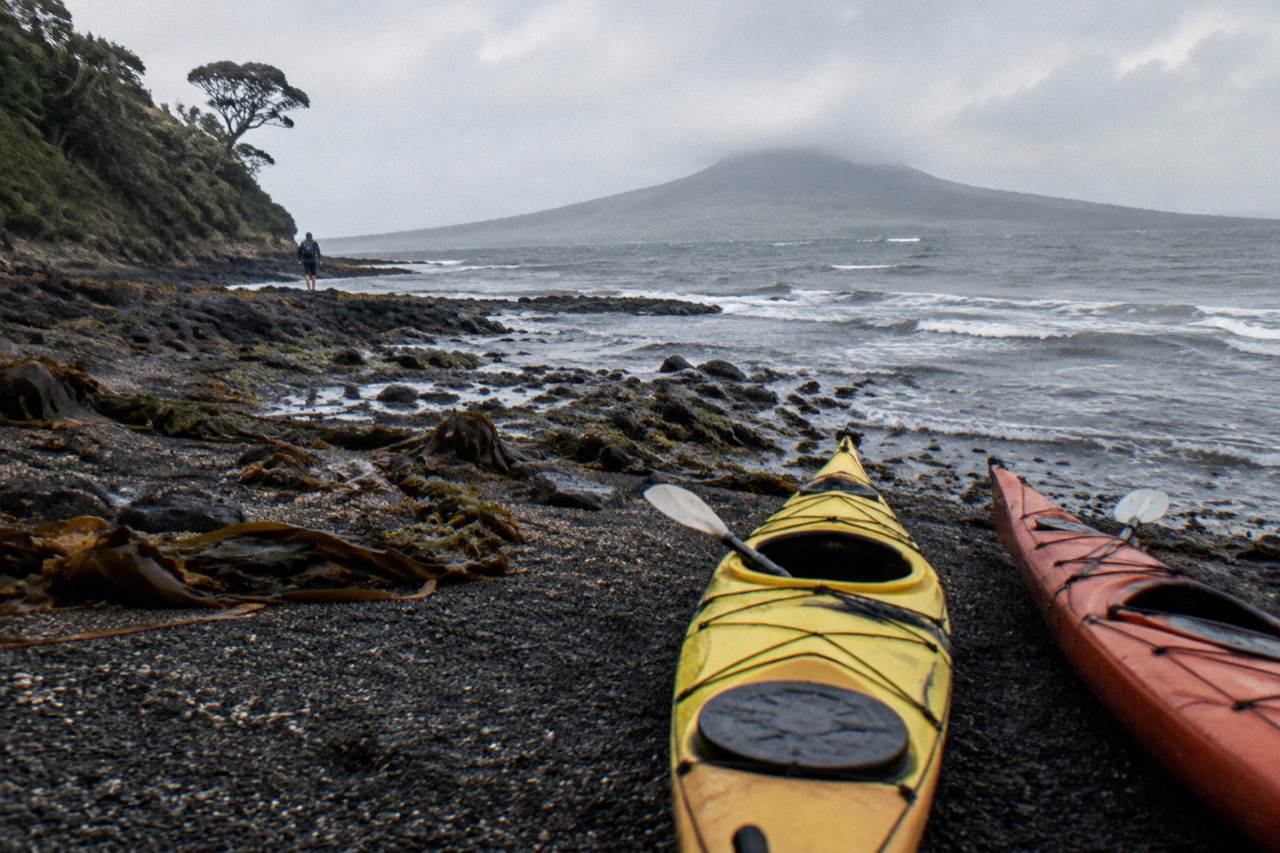
Stepping ashore on Rangitoto feels unlike anywhere else in the gulf. The island is pest-free, clothed in the world's largest pohutukawa forest, and built entirely of rough black lava fields. It is a 600-year-old volcano with a 60 m deep crater, and everything about walking on it, the loose gravel, the heat that radiates off the rock, the lack of shade, follows from that. Other pages covering the same trip are gathered on Auckland Kayak Tours.
On the sunset tour the island time is anchored by a BBQ dinner and a hot drink, catered, with dietary needs handled if you give notice. The day tour runs the same structure with a BBQ lunch. Both then walk the summit track before paddling back, and the sunset departure returns to St Heliers after dark with navigation lights on every kayak.
One thing the island cannot give you is a shop. DOC is blunt about this: bring your own food and water, there are no shops on the island, no rubbish bins, and a total fire ban with no fires or portable barbecues. Whatever you carry ashore, you carry back to the kayak.
The day tour deserves a closer look than it usually gets. It carries the same 4.9 rating as the sunset departure across 83 reviews, the same 7 km summit walk, the same price from $139.16 per person, and it gets you back to town with your evening free.
| Tour | Starts From | Total Duration | Price From (Per Person) | Rating And Reviews | Meal Included |
|---|---|---|---|---|---|
| Sunset kayak tour to Rangitoto Island | St Heliers, 384 Tamaki Drive | 6 hours 30 minutes | $139.16 | 4.9 across 179 reviews | BBQ dinner and hot drink |
| Day Sea Kayak Tour of Rangitoto Island | St Heliers, 384 Tamaki Drive | 6 hours 30 minutes | $139.16 | 4.9 across 83 reviews | BBQ lunch |
| Motukorea / Browns Island half-day | St Heliers, 384 Tamaki Drive | 4 hours | $110.76 | 5.0 across 38 reviews | Morning tea and refreshments |
| Night kayak tour in glowing bioluminescent waters | Given at booking | 1.5 to 2 hours | $64.03 | 4.9 across 327 reviews | Not stated |
How Hard Is The Rangitoto Summit Track After The Paddle?
The DOC figures for the Rangitoto Summit Track are 7 km return from Rangitoto Wharf, about 250 m of climbing, about 2 hours return, graded easy to intermediate. The terrain is rough, uneven volcanic rock with loose gravel and little shade, so sturdy shoes and sun protection matter more than raw fitness.
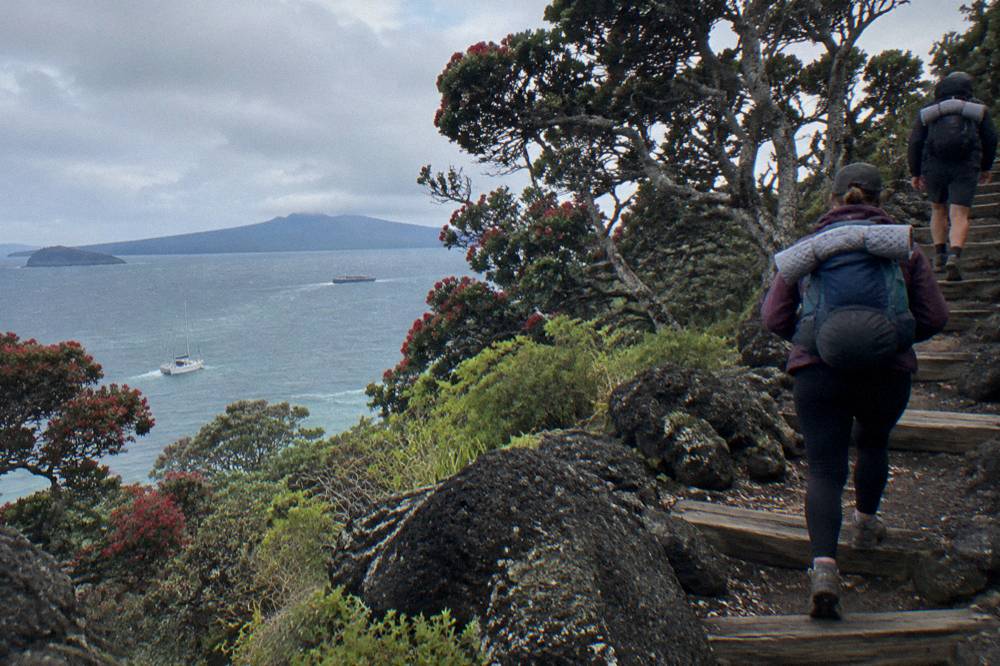
The walk is genuinely the second half of the day's effort. You arrive on the island having already paddled a long way, and the track then climbs steadily through pohutukawa forest onto bare lava fields. The reward at the top is a crater viewing platform with the Summit Lookout two minutes beyond it, and on a clear day a view over the Hauraki Gulf that few visitors ever earn by ferry.
Two variants exist if your legs are willing. The Crater Rim Track is a 20 minute, 850 m loop near the top, and the Lava Caves Track branches off 45 minutes from the wharf for a 15 minute, 500 m detour to the caves. The day tour brings head torches for the lava cave; the sunset tour visits the caves as daylight allows. Heat off the lava is intense on a sunny day, wasps are more common in the warm months, and there is almost no shade on the upper slopes, so water and a hat are not optional.
If 7 km of volcanic gravel after a long paddle sounds like the wrong kind of day, the Motukorea half-day offers the same volcano-plus-walk format with a 1.5 km guided walk climbing about 70 m instead, in a 4 hour tour. That trade-off, big island and big walk versus small island and short walk, is examined in the Motukorea versus Rangitoto comparison.
That comparison in one line: Rangitoto is the icon with the longer day, Motukorea is the highest-rated tour with 20 or more reviews on this site, 5.0 across 38, and a gentler walk. Both include the summit walk, one of only three tours here that do.
What Rules Apply Once You Land On Rangitoto?
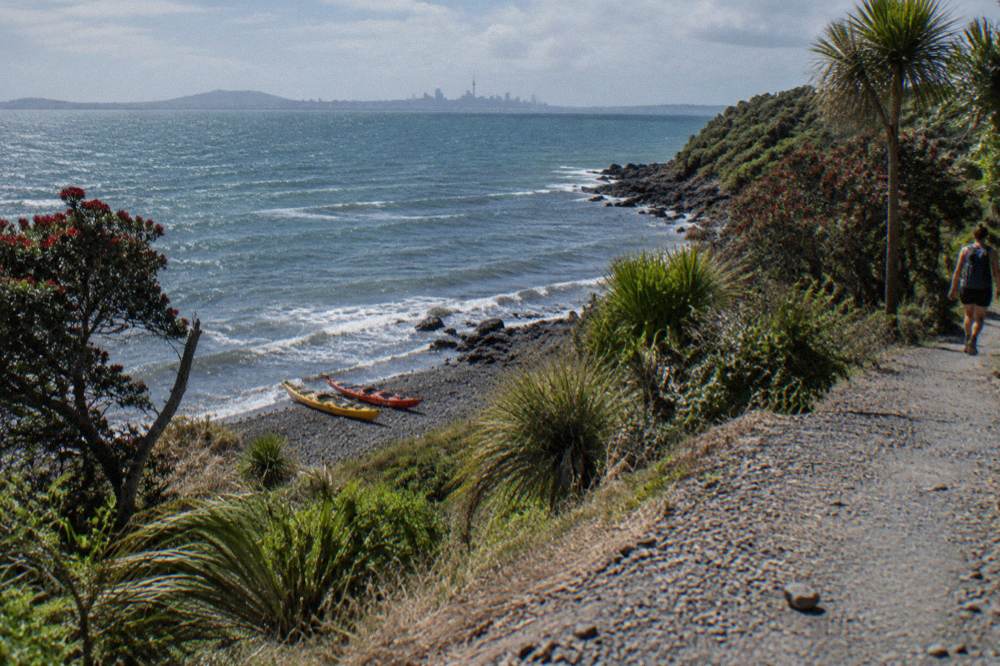
Rangitoto is pest-free and lies inside a Hauraki Gulf High Protection Area, so three rule sets apply: the Check, Clean, Close biosecurity standard before you land, a total fire and camping ban, and a strict no-take rule in the protected waters, where fishing and taking any seafood is prohibited. Kayaking itself is explicitly allowed.
The biosecurity rules are the ones that surprise people. Check your gear for rodents, insects, ants and skinks, clean footwear and gear of soil and seeds, and close your bags: no open bags, no supermarket bags, food in sealed containers. Rangers may recheck gear on arrival, and commercial operators need a Pest-free Warrant, which Auckland Sea Kayaks states it holds. In practice on a guided tour the operator's processes cover most of this, but your own day pack is your responsibility.
| Rule | What It Means For You |
|---|---|
| Total fire ban | No fires, no portable barbecues, anywhere on the island |
| No rubbish bins | Everything you carry ashore comes back out with you |
| Pest-free island | Check, Clean, Close on all gear, food in sealed containers |
| High Protection Area | No fishing or taking seafood of any kind, even by hand |
| No camping | Day visits only; the only overnight stays are three rentable historic baches |
| No dogs | Pets are prohibited on island reserves |
The no-take rule extends beyond fishing. In the High Protection Areas created under the 2025 marine protection regime you cannot take or disturb marine life, discharge waste, or land aircraft including drones, but you can snorkel, swim and kayak freely. The DOC Hauraki Gulf Marine Park pages hold the full wording if you want it from the source.
Sunset Or Day Tour: Which Rangitoto Kayak Should You Book?
Pick the sunset tour if the after-dark paddle home with navigation lights and a BBQ dinner on the island is the memory you want; pick the day tour if you would rather be back in Auckland with your evening free. Both cost from $139.16 per person, both run 6 hours 30 minutes, both carry a 4.9 rating, and both include the summit walk, so the choice is purely about the clock.
The sunset departure is the one with 179 reviews behind it and the stronger pull for most visitors. The trade is a later, longer-feeling day: you land, eat, walk, and then paddle home in the dark, guided and lit but genuinely nocturnal. Sunset itself is never guaranteed, and Auckland Sea Kayaks says bioluminescence is sometimes seen on this tour between October and April, never guaranteed. Treat both as possible bonuses, not bookings.
Same route, same meal standard, same island, home before dinner. It suits travellers with an evening reservation in town, families with teenagers who will be wrecked by 8 pm anyway, and anyone who would rather see the lava caves in full daylight with the head torches the day tour carries for exactly that purpose.
The full head-to-head, including fitness notes and who each departure suits, is in the day versus sunset kayak comparison. If neither Rangitoto departure fits your dates or budget, the night bioluminescence paddle at from $64.03 per person is the most reviewed tour here, 4.9 across 327 reviews, and makes a fine consolation prize on a sheltered-water night.
One caution on that night paddle: its meeting point is chosen at booking, so do not assume a beach until your confirmation names it, and the glow itself is always weather-and-plankton dependent. The glow is never guaranteed; it depends on season and conditions.
What Should You Bring And Wear For A Rangitoto Kayak Day?
Bring water, food beyond the catered meal, sturdy closed shoes for the volcanic track, sun protection, a warm layer for the paddle home, and a sealed bag for your rubbish, since the island has no bins. Wear quick-dry clothing or a wetsuit, never cotton, and expect to get wet to at least the knees.
The gear the tour supplies is the kayak side: double sea kayak, paddle, lifejacket and safety equipment, all included on both Rangitoto tours. The gear that is yours to get right is everything that touches rock and sun. The summit track's loose gravel punishes jandals and thin-soled trainers, and the lava fields hold heat through the middle of the day. For a packing list that covers both the paddle and the summit track, see the full guide to the Rangitoto kayak and summit hike.
| Item | Why It Matters On Rangitoto |
|---|---|
| Sturdy closed shoes | Rough uneven volcanic terrain and loose gravel on the summit track |
| Water | No shops on the island; heat off the lava is intense |
| Sun hat and sunscreen | Little shade above the forest line |
| Warm windproof layer | Conditions change fast on the gulf, and the sunset tour paddles home after dark |
| Sealed rubbish bag | No bins on the island; everything carries back out |
| Quick-dry clothing | Kayaking is a wet sport; cotton stays cold and heavy |
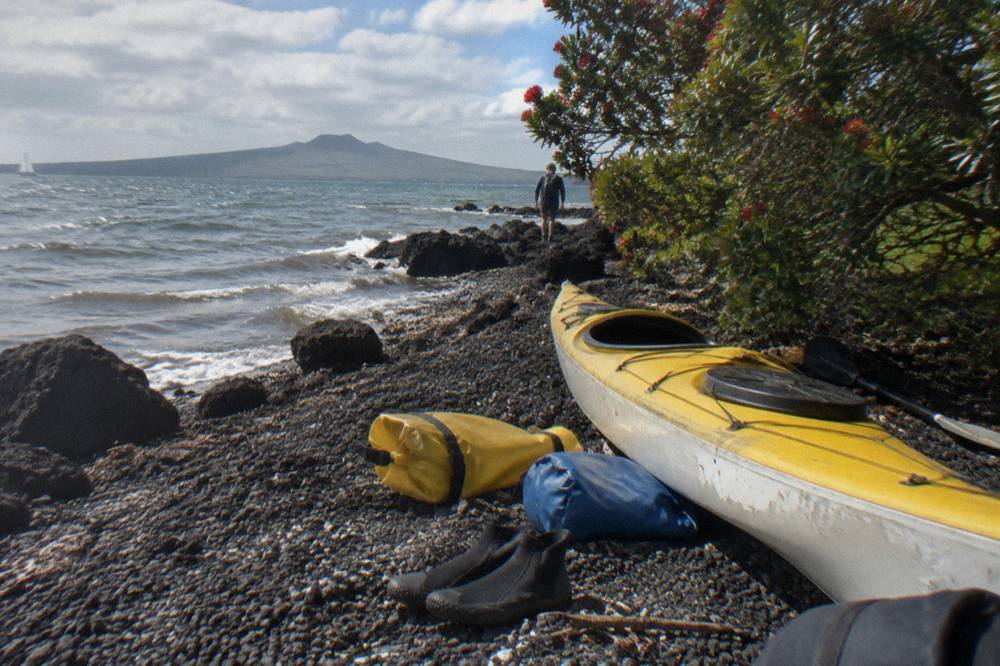
Footwear is worth its own sentence: you need shoes that can be wet at the landing and then walk seven kilometres on gravel. Amphibious shoes or old trainers beat anything you are precious about. A full kit discussion, including what to wear in each season, sits in the what to wear guide on this site.
What Happens If The Weather Turns On Your Rangitoto Tour?
If conditions are unsafe, Auckland Sea Kayaks may transfer you to a sheltered tour such as the City Lights or City Scenes paddles, reschedule you, or give a full refund if no alternative works. If you cancel, the booking page offers free cancellation up to 24 hours before the start for a full refund, while the operator's own terms charge a 25% admin fee outside 48 hours and nothing inside it, so read both before you book.
That two-layer cancellation structure is the single most important fine print on this page. The listing promise is the more generous one, but the operator's terms are the ones the operator applies to its own books, and the two differ. The practical takeaway: if your plans might move, move them more than 48 hours out, and read the terms on the booking page before you pay rather than after.
On the day itself, the guide's call is final and it is a safety call, not a service call. The gulf can be calm at 8 am and blown out by noon, and the operator's stated practice is to work within strict wind and sea limits with the final decision often made on the day. A cancelled crossing is disappointing, but the transfer options are real tours, not vouchers: the City Lights night kayak and the City Scenes waterfront paddle are both genuine Auckland experiences from $82.36 per person.
The full policy picture, including what the weather limits are and how rescheduling works in practice, is covered in the weather and cancellations guide. For planning purposes, check the MetService marine forecast for the gulf a day or two out, and trust the operator's judgment over your own optimism.
Common Questions About Kayaking To Rangitoto Island
Can You Kayak To Rangitoto Island If You Have Never Paddled Before?
Yes, on a guided tour. Both Rangitoto tours state no experience is needed and beginners are welcome, in stable double kayaks behind a guide. Independent kayaking to Rangitoto is a different matter: DOC says Rangitoto is accessible to experienced kayakers.
How Long Does The Kayak Tour To Rangitoto Take?
Both guided tours are listed at 6 hours 30 minutes in total, starting from the St Heliers boat ramp, including the crossing, island time, the summit walk and the paddle home.
How Much Does It Cost To Kayak To Rangitoto Island?
From $139.16 per person for either the sunset tour with BBQ dinner or the day tour with BBQ lunch, gear and guide included. The group size is capped at 8.
Do You Walk To The Summit On A Rangitoto Kayak Tour?
Yes. Both Rangitoto tours include the summit walk. DOC lists the Summit Track at 7 km return with about 250 m of climbing, about 2 hours return, on rough volcanic terrain.
Where Do Rangitoto Kayak Tours Start From?
The St Heliers Bay boat ramp at 384 Tamaki Drive. A free shuttle from the Auckland War Memorial Museum atrium departs 30 minutes before the tour, must be pre-booked and has limited seats. No tour offers hotel pickup.
Is There Food Or Water For Sale On Rangitoto?
No. There are no shops on the island and no rubbish bins either. Bring your own water and anything you want beyond the catered meal, and carry all rubbish back out.