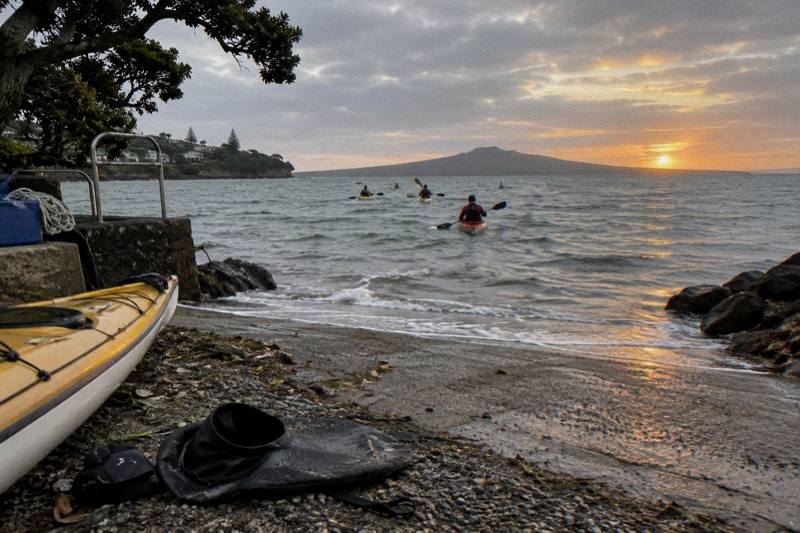
Photographing Rangitoto From A Kayak: Light, Dry Bags And Angles
A kayak puts a camera lower on the water than any ferry deck or shoreline viewpoint, which is exactly why the photos can be brilliant and the gear can end up wet. Here is what matters practically on a Rangitoto paddle.
Short answer
The sunset kayak tour to Rangitoto Island runs 6 hours 30 minutes from $139.16 per person and is the strongest photography option, rated 4.9 across 179 reviews, with a summit walk and BBQ dinner included. Keep gear in a dry bag, wear the supplied lifejacket, and treat a phone as a wet-risk item the whole way.
Rangitoto emerged from the sea just 600 years ago, making it the youngest volcano in New Zealand, and from a kayak it fills the frame in a way noshoreline shot manages. The island is pest-free, sits inside a Hauraki Gulf High Protection Area where kayaking is explicitly allowed, and DOC describes it as accessible to experienced kayakers when paddled independently, about two hours from the mainland, which is why almost everyone photographs it from a guided tour. The practical problem is not the volcano. It is salt water, spray, a cockpit that collects puddles, and hands that are busy with a paddle.
This guide sticks to what actually decides whether the photos come home: dry storage, phone versus camera risk, the lifejacket rule that now applies to every paddler, how the light behaves on a sunset departure, and the angles a double sea kayak realistically gives you. The Auckland Kayak Tours pages here cover the crossings in detail; this one is about the camera.
How Do You Keep A Camera Dry On An Auckland Kayak Tour?
Assume everything in the cockpit will get wet, because on a sea kayak it usually does. Spray comes off the paddle blades, waves slap the hull, and the operator Canoe & Kayak Adventures puts it plainly on its own pages: kayaking is a wet sport. A proper dry bag, sealed at the roll and clipped shut, is the only storage that counts, and it lives in the hatch or between your legs, never loose on the deck.
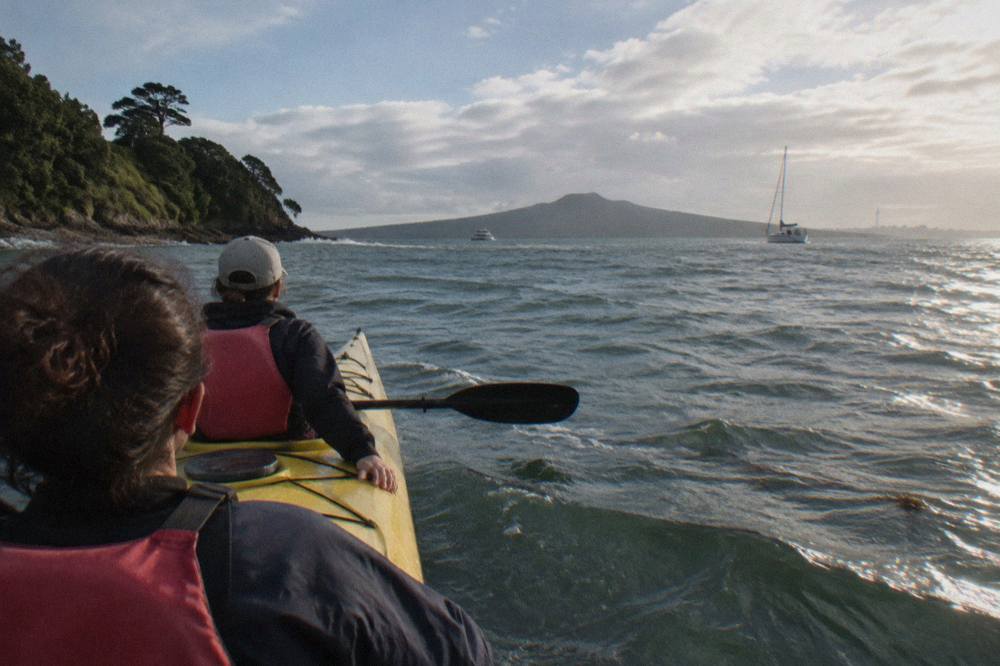
Guided tours here supply kayaks, paddles and safety gear, but food, drink and personal storage vary by operator, so check what the booking page says about dry storage before assuming there is a hatch barrel. The sunset kayak tour to Rangitoto Island departs from Auckland Sea Kayaks at 384 Tamaki Drive, St Heliers, and like every Auckland Sea Kayaks tour it uses double sea kayaks, which matters for photographers: the rear seat of a double kayak is generally the drier of the two and the better camera position, while the front paddler takes more of the spray. Ask the guide at the briefing which seat suits a camera. Check availability
A few habits do more for camera safety than any product. Lanyard or wrist strap on, always, because a dropped phone over open water is gone. Ziplock inside the dry bag as a second layer against condensation. Lens cloth in a shirt pocket, not in the bag, because salt fog on a lens is a constant, small problem you will fix ten times an hour. And a rule worth repeating to yourself: the camera comes out only when the paddle is across your lap and the guide says the water is settled, never mid-stroke.
| Storage method | Protection level | Best for | Main weakness |
|---|---|---|---|
| Roll-top dry bag, 5 to 10 litres | Watertight when closed correctly | Camera body, spare lens, phone | Slow to open, so you shoot less often |
| Hard case with a lanyard | Impact proof, splash proof | Small point and shoot | Bulky in a cockpit |
| Ziplock bag | Splash only | Phone in a pocket | Fails if submerged, fogs the lens |
| Wetsuit pocket | Minimal | Lens cloth, snacks | Floods on any re-entry |
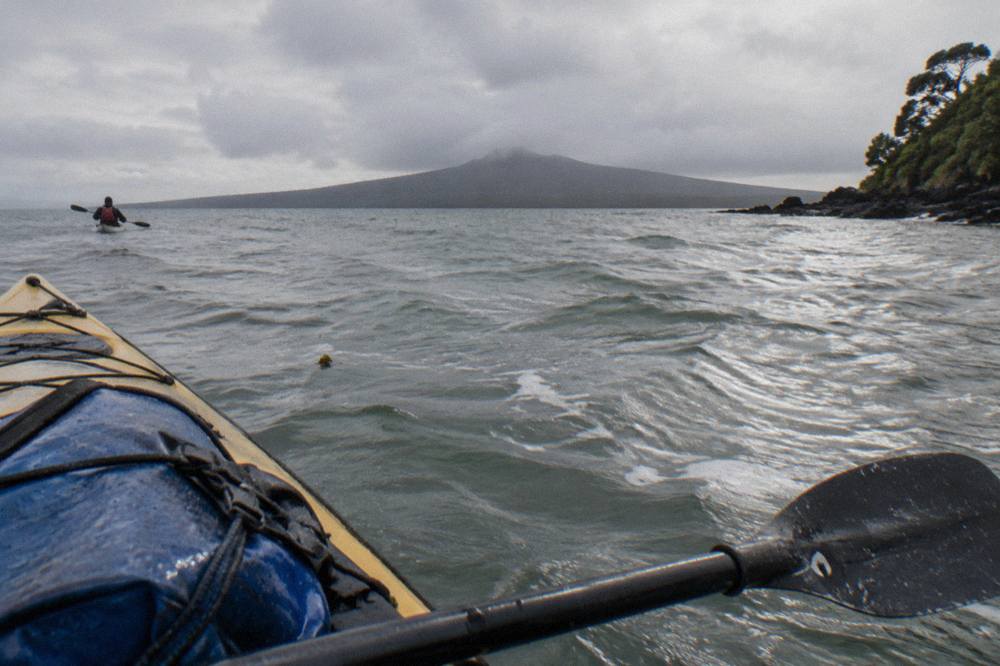
The clothing side of staying dry matters too, and the advice in what to wear sea kayaking in Auckland covers it in full: dress for the water, not the air, and expect wet knees at minimum.
What Camera Gear Works Best For Rangitoto Kayak Photography?
The best camera for this paddle is the one you can secure to your body and deploy in five seconds, which usually means a phone on a lanyard or a compact camera in a chest-mounted case. A big interchangeable-lens body is workable but punishing on a double kayak: hatches are slow, spray is constant, and both hands belong to the paddle whenever the group is moving. Small, tethered and quick beats big and buried.
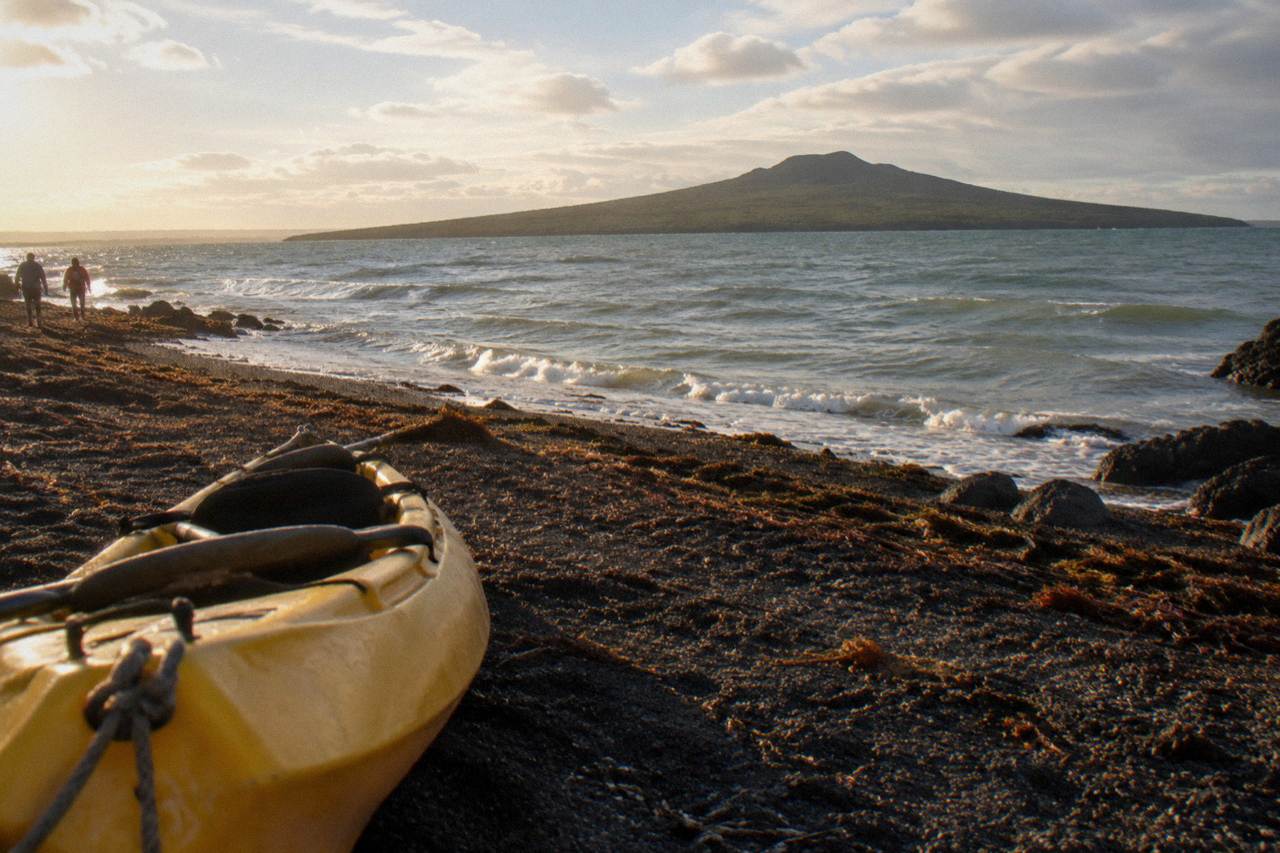
If you do bring a larger camera, the one-lens approach wins. A single versatile zoom stays sealed in one dry bag, and you never change glass over open water, because sensor swaps in salt air cost sensors. The Rangitoto shots that work from the water are wide: the island's bulk, the pohutukawa fringe at the shoreline, the black gravel of the landing beach. DOC notes Rangitoto holds the world's largest pohutukawa forest, and those trees leaning over the waterline are the foreground element that makes the volcano shots.
The tour choice shapes the gear decision more than most photographers expect. The Rangitoto day sea kayak tour and the sunset departure are both 6 hours 30 minutes from $139.16 per person, both rated 4.9, across 83 and 179 reviews respectively, and both include the summit walk, which means your camera spends the day cycling between two very different environments: a wet cockpit and a dry, dusty volcanic track DOC describes as rough, uneven and loose underfoot with little shade. Pack for both.
For photographers weighing which departure suits them, the deeper comparison in Rangitoto day kayak versus sunset kayak works through the light, the catering and the return-in-the-dark factor.
Which Rangitoto Kayak Tour Gives The Best Photo Opportunities?
For pure photography, the sunset tour to Rangitoto Island is the pick: 6 hours 30 minutes from $139.16 per person, rated 4.9 across 179 reviews, with the summit walk, a catered BBQ dinner and a hot drink included, and a return paddle after dark in kayaks fitted with navigation lights. The day tour offers the same island, a BBQ lunch and calmer, flatter midday light for detail work on the lava fields.
Auckland Sea Kayaks fits navigation lights to every kayak and brings the group home after dark, which gives you a rare frame: city glow on one side of the harbour and a black volcano behind you. Sunsets themselves are never guaranteed, on this or any tour, and the operator's own weather policy keeps departures inside strict wind and sea limits, with the final call often made on the day. If conditions are unsafe the operator may move the group to a sheltered tour, reschedule, or refund in full.
The budget-conscious alternative is not a Rangitoto crossing at all. The night kayak tour in glowing bioluminescent waters, from $64.03 per person and the most reviewed paddle covered here at 4.9 across 327 reviews, is a 1.5 to 2 hour night trip, and night water plus a moving paddle is the hardest photography environment on this site: expect phone shots of city light, not frameable glow. The operator says bioluminescence is never guaranteed and depends on season and conditions, so shoot it as a bonus, not a plan.
Between the two Rangitoto crossings sits the volcano alternative: the Motukorea, or Browns Island, half-day, 4 hours from $110.76 per person, rated 5.0 across 38 reviews, the highest rating of any tour here with 20 or more reviews. It trades Rangitoto's scale for a shorter day, a 1.5 kilometre guided summit walk climbing about 70 metres, and a volcano cone that photographs beautifully from water level because the island is smaller and the summit sits closer to the lens. The details are in the Browns Island Motukorea kayak tour guide.
Auckland Sea Kayaks offers a pre-booked free shuttle from the Auckland War Memorial Museum atrium on its Rangitoto departures, leaving 30 minutes before the tour. Seats are limited. No tour includes hotel pickup, so photographers with car-boot loads of gear should weigh driving to St Heliers against the shuttle. Parking around St Heliers is free, with time limits directly outside the shops, and the St Heliers kayak meeting point guide covers the arrival logistics in detail.
How Does The Light Change On A Sunset Paddle To Rangitoto?
A sunset departure can hand a photographer three distinct light phases in one trip: hard, contrasty light on the crossing out, soft golden light around the island and summit if conditions allow, and deep blue twilight into darkness on the return. The usable window for the classic warm Rangitoto frames is short, and it arrives while you are on or near the island, not while paddling.
The afternoon crossing light is the phase most first-timers misjudge. Low sun behind the island silhouettes the volcano beautifully but kills all detail on its slopes, so the wide crossing shots work best with the sun off to one side rather than directly ahead. Once the island's shadow starts to stretch, the pohutukawa fringe and the dark gravel of the landing beach pick up warm, raking light that flatters texture, and that is the moment for detail frames. DOC's own guidance for the island, that heat off the lava is intense and shade is scarce, is a photography point too: glare off black rock in afternoon sun will fool any meter, so bias exposure down when shooting the shoreline.
The summit walk is where the tripod-or-not question answers itself. DOC rates the Summit Track as 7 km return with about 250 m of climbing, easy to intermediate, on rough volcanic terrain. That is a walk, not a scramble, but it is long enough that heavy gear is a tax, and the summit frames are wide panoramas across the Hauraki Gulf that a phone handles credibly when braced. The crater viewing area sits near the top, with DOC noting a 60 m deep crater below.
The return leg is the phase that separates prepared photographers from disappointed ones. After dark, with navigation lights on every kayak, the workable images are of the boats themselves: bow lights trailing across black water, city glow on the horizon. A phone will struggle; a camera that handles high ISO cleanly earns its dry-bag space here. And the weather holds a veto over all of it. Operators watch the forecast closely, and the site's own advice on Auckland kayak tour weather and cancellations explains what happens to your booking when the wind arrives.
What Angles Can You Shoot From A Double Sea Kayak?
A double sea kayak gives you four stable working angles: low-and-wide near the waterline off the bow, the over-the-shoulder shot of your paddling partner, the group formation shot when the kayaks spread out, and the landing-beach frame from the gravel at the island end. What it does not give you is height, and trying to gain height by leaning or standing is how cameras and paddlers end up in the water.
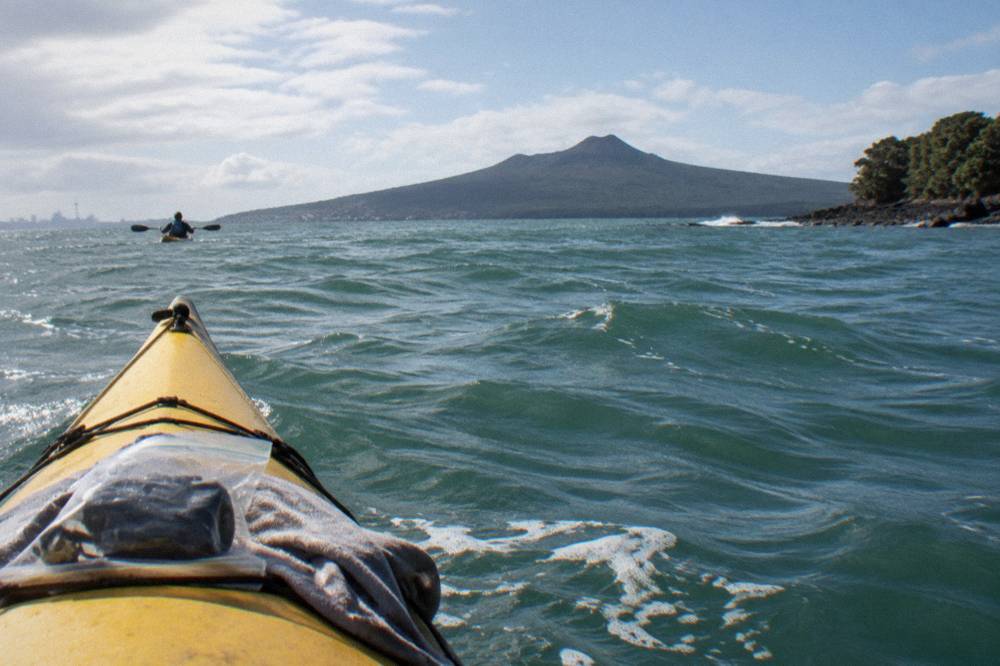
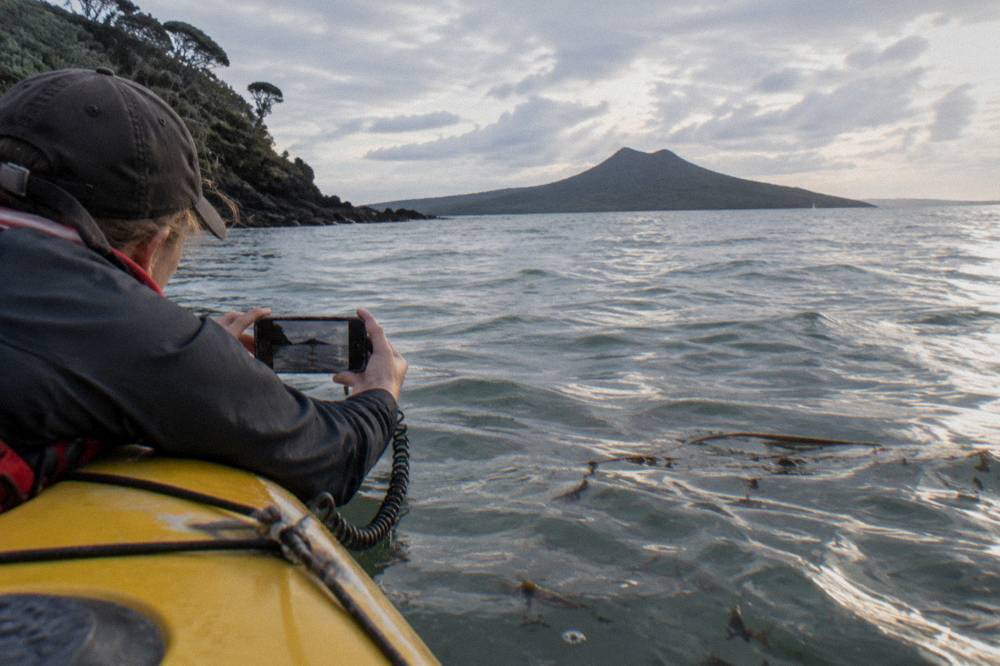
The near-waterline angle is the signature kayak shot and it costs nothing: a camera or phone held just above the waterline off the side of the hull turns calm water into a foreground mirror, with Rangitoto's bulk behind. It works only when the group has paused, never while paddling, and the guide's briefing will tell you when pauses happen. The partner shot, over the shoulder of the front paddler toward the island, gives the frame a human scale that pure landscape shots from a ferry cannot match, and because the front seat of a double kayak catches most of the spray, the rear seat is generally the better shooting platform. If that rear-seat advantage appeals, the guide to double versus single kayaks explains how tandem seating works and what to confirm before booking.
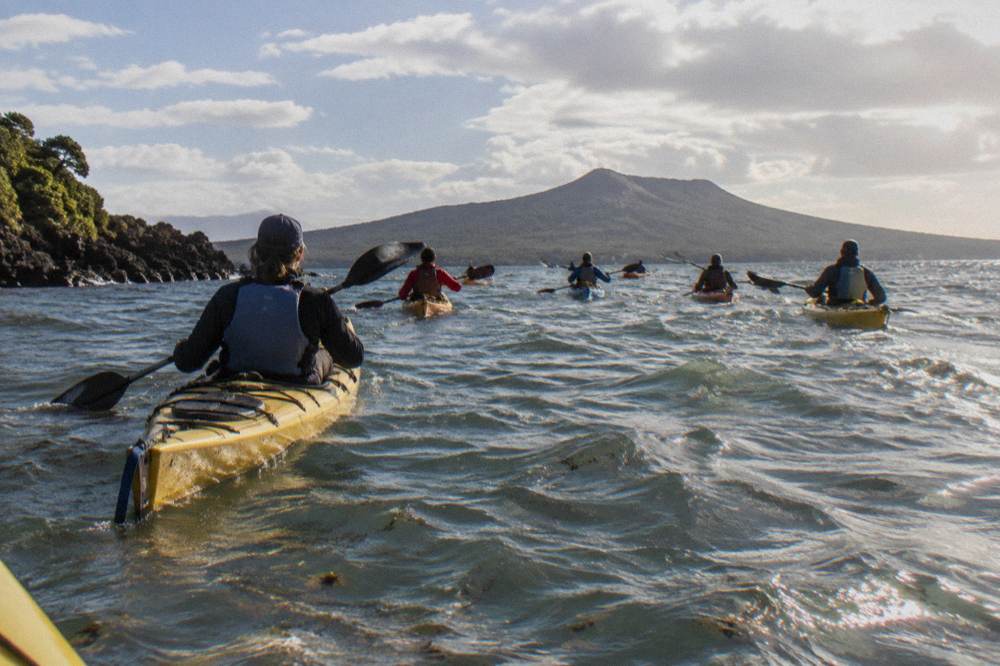
The formation shot rewards patience. When a full group of four doubles is travelling together, the line of kayaks is itself the composition, and the guide's position is usually the place to aim for since guides sit where the group photographs best. The tour cap on the Rangitoto departures is 8 people, which keeps the group small enough that the formation stays clean in frame. At the island end, the landing beach gives you the rare chance to shoot the kayaks from land: hulls on black volcanic gravel with the cone above them, and no spray risk at all, which makes it the safest place for the bigger camera to come out.
| Shot | Where on the tour | Risk to gear | Best light phase |
|---|---|---|---|
| Low waterline reflection | Pauses on the crossing | High, phone near water | Golden hour |
| Partner over-the-shoulder | Any paddling pause | Medium | Afternoon or golden |
| Group formation line | When kayaks spread out | Low, camera stays in cockpit | Any |
| Landing beach hulls | Island arrival | Low, you are on land | Late afternoon |
| Summit panorama | Summit walk | Low, dry track | Golden hour |
| Kayak lights after dark | Return paddle | Medium, spray and dark | Twilight |
One angle to abandon before you leave home: anything requiring a change of lens, a drone or a tripod on the kayak. DOC rules under the 2025 marine protection regime prohibit landing aircraft, including drones, in the High Protection Areas of the Hauraki Gulf, which include Rangitoto. A tripod belongs, if at all, on the summit track only.
How Do You Photograph From A Kayak With A Phone?
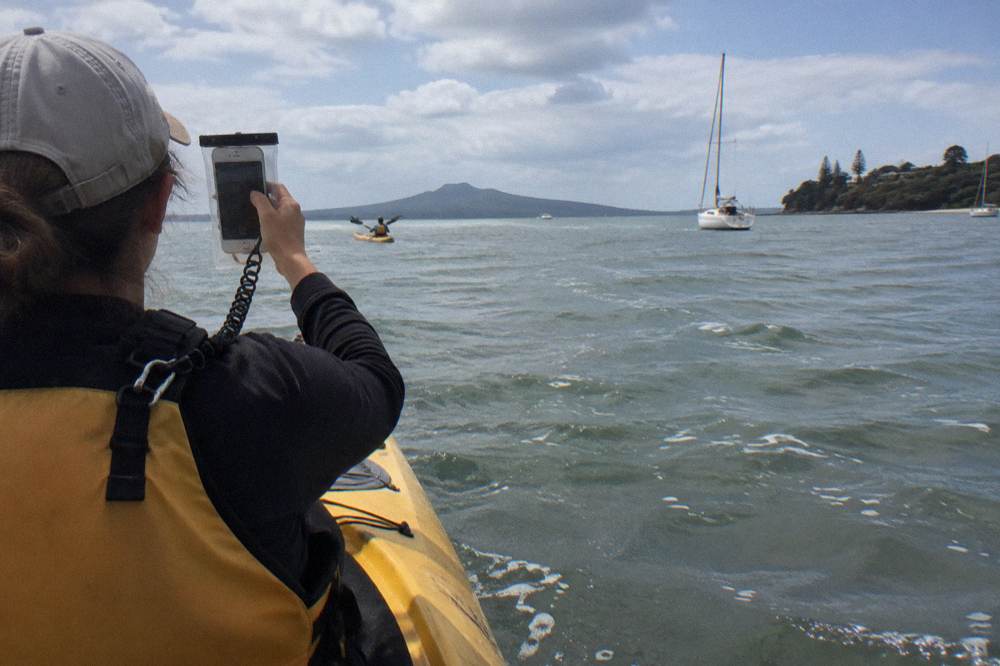
A modern phone is a genuinely good camera for this trip if it is tethered, waterproofed and shot deliberately: burst mode for paddling action, exposure bias pulled down for the black lava and the bright sky, and airplane mode so no notification shakes a frame. The risk profile is simple, a phone is the easiest thing on the boat to drop and the hardest to recover, so the lanyard does the real work.
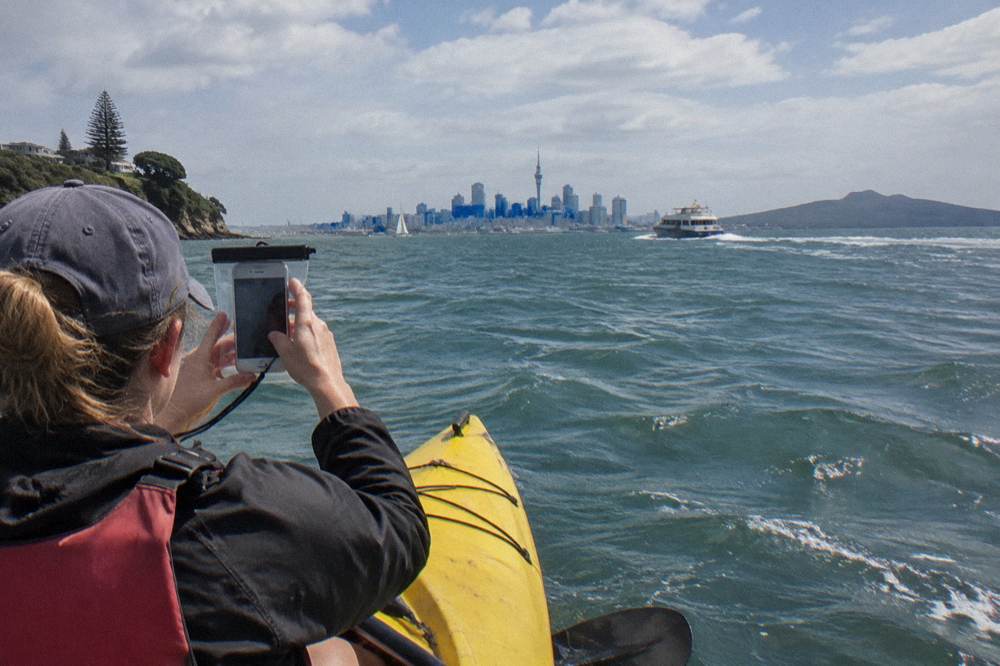
Salt on a phone lens is the day's recurring chore. A microfibre cloth in a pocket, not a bag, and a rinse of fresh water over hands before handling the phone at the island both cut the fog and smear problem sharply. Battery is the quiet killer: navigation, a cold wind and a full day of shooting will drain a phone fast, so a power bank lives in the dry bag with the phone, and the phone lives in airplane mode except when off the water. The sunset tour's 6 hour 30 minute duration is long enough that most phones arrive home nearly flat if unmanaged.
Night is where the phone hits its limit. The bioluminescence-style night paddles, and the dark return leg of the Rangitoto sunset tour, demand clean high-ISO output that most phones fake with heavy smoothing. Shoot the kayak lights and city glow as shapes and silhouettes, keep expectations modest, and if night frames are the goal, the honest answer is that a dedicated camera with a fast lens outperforms any phone on the water after dark.
For anyone whose phone-versus-camera question is really a do-I-need-gear-at-all question, the kayak hire in Auckland guide covers the self-guided option, though DOC describes Rangitoto as accessible to experienced kayakers, about two hours from the mainland, so a guided tour remains the practical route for most photographers.
What Should Photographers Pack For A Rangitoto Kayak Day?
Pack in three layers: on-body, in-cockpit and in-hatch. On body, a lanyarded phone or chest-mounted compact plus a lens cloth. In the cockpit, nothing you cannot afford to lose. In the hatch or dry bag, the camera body, power bank, fresh water, sun protection and warm layer, because the day runs from hot black lava to a cold, dark paddle home. Sturdy shoes matter as much as any camera item, the summit track is loose gravel.
| Item | Where it lives | Why it matters on this tour |
|---|---|---|
| Dry bag, 5 to 10 litres | Hatch, clipped | Only real protection against spray and dunking |
| Phone lanyard or wrist strap | On body | A dropped phone over open water is unrecoverable |
| Microfibre cloth | Shirt pocket | Salt fog on the lens repeats all day |
| Power bank and cable | Dry bag | A 6 hour 30 minute day drains a shooting phone |
| Sun hat, sunscreen, sunglasses retainer | On body | Little shade on the island, glare off lava and water |
| Warm layer and rain shell | Dry bag | The return paddle after dark is cold in any season |
| Sturdy walking shoes | Feet, in the kayak | DOC calls the summit track rough and uneven |
| Fresh water and snacks | Dry bag | No shops on the island, total fire ban |
Two rules shape the whole packing list. First, the lifejacket: Maritime NZ's rule in force since 9 October 2026 requires everyone on a kayak to wear a properly fitted lifejacket while underway, tours supply them, and every layer you pack must fit under one without blocking your arms. Second, the pest-free check: Rangitoto is a pest-free island inside a High Protection Area, so bags stay closed, food sits in sealed containers, and DOC rangers may recheck your gear on arrival, which means the camera bag you packed at home is the bag that gets inspected on the beach.
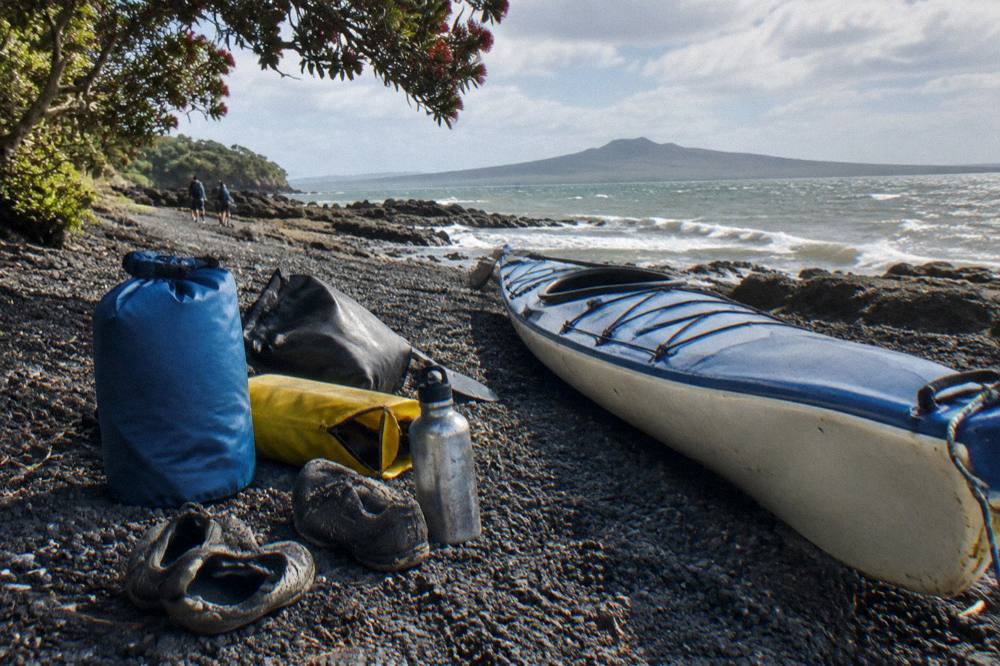
Photographers chasing the summit frames should also read the site's guide to the Rangitoto summit track after a kayak crossing, which covers the walk itself, the 7 km return distance and the 250 m height gain, and how the two halves of the day fit together.
What Else Should Photographers Know Before The Rangitoto Paddle?
Read the operator's cancellation terms before booking, because two sets of rules apply to Auckland Sea Kayaks tours: the booking page offers free cancellation up to 24 hours before the start for a full refund, while the operator's own terms charge a 25% admin fee on refunds more than 48 hours before departure and nothing inside 48 hours. If the operator cancels for weather, you get a full refund or a reschedule.
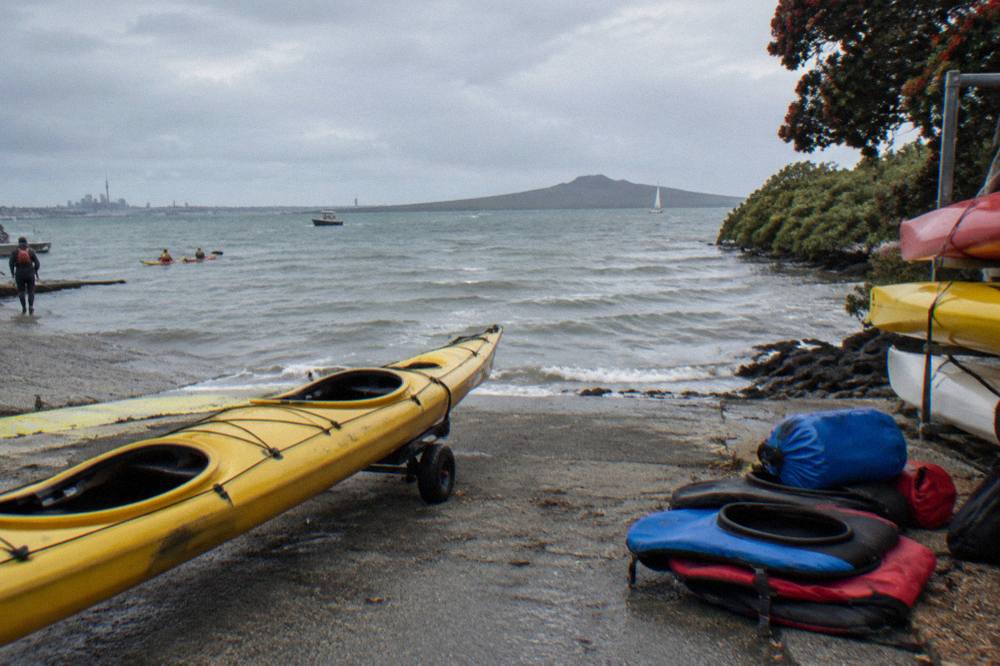
Group size and weight limits also shape the day. The Rangitoto sunset and day tours cap at 8 people, minimum age 14, with a 120 kg weight limit per paddler and a seat about 65 cm wide, and Auckland Sea Kayaks asks that paddlers can stay seated for up to 45 minutes at a time, which is also, usefully, the realistic rhythm for camera access on the water: shoot at the pauses, stow between them. Alcohol is not permitted on tour. The operator runs double kayaks only, so the front-or-back seat choice from earlier is a real decision to make at the briefing.
For perspective on the island itself, DOC's Rangitoto Island page covers the track network, the fire ban and the biosecurity rules, and the Hauraki Gulf's protected status is detailed on the Hauraki Gulf Marine Park pages. On the water itself, the Maritime NZ recreational craft guidance is the reference for lifejackets and safety gear, and MetService publishes the marine forecast operators watch.
Whatever the departure, the photographic payoff of this paddle is structural: Rangitoto is accessible only by ferry, boat and kayak, so the waterline view is not a variant of the standard tourist shot, it is a different frame entirely. The pohutukawa fringe, the black gravel, the cone against the sky and the dark paddle home are all there, weather permitting, for anyone whose camera makes it home dry.
Common Questions About Rangitoto Kayak Photography
Can I Bring A DSLR Or Mirrorless Camera On A Rangitoto Kayak Tour?
Yes, but pack it in a roll-top dry bag kept in the hatch, use one sealed lens rather than changing glass over water, and accept that it comes out only at pauses when the paddle is stowed. The day includes a dry summit walk on rough volcanic track, so a single versatile zoom serves both halves better than a bag of lenses.
Is A Phone Good Enough For Rangitoto Kayak Photography?
For daytime and golden-hour frames, yes, provided it is on a lanyard, airplane mode is on and a power bank rides in the dry bag. After dark, on the lit return paddle or any night tour, phone output drops off sharply and silhouette-style shots of kayak lights are the realistic result.
Which Seat In The Double Kayak Is Better For Photos?
The rear seat. The front paddler takes most of the spray, while the rear seat is drier and gives an over-the-shoulder view of your partner plus a clear line to the guide and the group. Ask the guide at the briefing, since group positioning on the day matters as much as the seat.
Do I Need To Wear A Lifejacket While Shooting?
Yes, always. Since 9 October 2026 Maritime NZ requires everyone on a kayak to wear a properly fitted lifejacket while underway, and guided tours supply them. There is no shooting-from-the-kayak exemption, so pack clothing layers that fit underneath.
Will The Sunset Tour Definitely Give Me A Sunset?
No. No tour guarantees a sunset, a glow or any sky condition. Auckland Sea Kayaks operates within strict wind and sea limits and makes the final call on the day, moving the group to a sheltered tour, rescheduling or refunding in full if conditions are unsafe.
Can I Fly A Drone From The Kayak Or The Island?
No. Rangitoto sits in a Hauraki Gulf High Protection Area where DOC's rules prohibit landing aircraft, including drones. The low waterline angle from the kayak itself is the alternative that stays legal and, in calm conditions, produces the better frame anyway.