Sea Kayak Safety On The Hauraki Gulf: Guides, Gear And Rules
The Hauraki Gulf mixes sheltered bays with genuine open water, so safety here is about gear, guides, weather calls and the rules that protect both paddlers and the islands.
Is Sea Kayaking On The Hauraki Gulf Safe For Beginners?
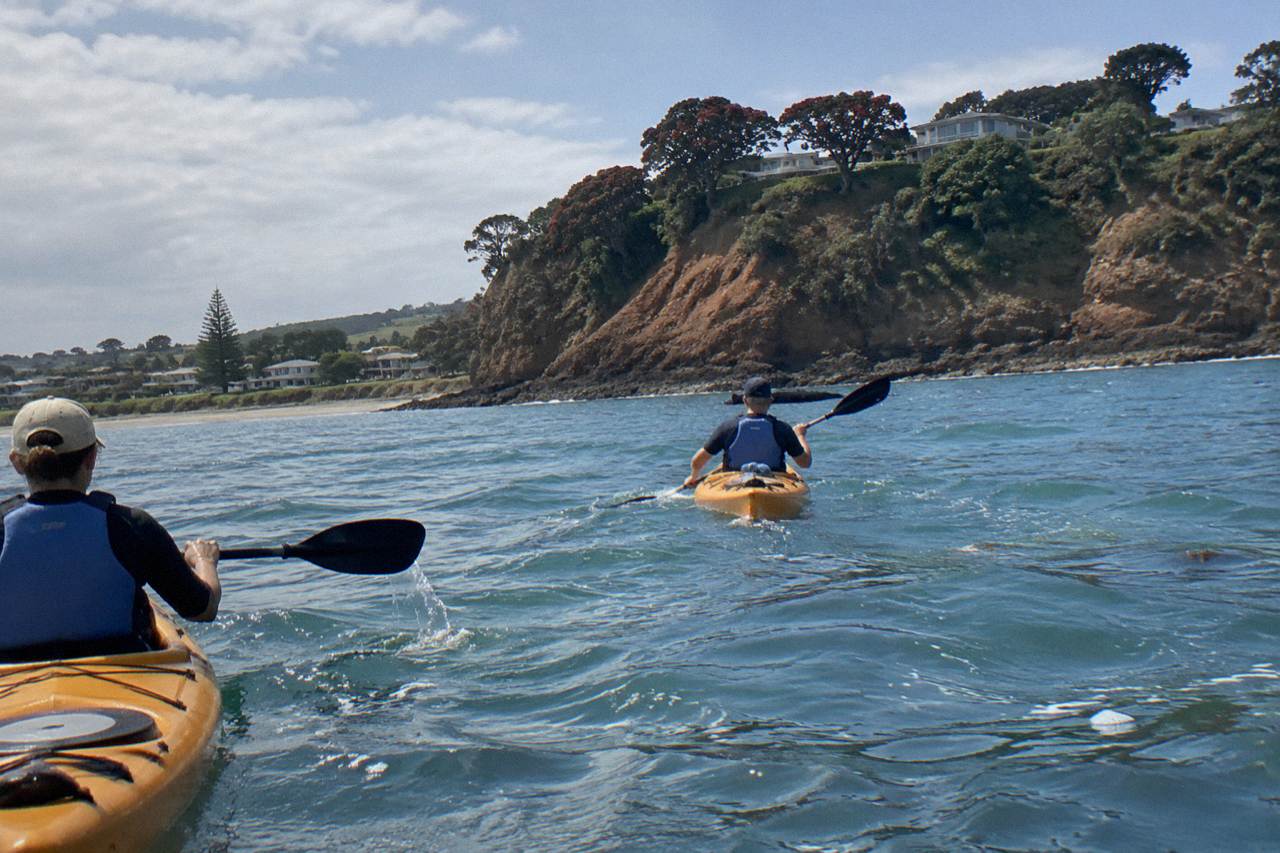
Yes, on a guided tour, and the operators here are set up for first-timers. Auckland Sea Kayaks and Canoe & Kayak Adventures both run guided paddles described as suitable for people with little or no experience, using stable double sea kayaks, supplied gear and trained guides. Independent crossings, by contrast, are treated by the Department of Conservation as trips for experienced paddlers only.
The Hauraki Gulf Marine Park covers more than 1.2 million hectares and more than 50 islands, and the conditions across that space range from glassy bays to open-water chop that separates islands like Rangitoto and Tiritiri Matangi from the mainland. The same body of water can be a gentle two-hour harbour paddle or a serious crossing, which is why the answer to the beginner question depends almost entirely on which paddle you choose and whether it is guided.
DOC is blunt about the independent version. On Rangitoto, the department says the island is "accessible to experienced kayakers," about 2 hours from the mainland. On Tiritiri Matangi, DOC says kayaking there "is an option for intermediate kayakers" because the stretch between the island and the mainland can get rough and windy, "so this trip is not for beginners." Those statements are about paddling independently, not about going with a guided group. Guided commercial tours are a different category: they are audited adventure activity operators working inside weather limits, in stable double kayaks, with a guide on the water beside you.
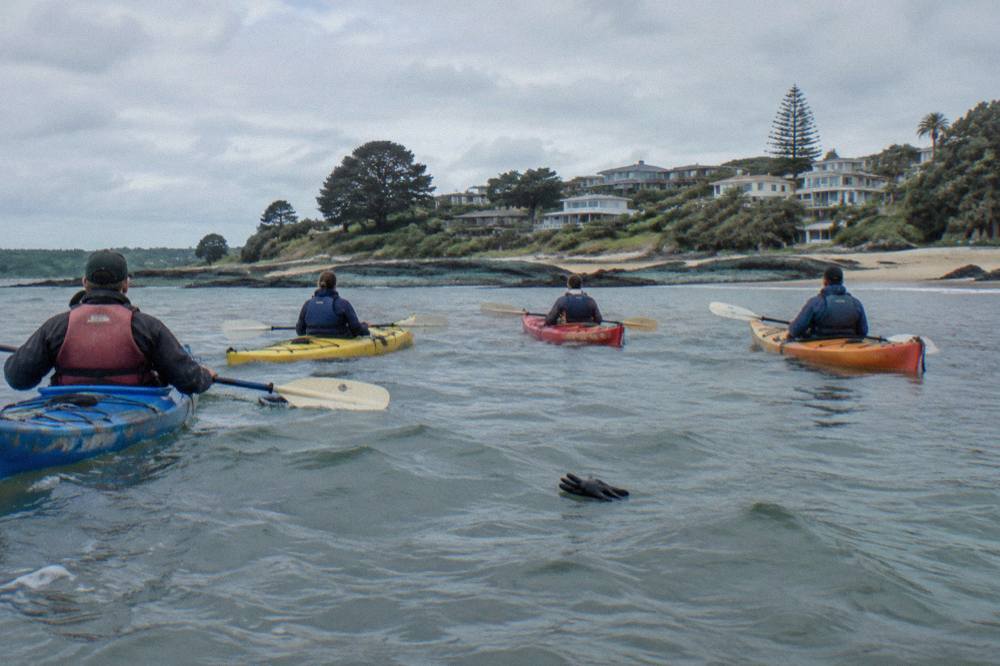
The guided tours covered here spell out the beginner position plainly. Auckland Sea Kayaks states that beginners are welcome on its tours, that no experience is needed, and that participants should weigh 120 kg or less and be able to fit a seat about 65 cm wide and stay seated for up to 45 minutes at a time. The Motukorea half-day asks for medium fitness, the City Lights night paddle is listed as easy, and the Rangitoto day and sunset tours ask for moderate fitness. In short: a first-time paddler has several well-supported options, and the long open-water crossings are the ones that demand respect.
For a wider view of what the region's guided paddles look like, the Auckland sea kayaking overview covers the tour styles, and the deeper beginner question is treated in can a beginner do sea kayaking.
What Safety Gear Does A Guided Auckland Kayak Tour Include?
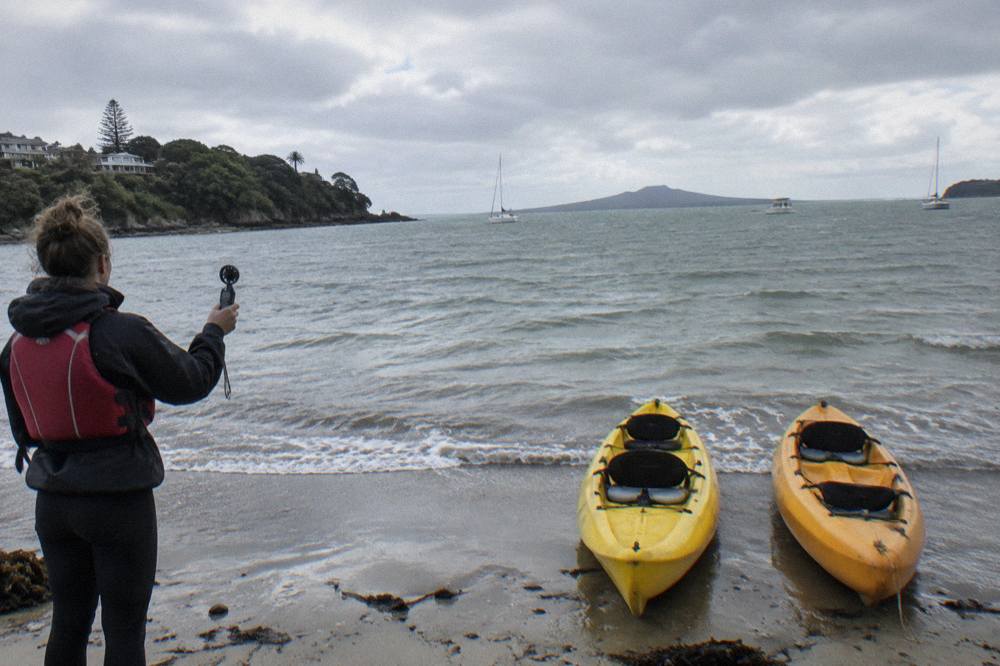
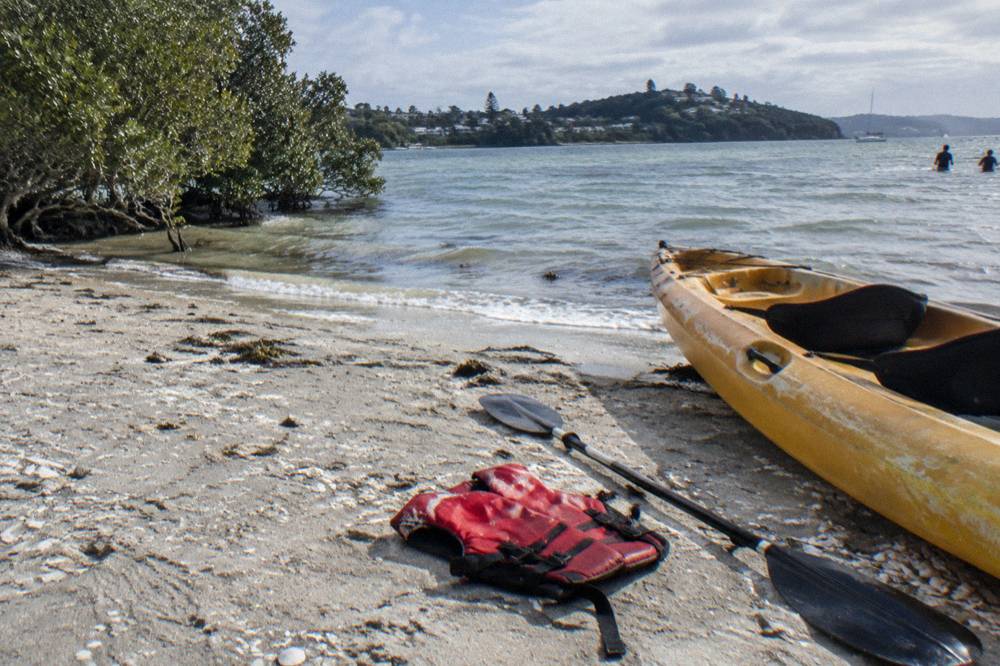
On guided tours here, the answer is the kayak, paddle and personal flotation device, with a guide and operators' safety equipment where stated; check each tour's inclusions before you book. Every Auckland Sea Kayaks tour uses double sea kayaks. The one exception is the Goat Island clear kayak hire, which is an unguided rental that includes the kayak, lifejacket, paddle and a safety briefing but no guide. If open water still feels intimidating, the guide to sea kayaking for beginners around Auckland explains how tours handle conditions and what local rules require.
Gear is the part of safety most travellers do not need to think about on a guided tour, because the operator carries it. A guide is stated on 10 of the 14 tours here; the City Scenes, Hallertau and Waiheke trips leave it unstated, and the one product without a guide is the Clearyak NZ rental at Goat Island, from $72.13 per double kayak for up to two people, rated 4.8 across 84 reviews. On that rental the safety layer is the briefing and your own judgment inside a marine reserve, which is why DOC tells inexperienced paddlers there to take care with sea conditions and currents.
| Tour | Operator | Guide | Gear | Kayak type | Group max |
|---|---|---|---|---|---|
| Sunset kayak tour to Rangitoto Island | Auckland Sea Kayaks | Yes | Yes | Double | 8 |
| Auckland: Day Sea Kayak Tour of Rangitoto Island | Auckland Sea Kayaks | Yes | Yes | Double | 8 |
| Auckland Volcano, Motukorea / Browns Island Sea Kayak Tour | Auckland Sea Kayaks | Yes | Yes | Double | 8 |
| Auckland: Browns Island Sea Kayak Volcano Tour | Social Nature Movement | Yes | Yes | Not stated | 16 |
| Auckland: Night Kayak Tour in Glowing Bioluminescent Waters | Social Nature Movement | Yes | Yes | Not stated | 16 |
| Bioluminescence Kayak Tour, Est. 1994 | Canoe & Kayak Adventures | Yes | Yes | Not stated | 24 |
| Auckland City Lights Night Kayaking Tour | Auckland Sea Kayaks | Yes | Yes | Double | 8 |
| Auckland Coastal Brewery Kayak Tour | Canoe & Kayak Adventures | Yes | Yes | Not stated | 24 |
| Guided Riverhead Tavern Kayak Tour in Auckland | Social Nature Movement | Yes | Yes | Not stated | 16 |
| Tiritiri Matangi Sea Kayak Tour | Canoe & Kayak Adventures | Yes | Yes | Double | 16 |
| Goat Island Marine Reserve Clearyak Kayak Rental | Clearyak NZ | No | Yes | Double, clear bottom | Not stated |
Guides time these crossings around the tide, and the hour-by-hour method paddlers use to estimate tidal stream strength explains how that planning works across the Hauraki Gulf.
A few details sharpen the picture. The Social Nature Movement bioluminescence night tour includes a safety light beacon on top of the standard kayak and flotation gear, a sensible addition given it runs 1.5 to 2 hours on the water after dark, from $64.03 per person, rated 4.9 across 327 reviews, the most reviewed paddle on the tours here. The Canoe & Kayak Adventures bioluminescence tour, operating since 1994, works on a one-guide-to-six-guest ratio with all kayaking and safety equipment and tuition from qualified guides included. The sunset Rangitoto tour returns to St Heliers after dark with navigation lights on every kayak. All that safety equipment and guide attention keeps mishaps rare on the water, and for anyone wondering what actually tends to go wrong for paddlers, the most common kayaking injuries explained gives a practical, hype-free answer.
If the supported, fully geared island format appeals, the Motukorea volcano half-day is a strong fit: a 4-hour Auckland Sea Kayaks tour from St Heliers, from $110.76 per person, rated 5.0 across 38 reviews, with a guide, double kayaks, all gear and a catered walk to the summit, and you can check availability alongside the Motukorea volcano tour guide.
What Are The Lifejacket Rules For Kayaks In New Zealand?
Since 9 October 2026, everyone on board a recreational craft of six metres or less, kayaks and paddleboards included, must wear a properly fitted lifejacket while the craft is underway. Maritime NZ is managing the first months of the rule through an educational approach. On guided tours the lifejacket is supplied and worn by all, so the rule mostly matters for anyone renting or paddling independently.
The national rule change came from Maritime NZ: everyone on a recreational craft of six metres or less must now wear a properly fitted lifejacket while underway, kayaks included. For guided Auckland paddles the practical effect is small, because operators were already supplying and requiring personal flotation devices: the Social Nature Movement tours list a PFD in the inclusions, the Clearyak rental includes lifejackets worn by all, and Auckland Sea Kayaks supplies all kayaking and safety equipment. The rule matters most at the margins, for the unguided Goat Island hire and for anyone paddling their own boat. Maritime NZ's recreational craft guidance is the primary source for the wording and the exceptions.
| Requirement | Who it applies to | Where it comes from |
|---|---|---|
| Properly fitted lifejacket worn while underway | Everyone on a kayak or craft six metres or less | Maritime NZ rule, in force 9 October 2026 |
| PFD supplied and worn | Guests on the guided tours here | Operator inclusions |
| Lifejackets worn by all | Goat Island clear kayak hirers | Clearyak NZ |
| Practise re-entry before you need it | Independent paddlers | Maritime NZ paddle craft advice |
Beyond the lifejacket, Maritime NZ's paddle craft advice adds three habits worth adopting whatever you paddle: dress for the water temperature rather than the air temperature because cold water shock kills, carry two waterproof ways to call for help, and check the marine forecast before launch. The forecast source for Gulf paddlers is the MetService marine forecast, which publishes the Hauraki recreational forecast covering the waters these tours operate on.
The sunset Rangitoto tour above is the one that makes the lifejacket and lighting question most visible, since it finishes on the water after dark with navigation lights fitted to every kayak, a double-kayak tour with a guide, gear, BBQ dinner and the summit walk included, from $139.16 per person and rated 4.9 across 179 reviews.
How Do Guides Handle Wind, Weather And Cancellations?
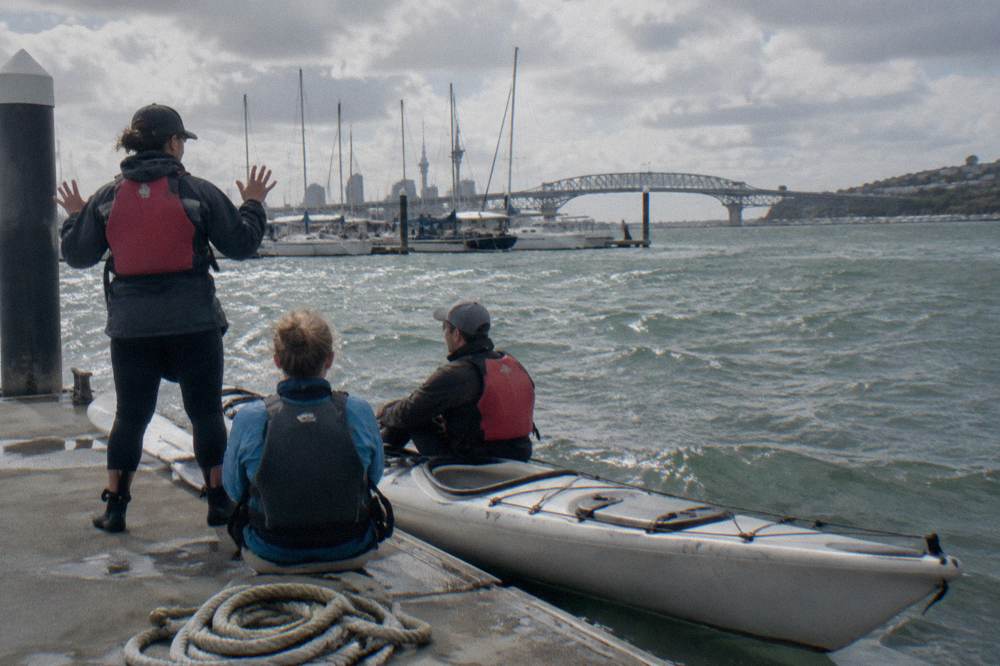
Guided operators here work inside strict wind and sea limits and often make the final call on the day of the tour. Auckland Sea Kayaks says that if conditions are unsafe it may move you to a sheltered tour such as City Lights or City Scenes, reschedule you, or give a full refund if no alternative exists. When the operator cancels for weather, the standard outcome is a full refund or a reschedule.
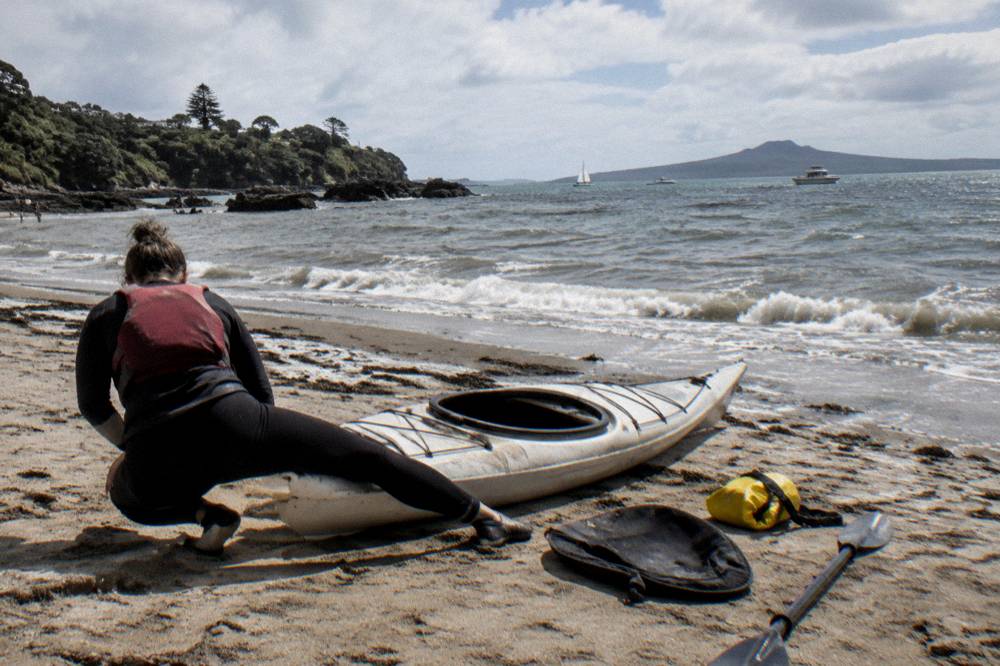
Weather is the single biggest variable in Gulf kayaking, and the honest answer is that no departure is promised until the guide says go. Auckland Sea Kayaks publishes a clear policy hierarchy: operate inside limits, transfer to a sheltered harbour tour if the island crossing is not on, reschedule, or refund in full. Canoe & Kayak Adventures says of its Tiritiri Matangi day tour that if weather conditions are unsuitable, an alternative paddling location will be arranged. Both policies put the decision with the operator, which is exactly where a safety-conscious paddler wants it. Other pages covering the same trip are gathered on Auckland Kayak Tours.
| Situation | Auckland Sea Kayaks outcome | Booking page outcome on covered tours |
|---|---|---|
| Operator cancels for weather | Full refund or reschedule | Refund or reschedule |
| Unsafe for the island crossing | Transfer to City Lights or City Scenes, or reschedule | Varies, operator decides |
| Guest cancels, more than 48 hours before | Refund less a 25% admin fee | Free cancellation up to 24 hours before for a full refund |
| Guest cancels within 48 hours or no-show | No refund | Check the terms on the booking page |
There is a genuine difference between two sets of terms on the Auckland Sea Kayaks tours, and a careful reader should see both. The booking page states free cancellation up to 24 hours before the start for a full refund, on the tours whose line says so. The operator's own terms are tighter: more than 48 hours before departure, a refund less a 25% admin fee, and within 48 hours or a no-show, no refund. Read the terms on the booking page before you rely on either version, because that is the version your booking is held under. All 14 tours here state free cancellation up to 24 hours before start, though Auckland Sea Kayaks keeps a 25% admin fee more than 48 hours out and refunds nothing inside 48 hours, so check the booking page before you count on it.
Cancellation logic is only half the weather story. The other half is timing: daylight saving runs from late September to early April, sunset comes late in midsummer and early in midwinter, and the MetService marine forecast is the reference for what the wind intends to do. The Auckland kayak tour weather and cancellations guide works through the whole decision, and the best time to kayak in Auckland covers the seasonal picture.
What Hazards Should Paddlers Know About Around Auckland?
The main hazards are wind and chop on open water, cold water year-round, currents around headlands and marine reserves, and sun and heat on volcanic islands. DOC warns that people have died at the Goat Island marine reserve and does not recommend swimming or snorkelling there in east or north-east winds over 20 knots or swell over a metre. None of this is a reason to stay ashore, but it is a reason to go guided or prepared.
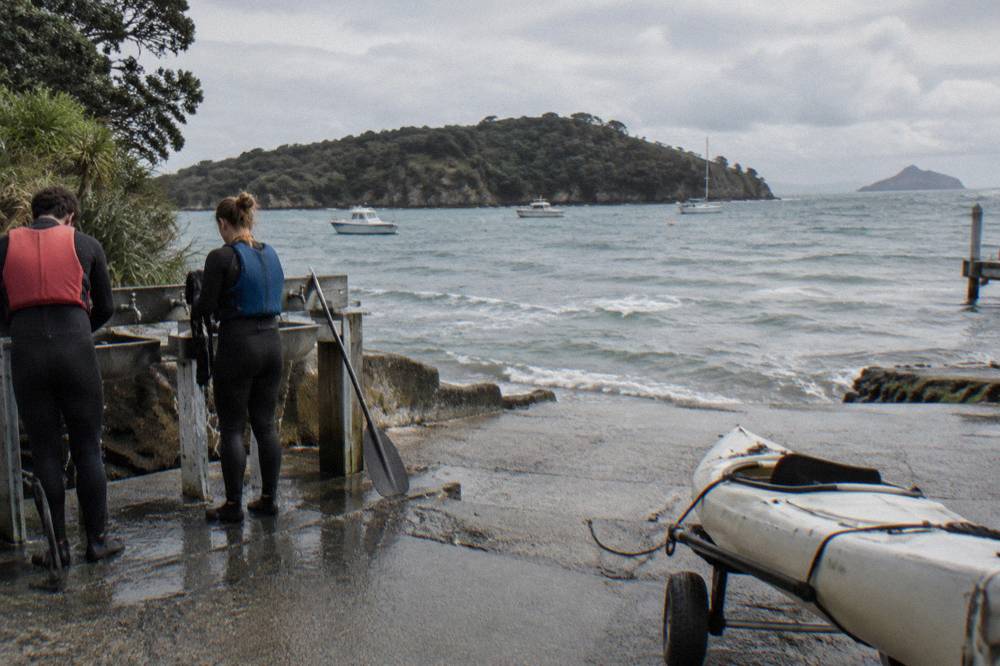
Maritime NZ's cold water message deserves the top of the list, because the Gulf is cool even in late summer and cold water shock can incapacitate a paddler long before hypothermia does. The agency's advice to dress for the water temperature, carry two waterproof ways to call for help and practise re-entry applies to every paddler, and the guided tours reduce the stakes further by keeping a qualified guide within reach.
The City Lights night paddle is a good example of a hazard-managed format: a 2.5-hour Auckland Sea Kayaks tour on the sheltered Waitemata from Westhaven Marina, easy graded, minimum age 12, weight limit 120 kg, group capped at 8, from $82.36 per person and rated 4.8 across 28 reviews. The hazards of open water are largely designed out of it, which is precisely why operators move island customers onto it when the wind is up.
Around the islands, the hazard profile shifts to terrain and sun. On Rangitoto, DOC describes the Summit Track as rough, uneven volcanic terrain with loose gravel and little shade, heat off the lava intense, and wasps more common in warm months. The track is 7 km return with about 250 m of climbing, easy to intermediate, about two hours return from the wharf. There is a total fire ban, no rubbish bins, no camping, and no shops, so water, sturdy shoes and sun protection are part of safety, not comfort. The full landing and after-dark picture is in do you land on Rangitoto on a kayak tour.
What Rules Apply At Goat Island And The Protected Areas?
Goat Island, the Cape Rodney-Okakari Point Marine Reserve, was New Zealand's first marine reserve, established in 1975, and its boundaries tripled in 2025 under the Hauraki Gulf Marine Protection Act. Fishing of any kind is banned, marine life must not be taken, disturbed or fed, and kayaking is explicitly allowed. In the Hauraki Gulf High Protection Areas, including Rangitoto and Motutapu, kayaking is allowed but no fishing or taking of seafood is permitted.
The reserve rules matter to paddlers because the Clearyak clear-bottom rental at Goat Island operates inside a marine reserve, and the Rangitoto, Motukorea, Tiritiri Matangi and Waiheke tours all land on islands elsewhere in the Hauraki Gulf. At Goat Island the rules are concrete: no taking, killing, disturbing or removing marine life or materials, do not feed fish, careful anchoring, no dogs, and speed limits of 5 knots within 200 m of shore or a dive flag. DOC's Goat Island reserve page carries the full set, and its safety note that people have died there is worth reading before any visit.
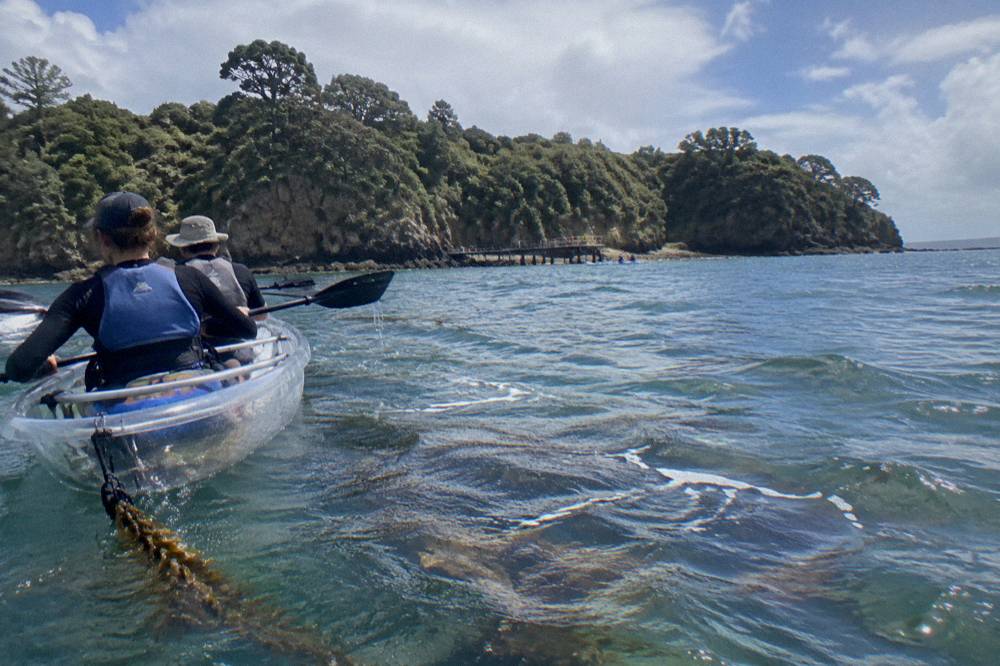
The Clearyak rental itself is a seasonal product with its own safety frame: double kayaks with transparent bottoms, launching from Goat Island beach, a maximum of 100 kg per person, all equipment and a safety briefing included, beginners explicitly welcome, and weather cancellations met with a full refund or a rebook. The hire runs in the warmer season only, so check the operator's website before you drive the roughly 1.5 hours north to Leigh, and note that DOC has upper car parks closing for repair with the main car park and lower overflow staying open.
| Rule | Where it applies | Who says it |
|---|---|---|
| No fishing or taking seafood, even by hand | High Protection Areas including Rangitoto and Motutapu | DOC |
| No taking, disturbing or feeding marine life; 5-knot limits near shore | Cape Rodney-Okakari Point Marine Reserve, Goat Island | DOC |
| Check, Clean, Close biosecurity on all gear and bags | Pest-free islands of the Hauraki Gulf | DOC and Auckland Council |
| No fires, no camping, take rubbish out | Rangitoto and gulf islands | DOC |
| No drones, no waste discharge | High Protection Areas | DOC |
Biosecurity is the rule set most visitors have not met before. The Check, Clean, Close standard asks paddlers to check gear for rodents, insects, ants and skinks, clean footwear and gear of soil and seeds, and close bags, with food in sealed containers rather than open or supermarket bags. Rangers may recheck gear on arrival, and commercial operators need a Pest-free Warrant, which Auckland Sea Kayaks states it holds. No pets are allowed on island reserves, and pests can be reported on 0800 DOC HOT. The wider context is on the DOC Hauraki Gulf Marine Park page.
How Fit And Prepared Do You Need To Be For A Gulf Paddle?
Guided tours here are graded easy to moderate rather than athletic: Auckland Sea Kayaks welcomes beginners with no experience, caps participant weight at 120 kg, and asks that you can stay seated for up to 45 minutes at a time. The Rangitoto tours add a 7 km return summit walk with about 250 m of climbing, and Motukorea includes a 1.5 km walk climbing about 70 m, so the walking, not the paddling, is usually the hardest part.
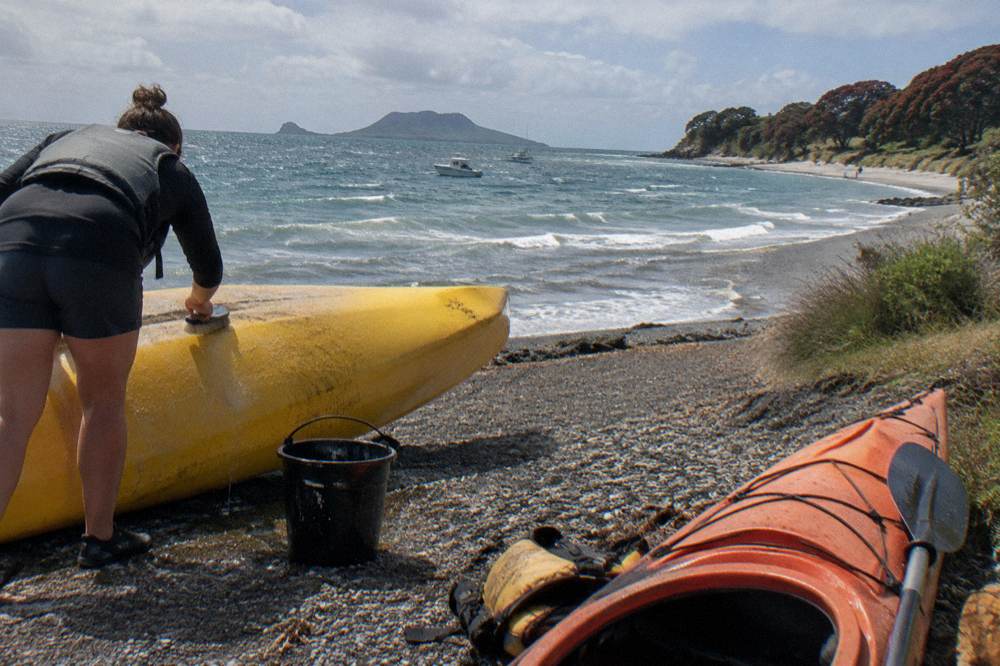
Preparation is mostly honest self-assessment. The long island days run 6 hours 30 minutes in total for Rangitoto, mixing a long open-water paddle with a volcanic hike, and the operators grade them moderate fitness. The shorter formats are gentler: the Motukorea half-day at 4 hours, the City Lights and City Scenes paddles at 2 to 2.5 hours, and the pub paddles at 2 hours with 60 to 90 stated paddling minutes on the Riverhead and Browns Bay versions. Minimum ages vary by tour, 14 on both Rangitoto tours, 12 on Motukorea, City Lights and City Scenes, 13 on Tiritiri Matangi, 11 on the Coastal Brewery paddle, and 3 on the Clearyak rental with an adult, so a family's options depend on the ages in it, and the tours with kids guide works through that in detail.
| Tour | Duration | Stated paddling | Fitness ask | Min age |
|---|---|---|---|---|
| Sunset kayak tour to Rangitoto Island | 6 hours 30 minutes | Not stated | Moderate, 7 km return summit walk | 14 |
| Auckland: Day Sea Kayak Tour of Rangitoto Island | 6 hours 30 minutes | Not stated | Moderate, 7 km return summit walk | 14 |
| Auckland Volcano, Motukorea / Browns Island Sea Kayak Tour | 4 hours | Not stated | Medium, 1.5 km walk, about 70 m climb | 12 |
| Auckland: Browns Island Sea Kayak Volcano Tour | 4 hours | 120 minutes | Not stated | Not stated |
| Auckland City Lights Night Kayaking Tour | 2.5 hours | Not stated | Easy | 12 |
| Auckland Coastal Brewery Kayak Tour | 2 hours | 90 minutes | Not stated | 11 |
| Guided Riverhead Tavern Kayak Tour in Auckland | 2 hours | 60 minutes | Not stated | Not stated |
What to bring sits alongside fitness. Kayaking is a wet sport, as Canoe & Kayak Adventures puts it, and the Clearyak FAQ warns hirers they may get wet to the knees, so a change of clothes and a towel belong in the kit on every product. Sturdy shoes matter on any tour that lands on volcanic terrain, sun protection matters on the water and doubly on black lava, and the what to wear sea kayaking guide covers the clothing logic season by season. Alcohol is not permitted on Auckland Sea Kayaks tours, and basic English is needed for safety instruction, with Spanish guides on request and Mandarin safety resources available.
The Riverhead Tavern paddle above is the lightest entry on the fitness question: a 2-hour guided tour with 60 stated paddling minutes, from $62.48 per person, the lowest per-person price on the tours here, a new listing with no reviews yet, minimum age not stated, meeting at Christmas Beach on Herald Island.
Common Questions About Sea Kayak Safety On The Hauraki Gulf
Is Sea Kayaking On The Hauraki Gulf Safe For Beginners?
On a guided tour, yes. The operators here welcome paddlers with no experience, use stable double kayaks, supply all gear and lifejackets, and cap group sizes between 8 and 24. Independent crossings to Rangitoto or Tiritiri Matangi are a different matter: DOC describes Rangitoto as accessible to experienced kayakers and Tiritiri Matangi as intermediate territory.
Personal flotation devices are supplied on the tours that list them as included gear, among them the Goat Island clear kayak rental, where a lifejacket is part of the hire and worn by all. Lifejackets are required by law when paddling in New Zealand, so expect one on any trip you book. Since 9 October 2026 a national Maritime NZ rule requires everyone on a kayak to wear a properly fitted lifejacket while underway. When the operator cancels, the standard outcome is a full refund or a reschedule. Auckland Sea Kayaks may instead move you to a sheltered tour such as City Lights or City Scenes. If you cancel yourself, the booking page offers free cancellation up to 24 hours before the start, while Auckland Sea Kayaks applies its own terms on five tours: a 25% admin fee when you cancel more than 48 hours out and no refund inside 48 hours, so read the terms before booking.
Tours here do not state a swimming requirement, and everyone wears a supplied lifejacket in a stable double kayak with a guide close by. Canoe & Kayak Adventures notes that kayaking is a wet sport and the Clearyak FAQ says no kayaking or swimming experience is needed. Expect to get at least splashed, and dress for the water temperature. Auckland Sea Kayaks tours set a 120 kg limit and ask that participants fit a seat about 65 cm wide. The Goat Island clear kayak rental sets a maximum of 100 kg per person. Canoe & Kayak Adventures asks paddlers over 120 kg on its tours to tell them in advance. Check the specific tour's booking page before you book. Yes, and they are biosecurity as much as safety. Gear must be checked for pests, cleaned of soil and seeds, and bags closed with food in sealed containers before landing on pest-free islands, and rangers may recheck gear on arrival. On Rangitoto there is a total fire ban, no camping and no rubbish bins, and in the High Protection Areas no fishing or taking of seafood is allowed.Do Auckland Kayak Tours Provide Lifejackets?
What Happens If My Kayak Tour Is Cancelled For Weather?
Do I Need To Be Able To Swim To Go On A Guided Kayak Tour?
Is There A Weight Limit On Auckland Kayak Tours?
Are There Rules About Landing On The Islands?