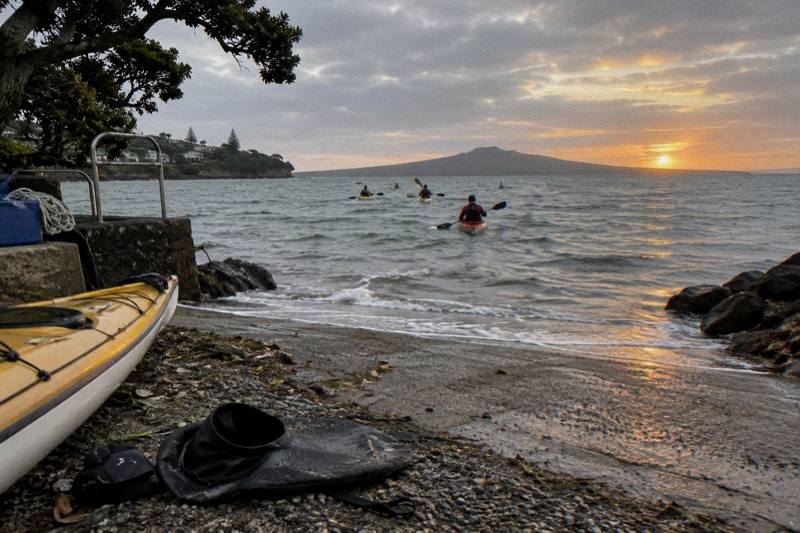
Can You Kayak To Rangitoto If You Have Never Paddled Before?
Yes, first-time paddlers can kayak to Rangitoto on a guided Auckland Sea Kayaks tour: what the operator requires, what DOC says about going independently, and which tour to pick.
In short
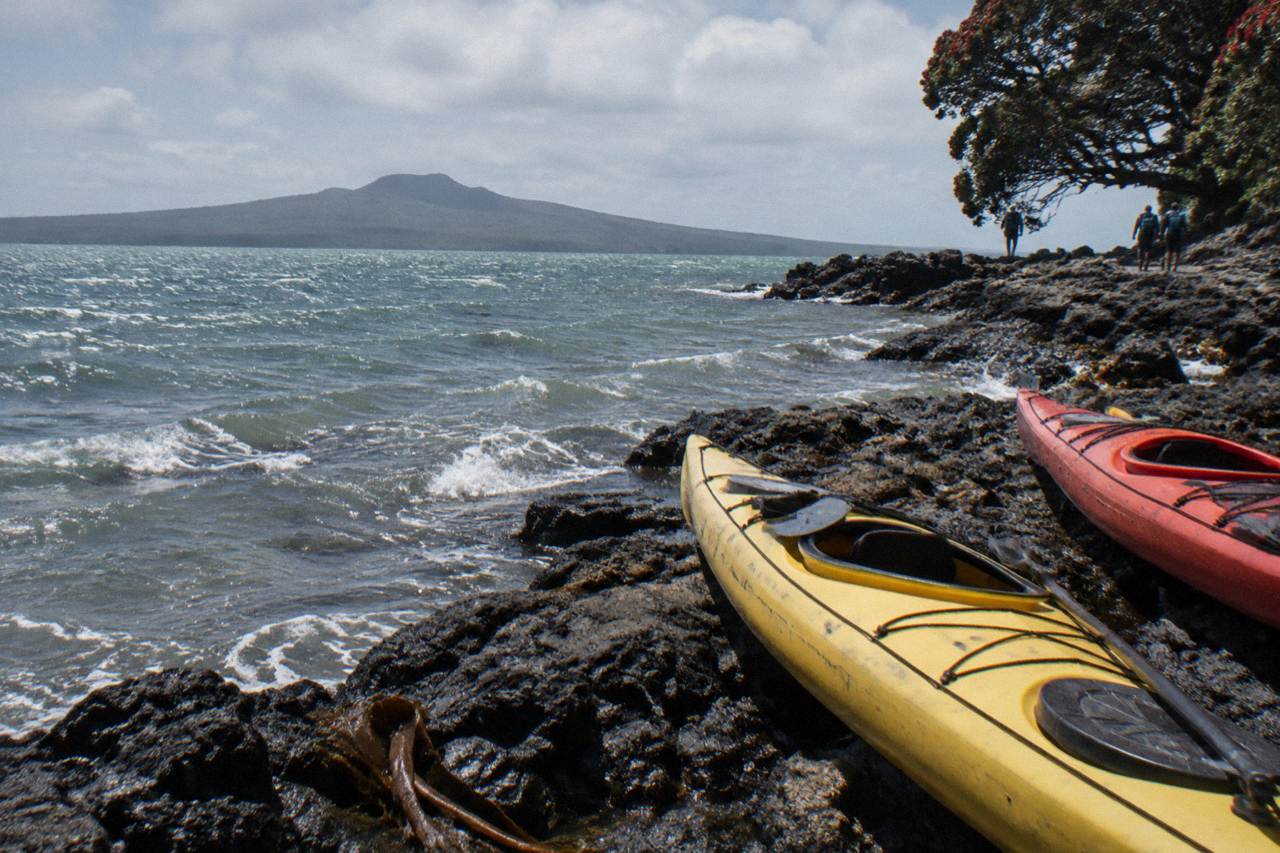
Yes, a complete beginner can kayak to Rangitoto on a guided tour, since Auckland Sea Kayaks states that no experience is needed and beginners are welcome. Tours use stable double sea kayaks with a guide leading every departure, and group sizes are capped at 8. Expect moderate fitness demands: the crossing takes about an hour and a half on the water each way, plus a guided summit walk on rough volcanic track. Paddling there independently is different, as DOC describes the island as accessible to experienced kayakers, about two hours from the mainland.
Rangitoto emerged from the sea just 600 years ago, which makes it the youngest volcano in New Zealand and one of the most photographed features on the Auckland horizon. Every week, a good share of the people paddling out to it have never sat in a kayak before. The crossing is an open-water paddle across the Hauraki Gulf, and the Department of Conservation describes the island as accessible to experienced kayakers, about two hours from the mainland, yet the guided tours that leave from St Heliers Bay take beginners routinely and have done for years. The difference between those two facts is the whole story, and it is worth understanding before you book anything. To see how those guided trips actually treat first-timers, the reviews from past Auckland paddlers separate operators with a real history of happy customers from the newer listings.
The short version: yes, you can kayak to Rangitoto without ever having paddled, provided you go with a guided tour rather than setting off alone. Auckland Sea Kayaks, the operator behind both Rangitoto tours covered here, states plainly that no experience is needed and beginners are welcome. What the company does ask for is a set of physical baselines, a minimum age, and a willingness to spend several hours in a double kayak with a guide in charge of the route. This article walks through what that means in practice, what the Department of Conservation says about the island, and how the sunset and day tours differ for a first-time paddler. For a broader look at the question of starting from zero, the companion piece on beginner sea kayaking basics covers the general picture.
Yes. A first-time paddler can kayak to Rangitoto on a guided tour, because Auckland Sea Kayaks states that no kayaking experience is needed and beginners are welcome on both its Rangitoto trips. The tours use stable double sea kayaks, a guide leads every departure, and all equipment is included. Going independently, without a guide, is a different matter: DOC describes the island as accessible to experienced kayakers, about two hours from the mainland.
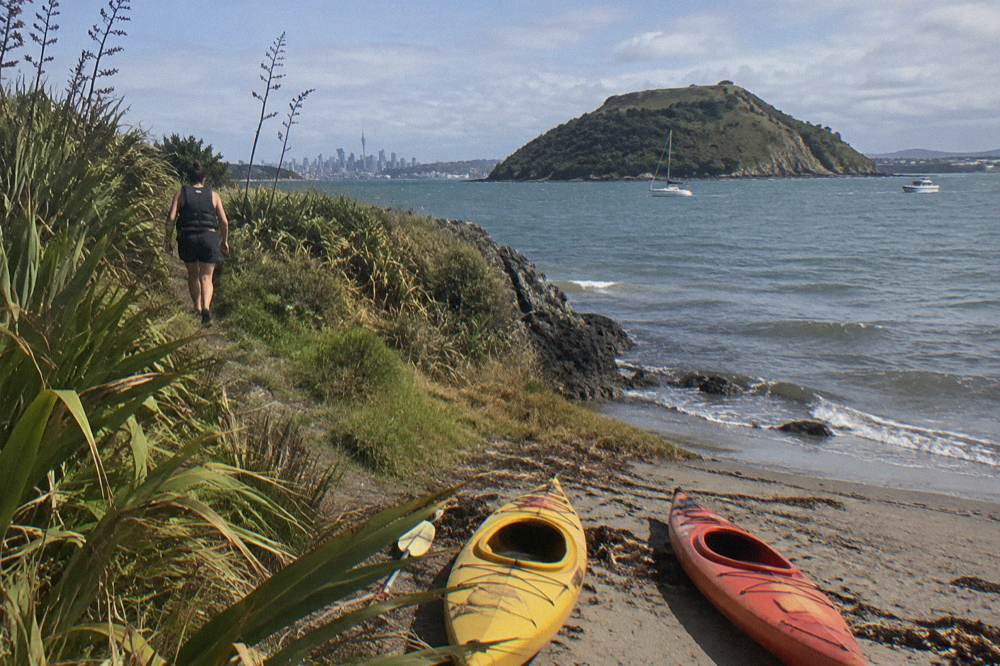
That contrast is the single most useful thing to understand. The guided sunset tour to Rangitoto, rated 4.9 across 179 reviews and priced from $139.16 per person, and the day tour, 4.9 across 83 reviews at the same from price, are built around people who have never paddled. The company has been running guided Hauraki Gulf trips since 2010, holds a Qualmark Gold certification, and carries a Pest Free Warrant that commercial operators need to land passengers on the islands of the gulf. In other words, the beginner question has been answered thousands of times over, and the operator's answer is a flat yes with conditions.
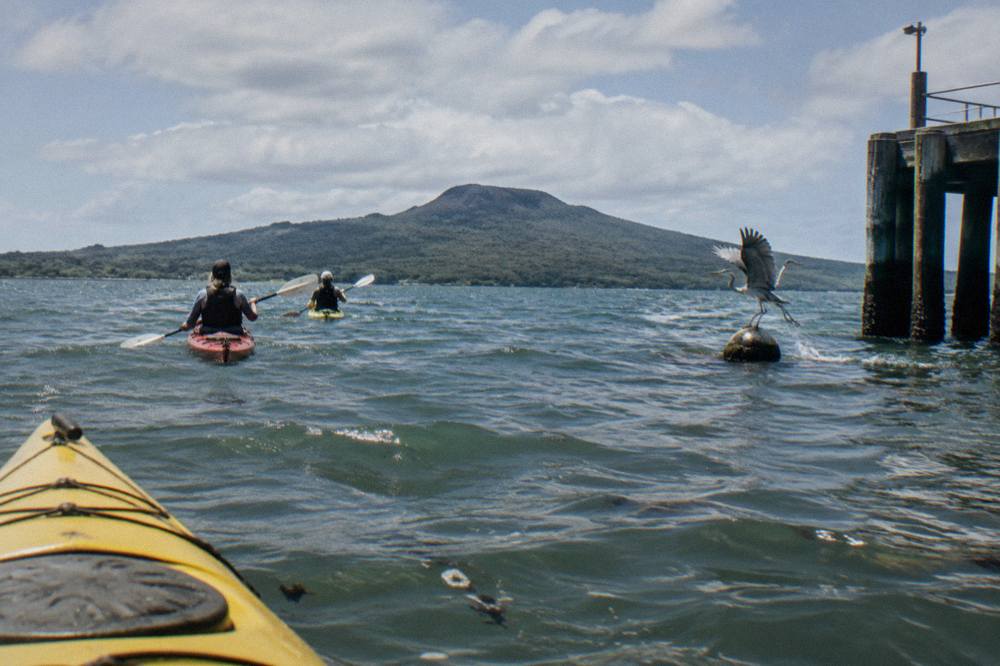
The conditions matter more than the yes. You will be in a double kayak, which is more stable than a single and lets a guide pair you with a stronger paddler if the group needs balancing. You need to be able to stay seated for stretches of up to 45 minutes at a time, because the open-water legs of the trip do not have anywhere to stop and stretch. You need to weigh 120 kg or less and fit a cockpit seat roughly 65 cm wide. And you need a basic level of English so the safety briefing lands, though the operator can arrange Spanish guides on request and has Mandarin safety resources. None of that is unusual for a first timer in reasonable health.
The island itself is pest-free and protected, which shapes the whole day. DOC and Auckland Council run a Check, Clean, Close biosecurity regime for everyone landing on gulf islands: check gear for rodents and insects, clean footwear of soil and seeds, and keep food in sealed bags rather than open supermarket bags. Rangers may recheck gear on arrival. Guided tours handle the details, but knowing why your bag needs to close properly is part of understanding where you are going. The DOC Rangitoto Island page covers the island rules in full, and it is worth a read before any trip.
If you already know you want one of these tours, the three below are the natural shortlist: the sunset and day Rangitoto paddles, plus the bioluminescence night tour as a shorter, cheaper first-paddle option from a different operator.
Is The Paddle To Rangitoto Hard For A Complete Beginner?
It is a real workout but a manageable one. Both Rangitoto tours run 6 hours 30 minutes in total, with around an hour and a half on the water each way per Auckland Sea Kayaks, plus a guided summit walk, so the day asks for moderate fitness rather than technique. The operator describes the tours as suitable for people with little or no kayaking experience, and a guide sets the pace and the route throughout.
The honest framing is that Rangitoto is not a sheltered harbour spin. The tour crosses open water in the Hauraki Gulf, where wind and sea state decide a great deal, and the operator works within strict wind and sea limits with the final call often made on the day. If conditions are unsafe, Auckland Sea Kayaks may transfer you to a sheltered tour such as the City Lights or City Scenes paddles, reschedule you, or give a full refund if no alternative works. A beginner does not need to judge the weather, but does need to accept that the plan can move.
What makes it work for novices is the equipment and the ratio. Double sea kayaks are the standard craft on these tours, roomier and steadier than singles, and most include the gear: kayak, paddle, and a properly fitted lifejacket. Gear is not stated on the City Scenes tour, so check the booking page. Group sizes are capped at 8 on both Rangitoto tours, so a guide is never far away. The physical baselines are the ones listed above, and the fitness question is covered in more depth in how fit you need to be for a Rangitoto kayak tour, but the summary is moderate fitness, comfortable sitting and paddling for stretches, and steady footing for a volcanic walking track.
| Requirement | What the operator states | Notes for a first timer |
|---|---|---|
| Experience | No experience needed, beginners welcome | Technique is taught on the beach before launch |
| Kayak type | Double sea kayak | More stable than a single, guide can pair paddlers |
| Seated time | Able to stay seated up to 45 minutes at a time | Open-water legs have no stopping points |
| Weight | 120 kg or less, seat about 65 cm wide | Stated by the operator for all its kayak tours |
| Minimum age | 14 for both Rangitoto tours | Younger paddlers cannot join these departures |
| Language | Basic English for the safety briefing | Spanish guides on request, Mandarin safety resources |
| Alcohol | Not permitted | Applies across the operator's kayak tours |
If those open-water legs sound like a big first outing, the guide to whether the paddle to the pub kayak tour suits beginner paddlers covers paddling time, boat stability, ages, and what to ask the operator.
One point that surprises people: the summit walk is part of both Rangitoto tours, not an optional extra. DOC grades the Rangitoto Summit Track as easy to intermediate, 7 km return from Rangitoto Wharf with about 250 m of climbing, over rough, uneven volcanic terrain with loose gravel and little shade. Sturdy shoes are the ones the operator and DOC both recommend, not sandals. The tour timings already account for the walk, so a beginner should plan on a full, satisfying day rather than a quick paddle.
What Does The Department Of Conservation Say About Kayaking There Alone?
DOC describes Rangitoto as accessible to experienced kayakers, about two hours from the mainland. The island has no road access, only ferry, boat and kayak, and the crossing is open water. For someone who has never paddled, that rules out going alone and points squarely at a guided tour.
This is not bureaucratic caution for its own sake. The Hauraki Gulf is a working body of water with wind, ferry wakes and changing conditions, and DOC's guidance for neighbouring Tiritiri Matangi makes the same point even more sharply, warning that the water between island and mainland can get rough and windy. Maritime NZ's own advice for paddle craft is to check the marine forecast, dress for the water temperature, and carry two waterproof ways to call for help. The national rule that took effect on 9 October 2026 tightened things further: everyone on a recreational craft of six metres or less, kayaks included, must wear a properly fitted lifejacket while underway, per Maritime NZ's recreational craft rules. Guided tours supply and fit the lifejacket, which removes one job from a beginner's list.
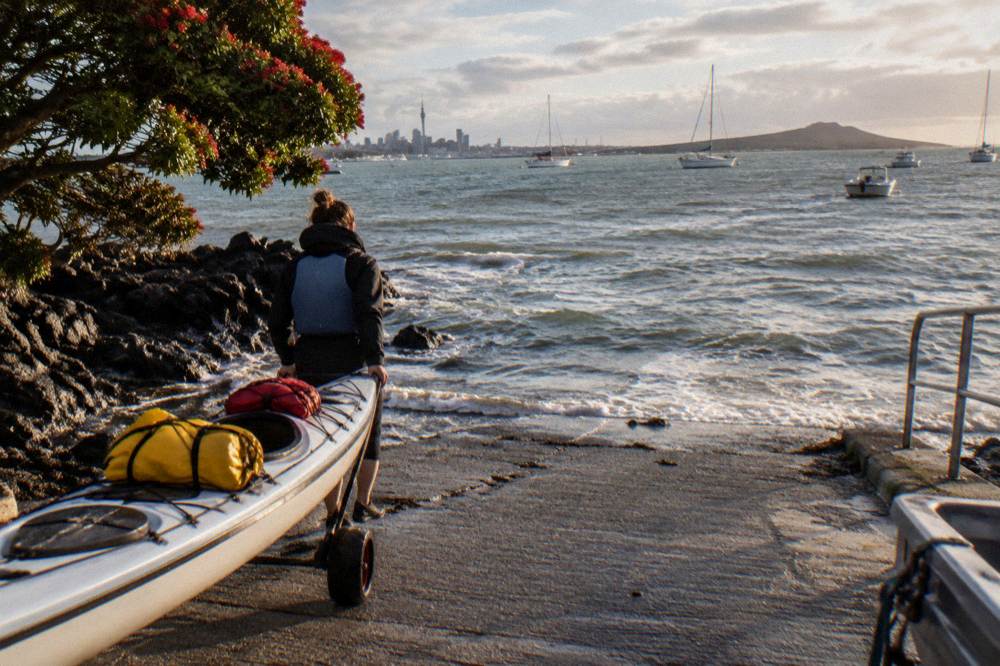
Guided tours also clear the island's biosecurity bar in a way an individual must manage alone. Commercial operators need a Pest Free Warrant to run trips onto pest-free islands, and Auckland Sea Kayaks states it holds one. A solo paddler has to run the Check, Clean, Close process themselves, land by day, and be ready for rangers to recheck gear. It is all doable, but it is a second skill set stacked on top of a first crossing, which is exactly the combination DOC's experienced-only wording is guarding against.
For a reader weighing the two paths, the practical comparison looks like this:
| Guided tour from St Heliers | Independent paddle | |
|---|---|---|
| Experience needed | None, per the operator | DOC: experienced kayakers |
| Craft | Double sea kayak, gear included | Your own or rented, your responsibility |
| Safety cover | Guide with the group, group max 8 | You carry comms, per Maritime NZ advice |
| Island biosecurity | Handled under operator's Pest Free Warrant | You run Check, Clean, Close yourself |
| Summit walk | Included on the sunset and day tours | Your own planning, DOC track info applies |
| Cost | From $139.16 per person on both Rangitoto tours | Rental plus your own time and gear |
Wondering whether you actually set foot on the island? Yes, both guided tours land, and the details are in do you land on Rangitoto on a kayak tour.
Sunset Or Day Tour: Which Rangitoto Trip Suits A First Timer?
Both tours suit beginners, with identical from prices of $139.16 per person, the same 6 hours 30 minute duration, the same summit walk, and the same minimum age of 14. The real choice is the light you paddle home in and the meal: the sunset tour serves a BBQ dinner and returns after dark with navigation lights on every kayak, while the day tour serves a BBQ lunch and finishes in daylight.
The sunset tour, 4.9 across 179 reviews, is the one most first timers picture. You paddle out in the late afternoon, walk to the summit as the day winds down, eat a catered BBQ dinner with a hot drink, and paddle back with navigation lights on every kayak. The operator notes bioluminescence is sometimes seen between October and April on this tour and is never guaranteed, which is a fair way to set expectations. The day tour, 4.9 across 83 reviews, runs the same route with a BBQ lunch and head torches supplied for the lava cave visit, and suits travellers who would rather not be on the water after dark on their first attempt.
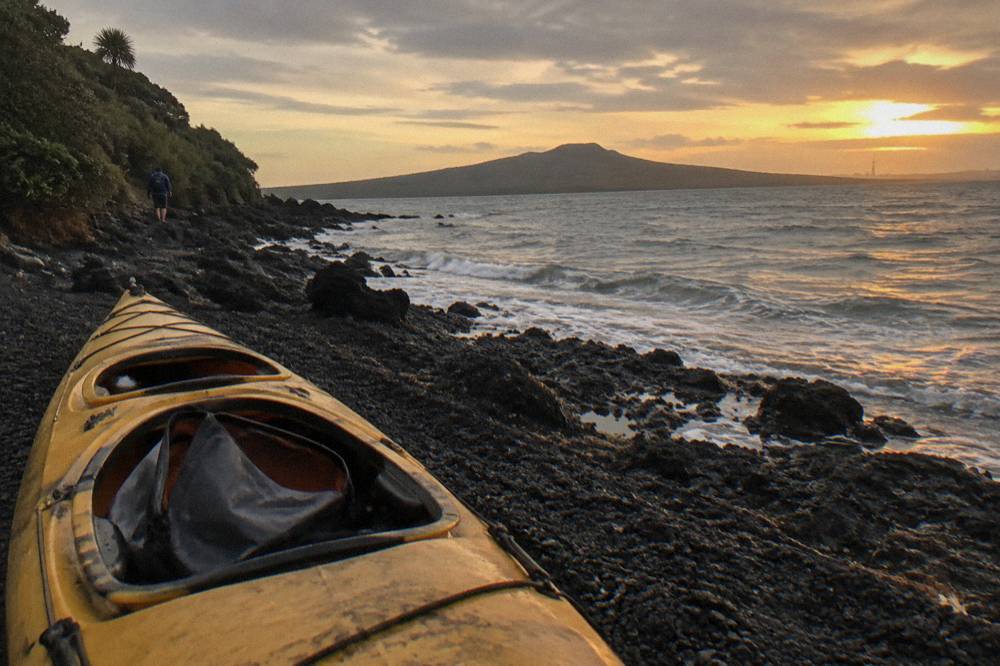
Neither tour offers hotel pickup. Both depart from the St Heliers Bay boat ramp at 384 Tamaki Drive, where free parking is available around St Heliers with time limits directly outside the shops, and there is a free shuttle from the atrium of the Auckland War Memorial Museum that departs 30 minutes before the tour, must be pre-booked, and has limited seats. Arriving 10 minutes early is the operator's stated guidance. Cancellation terms deserve a careful read: the booking page states free cancellation up to 24 hours before the start for a full refund, while the operator's own terms differ, refunding less a 25% admin fee only when you cancel more than 48 hours before departure, with no refund inside 48 hours. If the operator cancels for weather, you get a full refund or a reschedule.
If 6 hours 30 minutes sounds like a lot for a first paddle, a shorter volcano option exists: the Motukorea half-day from the same operator, 4 hours, rated 5.0 across 38 reviews, from $110.76 per person, minimum age 12, with a 1.5 km guided summit walk and morning tea included. It is a gentler first island paddle and a common stepping stone before Rangitoto.
What Should A First Time Paddler Wear And Bring?
Wear quick-drying layers and shoes you can walk on volcanic rock in, bring sun protection and water, and expect to get at least splashed. The operator supplies all kayaking and safety equipment including lifejackets; you supply clothing that works wet, sturdy footwear for the 7 km summit track, and whatever food and drink the tour does not cater.
Both Rangitoto tours are catered, BBQ dinner with a hot drink on the sunset departure and BBQ lunch on the day trip, with dietary needs handled if you give notice. Everything else is on you. DOC's know-before-you-go advice for Rangitoto is direct about the island: no shops, no rubbish bins, a total fire ban, intense heat off the lava with little shade on the track, and wasps more common in the warmer months. Sun protection is not optional gear on a black-rock volcano in New Zealand sun. A full clothing breakdown is in what to wear sea kayaking in Auckland.
A short list that covers the whole day:
| Item | Why | Who provides it |
|---|---|---|
| Lifejacket | Required by law on kayaks since 9 October 2026 | Tour includes, fitted on arrival |
| Double kayak, paddle | Standard craft on both Rangitoto tours | Tour includes |
| Quick-dry clothing | Kayaking is a wet sport; you may get splashed | You |
| Sturdy walking shoes | Summit track is rough volcanic terrain, loose gravel | You |
| Sun hat, sunscreen, sunglasses | Little shade on the island, heat off the lava | You |
| Water bottle | No shops on Rangitoto | You |
| Sealed bags for gear | Pest-free island rules, Check Clean Close | You, though the tour guides the process |
The lifejacket rule deserves its own sentence because it changed recently. Since 9 October 2026, everyone on a recreational craft of six metres or less must wear a properly fitted lifejacket while underway, kayaks included, and Maritime NZ is managing the first months through education. On a guided tour this is invisible, the operator fits and supplies, but a first timer hiring craft independently should know the rule now applies nationwide.
Ready to try the guided version for yourself? Free cancellation up to 24 hours before the start for a full refund is stated on the booking page, so the commitment is lower than it looks.
What If You Want A Shorter First Paddle Before Committing?
Auckland has shorter guided options that still count as a genuine first paddle: the bioluminescence night tour at 1.5 to 2 hours from $64.03 per person with 327 reviews, and the City Lights night paddle at 2.5 hours from $82.36 per person. Both are guided, gear is included, and both give you the basics of a stroke and a lifejacket fit without a 6 hour day.
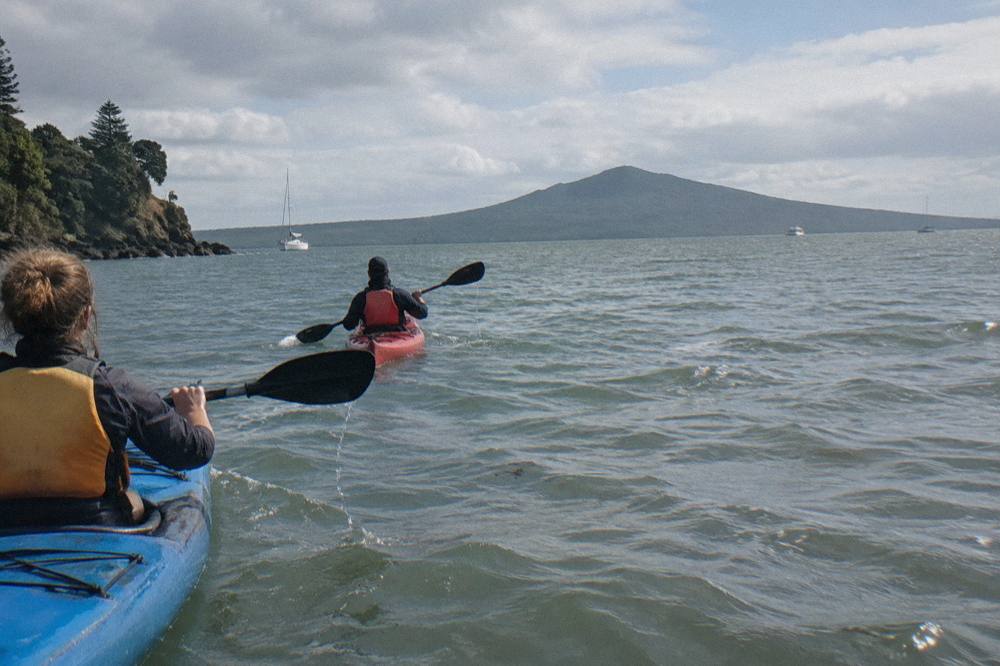
The bioluminescence night tour, run by Social Nature Movement, is the most reviewed kayak trip covered on this site, 4.9 across 327 reviews, and the cheapest tour among those with 15 or more reviews. The meeting point is chosen at booking. The operator says bioluminescence is never guaranteed and depends on season and conditions, so book it for the paddle and the night air, not for a promised glow. Canoe & Kayak Adventures runs a separate 2 hour bioluminescence tour from a plus-code meeting point, 4.1 across 206 reviews, with a stated guide to guest ratio of one to six.
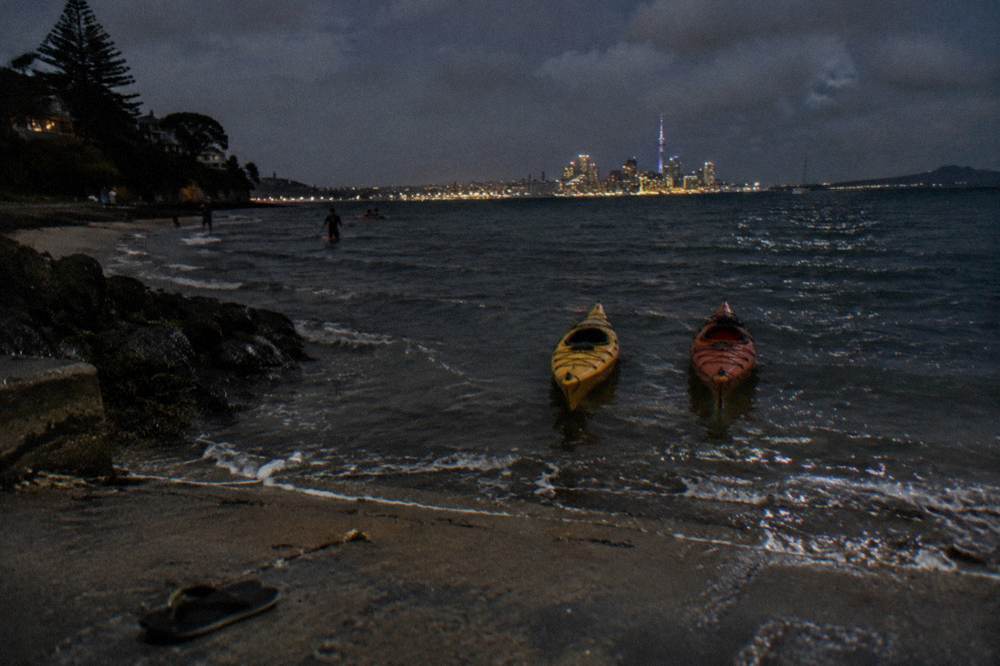
For a first timer whose real goal is Rangitoto, one of the shorter paddles is a reasonable confidence builder, but it is not a prerequisite.
Common Questions About Kayaking To Rangitoto As A Beginner
Can You Kayak To Rangitoto If You Have Never Paddled Before?
Yes, on a guided tour. Auckland Sea Kayaks states no experience is needed on both its Rangitoto tours, uses stable double kayaks with a guide leading each departure of up to 8 people, and includes all equipment. DOC advises against paddling to Rangitoto independently unless you are an experienced kayaker.
Do You Need To Be Fit To Do A Rangitoto Kayak Tour?
Moderate fitness. The tours run for 6 hours 30 minutes and include a guided summit walk on DOC's Summit Track, 7 km return with about 250 m of climbing over rough volcanic terrain. You also need to stay seated in the kayak for stretches of up to 45 minutes at a time.
What Is The Weight And Age Limit On The Rangitoto Kayak Tours?
The operator states a weight limit of 120 kg and a cockpit seat about 65 cm wide on all its kayak tours. The minimum age for both the sunset and day Rangitoto tours is 14. The shorter Motukorea half-day accepts paddlers from age 12.
Is The Paddle To Rangitoto Safe For Beginners?
The operator runs within strict wind and sea limits, with the final call often made on the day, and may transfer you to a sheltered tour, reschedule, or refund in full if conditions are unsafe. Lifejackets are supplied and fitted, and since 9 October 2026 wearing one is required by law on kayaks.
What Happens If The Weather Cancels My Rangitoto Tour?
If the operator cancels for weather you get a full refund or a reschedule. If you cancel, the booking page states free cancellation up to 24 hours before the start for a full refund, but the operator's own terms differ: more than 48 hours before departure brings a refund less a 25% admin fee, and inside 48 hours there is no refund. Read both before booking.
Do You Land On Rangitoto During The Tour?
Yes. Both the sunset and day tours land on the island and include the guided summit walk. Rangitoto is pest-free, so gear must follow the Check, Clean, Close biosecurity rules, which the guided tours manage under the operator's Pest Free Warrant.
The through-line for anyone who has never held a paddle: the guided tours exist precisely for you. The operator that runs them has carried beginners since 2010, the craft and the guide and the dinner are all in the price, and the only real questions left are which departure suits your day and what to wear on your feet. For anyone mapping out the wider options, Auckland Kayak Tours lays out every guided paddle from St Heliers, Westhaven and further afield, with prices and start points for each.