How Fit Do You Need To Be For A Rangitoto Kayak Tour?
A plain-language fitness guide to the guided Rangitoto kayak tours from St Heliers: paddling demands, the summit walk, weight and age limits, and how the operator describes the effort involved.
In short
You need moderate general fitness, but no kayaking experience, and beginners are welcome on both guided Rangitoto tours. Expect to sit in a kayak seat up to 45 minutes at a time, paddle a double across open water, and complete a 7 km return summit walk with about 250 m of climbing over rough volcanic terrain. The day runs 6 hours 30 minutes, so steady stamina across the whole outing matters more than strength.
You need moderate general fitness, not kayaking experience. Auckland Sea Kayaks, the operator of both guided Rangitoto tours, welcomes beginners and states no experience is needed, but describes the sunset tour as requiring moderate fitness. The day asks for three things: sitting in a kayak seat up to 45 minutes at a time, a long guided paddle in a double kayak, and a 7 km return summit walk over rough volcanic ground.
That combination is why the question deserves a straight answer. Plenty of activities marketed to beginners are genuinely gentle. A Rangitoto crossing is not that. The Department of Conservation, which manages the island, describes Rangitoto as accessible to experienced kayakers, putting the crossing from the mainland at about two hours for those paddling independently. The guided tours exist precisely to close that gap: stable double sea kayaks, a guide making the calls on wind and sea state, and a group capped at eight people. What the guide cannot do is pedal for you or walk the summit track on your behalf.
The honest framing is this. If you can walk briskly for an hour on uneven ground, sit comfortably for the length of a film, and sustain steady effort across a six-and-a-half-hour day, you are in the right zone for the Rangitoto tours. If any one of those three is doubtful, there are shorter, flatter Auckland options covered later in this article that deliver a genuine sea kayaking experience without the volcano.
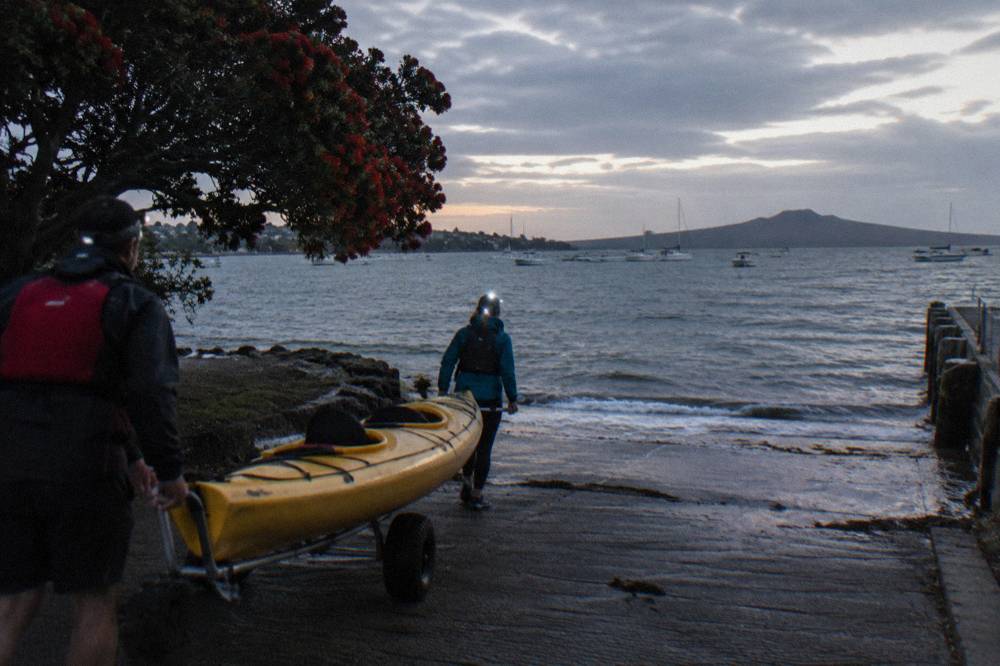
The tour that anchors this article is the Auckland: Day Sea Kayak Tour of Rangitoto Island, a 6 hour 30 minute guided trip from $139.16 per person, rated 4.9 across 83 reviews. It starts at St Heliers Bay boat ramp, 384 Tamaki Drive, and includes a BBQ lunch, all kayak gear, and the guided summit walk.
What Does The Paddle Itself Actually Demand?
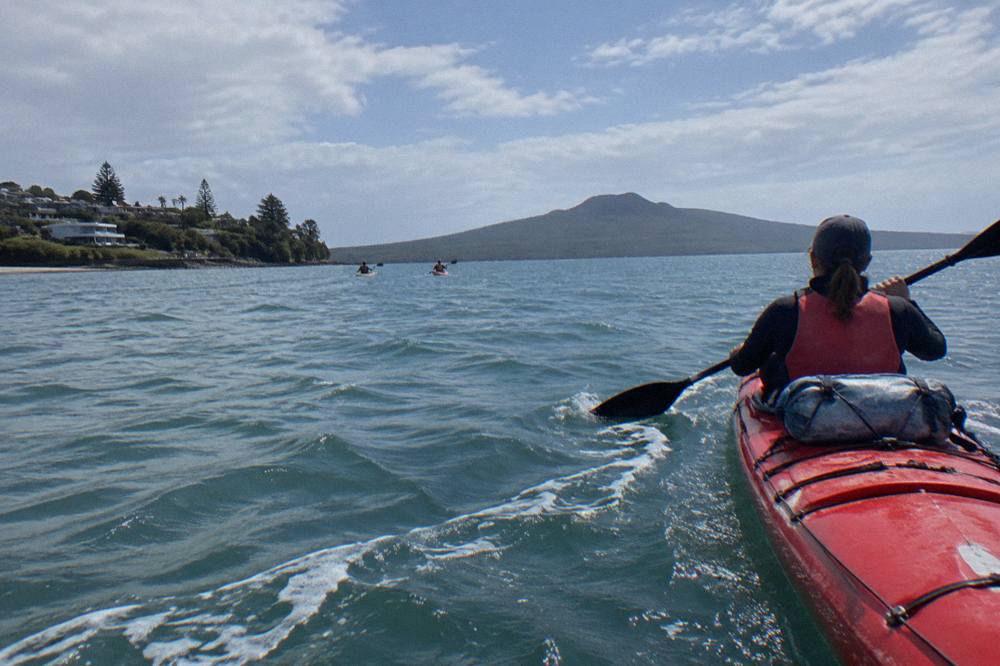
The paddle is a sustained but low-intensity effort in a double kayak, broken into stints of up to 45 minutes seated at a time. Auckland Sea Kayaks asks that participants stay seated up to 45 minutes at a time, fit a seat about 65 cm wide, and weigh 120 kg or less. Double kayaks share the load, and the guide sets the pace, so stamina matters far more than strength.
The stated requirements deserve a closer read than most people give them. The 45 minute seating limit is about comfort and circulation, not power. Guided groups pause, regroup and rest on the water; nobody is sprinting across the Hauraki Gulf. The seat width figure, about 65 cm, is the operator's way of flagging cockpit fit for larger paddlers without making anyone guess. The weight limit of 120 kg applies across the Auckland Sea Kayaks tours, and the operator asks to be told in advance about anything that affects fit or comfort so they can plan.
The total tour duration is 6 hours 30 minutes for both the day and sunset Rangitoto tours. How those hours divide between paddling, the island, and the return is a decision the guide makes on the day around wind, tide and the group in front of them. What is fixed is the shape of the day: launch from St Heliers, a guided open-water crossing, time ashore including the summit walk, and a guided paddle back. The crossing is the part first-timers worry about most, and the honest answer is that fitness helps less than patience does.
It also helps to understand what a double kayak does to the effort equation. Two people, two paddles, one hull that is longer and steadier than a single. A nervous or tired paddler in the front seat can ease off and the boat still moves well, which is exactly why the operator runs doubles and why beginners are welcome on every public tour. Upper-body gym strength is close to irrelevant; the paddlers who finish happiest are the ones with steady breathing and loose shoulders.
| Requirement | What the operator states | What it means in practice |
|---|---|---|
| Seating | Able to stay seated up to 45 minutes at a time | Comfort stints on the water, with pauses to regroup |
| Cockpit fit | Seat about 65 cm wide | Tell the operator in advance about fit concerns |
| Weight | 120 kg or less | Applies to the Auckland Sea Kayaks tours |
| Experience | Beginners welcome, no experience needed | Full instruction and a guide on the water |
| Kayak type | Double sea kayak | Load shared between two paddlers |
| Language | Basic English needed | Safety briefings are delivered in English |
A fuller treatment of the gear side of that table, including what a wetsuit does and does not do in Hauraki Gulf water, is in the guide to what to wear sea kayaking in Auckland.
How Hard Is The Rangitoto Summit Walk After The Paddle?
The Summit Track is 7 km return with about 250 m of climbing, graded easy to intermediate by the Department of Conservation, over rough, uneven volcanic terrain with loose gravel and little shade. DOC describes the walk as about 2 hours return from Rangitoto Wharf. It is a genuine walk, not a stroll, and it comes after a long paddle, which is the combination that catches people out.
The Department of Conservation's track notes are worth reading before booking, because the surface is the real story. Rangitoto is a shield volcano that emerged from the sea just 600 years ago, and the ground is raw black lava field. The track to the summit crosses rough uneven terrain and loose gravel, and DOC advises sturdy shoes, sun protection and the knowledge that heat radiating off the lava is intense. There is little shade on the main line, though a shaded alternative exists in the Wilson's Park Track, 1.4 km one way. Wasps are more common in the warmer months.
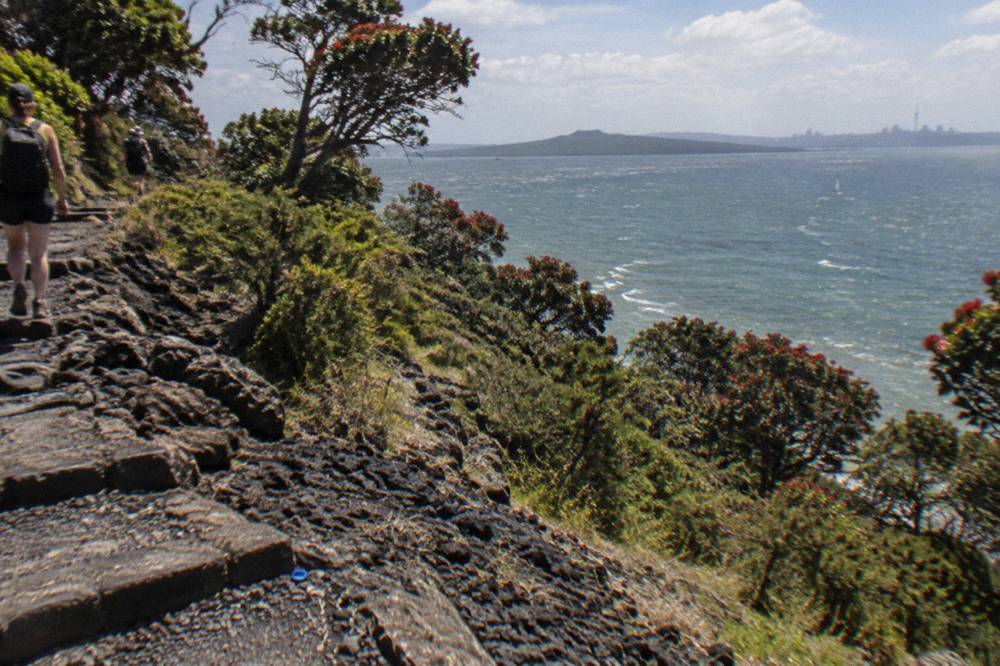
The guided summit walk is included on exactly three of the tours covered on this site: the Rangitoto sunset tour, the Rangitoto day tour, and the Motukorea half-day, which walks a shorter 1.5 km route climbing about 70 m on a different island. On the Rangitoto tours the walk is guided, the pace belongs to the group, and the reward at the top is the crater viewing area looking into a crater roughly 60 m deep. Nobody is left to race up alone.
The practical advice is simple. Do the walk in the shoes you would wear on a day hike, not in jandals, and carry water, because there are no shops on the island and no rubbish bins either. If a 7 km return walk with 250 m of climbing sounds like a full morning's exercise on its own, treat that as useful information about the day as a whole rather than a reason to hide from it. A deeper comparison of the two Rangitoto legs, paddle and summit, is in Rangitoto summit track after a kayak crossing.
DOC's own Rangitoto page, including the track grades and the know-before-you-go notes, is at doc.govt.nz's Rangitoto Island guide.
Do You Need Kayaking Experience To Join A Rangitoto Tour?
No. Auckland Sea Kayaks states that beginners are welcome and no experience is needed on all of its kayak tours, including both Rangitoto departures, which carry a 4.9 rating across 179 reviews for the sunset tour and 83 for the day tour. Full instruction, stable double sea kayaks, all gear and an experienced guide are part of both tours. Minimum age is 14 on each.
The distinction that matters is between experience and condition. The tour supplies the experience: how to hold the paddle, how to sit, how to steer, what to do when a wake rolls under the hull. It cannot supply the condition: shoulders that can repeat a motion, a back that tolerates a seat, legs that can carry you up a volcano after the paddle. Someone who has never touched a kayak but walks regularly will fare better than a sedentary experienced paddler, and the operator's own requirements point the same way. The full index of guides sits on Auckland Kayak Tours.
It is worth naming the safety framework too, because it explains why beginners can be taken across open water at all. Auckland Sea Kayaks has operated since 2010, holds a Qualmark Gold certification as an Adventure Activity Operator, and carries a Pest Free Warrant for island landings, which matters on a pest-free island where rangers may check gear on arrival. The operator works within strict wind and sea limits, and the final call on conditions is often made on the day. If conditions are unsafe, the options include transfer to a sheltered tour such as the City Lights or City Scenes paddles, a reschedule, or a full refund when no alternative works.
That safety net has a fitness implication people sometimes miss. A tour that turns around or reroutes because of weather is not a failed tour; it is the system working. But a day that starts with a long paddle into a building breeze will ask more of you than a glass-calm one, and no fitness guide can promise which one you get. Booking with the mindset that the crossing is a real effort, occasionally a hard one, is the honest preparation.
For anyone weighing whether their first-ever paddle should really be a volcano crossing, the article Can a beginner do sea kayaking? works through the same question from the water side rather than the fitness side.
What Are The Age, Weight And Health Limits On The Rangitoto Tours?
The minimum age on both Rangitoto tours is 14, the weight limit is 120 kg, and the operator asks that paddlers fit a seat about 65 cm wide and be able to stay seated up to 45 minutes at a time. Basic English is needed for safety briefings. Alcohol is not permitted, and disabilities are accommodated where possible, including tandem arrangements.
Each limit exists for a physical reason rather than an administrative one. The 14 year minimum on the Rangitoto tours reflects the length of the day as much as the difficulty of the paddling: six and a half hours, an open crossing, and a summit walk is a big ask for younger children, and the operator runs other tours better suited to families. The Motukorea half-day, for example, takes ages 12 and up, and the City Lights and City Scenes harbour paddles also start at 12.
The health questions worth asking yourself before booking are the unglamorous ones. Can you kneel or brace to get in and out of a kayak at a boat ramp? Can you carry a modest share of a double kayak a short distance with your partner in the pair? Do you handle six hours outdoors, in sun reflected off water and heat radiating off black rock, without wilting? Kayaking is a wet sport and you may get wet to the knees or more; a full discussion of that is in Do you get wet on an Auckland sea kayak tour?
One rule change worth knowing applies to every paddler in the country. From 9 October 2026, under the national rule announced by Maritime NZ, everyone on board a recreational craft of six metres or less must wear a properly fitted lifejacket while underway, kayaks included. On guided tours the lifejacket is supplied and worn throughout, so the rule changes nothing about preparation, but it is a useful reminder that sea kayaking is governed as a real water activity, not a theme-park ride.
| Tour | Minimum age | Weight limit | Group size cap | Summit walk |
|---|---|---|---|---|
| Sunset Paddle to Rangitoto | 14 | 120 kg | 8 | Yes |
| Daytime Paddle to Rangitoto | 14 | 120 kg | 8 | Yes |
| Half-Day Motukorea Volcano Paddle | 12 | 120 kg | 8 | Yes |
The sunset tour, from $139.16 per person and rated 4.9 across 179 reviews, makes the same physical demands as the day tour: 6 hours 30 minutes, double kayaks, the summit walk and a 14 year minimum, with a BBQ dinner and a hot drink in place of the day tour's BBQ lunch. The differences are timing and mood, not effort. It returns to St Heliers after dark with navigation lights on every kayak.
How Should You Prepare In The Weeks Before The Tour?
Build walking endurance and seated core comfort rather than arm strength: three or four brisk walks of 45 to 60 minutes a week, including hills and uneven ground, plus a couple of longer walks approaching 7 km in the final fortnight, covers the summit half of the day. For the paddle half, any routine that builds general stamina, cycling, swimming or brisk walking, transfers better than weights.
The single best preparation is honest and cheap: walk the distance. Find a route near home with a hill in it and some rough ground, and do it in the shoes you plan to wear on the island. If a 7 km return walk with 250 m of climbing takes you comfortably under two and a half hours including a break, the summit half of the tour is in range. If it does not, you have found out at zero cost and can either train or pick a different tour from the same harbour.
The second preparation is sitting. This sounds absurd until the first time someone spends a long day in a kayak seat and discovers their lower back has opinions. Any routine that involves sitting on the floor, sitting on a bench without a backrest for 30 to 45 minutes, or doing plain planks and glute bridges twice a week will make the boat a friendlier place. Shoulder and rotator-cuff work helps at the margins, but the engine for paddling is trunk and legs.
| Preparation item | Why it matters | Suggested routine |
|---|---|---|
| Brisk walking, 45 to 60 minutes | Summit walk endurance, general stamina | 3 to 4 sessions a week |
| One longer walk, 6 to 7 km | Rehearses the summit distance | Once a week in the final fortnight |
| Hills or stair climbs | Approximates the 250 m of climbing | Include in two walks a week |
| Uneven-ground walking | The track is rough lava with loose gravel | Any trail, grass or beach section |
| Seated core work, planks, backrest-free sitting | Comfort in a 65 cm kayak seat | 2 to 3 short sessions a week |
None of this needs a gym. It needs four weeks of consistency more than eight weeks of enthusiasm. And if the training window is short, remember the tour's own words: beginners with no experience are welcome, the guide sets the pace, and moderate fitness is the stated bar for the sunset tour. Preparation widens your margin; it is not a entry exam.
A useful companion piece while training is How fit do you need to be for sea kayaking generally, which walks through what a full tour day in Auckland looks like hour by hour, from the St Heliers meeting point through the return.
What Are The Easier Options If Rangitoto Sounds Like Too Much?
If the six-and-a-half-hour day is too much, shorter guided options include the Motukorea half-day, 4 hours from $110.76, rated 5.0 across 38 reviews; the City Lights night paddle, 2.5 hours from $82.36; and the bioluminescence night tour, 1.5 to 2 hours from $64.03, the most reviewed tour on this site at 4.9 across 327 reviews.
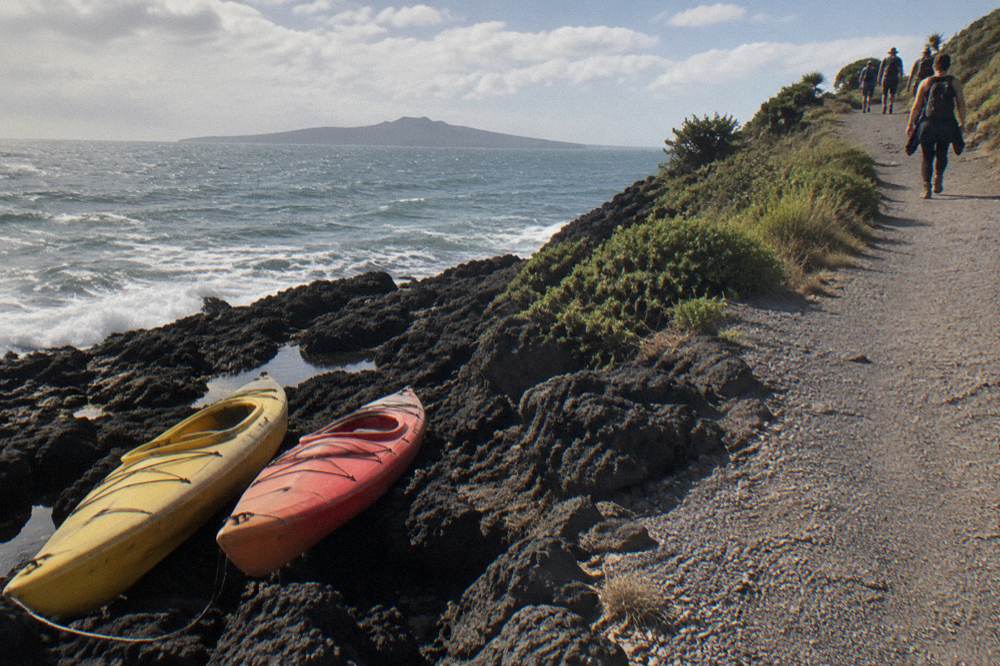
The Motukorea half-day deserves the first mention because it keeps the volcano-and-kayak formula but shrinks every number. Four hours instead of six and a half, ages 12 and up instead of 14, a 1.5 km guided walk climbing about 70 m instead of a 7 km track climbing 250 m, morning tea instead of a full BBQ, and the same double kayaks, guide and gear. It starts from the same St Heliers Bay boat ramp and uses the same free museum shuttle arrangement. For a paddler who wants the island story without the full Rangitoto day, it is the honest stepping stone.
The harbour paddles shrink the day further. The City Lights night kayak, run by Auckland Sea Kayaks, covers 2.5 hours from Westhaven Marina and is described as easy, with a light snack and a 12 year minimum. The bioluminescence night tour, run by Social Nature Movement, runs 1.5 to 2 hours and is the most reviewed kayak experience on this site: 4.9 across 327 reviews, from $64.03 per person. Bioluminescence is something the operator says is sometimes seen and never guaranteed, so book it as a night paddle that may glow, not a glow show with a paddle attached.
Every one of these tours, like the Rangitoto departures, involves getting to a start point under your own steam, since no tour here offers hotel pickup. The Auckland Sea Kayaks tours from St Heliers do offer a pre-booked free shuttle from the Auckland War Memorial Museum atrium, departing 30 minutes before the tour with limited seats, which is worth locking in early, especially after a training-day fatigue. The meeting-point logistics are laid out in St Heliers kayak meeting point.
Common Questions About Rangitoto Kayak Tour Fitness
How Fit Do You Need To Be For A Rangitoto Kayak Tour?
Moderate general fitness. Beginners are welcome and no kayaking experience is needed, but the day is 6 hours 30 minutes, you must be able to stay seated up to 45 minutes at a time, weigh 120 kg or less, and complete a 7 km return summit walk with about 250 m of climbing on rough volcanic ground.
Can You Kayak To Rangitoto If You Have Never Paddled Before?
Yes, on a guided tour. Auckland Sea Kayaks welcomes beginners on both Rangitoto tours, with double sea kayaks, gear and full instruction. Travelling to Rangitoto independently is treated by DOC as a trip for experienced kayakers.
Is The Rangitoto Summit Walk Hard?
DOC grades the Summit Track easy to intermediate: 7 km return, about 250 m of climbing, roughly 2 hours return, over rough uneven volcanic terrain with loose gravel and little shade. Sturdy shoes and water are needed, and there are no shops on the island.
What Is The Weight And Age Limit On The Rangitoto Kayak Tours?
The weight limit is 120 kg and the minimum age is 14 on both the day and sunset Rangitoto tours. Paddlers need to fit a seat about 65 cm wide and be able to stay seated up to 45 minutes at a time.
Is There An Easier Volcano Kayak Tour Near Auckland?
Yes. The Motukorea half-day runs 4 hours from $110.76 per person, rated 5.0 across 38 reviews, with a shorter 1.5 km guided walk climbing about 70 m, ages 12 and up, from the same St Heliers start point.
What Happens If I Am Not Fit Enough On The Day?
Tell the operator when booking and again at the briefing. Guides set the pace for the group, the summit walk is guided, and the operator accommodates disabilities with arrangements such as tandem kayaks where possible. If weather makes conditions unsafe, options include a sheltered alternative tour, a reschedule, or a full refund if no alternative is available.