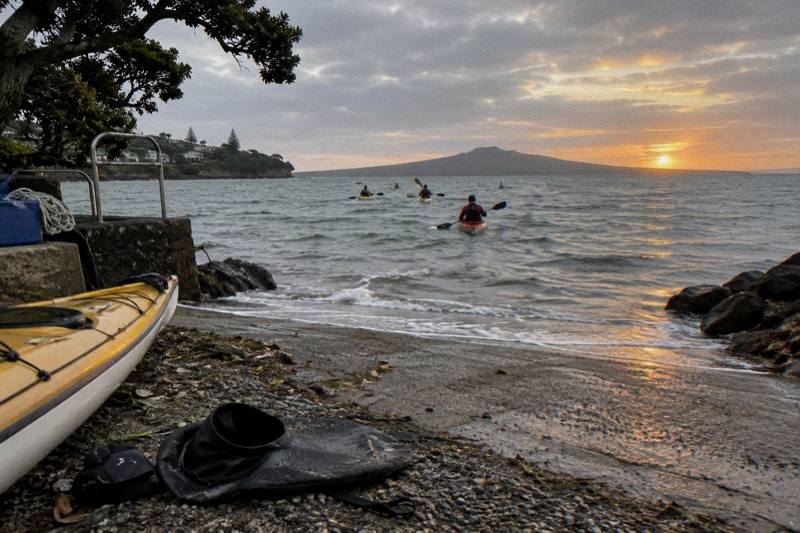
Rangitoto Summit Track After A Kayak Crossing
The summit walk is the payoff half of every Rangitoto kayak and hike day. Here is exactly what the track involves, how hard it feels after the paddle, and which guided tours build it in.
Short answer
"The Rangitoto Summit Track is 7 km return with about 250 m of climbing, graded easy to intermediate, and takes about 2 hours return. Two guided kayak tours include the Rangitoto Summit Track: the sunset tour and the day tour, both from $139.16 per person. The Motukorea half-day, from $110.76 per person, has its own summit walk.
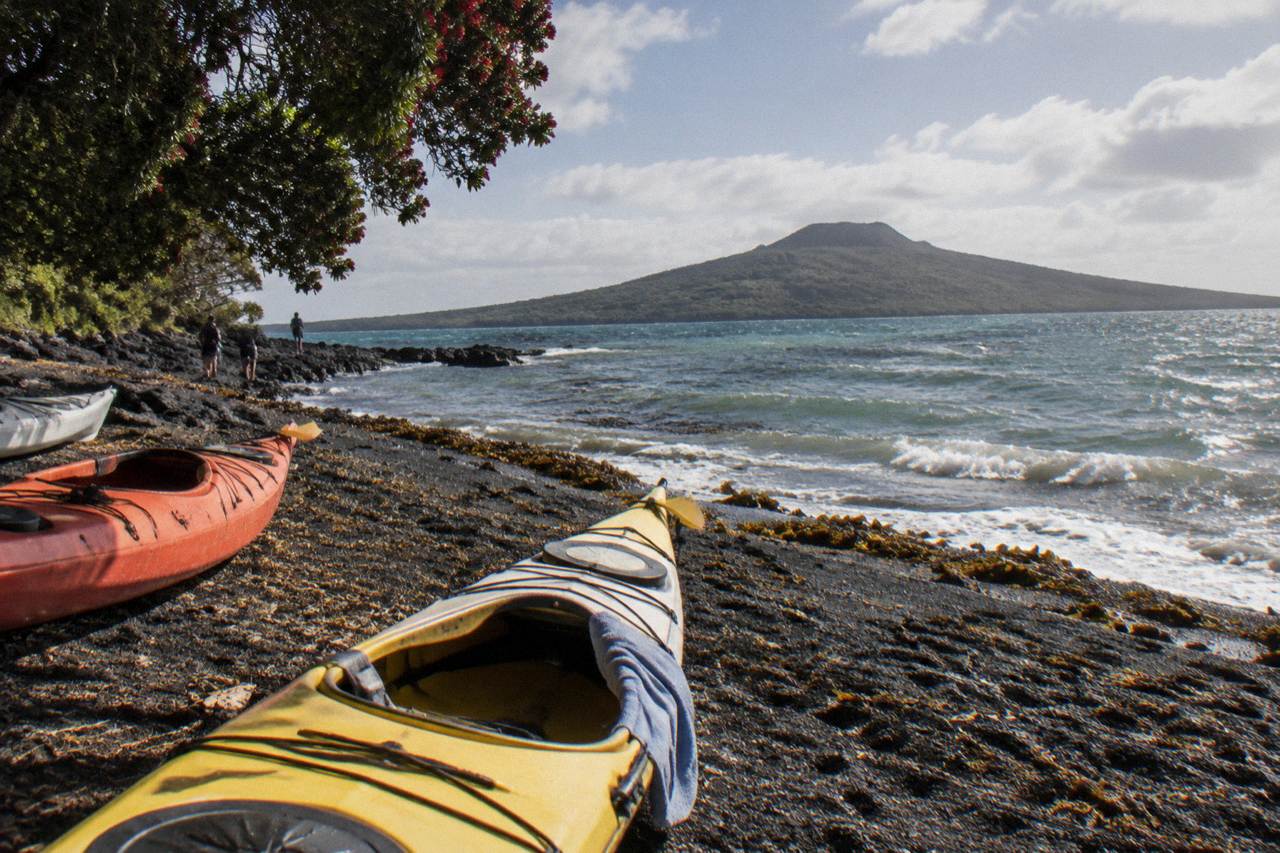
Rangitoto emerged from the sea just 600 years ago, which makes it the youngest volcano in New Zealand and the most abrupt walk in the Hauraki Gulf. Paddle to it and you earn the summit twice: once crossing open water from St Heliers, once on foot over loose volcanic gravel. The walk itself is modest by tramping standards, 7 km return with about 250 m of climbing, but it lands in the middle of a long day, and that changes how it feels underfoot and in the legs.
This guide covers the track in detail: what the Department of Conservation says about it, which guided kayak tours build the summit into their itinerary, what to wear and carry, and the island rules that catch first-time visitors out. The three tours that include a summit walk all depart from the same St Heliers Bay boat ramp, and two of them are Rangitoto trips proper. For a wider look at the crossing itself, the companion guide kayak to Rangitoto island covers the paddle in full.
How Hard Is The Rangitoto Summit Track After Paddling?
After a guided crossing from St Heliers, the summit walk is the smaller half of the effort but not a trivial one: DOC grades the Summit Track easy to intermediate, 7 km return with about 250 m of climbing, about 2 hours return at a steady pace. Paddlers with moderate fitness manage it comfortably, and the crossing takes about an hour and a half on the water each way, leaving the rest of the 6 hours 30 minutes for the island. The honest answer: the legs feel it, the views repay it.
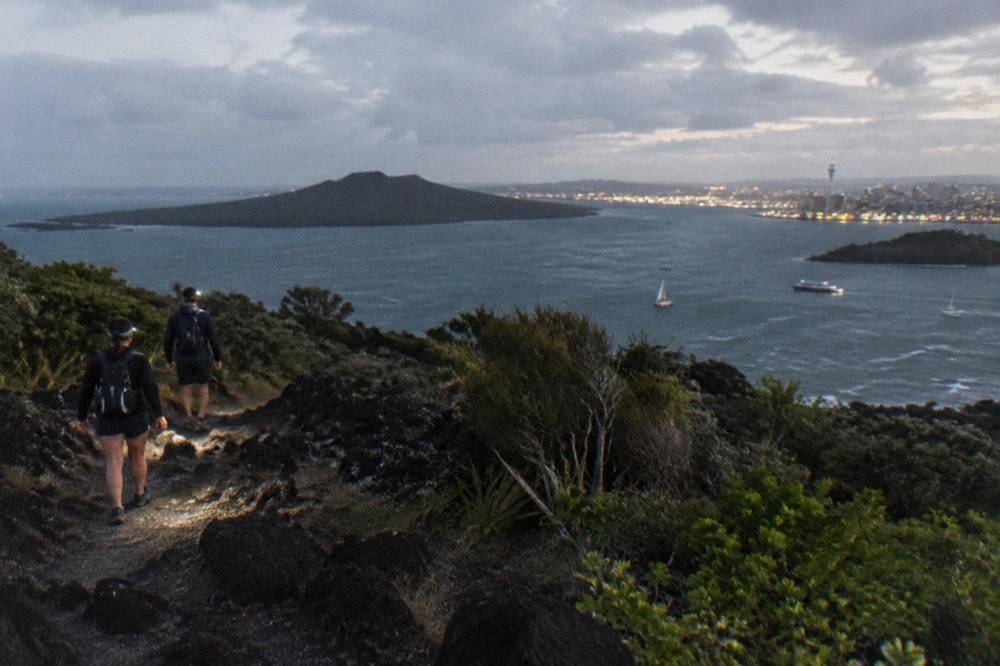
The tour that sets the benchmark is the Auckland day sea kayak tour of Rangitoto Island, a 6 hours 30 minutes trip from $139.16 per person, rated 4.9 across 83 reviews. It paddles out with a guide, lands on the island, walks the summit track as a group with a BBQ lunch, then paddles back to St Heliers. The sunset version covers the same track with a BBQ dinner instead and returns after dark with navigation lights on every kayak; it carries 4.9 across 179 reviews at the same from price of $139.16 per person.
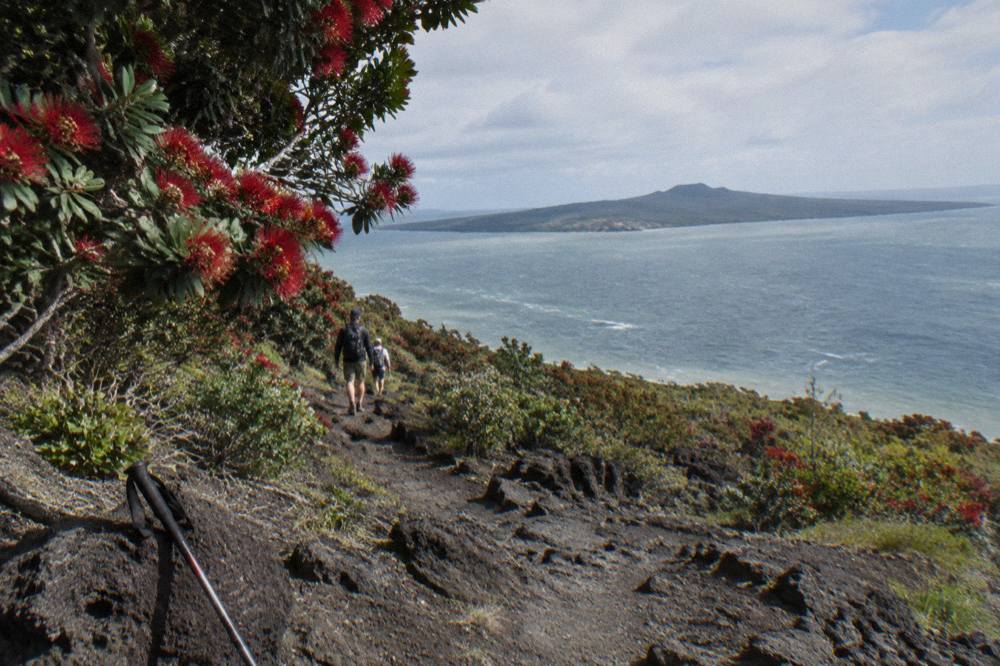
What makes the walk harder than its numbers is the surface. DOC describes rough, uneven volcanic terrain and loose gravel with little shade, and the heat radiating off the lava fields on a clear summer afternoon is intense. Wasps are more common in the warm months. None of this is mountaineering; it is a well-formed track. But footwear matters more than fitness, and a sun hat matters more than both. Auckland Sea Kayaks, the operator behind both Rangitoto tours, says beginners with no kayaking experience are welcome and describes the day tour as needing moderate fitness, with the walking leg being a guided 7 km return walk to the summit. Since the walk is only half the outing, the guide to landing on Rangitoto during a kayak tour explains what happens when you step ashore and how the summit leg fits into the rest of the crossing.
The Motukorea half-day, from $110.76 per person and rated 5.0 across 38 reviews, includes a shorter guided walk on a different island, 1.5 km climbing about 70 m, and is worth naming here because it is the gentler sibling of the summit idea. It is covered properly in the Motukorea versus Rangitoto kayak comparison. If a 7 km walk stacked on a long paddle sounds like the wrong day out, that four-hour tour is the honest alternative.
What Does The Rangitoto Summit Track Actually Involve?
From Rangitoto Wharf the Summit Track runs 7 km return with about 250 m of climbing, about 2 hours return, graded easy to intermediate. The Summit Lookout sits 2 minutes from the crater viewing platform, and the crater itself is about 60 m deep. The surface is rough volcanic terrain, loose gravel and little shade, so sturdy shoes and sun protection are the two preparations that matter most.
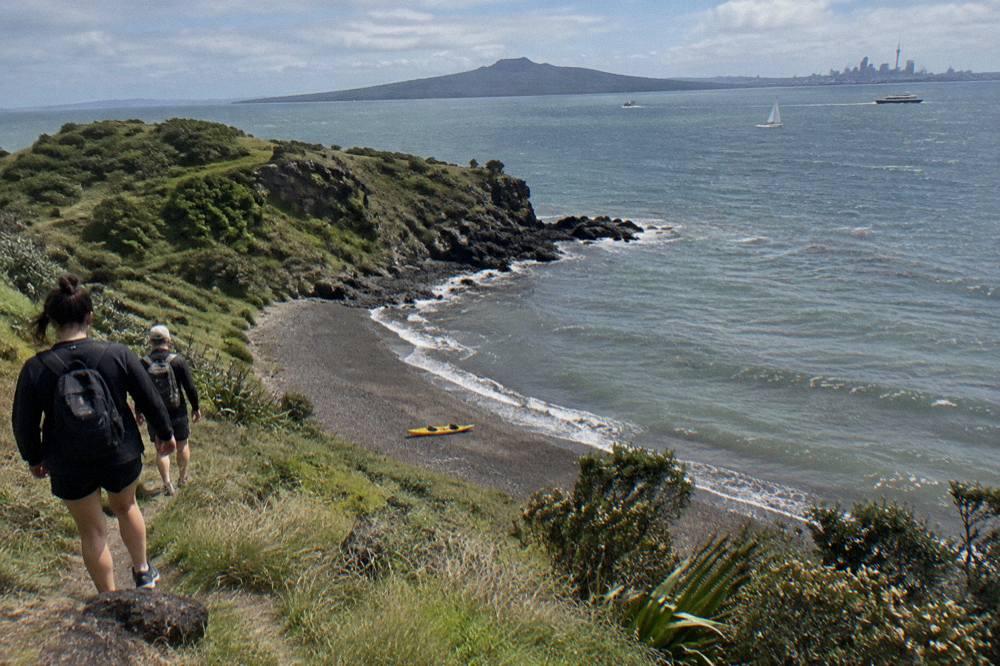
The numbers come from the Department of Conservation, whose Rangitoto island page is the authoritative source for track facts. Two shorter options branch off the summit route and are worth knowing about before you land, because guided tours move at a group pace and free time on the island is limited on the tighter itineraries. The Crater Rim Track is a 20 minute, 850 m loop around the lip of the crater. The Lava Caves Track is 15 minutes and 500 m one way, with the turnoff 45 minutes from the wharf. The day tour includes a lava cave visit and supplies head torches for it.
| Track | Distance | Time | Notes |
|---|---|---|---|
| Summit Track | 7 km return | About 2 hours return | Easy to intermediate, about 250 m of climbing, little shade |
| Crater Rim Track | 850 m loop | 20 minutes | Starts near the crater viewing platform |
| Lava Caves Track | 500 m one way | 15 minutes | Turnoff 45 minutes from the wharf |
| Wilson's Park Track | 1.4 km one way | 1 hour | Shaded alternative through the forest |
Wilson's Park Track deserves a mention for one practical reason: shade. On a hot February day the summit route's exposed lava fields are punishing, and the Wilson's Park alternative runs through shaded forest. Guided groups walk the main summit track together, so this is an option mainly for the ferry crowd or for paddlers on unguided trips, but knowing it exists tells you how the island's track network fits together.
There are no shops on the island and no rubbish bins. Bring your own food and water, and carry out everything you carry in. The catered kayak tours solve the food problem for you, the sunset tour with a BBQ dinner and a hot drink, the day tour with a BBQ lunch, both happy to handle dietary needs given notice. The total fire ban and the no-camping rule are enforced, and the old mine base is closed because of asbestos.
Which Guided Kayak Tours Include The Summit Walk?
Exactly three guided tours include a summit walk: the sunset kayak tour to Rangitoto Island, the day sea kayak tour of Rangitoto Island, and the Motukorea half-day. Two of them walk the Rangitoto summit track; Motukorea has its own summit walk on a different island. The two Rangitoto tours cost from $139.16 per person and run 6 hours 30 minutes; the Motukorea half-day costs from $110.76 per person and runs 4 hours. No other tour on this site includes a summit walk. If those fixed tour times leave you wondering how much of the day is actually spent paddling, the guide to how long the kayak crossing to Rangitoto takes explains why the crossing itself has no single answer.
All three are Auckland Sea Kayaks tours, all depart from the St Heliers Bay boat ramp at 384 Tamaki Drive, and all use double sea kayaks with a guide and full gear included. Group size is capped at 8. Minimum ages differ: 14 on both Rangitoto tours, 12 on the Motukorea half-day, and the weight limit on all three is 120 kg. That is the practical checklist in one paragraph.
| Tour | Price (USD, from) | Duration | Summit walk | Food | Reviews |
|---|---|---|---|---|---|
| Sunset kayak tour to Rangitoto Island | $139.16 per person | 6 hours 30 minutes | Yes, Rangitoto, 7 km return | BBQ dinner and hot drink | 4.9 across 179 |
| Auckland day sea kayak tour of Rangitoto Island | $139.16 per person | 6 hours 30 minutes | Yes, Rangitoto, 7 km return | BBQ lunch | 4.9 across 83 |
| Auckland Volcano, Motukorea half-day | $110.76 per person | 4 hours | Yes, Motukorea, 1.5 km, about 70 m climb | Morning tea and refreshments | 5.0 across 38 |
Choosing between the two Rangitoto formats is mostly a question of dinner versus lunch and daylight versus dark. The sunset tour returns to St Heliers after dark with navigation lights on every kayak; the day tour gets you back with the evening free. The deeper comparison, including how each handles the summit leg and the lava caves, lives in the Rangitoto day kayak versus sunset kayak guide.
Transport to the departure point matters more than most visitors expect. No tour offers hotel pickup, but Auckland Sea Kayaks runs a pre-booked free shuttle from the Auckland War Memorial Museum atrium for its Rangitoto and Motukorea tours, departing 30 minutes before the tour start, with limited seats. Book it ahead or plan on parking around St Heliers, where free parking exists but time limits apply directly outside the shops. Since the shuttle and parking both hinge on where you wake up, the guide to Auckland overnight bases near each kayak launch point compares accommodation options from St Heliers out to Leigh.
Can You Do The Summit Track Without A Kayak Tour?
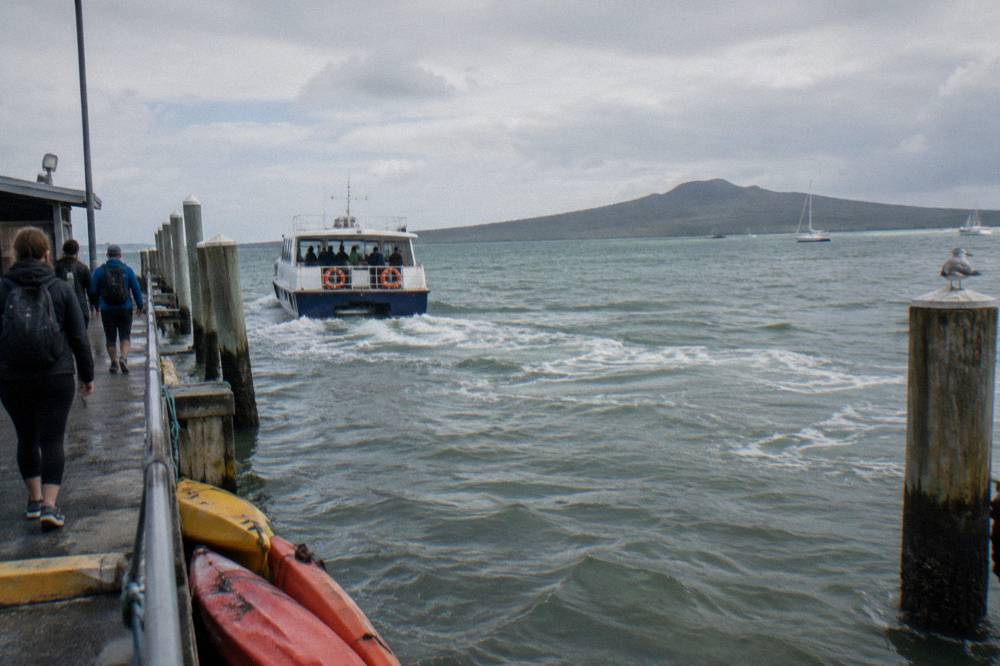
Yes, the summit track is a public DOC track walked by ferry passengers every day, and the ferry from Queens Wharf takes 25 minutes. But doing it after kayaking is the point: DOC describes Rangitoto as accessible to experienced kayakers, about two hours from the mainland, so for most visitors the guided kayak and hike day is the only way to combine both halves safely in one outing.
The distinction is real and worth spelling out. The ferry delivers you to Rangitoto Wharf, the track starts there, and ferry walkers do it daily without a paddle in sight. Kayaking to the island unguided is a different proposition: open water, weather windows, and a craft you must also get home. The Department of Conservation is blunt that this is experienced-kayaker territory. The guided tour sits in between: you paddle a double sea kayak in a group of at most 8 with an experienced guide, no experience needed, and the summit walk happens as part of the same catered day.
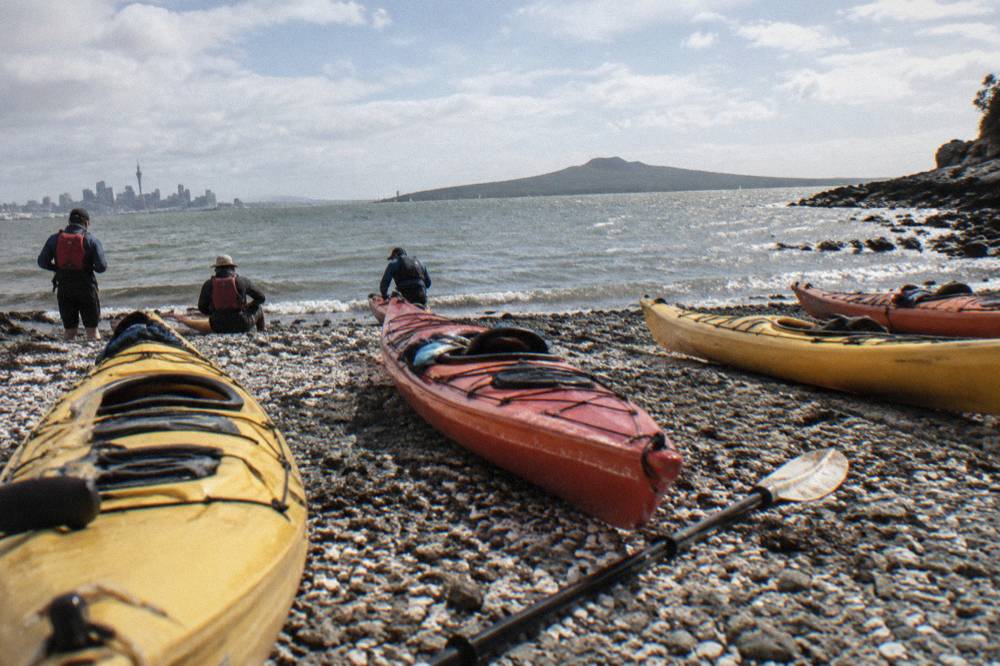
There is also a middle path worth knowing about: Auckland Sea Kayaks runs guided Rangitoto walking tours that take the ferry across and walk the summit with a guide, minimum age 8. That option is outside the kayak tours covered here, but it exists, and it suits families whose children are under the 14-year minimum age of the kayak tours. The full set of Rangitoto paddle options is laid out in the Rangitoto kayak tours overview.
Cancellations deserve one careful paragraph because the two Rangitoto tours carry two sets of terms. The booking page states free cancellation up to 24 hours before the start for a full refund. The operator's own terms differ: more than 48 hours before departure, a refund less a 25% admin fee; inside 48 hours or a no-show, no refund. Read both before booking, and note that if the operator cancels for weather, you get a full refund or a reschedule. The operator's weather policy is to run within strict wind and sea limits, with the final call often made on the day, and to offer a transfer to a sheltered tour, a reschedule, or a full refund if nothing else fits. The weather and cancellations guide covers this in depth.
How Fit Do You Need To Be For The Combined Day?
For the Rangitoto day or sunset tour, moderate fitness is the stated requirement: a guided open-water paddle in a double kayak, then a 7 km return walk with about 250 m of climbing over uneven ground, inside a 6 hours 30 minutes day. Auckland Sea Kayaks says beginners with no kayaking experience are welcome. The Motukorea half-day needs medium fitness for a 4 hour day and a 1.5 km walk.
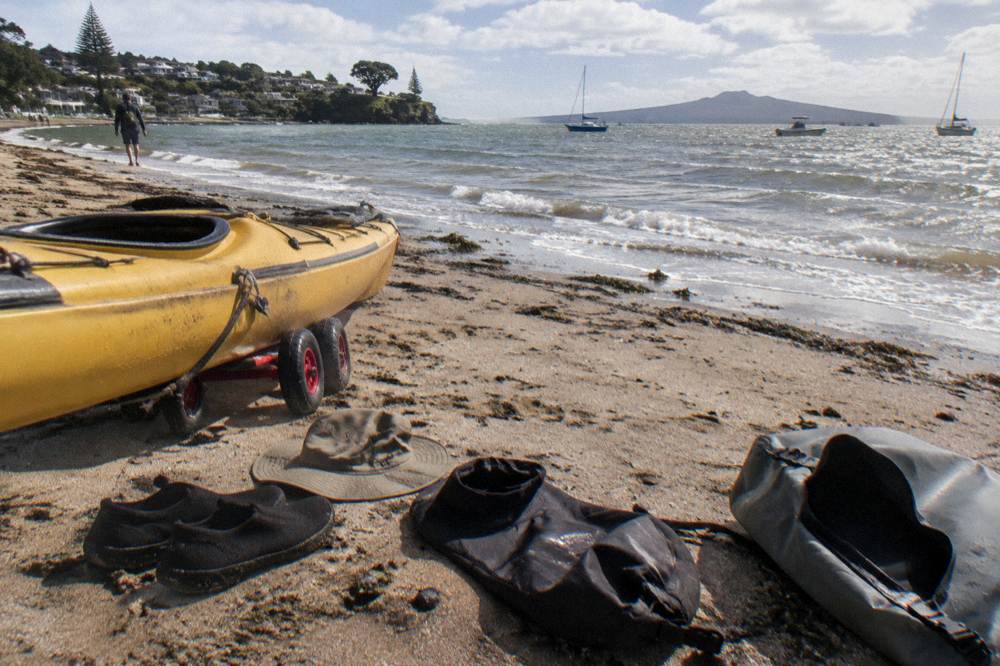
The specific physical requirements the operator publishes apply to all its kayak tours: weight of 120 kg or less, the ability to fit a seat about 65 cm wide, and the ability to stay seated for up to 45 minutes at a time. A basic level of English is needed for safety instruction, with Spanish-speaking guides on request and Mandarin safety resources available. Alcohol is not permitted on the tours. These are practical limits, not fitness tests, and the double kayaks do most of the stability work for new paddlers.
The walking half is where honest expectation-setting helps. Seven kilometres return on a hot day over gravel, after an open-water paddle, is a real day out, and the operator calls the fitness level moderate for exactly that reason. If that combination sounds like too much, the honest downshifts are the Motukorea half-day with its 1.5 km walk, or a city paddle like the City Lights night tour, 2.5 hours from $82.36 per person, rated 4.8 across 28 reviews, which involves no walking at all. The fitness question for Rangitoto tours is covered in its own article.
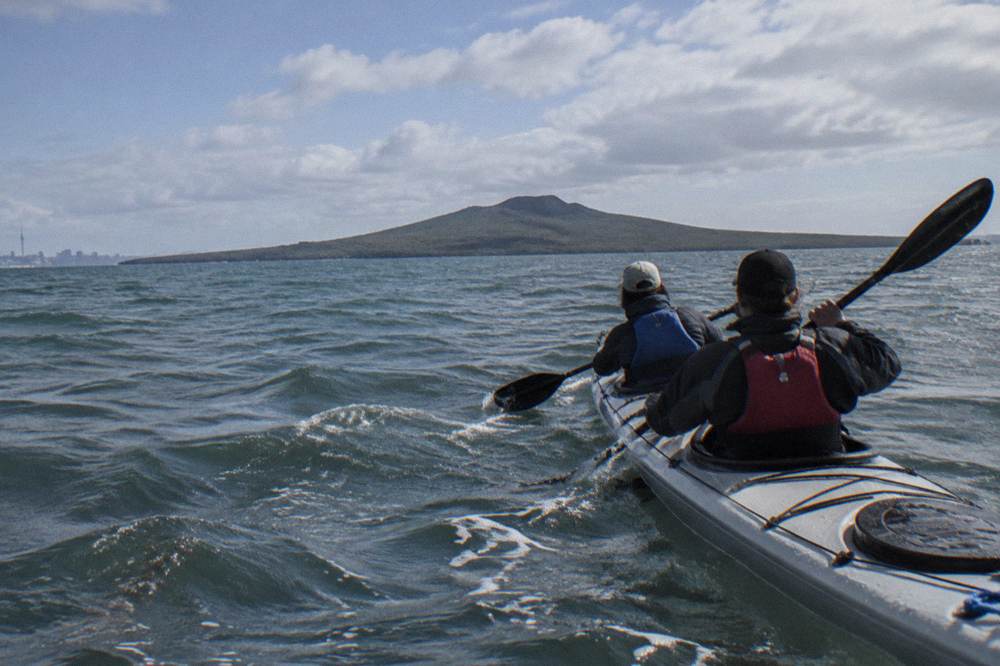
Training is rarely necessary, but two habits repay themselves: doing any long walk on uneven ground in the weeks before, and getting comfortable being wet from the knees down. Kayaking is a wet sport, as Canoe & Kayak Adventures puts it, and the walk starts with a beach landing. For the sunset tour specifically, the return leg runs in the dark, which adds nothing to the fitness ask but does reward a bit of stamina discipline on the summit, since a slow group walk down eats into the daylight.
What Should You Wear And Carry For The Walk?
Wear sturdy closed shoes with grip, sun protection including a hat, and quick-drying layers, and carry your own water and any snacks beyond the catered meal, because the island has no shops and no rubbish bins. The catered tours supply the main meal and a hot drink, but sun protection and footwear are yours to get right, and the lava heat is intense on clear days.
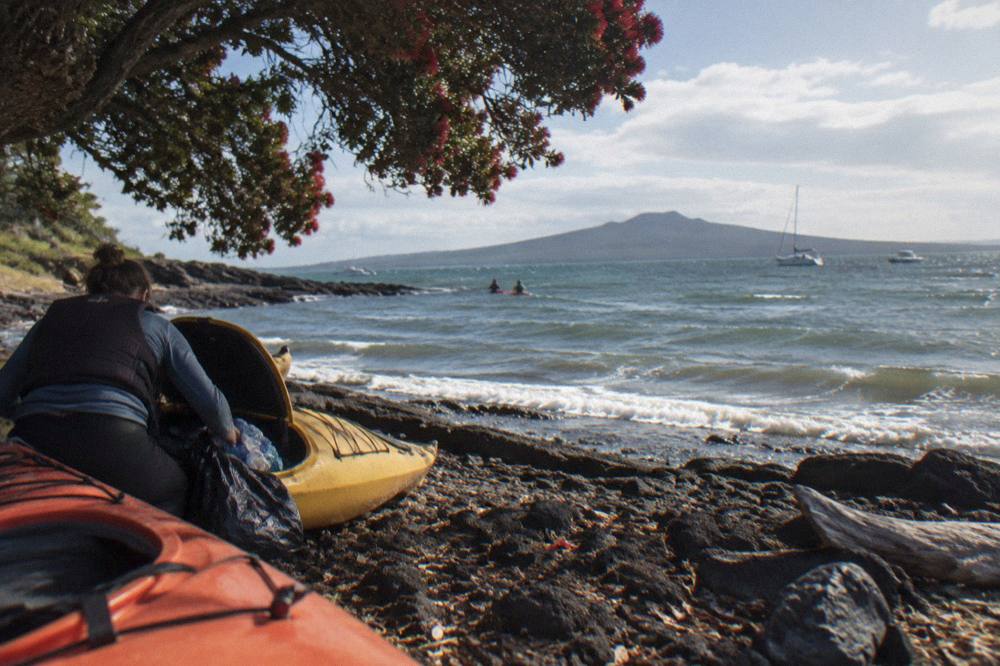
The footwear point cannot be overstated. The summit track crosses loose volcanic gravel and rough broken lava, and jandals are the classic mistake of the ferry crowd. Trainers with decent grip are fine; tramping boots are more than the track demands. The operators supply all kayaking and safety equipment including lifejackets, and the day tour supplies head torches for the lava caves. Since a national rule change on 9 October 2026, everyone aboard a recreational craft of six metres or less, kayaks included, must wear a properly fitted lifejacket while underway; on guided tours the operator supplies it.
| Item | Why | Supplied by tour? |
|---|---|---|
| Sturdy shoes with grip | Loose gravel and rough lava terrain | No |
| Sun hat and sunscreen | Little shade, intense heat off the lava | No |
| Water bottle | No shops on the island | No, bring your own |
| Warm layer | Sea breeze and, on the sunset tour, the dark paddle home | No |
| Wetsuit or quick-dry clothing | Kayaking is a wet sport | Gear included; clothing choice is yours |
| Lifejacket | Required by law on the paddle | Yes |
| Meal and hot drink | Catered on the summit-walk tours | Yes, BBQ lunch or dinner |
For the sunset tour the return paddle deserves specific thought: navigation lights on every kayak, a hot drink before departure, and warm layers that still work damp. Daylight in midsummer runs late into the evening, which is what makes the evening format possible at all; by midwinter sunset comes early and the evening tours are not the natural fit. The general timing picture is laid out in when to kayak in Auckland.
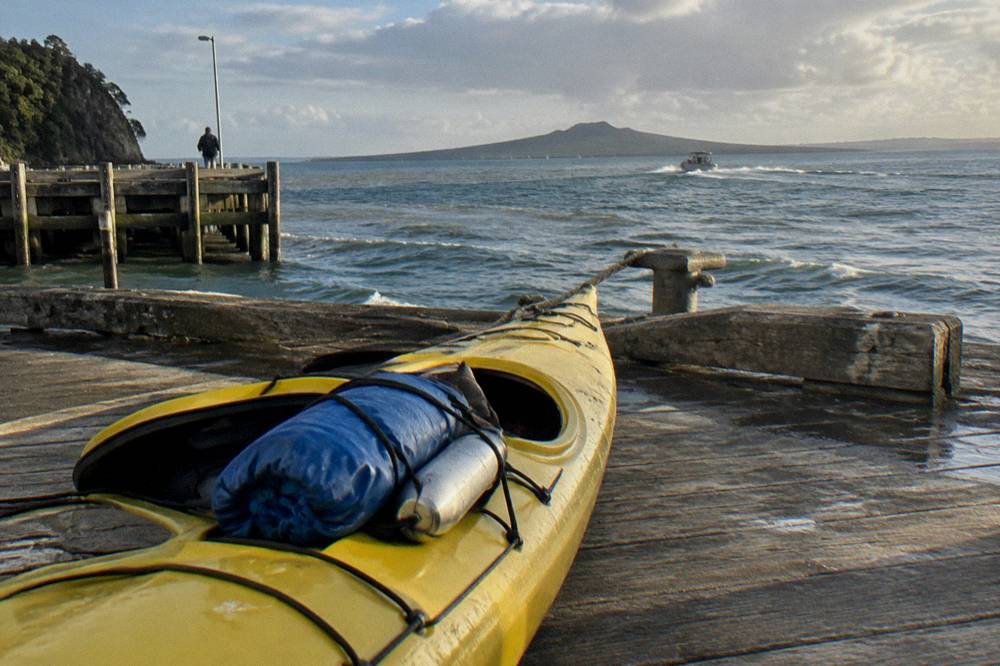
Packing is a biosecurity matter too, not just a comfort one. Rangitoto is pest-free, and every visitor is expected to follow the Check, Clean, Close routine: check gear for rodents, insects, ants and skinks, clean footwear and gear of soil and seeds, and close bags, with food in sealed containers rather than open or supermarket bags. Rangers may recheck gear on arrival. The full clothing picture for the paddle itself is in what to wear sea kayaking in Auckland.
What Are The Island Rules Once You Land?
Rangitoto has a total fire ban, no camping, no dogs, and no rubbish bins, so everything you bring leaves with you. It sits inside one of the Hauraki Gulf's High Protection Areas, where kayaking and swimming are explicitly allowed but fishing and taking seafood are not. Collecting plants, rocks or wildlife is prohibited across the island reserves.
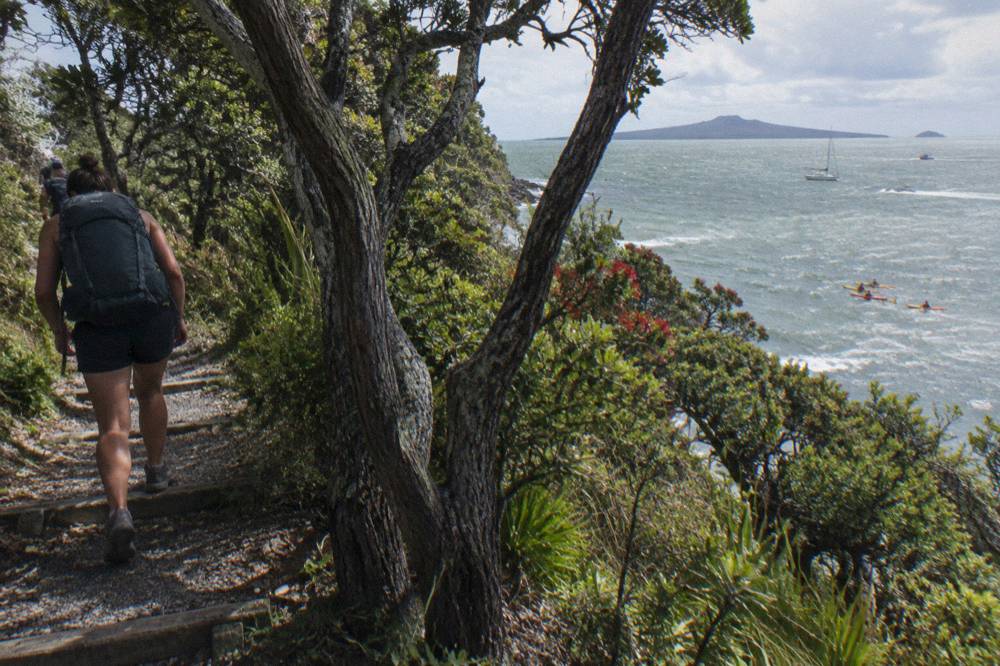
The protection rules come from the new Hauraki Gulf marine protection regime, under which Rangitoto and Motutapu form one of 12 High Protection Areas. In plain terms: paddle, swim and snorkel freely, harm nothing, take no seafood even by hand, and leave the drone at home, because landing aircraft including drones is not permitted. The Hauraki Gulf Marine Park pages carry the full rule set, and the park itself covers more than 1.2 million hectares and more than 50 islands.
Guided tour groups land under the operator's own biosecurity procedures, which removes most of the thinking for you, but personal day packs still get checked. The rules that most often surprise walkers are the small ones: no dogs anywhere on the island reserves, no fires or portable barbecues, and no bins of any kind, so the wrapper you carry up is the wrapper you carry down. The three rentable historic baches on the island are the only overnight accommodation, booked through rangitoto.org, well outside a day tour's scope.
For paddlers on the sunset tour there is one more attraction that depends on season and luck rather than rules: Auckland Sea Kayaks reports bioluminescence is sometimes visible in the water between October and April, and is explicit that it is never guaranteed. Treat it as a possible bonus on the dark paddle home, never as a reason to book.
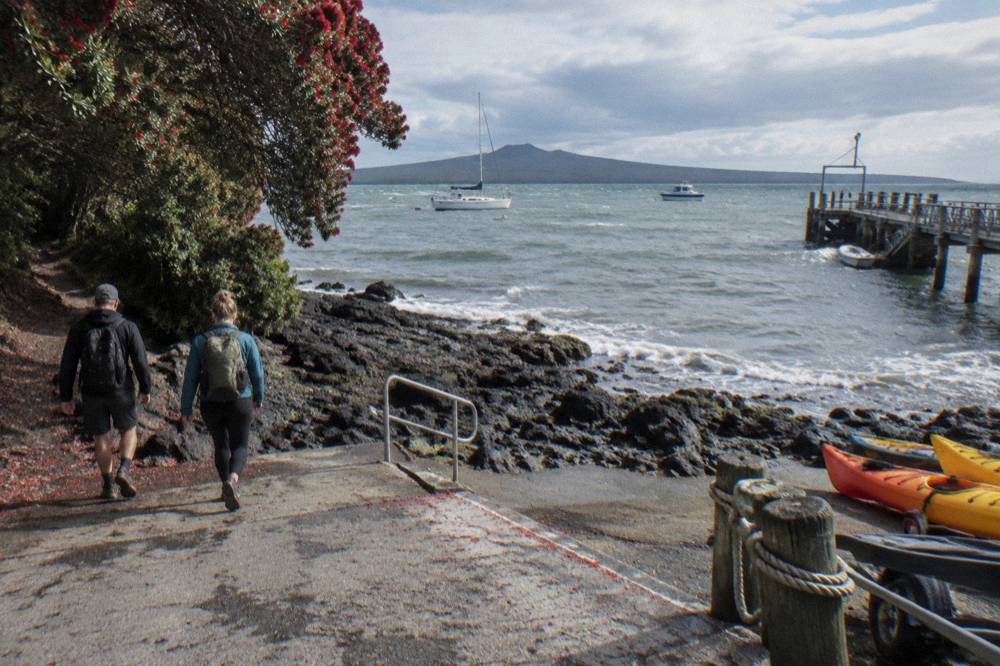
Is The Summit Walk Worth It After The Paddle?
For most visitors, yes: from the summit track you look out over the Hauraki Gulf, the crater rim and the city together, and it is the half of the day people remember. The cost is honest, about 2 hours of walking on gravel stacked onto a long paddle, which is exactly why the catered tours build in a meal before the climb. Moderate fitness and good shoes settle the question.
The sunset version frames the reward differently, a summit in the golden hour and a lit paddle home, and reviews sit at 4.9 across 179 for it, the strongest review pool of any Rangitoto trip. The day version, 4.9 across 83, buys the same walk with a BBQ lunch and a daylight return. Both cost from $139.16 per person. Neither promises a sunset, a view or any particular weather, and the operator is explicit that sea state decides the day; the summit walk happens if the crossing happens.
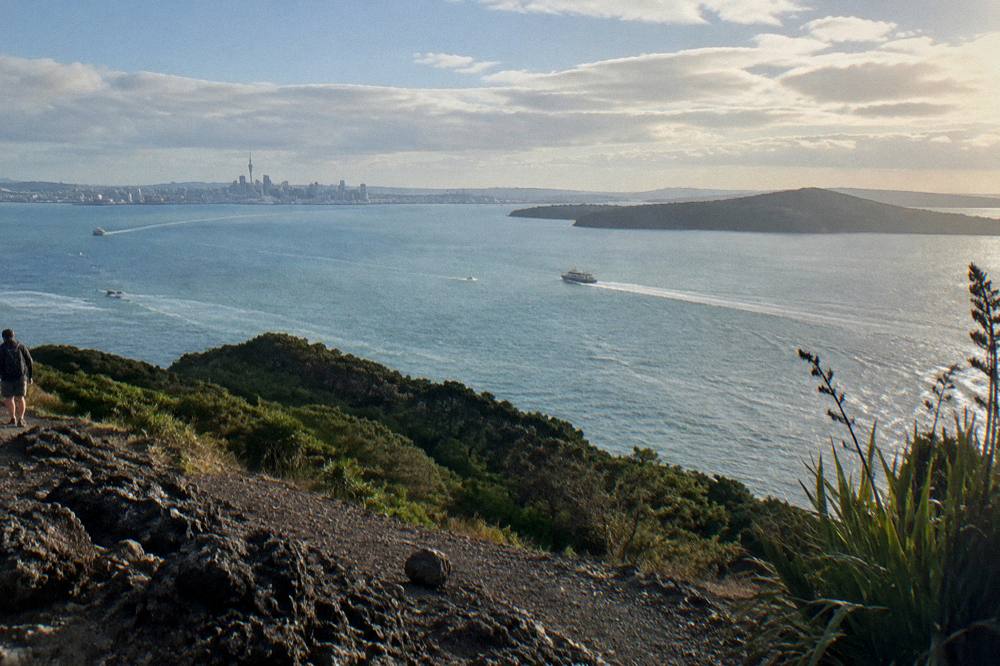
The walk's numbers in one line, since they anchor every decision above: 7 km return, about 250 m of climbing, about 2 hours return, easy to intermediate. The infographic below puts the summit track beside the other walking options on the island so the choice of routes is visible at a glance.
For visitors weighing whether the whole day earns its price, the honest framing is that the ferry plus an independent walk costs less and delivers the summit, but the kayak and hike day delivers the crossing, the catering, the guide and the summit in one guided package. If you are curious what the paddle alone is worth without the walk, the Is A Rangitoto Sunset Kayak Worth It? piece works through that question, and the Rangitoto kayak versus ferry comparison sets the two formats side by side.
Before locking any date, check the MetService marine forecast for the Hauraki Gulf, since the operator's go or no-go call follows wind and sea limits, and a flexible booking is worth more than a perfect forecast a week out. Auckland Kayak Tours shows the from-price for each tour, though rates can change, so confirm the live price on the booking page before you book.
Common Questions About The Rangitoto Summit Track
How Long Is The Rangitoto Summit Track?
DOC lists it at 7 km return from Rangitoto Wharf, about 2 hours return, with about 250 m of climbing and an easy to intermediate grade. The surface is rough volcanic terrain with loose gravel and little shade.
Which Kayak Tours Include The Rangitoto Summit Walk?
Two: the sunset kayak tour to Rangitoto Island and the day sea kayak tour of Rangitoto Island, both from $139.16 per person, both 6 hours 30 minutes, both walking the 7 km return summit track with a catered meal. The Motukorea half-day includes a different summit walk, 1.5 km with about 70 m of climbing.
Can Beginners Do The Paddle And The Summit Walk In One Day?
Yes, on the guided tours. Auckland Sea Kayaks states no kayaking experience is needed, tours use stable double sea kayaks in groups of at most 8, and the day tour is rated for moderate fitness covering both the paddle and the walk.
What Is The Minimum Age For The Kayak And Summit Tours?
Fourteen for both Rangitoto tours, the sunset and the day trip. Twelve for the Motukorea half-day. The weight limit on all three is 120 kg, and participants need to fit a seat about 65 cm wide.
Are There Lava Caves On The Summit Walk?
The Lava Caves Track branches off the summit route, 500 m one way with the turnoff 45 minutes from the wharf. The guided day tour includes a lava cave visit and provides head torches for it.
What Happens If The Weather Cancels The Tour?
If the operator cancels for weather, you receive a full refund or a reschedule. The operator may also transfer you to a sheltered tour such as the City Lights or City Scenes paddle, or refund in full if no alternative fits. Client cancellation terms differ between the booking page and the operator's own terms, so read both before booking.